शास्त्र विंग · वाद्य-पट्टिका · Instrument Plate
तिमिला
Thimila
अन्य नामतिमिला · Timila · Thimila (Malayalam: തിമില) · Idamaram / इडमरम (regional colloquial)
परिचय
Overviewतिमिला केरल के मंदिर-प्रांगण का अग्रणी अवनद्ध वाद्य है — घड़ी-नुमा कटहल-काठ से तराशा, बछड़े की खाल से मढ़ा और चमड़े की डोरियों से कसा हुआ द्वि-मुखी ढोल। इसकी दो ही बोल-ध्वनियाँ — 'ठा' और 'ठों' — पंचवाद्यम की समूची पिरामिड-नुमा लयात्मक वास्तुकला रचती हैं। बाएँ कंधे पर लटकाकर, दोनों हाथों से बजाया जाने वाला यह वाद्य त्रिशूर पूरम जैसे उत्सवों में सैकड़ों की संख्या में एक साथ गूँजकर पूरे केरल को एक लय में बाँध देता है।
अंग्रेज़ी में पढ़ें · Read in English
The thimila is the leading avanaddha (percussion) instrument of Kerala's temple courtyard — an hourglass jackwood, calfskin-headed, leather-laced double drum. Its two strokes alone — 'tha' and 'thom' — build the entire pyramid-like rhythmic architecture of Panchavadyam. Slung on the left shoulder and played with both hands, at festivals like the Thrissur Pooram hundreds of them sound in unison, binding all of Kerala into a single rhythm.
वर्गीकरण
ClassificationNatya Shastra Category
अवनद्ध (Avanaddha - percussion / membrane instruments)
नाट्यशास्त्र की चार वाद्य कोटियों (तत, सुषिर, घन, अवनद्ध) में तिमिला 'अवनद्ध वाद्य' है — अर्थात् चमड़े से मढ़ा हुआ ताल वाद्य, जिसकी ध्वनि खाल के कंपन से उत्पन्न होती है। यह एक द्वि-मुखी (दोनों ओर मढ़ा) घंटाकार अवनद्ध वाद्य है।
In the four instrument categories of the Natya Shastra (Tata, Sushira, Ghana, Avanaddha), the thimila is an 'Avanaddha vadya' — a membrane-covered percussion instrument whose sound arises from the vibration of stretched skin. It is a double-headed, hourglass-shaped membranophone.
Western Category
Membranophone (hand-played drum)
Western Family
Hourglass / waisted drum family (structurally kin to the damaru and idakka, but larger and open-tuned)
Sub Classification
बनावट
PhysicalDescription Hindi
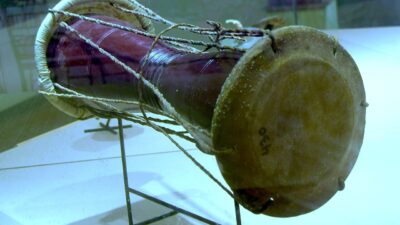
तिमिला एक घड़ी-नुमा (रेत-घड़ी / hourglass) आकार का द्वि-मुखी ढोल है, जिसे केरल की मंदिर वाद्य परंपरा में प्रमुखता प्राप्त है। इसका खोल पॉलिश किए हुए कटहल (जैकवुड) की लकड़ी से तराशा जाता है, जो बीच में पतला और दोनों सिरों पर चौड़ा होता है। दोनों मुख बछड़े की खाल से मढ़े होते हैं और चमड़े की डोरियों (तसमों) से आपस में कसकर बाँधे जाते हैं; यही डोरियाँ कमर के चारों ओर लिपटी रहती हैं जिससे वादक खींचाव बदलकर स्वर को नियंत्रित करता है।
Description English
The thimila is an hourglass (waisted) double-headed drum central to Kerala's temple percussion tradition. Its shell is carved from polished jackwood, narrow at the waist and broad at both ends. Both faces are covered with calfskin and laced together by leather braces that also wind around the waist of the drum; by tightening or loosening these braces the player adjusts the tension and controls the tone.
Body
Hourglass / waisted (broad at both ends, pinched at the centre)
रेत-घड़ी जैसा — दोनों सिरों पर चौड़ा, बीच में सँकरा
Polished jackwood (Artocarpus / anjili wood), carved as a single hollow shell
पॉलिश किया हुआ कटहल (जैकवुड / अंजिली) की ठोस खोखली लकड़ी
approx. 35-45 (portable, suspended drum)
Twin conical cavities meeting at the narrow waist, so the two heads couple through the pinched middle
Strings
The thimila is a membranophone; it has drumheads, not strings
None — resonance comes from the coupled skins and hollow jackwood body
Not applicable for a percussion drum
Membranes
2 (both ends covered)
Calfskin, preferably taken from a 1-2 year old calf
बछड़े की खाल (आदर्शतः 1-2 वर्ष के बछड़े की)
Upper/front skin is struck; the drum is played on one side with both hands
वादन ऊपरी/सामने वाले मुख पर होता है — दोनों हाथों से एक ही ओर बजाया जाता है
Bracing
तसमे / चमड़े की डोरियाँ
Leather braces / lacing
Leather straps
Hold the two calfskin heads together and wind around the waist; tightening or slackening them raises or lowers the pitch
दोनों मुखों को जोड़ती हैं और कमर पर लिपटी रहती हैं; इन्हें कसने-ढीला करने से स्वर ऊँचा-नीचा होता है
Strap
कंधे का पट्टा
Shoulder strap
The drum is suspended from the player's left shoulder / waist by a strap so both hands are free to strike the upper head while standing and walking in procession
वाद्य को बाएँ कंधे/कमर पर एक पट्टे से लटकाया जाता है, ताकि खड़े होकर और शोभायात्रा में चलते हुए दोनों हाथ ऊपरी मुख पर प्रहार के लिए स्वतंत्र रहें
Bow
लागू नहीं
Not applicable
The thimila is struck by the bare hands (fingers and palms) — no bow and no sticks
0
Played entirely with the hands
Tuning Pegs
लागू नहीं
Not applicable
There are no pegs; pitch is set purely by the tension of the leather braces around the waist
Bridge
लागू नहीं
Not applicable
No bridge — it is a membrane drum, not a chordophone
Not applicable
Frets
तिमिला में फ्रेट या तार नहीं होते; यह विशुद्ध ताल वाद्य है जिसकी दो मूल बोल-ध्वनियाँ हैं — 'ठा' और 'ठों'।
The thimila has no frets or strings; it is a pure percussion instrument with two basic syllabic strokes — 'tha' and 'thom'.
ध्वनि-चरित्र
SoundTonal Character Hindi
तिमिला की ध्वनि तीखी, चमकदार और भेदक होती है — पंचवाद्यम में यह अग्रणी (नायक) वाद्य है जो पूरी वाद्य-मंडली की लय और चढ़ाव का नेतृत्व करती है। इसका स्वर न बहुत ऊँचा न बहुत नीचा, बल्कि संतुलित और स्पष्ट होता है, जो शोभायात्रा और मंदिर-प्रांगण की खुली हवा में दूर तक गूँजता है।
Tonal Character English
The thimila's voice is sharp, bright and penetrating — in Panchavadyam it is the leading (chief) instrument that sets and drives the rhythm and the crescendo of the whole ensemble. Its tone is neither too high nor too low but balanced and clear, carrying far across the open air of processions and temple courtyards.
Timbre
Crisp, ringing, focused attack with a short resonant tail; balanced mid-high pitch
Range
A fixed pitch/sruti drum (not melodic) — the two core strokes 'tha' (open, resonant) and 'thom' (deeper, damped) plus their variations
Dynamic Range
Wide for a hand drum — from soft anticipatory taps in the opening slow tempo to thunderous unison strokes at the climactic fast cycles
Techniques
सुनने का मार्गदर्शन
The Listening Guideतिमिला का असली रस पंचवाद्यम की सामूहिक प्रस्तुति में है। धीमी, विरल शुरुआत से आरंभ कीजिए और हर आवृत्ति के अंत में आने वाले 'कलाशम' को पहचानिए, जहाँ अग्रणी तिमिला-वादक तेज़ बोल-समूह बजाकर गति बढ़ा देता है। जैसे-जैसे मात्राएँ घटती और गति बढ़ती है, सैकड़ों तिमिला एक साथ गरजती हैं — यही उत्सव का चरम है।
अंग्रेज़ी में पढ़ें · Read in English
To appreciate the thimila, listen to a pooram or a Panchavadyam performance. Notice the slow, sparse strokes at the start — then watch how each cycle ends in a 'kalasam' and the tempo rises while the beats reduce. On the lead thimila player's cue the whole row thunders in unison. The roaring massed rhythm of the final phase is the thimila's true thrill.
अन्य विवरण
More DetailsTimbre
Crisp, ringing, focused attack with a short resonant tail; balanced mid-high pitch
रोचक तथ्य
Margin Notesअग्रणी वाद्य की ज़िम्मेदारी — पंचवाद्यम में तिमिला केवल एक वाद्य नहीं, बल्कि संचालक है। मुख्य तिमिला-वादक ही तय करता है कि कब 'कलाशम' आएगा, कब गति बढ़ेगी और कब पूरी मंडली एक साथ गूँजेगी — बाक़ी सभी वाद्य उसी के संकेत का अनुसरण करते हैं।
In Panchavadyam the thimila is not merely an instrument but the conductor. The lead thimila player decides when the 'kalasam' will come, when the tempo will rise and when the whole ensemble will thunder together — every other instrument follows his cue.
56 से 1792 मात्राओं तक — आधुनिक पंचवाद्यम की सबसे अद्भुत विशेषता इसकी पिरामिड-नुमा लयात्मक संरचना है, जो 1792 मात्राओं से आरंभ होकर क्रमशः घटते-घटते 56, फिर उससे भी कम मात्राओं पर पहुँचती है, जबकि गति उतनी ही बढ़ती जाती है — और इस विशाल वास्तुकला की धुरी तिमिला है।
The most remarkable feature of modern Panchavadyam is its pyramid-like rhythmic structure, descending in cycles from 1792 beats down to 56 and fewer, while the tempo correspondingly rises — and the axis of this vast architecture is the thimila.
तमिलनाडु और केरल दोनों में — यद्यपि तिमिला को केरल का वाद्य माना जाता है, यह दक्षिण भारत में तमिलनाडु की मंदिर-परंपराओं में भी प्रयुक्त होती है, विशेषतः श्रीबलि और श्रीभूतबलि जैसे अनुष्ठानों में।
Though thought of as a Keralan instrument, the thimila is also used in the temple traditions of Tamil Nadu in South India, especially in rites such as sree-bali and sree-bhootha-bali.
एक साज़ बनाने की कला — एक अच्छी तिमिला कटहल की भली-भाँति सूखी, पॉलिश की हुई लकड़ी और 1-2 वर्ष के बछड़े की चुनी हुई खाल माँगती है; खाल को चमड़े की डोरियों से इतनी सटीकता से कसा जाता है कि 'ठा' और 'ठों' दोनों बोल स्पष्ट और संतुलित निकलें।
A fine thimila demands well-seasoned, polished jackwood and carefully selected skin from a 1-2 year old calf; the skin is laced with leather braces so precisely that both the 'tha' and the 'thom' strokes ring out clear and balanced.
सवाल-जवाब
Questions & Answersतिमिला क्या है?
तिमिला केरल (और तमिलनाडु के कुछ भाग) का एक घड़ी-नुमा (hourglass) द्वि-मुखी अवनद्ध (ताल) वाद्य है। कटहल की लकड़ी से तराशा और बछड़े की खाल से मढ़ा यह ढोल केरल के मंदिर-उत्सवों की पंचवाद्यम वाद्य-मंडली का अग्रणी वाद्य है।
तिमिला कैसे बजाई जाती है?
तिमिला को बाएँ कंधे पर एक पट्टे से लटकाया जाता है और केवल दोनों हाथों की उँगलियों तथा हथेलियों से ऊपरी मुख पर बजाया जाता है — न कोई डंडा, न धनुष। इसकी दो मूल बोल-ध्वनियाँ 'ठा' और 'ठों' हैं।
पंचवाद्यम में तिमिला की क्या भूमिका है?
पंचवाद्यम के पाँच वाद्यों (तिमिला, मद्दलम, इलत्तालम, इडक्का, कोम्बु) में तिमिला अग्रणी वाद्य है। मुख्य तिमिला-वादक ही तय करता है कि कब 'कलाशम' आएगा और कब गति बढ़ेगी; पूरी मंडली उसी की लय का अनुसरण करती है।
तिमिला किस चीज़ से बनती है?
तिमिला का खोल पॉलिश किए हुए कटहल (जैकवुड) की लकड़ी से तराशा जाता है और इसके दोनों मुख बछड़े की खाल (आदर्शतः 1-2 वर्ष के बछड़े की) से मढ़े जाते हैं, जिन्हें चमड़े की डोरियों से कसकर बाँधा जाता है।
क्या तिमिला हिंदी फ़िल्म संगीत में प्रयुक्त होती है?
तिमिला मुख्यतः केरल की मंदिर-वाद्य परंपरा का वाद्य है, हिंदी फ़िल्म-संगीत का नियमित अंग नहीं। कभी-कभार जब कोई फ़िल्म केरल की संस्कृति, ओणम या मंदिर-उत्सव को ध्वनि से चित्रित करती है, तब पंचवाद्यम/तिमिला की गूँज सुनाई दे सकती है।
नमूना-पट्टी
The Specimen Table| नाम | तिमिला · Thimila |
|---|---|
| अन्य नाम | तिमिला · Timila · Thimila (Malayalam: തിമില) · Idamaram / इडमरम (regional colloquial) |
| प्रकार | वाद्य · Instruments |
साझा कीजिए · Share this Plate