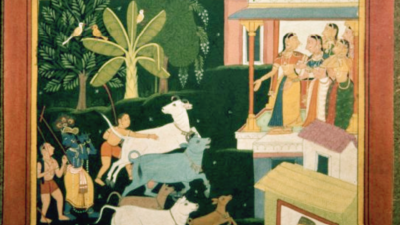
शास्त्र विंग · राग-पट्टिका · Raag Plate
कल्याणी
Kalyani
एक श्रृंगार Hindustani राग · A Romance Hindustani Raag
भावRomantic · Devotional · Serene
ऊर्जामध्यम
स्वर-चित्र · The Swara Panel
आरोह — अवरोह · The Ascent and the Descent
आरोह · Aroha
स ऋ गा म प ध नी स
S R₂ G₃ M₂ P D₂ N₃ Ṡ
अवरोह · Avaroha
स नी ध प म गा ऋ स
Ṡ N₃ D₂ P M₂ G₃ R₂ S
वादी–संवादी टिप्पणी · Vadi–Samvadi note
Vadi — The vadi (primary) note provides the tonal center of Raag Kalyani.
Samvadi — Ni (Nishad) is the samvadi, complementing the vadi note.
समय और भाव
Time Theory & Moodसमय-सिद्धांत · Time Theory
संध्या काल
परंपरागत रूप से संध्या काल (4:00 PM - 7:00 PM) में गाया जाता है।
Traditionally performed during evening/twilight hours (4:00 PM - 7:00 PM), when day transitions to night.
भाव और गति · Mood & Tempo
श्रृंगार · Romance/Beauty
प्रेम, सौंदर्य और भक्ति का रस। रोमांटिक तड़प, सौंदर्यपरक आनंद और गहरे भावनात्मक जुड़ाव को जगाता है।
ऊर्जा · Energyमध्यम
स्तर · Levelintermediate — राग कल्याणी के लिए इसके मूल ठाट की समझ और मींड, गमक, आंदोलन के माध्यम से इसके अद्वितीय चरित्र को उभारने की क्ष…
पट्टिका-लेख
The Monographपरिचय Introduction
राग कल्याणी हिंदुस्तानी शास्त्रीय संगीत का एक राग है जो Kalyan ठाट से संबंधित है। इसका प्रमुख रस श्रृंगार (Romance/Beauty) है। यह परंपरागत रूप से संध्या काल (4:00 PM - 7:00 PM) में गाया जाता है। गाया जाता है।
अंग्रेज़ी में पढ़ें · Read in English
Raag Kalyani is a complete scale with all 7 notes in both ascent and descent raga in Hindustani classical music belonging to the Kalyan thaat. This raag embodies the Romance/Beauty (श्रृंगार) rasa, creating an atmosphere of romantic, devotional emotion. It is traditionally performed during evening hours. The raag offers rich melodic possibilities through its characteristic phrases and ornamentations, making it a rewarding subject for both khayal and instrumental performance.
सांस्कृतिक महत्व Cultural Significance
भारतीय शास्त्रीय संगीत की समृद्ध परंपरा के अंग के रूप में, राग कल्याणी Hindustani परंपरा को परिभाषित करने वाले स्वर संरचना और भावनात्मक अभिव्यक्ति के बीच गहरे संबंध का प्रतिनिधित्व करता है।
अंग्रेज़ी में पढ़ें · Read in English
As part of the rich tapestry of Indian classical music, Raag Kalyani represents the deep connection between melodic structure and emotional expression that defines the Hindustani tradition.
ऐतिहासिक महत्व Historical Significance
राग कल्याणी हिंदुस्तानी संगीत का राग है जो कर्नाटक संगीत की कल्याणी राग के समतुल्य है। यमन ठाट परिवार से संबंधित, इसका नाम "कल्यण" (समृद्धि) से आया है। संगीत परिजात (16वीं शताब्दी) जैसे ग्रंथों में ऐतिहासिक रूप से प्रलेखित, यह विशेषकर ग्वालियर और जयपुर घरानों में खयाल परंपरा का आधार बन गया। विकृत स्वरों का अत्यधिक उपयोग इसे यमन राग से अलग करता है।
अंग्रेज़ी में पढ़ें · Read in English
Raag Kalyani is the Hindustani equivalent of the Carnatic raag Kalyani and belongs to the Yaman thaat family. Its name derives from "Kalyan" meaning prosperity and well-being. Historically documented in texts like the Sangeet Parijatak (16th century), it became a cornerstone of Hindustani khayal tradition, particularly popular in the Gwalior and Jaipur gharanas. The raag's sophisticated use of vikrit swaras (altered notes) distinguishes it from its sister raag Yaman.
शिक्षा
Teaching & LearningStart with aaroha-avaroha practice with tanpura
Focus on the pakad (catch phrase) to establish the raag's identity
Practice alap in vilambit (slow) laya to internalize the mood
Gradually build speed through jod and jhala patterns
Confusing this raag with similar-sounding raags
Not giving enough weight to the vadi and samvadi swaras
Using inappropriate meend or gamak patterns
तुलना
A Specimen Comparisonदोनों संपूर्ण राग हैं, पर एक स्वर में भिन्न: कल्याणी में तीव्र मध्यम (M2) है जबकि शंकरभरणम् में शुद्ध मध्यम (M1)। यह एकमात्र अंतर निर्णायक है — कल्याणी का तीव्र म एक विशिष्ट तनाव और उत्कर्ष रचता है जो शंकरभरणम् में नहीं है।
| तुलनाSpecimen | कल्याणी | धीरशंकरभरणम् |
|---|---|---|
| स्वर-अंतर | Kalyani uses tivra Madhyama (M2); Dheerasankarabharanam uses shuddha Madhyama (M1); all other notes identical. | |
| भाव-अंतर | Kalyani is more romantic, aspirational, and emotionally charged; Sankarabharanam is more grounded and settled. | |
दोनों में तीव्र म है, पर सिंहेंद्रमध्यमम् में शुद्ध धैवत (D1) है जबकि कल्याणी में चतुःश्रुति धैवत (D2)। यह निचला ध सिंहेंद्रमध्यमम् को कल्याणी की उज्ज्वलता से हटाकर एक चिंतनशील, करुण भाव की ओर ले जाता है।
| तुलनाSpecimen | कल्याणी | सिंहेंद्रमध्यमम् |
|---|---|---|
| स्वर-अंतर | Simhendramadhyamam has shuddha Dha (D1); Kalyani has chatushruti Dha (D2); both share tivra Ma. | |
| भाव-अंतर | Simhendramadhyamam is more contemplative and melancholic; Kalyani is brighter and more uplifting. | |
हिंदुस्तानी परंपरा में यमन की तुलना यमन कल्याण से होती है — एक ऐसा रूप जिसमें अवरोह में तीव्र और शुद्ध दोनों म मिलाए जाते हैं, जिससे भावनात्मक बनावट कुछ और जटिल हो जाती है।
| तुलनाSpecimen | कल्याणी | यमन कल्याण |
|---|---|---|
| स्वर-अंतर | Yaman Kalyan mixes both tivra and shuddha Ma in descent; pure Yaman/Kalyani uses only tivra Ma throughout. | |
प्रस्तुति
Performance- Description
- परंपरागत रूप से संध्या काल (4:00 PM - 7:00 PM) में गाया जाता है। Traditionally performed during evening/twilight hours (4:00 PM - 7:00 PM), when day transitions to night.
- Prahar Number
- 5
- Prahar Name
- संध्या काल Sandhya Kaal
- Time Start
- 16:00
- Time End
- 19:00
- Time Flexibility
- flexible
Time
और जानें
More to Know- raag-dheerasankarabharanam — Dheerasankarabharanam — धीरशंकरभरणम् — Both are sampurna (all seven notes) raags, but they differ in one note: Kalyani uses tivra Madhyama (M2, sharp fourth) while Dheerasankarabharanam uses shuddha Madhyama (M1, natural fourth). This single note change is decisive — the tivra Ma in Kalyani creates a characteristic tension and elevation that Sankarabharanam lacks. Kalyani therefore feels more romantic, aspirational, and emotionally charged, while Sankarabharanam has a more grounded, settled quality. In Hindustani terms, the equivalent comparison is between Yaman (tivra Ma) and Bilawal (shuddha Ma). — दोनों संपूर्ण राग हैं, पर एक स्वर में भिन्न: कल्याणी में तीव्र मध्यम (M2) है जबकि शंकरभरणम् में शुद्ध मध्यम (M1)। यह एकमात्र अंतर निर्णायक है — कल्याणी का तीव्र म एक विशिष्ट तनाव और उत्कर्ष रचता है जो शंकरभरणम् में नहीं है। — Kalyani uses tivra Madhyama (M2); Dheerasankarabharanam uses shuddha Madhyama (M1); all other notes identical. — Kalyani is more romantic, aspirational, and emotionally charged; Sankarabharanam is more grounded and settled.
- raag-simhendramadhyamam — Simhendramadhyamam — सिंहेंद्रमध्यमम् — Both use tivra Ma, but Simhendramadhyamam has Shuddha Dhaivata (D1) compared to Kalyani's Chatushruti Dhaivata (D2). This lower Dha in Simhendramadhyamam shifts the raag from Kalyani's brightness toward a more contemplative, slightly melancholic quality. — दोनों में तीव्र म है, पर सिंहेंद्रमध्यमम् में शुद्ध धैवत (D1) है जबकि कल्याणी में चतुःश्रुति धैवत (D2)। यह निचला ध सिंहेंद्रमध्यमम् को कल्याणी की उज्ज्वलता से हटाकर एक चिंतनशील, करुण भाव की ओर ले जाता है। — Simhendramadhyamam has shuddha Dha (D1); Kalyani has chatushruti Dha (D2); both share tivra Ma. — Simhendramadhyamam is more contemplative and melancholic; Kalyani is brighter and more uplifting.
- raag-yaman-kalyan — Yaman Kalyan — यमन कल्याण — Within the Hindustani tradition, Yaman is often compared with Yaman Kalyan — a variant that mixes both tivra and shuddha Ma in descent, creating a slightly more complex emotional texture. — हिंदुस्तानी परंपरा में यमन की तुलना यमन कल्याण से होती है — एक ऐसा रूप जिसमें अवरोह में तीव्र और शुद्ध दोनों म मिलाए जाते हैं, जिससे भावनात्मक बनावट कुछ और जटिल हो जाती है। — Yaman Kalyan mixes both tivra and shuddha Ma in descent; pure Yaman/Kalyani uses only tivra Ma throughout.
In Film Music
Carnatic Kalyani and Hindustani Yaman are the same raag expressed through two different classical traditions — both defined by tivra Madhyama (sharp fourth) with all other notes in their natural forms, creating a seven-note scale of exceptional romantic and devotional beauty. In Hindi film music, it is Yaman (and its close variant Yaman Kalyan) that has produced some of the most beloved film songs ever composed. The raag's evening performance time, romantic rasa, and the characteristic yearning quality of the tivra Ma make it a natural vehicle for songs of love, longing, and spiritual devotion. Among the most celebrated film songs in this raag is 'Abhi Na Jao Chhod Kar' from Hum Dono (1961), composed by Jaidev and sung by Mohammad Rafi and Asha Bhosle — a duet of two lovers unwilling to part, in which the raag's expansive yearning perfectly matches the emotional content. It reached number 2 on the Binaca Geetmala finals of 1961. Ravindra Jain composed 'Jab Deep Jale Aana, Jab Shaam Dhale Aana' for Chitchor (1976), sung by Yesudas and Hemlata — a song that uses Yaman Kalyan (a variant that blends shuddha Ma in descent) to create an atmosphere of warmth and gentle invitation. Beyond these two landmark songs, Yaman/Kalyani has been used extensively throughout Hindi film music history for its combination of accessibility, emotional richness, and romantic grandeur — qualities that make it one of the most 'cinematic' of all Indian classical raags.
Comparisons
सीखने के लिए
For Learners- Difficulty Level
- intermediate
अन्य विवरण
More Details- Indian_Music_Raga_Encyclopedia_v2.xlsx
- notesandsargam.com — Abhi Na Jao Chhod Kar sargam notes (Yaman Kalyan confirmation)
- sulekha.com — Jab Deep Jale Aana: Raga Yaman Kalyan
- bollypiano.com — Exploring Indian Film Songs in Raag Kalyani/Yaman
- songsofyore.com — Film songs based on classical ragas (2): A date with Yaman
- atulsongaday.me — Abhi Naa Jaao Chhodkar
References
नमूना-पट्टी
The Specimen Table| नाम | कल्याणी · Kalyani |
|---|---|
| आरोह | स ऋ गा म प ध नी स |
| अवरोह | स नी ध प म गा ऋ स |
| जाति | संपूर्ण-संपूर्ण · Sampurna-Sampurna |
| समय | संध्या काल |
| ऊर्जा | मध्यम |
| परिवार | Kalyani |
| स्तर | intermediate |
| लोकप्रियता | Very popular |
जुड़े हुए पन्ने
Connected Plates · The Graph Made Visibleअटलस में कोई पन्ना अकेला नहीं — इस राग से गीत, प्रस्तुतियाँ, कलाकार, ताल, घराने और मिलते-जुलते राग, सब यहाँ से खुलते हैं।
फ़िल्मी गीत इस राग में · Famous Film Songs
इस राग के कलाकार · Notable Artists
ताल-साथी · Taal Pairings
श्रवण-कक्ष · The Listening Room
सुनिए — कल्याणी · Hear the Raag
Raga Kalyani | Carnatic Veena
प्रश्नोत्तर
Questions & Answersराग Kalyani क्या है?
राग Kalyani Hindustani शास्त्रीय संगीत का एक राग है।
अंग्रेज़ी में पढ़ें · Read in English
What is Raag Kalyani? — Raag Kalyani is a raag in Hindustani classical music.
साझा कीजिए · Share this Plate