गीत विंग · गीत-पट्टिका · Song Plate
मेरी अरज सुनो करतार
Meri Araj Suno Kartar
खेमचंद प्रकाश के शादी संगीत से एक प्रार्थना-गीत।
भावभक्ति · आध्यात्मिक
भाषाhindi स्वरूपUnknown
श्रेय
The Creditsसूत्र-वाक्य · The Hook
सूत्र-वाक्य
खेमचंद प्रकाश के शादी संगीत से एक प्रार्थना-गीत।
In EnglishA prayer-song from Khemchand Prakash's score for Shaadi.
पट्टिका-लेख
The Monographपरिचय Overview
'मेरी अरज सुनो करतार' 1941 की रणजीत मूवीटोन फ़िल्म शादी का एक प्रार्थना-विषयक गीत है, संगीत खेमचंद प्रकाश का। शीर्षक करतार (सृष्टिकर्ता) से एक विनती है — एक भक्ति-स्वर जो पूरे संगीत में बार-बार लौटता है। उपलब्ध गीत-सूचियों में गायक प्रलेखित नहीं है, इसलिए यहाँ कोई गायक नहीं जोड़ा गया।
अंग्रेज़ी में पढ़ें · Read in English
'Meri Araj Suno Kartar' is a prayer-themed song from the 1941 Ranjit Movietone film Shaadi, composed by Khemchand Prakash. The title is an appeal to the Creator (Kartar) — a devotional register that recurs across the soundtrack. The singer is not documented in the available song listings, so no singer is attributed here.
काव्य The Poetry
शीर्षक 'मेरी अरज सुनो करतार' — 'मेरी विनती सुनो, हे करतार (सृष्टिकर्ता)' — एक याचना-संबोधन है जिसमें भक्त विनम्रता के भाव से सृष्टिकर्ता के समक्ष अपनी बात रखता है। 'करतार' (संस्कृत 'कर्तृ' से, 'जो करता है / रचता है') एक दिव्य उपाधि है जो हिंदू और सिख भक्ति परंपराओं में प्रयुक्त होती है — विशेषकर कबीर और गुरुओं की निर्गुण-काव्य धारा में। भक्ति-संदर्भ में 'अरज' (अरबी/फ़ारसी 'अर्ज़' से, याचना या निवेदन) प्रार्थना को छोटे से बड़े की, नश्वर से शाश्वत की अपील के रूप में प्रस्तुत करता है। इस प्रकार की याचना-शैली, जिसमें भक्त सीधे ईश्वर से निवेदन करता है, 1930 और 1940 के दशकों की फ़िल्मी प्रार्थना-गीतों की एक विशेषता थी, जब मौखिक परंपरा की भक्ति-रचनाएँ सिनेमा दर्शकों के लिए नियमित रूप से रूपांतरित की जाती थीं।
अंग्रेज़ी में पढ़ें · Read in English
The title 'Meri Araj Suno Kartar' — 'Listen to my plea, O Kartar (Creator)' — is a supplicatory address in which the devotee places himself before the Creator in an attitude of humility. 'Kartar' (कारतार, from Sanskrit kartri, 'the one who acts/creates') is a divine epithet used across Hindu and Sikh devotional traditions, particularly in the Nirguni (formless God) poetry of Kabir and the Gurus. In the bhakti context, 'araj' (or arz, from Arabic/Persian, meaning petition or plea) frames prayer as an appeal from the small to the great, the mortal to the eternal. This kind of suppliant address, in which the devotee offers his entreaty directly, was a staple of film prayer-songs in the 1930s and 1940s, when devotional idioms from oral-tradition bhakti were regularly adapted for cinema audiences.
कहानी The Story
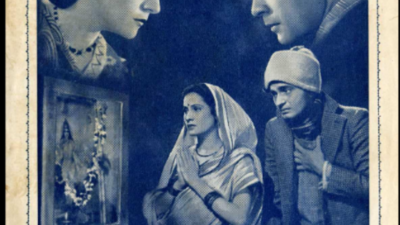
शादी (1941) रणजीत मूवीटोन की एक प्रस्तुति थी, जिसे निर्देशक जयंत देसाई ने बनाया, और यह स्टूडियो तथा उसके इन-हाउस संगीतकार खेमचंद प्रकाश के बीच की असाधारण रूप से उत्पादक पाँच-वर्षीय साझेदारी का हिस्सा है, जिन्होंने 1940 से 1945 के बीच 19-20 रणजीत फ़िल्मों का संगीत रचा। इस दौर में स्टूडियो की संगीत-पहचान ख़ुर्शीद की आवाज़ और खेमचंद प्रकाश की सुरीली प्रतिभा से परिभाषित थी। 'मेरी अरज सुनो करतार' संगीत-पट्टी में एक प्रार्थना-केंद्रित गीत है, जो प्रेम और भक्ति के स्वरों को संतुलित करता है। फ़िल्म स्तर पर गीत-श्रेय मुंशी दिल और डी.एन. माधोक के बीच साझा है, परंतु इस विशेष गीत के गीतकार और गायक उपलब्ध सूचियों में संरक्षित नहीं हैं। यह भक्ति-गीत उस संगीत-पट्टी में स्वर-वैविध्य प्रदान करता, जिसमें प्रेम और हास्य गीत प्रमुख थे।
अंग्रेज़ी में पढ़ें · Read in English
Shaadi (1941) was produced by Ranjit Movietone under director Jayant Desai, and belongs to the extraordinarily productive five-year collaboration between the studio and its in-house composer Khemchand Prakash, who scored 19-20 Ranjit films between 1940 and 1945. The studio's musical identity in this period was defined by Khursheed's voice and Khemchand Prakash's melodic gift. 'Meri Araj Suno Kartar' is a prayer-centred number in a soundtrack that balanced romantic and devotional registers. The film's lyric credits at the film level are shared between Munshi Dil and D.N. Madhok, but the specific lyricist and singer for this song are not preserved in available song listings. The devotional number would have provided tonal variety within the soundtrack, offering a moment of spiritual earnestness amid the romantic and comic songs that dominated Ranjit's output.
वर्गीकरण
ClassificationGenre
अन्य विवरण
More Details- https://en.wikipedia.org/wiki/Khemchand_Prakash
- https://www.cinemaazi.com/people/khemchand-prakash
- https://www.hindigeetmala.net/movie/shaadi_1941.htm
- https://mehfilmeinmeri.wordpress.com/2022/08/10/aayega-aanewala-remembering-khemchand-prakash/
- https://grokipedia.com/page/shaadi_1941_film
References
रोचक तथ्य
Margin Notesखेमचंद प्रकाश (1907-1950) ने फ़िल्म उद्योग में आने से पहले बीकानेर और नेपाल के राजदरबारों में शास्त्रीय गायक और कथक नर्तक के रूप में प्रशिक्षण प्राप्त किया था; कई शास्त्रीय परंपराओं में उनकी यह गहरी पैठ उनके फ़िल्म-संगीत को एक असाधारण औपचारिक विस्तार देती है।
अंग्रेज़ी में पढ़ें · Read in English
Khemchand Prakash (1907-1950) was trained as a classical vocalist and Kathak dancer in the royal courts of Bikaner and Nepal before entering the film industry; his immersion in multiple classical traditions gave his film scores an unusual formal range.
शादी (1941) का निर्देशन जयंत देसाई ने किया, जो रणजीत मूवीटोन की सामाजिक फ़िल्मों के सबसे विपुल निर्देशकों में से एक थे; देसाई और खेमचंद प्रकाश का सहयोग स्टूडियो की कई प्रस्तुतियों में फैला रहा।
अंग्रेज़ी में पढ़ें · Read in English
Shaadi (1941) was directed by Jayant Desai, one of Ranjit Movietone's most prolific directors of social films; Desai's collaboration with Khemchand Prakash spanned several productions at the studio.
'कर्तार' नामक ईश्वर-विशेषण सिख भक्ति-काव्य और गुरबाणी में विशेष रूप से प्रमुख है, जहाँ यह निराकार, सृष्टिकर्ता ईश्वर को दर्शाता है — 1941 की किसी हिंदी फ़िल्म के प्रार्थना-गीत में इसका प्रयोग प्रारंभिक सवाक् युग के संगीत की समन्वयवादी भक्ति-शब्दावली को दर्शाता है।
अंग्रेज़ी में पढ़ें · Read in English
The divine epithet 'Kartar' is particularly prominent in Sikh devotional poetry and the Gurbani, where it denotes the formless, all-creating God — its use in a Hindi film prayer-song of 1941 reflects the syncretic devotional vocabulary of early talkie-era music.
खेमचंद प्रकाश का 1950 में 42 वर्ष की आयु में लिवर सिरोसिस से निधन हो गया, जिससे उनका करियर समय से पहले थम गया — इसके अंतिम वर्षों में ही उन्होंने महल (1949) के 'आएगा आनेवाला' जैसे मील के पत्थर साबित हुए गीत रचे थे।
अंग्रेज़ी में पढ़ें · Read in English
Khemchand Prakash died at the age of 42 in 1950 from liver cirrhosis, cutting short a career that, in its final years, had produced landmark songs like 'Aayega Aanewala' from Mahal (1949).
नमूना-पट्टी
The Specimen Table| शीर्षक | मेरी अरज सुनो करतार · Meri Araj Suno Kartar |
|---|---|
| फ़िल्म | शादी · 1941 |
| वर्ष · युग | 1941 |
| संगीतकार | Khemchand Prakash |
| स्वरूप | Unknown |
| भाषा | hindi |
| भाव | भक्ति · आध्यात्मिक |
| लोकप्रियता | Obscure |
| बोल-स्थिति | केवल झलक |
जुड़े हुए पन्ने
Connected Plates · The Graph Made Visibleअटलस में कोई पन्ना अकेला नहीं — इस गीत से जुड़े गीत, कलाकार, फ़िल्म, राग-ताल-विधा, सब यहाँ से खुलते हैं।
कलाकार · The Artists
फ़िल्म · The Film
साझा कीजिए · Share this Plate