गीत विंग · गीत-पट्टिका · Song Plate
मैं चली रे नदी किनारे
Mai Chali Re Nadi Kinare
1941 की भक्ति-फ़िल्म तुलसी का नदी-किनारे का लोक-रंग वाला एक गीत।
भावचुलबुला · रोमांटिक
भाषाhindi स्वरूपUnknown
श्रेय
The Creditsसूत्र-वाक्य · The Hook
सूत्र-वाक्य
1941 की भक्ति-फ़िल्म तुलसी का नदी-किनारे का लोक-रंग वाला एक गीत।
In EnglishA riverside folk-flavoured song from the 1941 devotional film Tulsi.
पट्टिका-लेख
The Monographपरिचय Overview
'मैं चली रे नदी किनारे' तुलसी (1941) का एक गीत है, जिसका संगीत हरिश्चंद्र बाली का और बोल पंडित फणि के हैं। शीर्षक एक स्त्री के नदी-किनारे निकलने को दर्शाता है — 1940 के दशक के आरंभ की फ़िल्मों में एक परिचित ग्रामीण, लोक-रंग का दृश्य। उपलब्ध स्रोतों में गायकों के नाम दर्ज नहीं हैं।
अंग्रेज़ी में पढ़ें · Read in English
'Mai Chali Re Nadi Kinare' is a song from Tulsi (1941), with music by Harishchandra Bali and lyrics by Pandit Phani. The title evokes a woman setting off along the riverbank — a familiar pastoral, folk-flavoured setting in films of the early 1940s. Singer credits are not documented in available sources.
काव्य The Poetry
नदी किनारा हिंदी स्त्री लोकगीत के प्राथमिक स्थान-बिंबों में से एक है — घरेलू और खुले के बीच की सीमा-रेखा, जहाँ एक स्त्री चलती है, काम करती है और विचार करती है। 'मैं चली रे नदी किनारे' — 'मैं नदी किनारे चली जाती हूँ' — में 'रे' का प्रयोग लोक-संबोधन की विशेषता है: एक कोमल विस्मयादिबोधक या संबोधन जो वाणी को आत्मीय और गाया हुआ बनाता है, न कि कथित। पंडित फणि का काव्य-स्वर, जैसा कि इस दौर में उनके द्वारा लिखी फ़िल्मों में देखा गया है (जिनमें 1941 की ही सज्जन शामिल है), पारंपरिक काव्य-लोक मिश्रण की ओर झुकता है — स्थापित बिंबों का उपयोग करते हुए (नदी, यात्रा, निकलना) भावना को सीधे वर्णित करने की जगह उसके लिए एक ढाँचा बनाना। तुलसी-विषयक या भक्ति-संदर्भ में नदी-किनारे का परिवेश हिंदू काव्य में पवित्र नदियों की अनुगूँज भी रख सकता है, जहाँ नदी किनारे जाना एक साथ साधारण काम और पवित्र कार्य दोनों होता है।
अंग्रेज़ी में पढ़ें · Read in English
The riverbank (nadi kinara) is one of the primary topoi of the Hindi feminine folk-lyric — a liminal space between the domestic and the open, where a woman moves, works, and reflects. 'Mai Chali Re Nadi Kinare' — 'I go along the riverbank' — uses the re particle characteristic of the folk-vocative: a soft exclamation or address that marks the speech as intimate and sung rather than narrated. Pandit Phani's lyric register, as seen across the several films he wrote for in this period (including Sajjan, also of 1941), tends toward the traditional poetic-folk blend, using established imagery — the river, the journey, the going-out — to frame feeling rather than describe it directly. The nadi kinara setting in the devotional or Tulsi-themed context may also carry the resonance of sacred rivers in Hindu lyric, where going to the riverbank is simultaneously an ordinary errand and a sacred act.
कहानी The Story
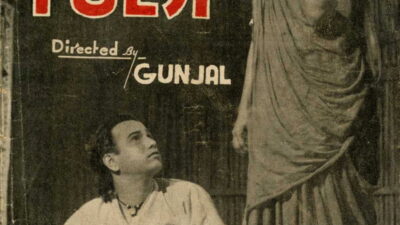
तुलसी (1941) का निर्देशन दादा गुंजल ने किया, संगीत हरिश्चंद्र बाली ने और बोल पंडित फणि ने लिखे। फ़िल्म में त्रिलोक कपूर, शालिनी, श्रीनिवास, नीला, बद्री प्रसाद, जमशेद और अनंत मराठे थे — एक काल-सामाजिक फ़िल्म के लिए पर्याप्त भव्य कलाकार-मंडल। फ़िल्म की बची हुई गीत-सूची, बॉलीवुड हंगामा और संबंधित डेटाबेस द्वारा पुष्ट, में 'मत चली रे नदी किनारे' (वर्तमान शीर्षक का एक रूपांतर) शामिल है, जो इस संगीत-पट्टी में गीत के स्थान की पुष्टि करती है। त्रिलोक कपूर इस समय वह करियर बना रहे थे जो बाद में उन्हें पौराणिक और भक्ति फ़िल्मों में हिंदी सिनेमा के सबसे पहचाने जाने वाले चेहरों में से एक बनाएगा। फ़िल्म का शीर्षक — तुलसी, पवित्र तुलसी के पौधे का संदर्भ — एक घरेलू या भक्ति-ढाँचे का संकेत देता है, जो इस गीत के ग्रामीण-नदी-किनारे के बिंबों से सुसंगत है। फ़िल्म का कोई रिकॉर्डिंग या प्रिंट सार्वजनिक प्रचलन में प्रतीत नहीं होता।
अंग्रेज़ी में पढ़ें · Read in English
Tulsi (1941) was directed by Dada Gunjal with music composed by Harishchandra Bali and lyrics by Pandit Phani. The film starred Trilok Kapoor, Shalini, Srinivas, Neela, Badri Prasad, Jamshed, and Anant Marathe — a substantial ensemble for a period social picture. The surviving song list for the film, confirmed by Bollywood Hungama and related databases, includes 'Mat Chali Re Nadee Kinare' (variant of the present title), confirming the song's place in this soundtrack. Trilok Kapoor was at this stage building the career that would later make him one of Hindi cinema's most identified faces in mythological and devotional films. The film's title — Tulsi, referring to the sacred basil plant — suggests a domestic or devotional framing, consistent with the pastoral-riverbank imagery of this song. No recording or print of the film appears to be in public circulation.
वर्गीकरण
ClassificationGenre
अन्य विवरण
More Details- https://www.bollywoodhungama.com/movie/tulsi/
- https://www.imdb.com/title/tt0216305/
- https://atulsongaday.me/tag/harishchandra-bali/
References
रोचक तथ्य
Margin Notesइस गीत (या इससे मिलते-जुलते संस्करण) की एक यूट्यूब रिकॉर्डिंग ID UW3xA-pcHyo के तहत मौजूद है, जिससे फ़िल्म की सामान्य अल्पज्ञातता के बावजूद इसे सुनना संभव है।
अंग्रेज़ी में पढ़ें · Read in English
A YouTube recording of this song (or a closely related version) exists under the ID UW3xA-pcHyo, making it accessible for listening despite the film's general obscurity.
फ़िल्म में त्रिलोक कपूर मुख्य भूमिका में थे, जिन्होंने आगे चलकर 1950 के दशक की कई पौराणिक फ़िल्मों में भगवान शिव की यादगार भूमिका निभाई — इस दौर में वे सामाजिक फ़िल्मों में अपना शुरुआती करियर बना रहे थे।
अंग्रेज़ी में पढ़ें · Read in English
The film starred Trilok Kapoor, who would go on to play the deity Shiva memorably in several 1950s mythologicals — at this stage he was building his early career in social pictures.
गीत के शीर्षक की पुष्टि बॉलीवुड हंगामा डेटाबेस में इसके 'मत चली रे नदी किनारे' वर्तनी-रूप में सम्मिलित होने से होती है, जो वर्तमान लिप्यंतरण से मेल खाता है।
अंग्रेज़ी में पढ़ें · Read in English
The song title is confirmed by its inclusion in the Bollywood Hungama database under the variant spelling 'Mat Chali Re Nadee Kinare', aligning with the present transliteration.
संगीत निर्देशक हरिश्चंद्र बाली ने 1940 के दशक की शुरुआत की कई बॉम्बे फ़िल्मों में काम किया; यह प्रस्तुति उनकी फ़िल्मोग्राफ़ी के इस दौर की अपेक्षाकृत बेहतर दर्ज प्रविष्टियों में से एक है।
अंग्रेज़ी में पढ़ें · Read in English
Harishchandra Bali, the music director, worked on several Bombay films of the early 1940s; this production represents one of the better-documented entries in his filmography for this period.
नमूना-पट्टी
The Specimen Table| शीर्षक | मैं चली रे नदी किनारे · Mai Chali Re Nadi Kinare |
|---|---|
| फ़िल्म | तुलसी · 1941 |
| वर्ष · युग | 1941 |
| गीतकार | Pandit Phani |
| संगीतकार | Harishchandra Bali |
| स्वरूप | Unknown |
| भाषा | hindi |
| भाव | चुलबुला · रोमांटिक |
| बोल-स्थिति | केवल झलक |
जुड़े हुए पन्ने
Connected Plates · The Graph Made Visibleअटलस में कोई पन्ना अकेला नहीं — इस गीत से जुड़े गीत, कलाकार, फ़िल्म, राग-ताल-विधा, सब यहाँ से खुलते हैं।
कलाकार · The Artists
फ़िल्म · The Film
साझा कीजिए · Share this Plate