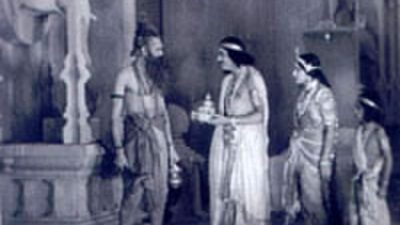
गीत विंग · गीत-पट्टिका · Song Plate
दुश्मन-ए-जान आसमान और मुनहरिफ़ तक़दीर है
Dushman-e-Jaan Aasman Aur Munharif Taqdir Hai
आसमान जान का दुश्मन, तक़दीर मुँह फेरे हुए — जादुई बंधन (1941) का एक नियति-विलाप।
भावतीव्र · उदास
भाषाhindi-urdu गतिधीमी स्वरूपPlayback
श्रेय
The Creditsसूत्र-वाक्य · The Hook
सूत्र-वाक्य
आसमान जान का दुश्मन, तक़दीर मुँह फेरे हुए — जादुई बंधन (1941) का एक नियति-विलाप।
In EnglishThe sky an enemy of life, fate turned away — a song of cosmic despair from Jadui Bandhan (1941).
पट्टिका-लेख
The Monographपरिचय Overview
'दुश्मन-ए-जान आसमान और मुनहरिफ़ तक़दीर है' जादुई बंधन (1941) के लिए दर्ज दस गीतों में से एक है — नानूभाई वकील निर्देशित, संगीत राम गोपाल पांडे का और बोल पंडित अनुज के। भारी उर्दू-फ़ारसी शीर्षक — आसमान शत्रु, नियति मुँह फेरे — एक निराशा-भरे ग़ज़ल-शैली गीत की ओर संकेत करता है जो तक़दीर और परिस्थिति की निष्ठुरता को संबोधित करता है।
अंग्रेज़ी में पढ़ें · Read in English
'Dushman-e-Jaan Aasman Aur Munharif Taqdir Hai' is one of ten songs documented for Jadui Bandhan (1941), directed by Nanubhai Vakil with a score by Ram Gopal Pandey and lyrics by Pandit Anuj. The heavily Urdu-Persian title — the heavens hostile, destiny averted — points to a despairing ghazal-style number addressing fate and the cruelty of circumstance.
काव्य The Poetry
यह शीर्षक 1940 के दशक के आरंभिक बम्बई फ़िल्म-गीत शब्दावली में सर्वाधिक घनी फ़ारसियत रखने वाले में से एक है। 'दुश्मन-ए-जान' (जीवन/आत्मा का शत्रु, फ़ारसी-उर्दू इज़ाफ़त बनावट में) आसमान को एक व्यक्तिगत विरोधी के रूप में संबोधित करता है; 'आसमान' का शास्त्रीय उर्दू काव्य की निराशावादी ब्रह्माण्डविज्ञान में वक्ता के हित के विरुद्ध एक ब्रह्मांडीय शक्ति के रूप में प्रयोग प्रचलित है। 'मुनहरिफ़ तक़दीर' दुर्लभ अरबी-व्युत्पन्न 'मुनहरिफ़' (विचलित, मुड़ा हुआ, सही पथ से भटका) का तक़दीर पर प्रयोग करता है — जिसका अर्थ है वह भाग्य जिसने अपना मुँह फेर लिया हो, ब्रह्मांडीय परित्याग की एक विशेष रूप से परिष्कृत अभिव्यक्ति। जादुई बंधन (1941) के लिए पंडित अनुज की शब्द-शब्दावली लगातार इस उच्च फ़ारसी-उर्दू रजिस्टर से खींचती है, ऐसे शीर्षक उत्पन्न करती है जिनमें लगभग विद्वत्तापूर्ण घनत्व है। धीमा ताल और ग़ज़ल शैली का वर्गीकरण एक लयात्मक रूप से संचालित फ़िल्म-गीत के बजाय सुविचारित, छंदशास्त्रीय रूप से सावधान प्रस्तुति के गीत की ओर इशारा करता है।
अंग्रेज़ी में पढ़ें · Read in English
The title is among the most densely Persianate in the Bombay film-song vocabulary of the early 1940s. 'Dushman-e-jaan' (enemy of life/soul, using the Persian-Urdu izafat construction) addresses the sky as a personal adversary; 'aasman' (the sky) as a cosmic force opposed to the speaker's wellbeing is a trope rooted in classical Urdu poetry's pessimistic cosmology. 'Munharif taqdir' employs the rare Arabic-derived 'munharif' (deflected, turned away, deviated from the right path) applied to fate — meaning a destiny that has turned its face away, a particularly refined expression of cosmic abandonment. Pandit Anuj's lyric vocabulary for Jadui Bandhan (1941) consistently draws from this high Persian-Urdu register, producing titles that have an almost scholarly density. The slow tempo and ghazal genre classification point to a number of deliberate, metrically careful delivery rather than a rhythmically driven film-song.
कहानी The Story
जादुई बंधन (1941) नानूभाई वकील के निर्देशन में एक फ़ैंटेसी फ़िल्म के रूप में बनी थी, जिसमें सरोजिनी, शिराज़ और बाबूराव पहलवान थे। राम गोपाल पांडे ने पंडित अनुज के बोलों पर दस गीतों का संगीत रचा। फ़िल्म की फ़ैंटेसी संरचना के भीतर 'दुश्मन-ए-जान आसमान और मुनहरिफ़ तक़दीर है' जैसा ब्रह्मांडीय निराशा का गीत नाटकीय निम्न-बिंदु का काम करता — वह क्षण जिसमें तक़दीर और आसमान दोनों नायक के विरुद्ध एक हो गए लगते हैं, जिससे कथानक की अलौकिक बाधाएँ साहसिक-मनोरंजन के बजाय ब्रह्मांडीय उत्पीड़न जैसी लगती हैं। ग़ज़ल-विलाप गीत बम्बई की फ़ैंटेसी फ़िल्मों में मानक भावनात्मक आधार थे, यह सुनिश्चित करते हुए कि तमाशे को वास्तविक भावनात्मक संलग्नता के क्षणों से विराम मिले। यह जादुई बंधन का इस बैच में दूसरा गीत है — 'एक बेवफ़ा से नाहक़' के साथ — यह सुझाता है कि फ़िल्म के विलाप-गीत उसके सर्वाधिक सूचीबद्ध गीतों में थे।
अंग्रेज़ी में पढ़ें · Read in English
Jadui Bandhan (1941) was directed by Nanubhai Vakil as a fantasy film, starring Sarojini, Shiraz, and Baburao Pahelwan. Ram Gopal Pandey composed the ten-song score to lyrics by Pandit Anuj. Within the film's fantasy structure, a number of cosmic despair such as 'Dushman-e-Jaan Aasman Aur Munharif Taqdir Hai' would serve as the dramatic low point — the moment in which fate and heaven appear to have combined against the protagonist, making the supernatural obstacles of the plot feel like cosmic persecution rather than mere adventure. Ghazal-lament numbers were standard emotional anchors in Bombay fantasy films, ensuring the spectacle was punctuated by moments of genuine emotional investment. This is the second song from Jadui Bandhan in the present batch, alongside 'Ek Bewafa Se Nahak Hum Dil Ko Laga Baithe,' suggesting the film's lament numbers were among its most catalogued.
वर्गीकरण
Classification- Tempo
- Slow
Genre
अन्य विवरण
More Details- https://en.wikipedia.org/wiki/Jadui_Bandhan
- https://www.imdb.com/title/tt0376679/
- https://www.cinestaan.com/movies/jadui-bandhan-840/cast-crew
References
रोचक तथ्य
Margin Notesजादुई बंधन (1941) का निर्देशन नानूभाई वकील ने किया था, जिसमें सरोजिनी, शिराज़ और बाबूराव पहलवान ने एक फैंटेसी-एडवेंचर कथानक में अभिनय किया।
अंग्रेज़ी में पढ़ें · Read in English
Jadui Bandhan (1941) was directed by Nanubhai Vakil, starring Sarojini, Shiraz, and Baburao Pahelwan in a fantasy-adventure setting.
'मुनहरिफ़' (मार्ग से भटका हुआ/विचलित) शब्द अरबी मूल का है और मुख्यधारा के हिंदी फ़िल्म-गीत शीर्षकों में कम ही मिलता है; यहां इसका प्रयोग पंडित अनुज की उच्च फ़ारसी-उर्दू काव्य-शब्दावली पर पकड़ को दर्शाता है।
अंग्रेज़ी में पढ़ें · Read in English
The word 'munharif' (turned aside/deflected from the path) is an Arabic-derived term rarely found in mainstream Hindi film-song titles; its use here signals Pandit Anuj's command of high Persian-Urdu poetic vocabulary.
फ़िल्म के लिए राम गोपाल पांडे के संगीत ने ग़ज़ल शैली की चिंतनशील परंपराओं को 1940 के दशक की बॉम्बे फैंटेसी फ़िल्मों की वाद्यवृंद-संबंधी अपेक्षाओं के साथ जोड़ा।
अंग्रेज़ी में पढ़ें · Read in English
Ram Gopal Pandey's score for the film combined the ghazal idiom's meditative conventions with the orchestral expectations of 1940s Bombay fantasy production.
फ़िल्म में ग़ज़ल-शैली के दो विलाप-गीत थे — यह गीत और 'एक बेवफ़ा से नाहक हम दिल को लगा बैठे' — जो इसके दस-गीतों के संगीत में निराशा-भरे गीतों की एक जोड़ी बनाते हैं।
अंग्रेज़ी में पढ़ें · Read in English
The film carried two ghazal-register lament numbers — this song and 'Ek Bewafa Se Nahak Hum Dil Ko Laga Baithe' — forming a pair of despairing numbers within its ten-song soundtrack.
नमूना-पट्टी
The Specimen Table| शीर्षक | दुश्मन-ए-जान आसमान और मुनहरिफ़ तक़दीर है · Dushman-e-Jaan Aasman Aur Munharif Taqdir Hai |
|---|---|
| फ़िल्म | जादुई बंधन · 1941 |
| वर्ष · युग | 1941 |
| गीतकार | Pandit Anuj (S. L. Shrivastav) |
| संगीतकार | Ram Gopal Pandey |
| स्वरूप | Playback |
| गति | धीमी |
| भाषा | hindi-urdu |
| भाव | तीव्र · उदास |
| बोल-स्थिति | केवल झलक |
जुड़े हुए पन्ने
Connected Plates · The Graph Made Visibleअटलस में कोई पन्ना अकेला नहीं — इस गीत से जुड़े गीत, कलाकार, फ़िल्म, राग-ताल-विधा, सब यहाँ से खुलते हैं।
कलाकार · The Artists
फ़िल्म · The Film
साझा कीजिए · Share this Plate