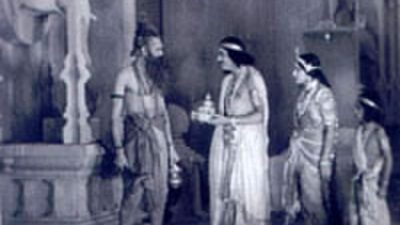
गीत विंग · गीत-पट्टिका · Song Plate
फूलों में कोई फूले
Phulo Me Koi Phoole
'फूलों में कोई फूले' — मेरी ख़्वाहिश (1941) का उपवन-रूपक गीत।
भावदार्शनिक · रोमांटिक
भाषाhindi गतिमध्यम स्वरूपUnknown
श्रेय
The Creditsसूत्र-वाक्य · The Hook
सूत्र-वाक्य
'फूलों में कोई फूले' — मेरी ख़्वाहिश (1941) का उपवन-रूपक गीत।
In English'Among flowers, some bloom' — a garden-metaphor lyric from Meri Khwahish (1941).
पट्टिका-लेख
The Monographपरिचय Overview
मेरी ख़्वाहिश (1941) के आठ गीतों के संगीत से उपवन-बिंब पर रचा एक गीत, संगीत वसंत और शांति कुमार का, बोल बालम परदेसी और ए. के. सिंधु के। खिलते फूल की कल्पना — भाग्य, सौंदर्य और नियति का एक उपवन में असमान वितरण — उस युग के सामाजिक-फ़िल्म गीतों में आम कोमल-दार्शनिक स्वर लिए हुए है। फ़िल्म के गीतों के गायक उपलब्ध संदर्भों में दर्ज नहीं हैं।
अंग्रेज़ी में पढ़ें · Read in English
A song built on garden imagery from the eight-song score of Meri Khwahish (1941), with music by Vasant and Shanti Kumar and lyrics by Baalam Pardesi and A. K. Sindhu. The conceit of the blooming flower — fortune, beauty and fate distributed unevenly across a garden — carries the gently philosophical tone common to the social-film songbook of the era. The film's per-song singers are not documented in available references.
काव्य The Poetry
'फूलों में कोई फूले' का शीर्षक एक प्राचीन उत्तर भारतीय काव्य-संकल्पना को समेटता है — मानव-जीवन के उपवन में हर फूल अपनी परिपूर्णता को नहीं पाता। इस फ़िल्म के सभी गीतों के बोल बालम परदेसी और ए.के. सिंधु ने मिलकर लिखे — दो गीतकारों का संयुक्त श्रेय उस दौर में अपने आप में असामान्य था। गीत के मूल पाठ के अभाव में, शीर्षक का बिंब ही बोलता है: उपवन एक सामाजिक रूपक के रूप में — यह परंपरा कबीर के दोहों से लेकर स्वतंत्रता-पूर्व लोकप्रिय गीत की व्यंग्यात्मक शायरी तक फैली है। 'कोई' शब्द उपवन में आकस्मिकता और संयोग को स्थान देता है — खिलना सार्वजनिक नहीं, अर्जित नहीं, पूरी तरह व्याख्यायित भी नहीं। यह दार्शनिक स्वर — शांत, अनुद्वेगी — स्वर्ण-युग से पहले के फ़िल्मी गीत की सबसे विचारशील विशेषता है। शारीरिक दृश्य (फूलों का खिलना) और अस्तित्वगत निष्कर्ष (कुछ क्यों फलते-फूलते हैं, अन्य क्यों नहीं) का यह युग्म सामाजिक असमानता को मनोरंजन के ढाँचे में व्यक्त करने का एक सामान्य माध्यम था।
अंग्रेज़ी में पढ़ें · Read in English
The title 'Phulo Me Koi Phoole' (Among flowers, some bloom) embeds a centuries-old North Indian poetic conceit — that in a garden of human lives, not every flower reaches its potential. Baalam Pardesi and A.K. Sindhu were the joint lyricists of this and the other songs in the Meri Khwahish (1941) score, a collaborative authorship unusual for the period. Without the surviving lyric text, the title's imagery speaks for itself: the garden as a social metaphor, a tradition running from Kabir's dohas to the satirical verse of pre-Independence popular song. The word 'koi' (someone, some) introduces contingency and chance into the garden — bloom is not universal, not earned, not even fully explained. This philosophical note — quiet, unembittered — characterises the pre-Golden-Era filmi lyric at its most thoughtful. The pairing of physical description (flowers blooming) with existential inference (why some flourish and others do not) was a common mode for expressing social inequality within the constraints of a song form designed to entertain first and edify second.
कहानी The Story
मेरी ख़्वाहिश (1941) एक हिंदी सामाजिक फ़िल्म थी जिसका संगीत वसंत और शांति कुमार ने मिलकर रचा था — यह दोहरा संगीत-श्रेय उस दौर के छोटे स्टूडियो की कार्यशाला-संस्कृति को दर्शाता है, जहाँ एक अकेला नाम पूरे संगीत का स्वामित्व लेने की बजाय कई हाथ मिलकर काम करते थे। फ़िल्म के आठ गीत बालम परदेसी और ए.के. सिंधु ने संयुक्त रूप से लिखे — दोनों गीतकार स्वतंत्रता-पूर्व हिंदी सिनेमा के बचे हुए अभिलेखों में अन्यत्र बहुत कम दर्ज हैं। उस दौर की अधिकांश सामाजिक फ़िल्मों की तरह मेरी ख़्वाहिश संभवतः घरेलू या प्रेम-संबंधी उलझनों पर केंद्रित थी, जिसमें गीत भावनात्मक और दार्शनिक टिप्पणी का प्राथमिक माध्यम था। इसे बनाने वाले स्टूडियो की पुष्टि उपलब्ध स्रोतों में नहीं होती, और किसी ज्ञात पुरालेख में फ़िल्म की प्रिंट सामने नहीं आई है। 'फूलों में कोई फूले' ने अपने उपवन-रूपक के साथ संभवतः एक चिंतनशील विराम का काम किया — वह दार्शनिक पल जो 1941 की सामाजिक फ़िल्म किसी पात्र के निजी दर्द को साझा मानवीय अनुभव में बदलने के लिए बार-बार उपयोग करती थी।
अंग्रेज़ी में पढ़ें · Read in English
Meri Khwahish (My Desire, 1941) was a Hindi social film whose score was jointly composed by Vasant and Shanti Kumar — a dual composing credit reflecting the workshop culture common to smaller studios, where multiple hands shaped a soundtrack rather than a single name claiming full authorship. The film's eight songs were written jointly by Baalam Pardesi and A.K. Sindhu, two lyricists who are otherwise scarcely documented in the surviving record of pre-Independence Hindi cinema. As with most social films of the period, Meri Khwahish appears to have centred on domestic or romantic predicaments, using song as the primary vehicle for emotional and philosophical commentary. No studio identification has been confirmed in accessible sources, and no print of the film has surfaced in any known archive. 'Phulo Me Koi Phoole,' with its garden metaphor, probably served as a reflective interlude within a domestic drama — a moment of philosophical stepping-back that the social film of 1941 regularly deployed to generalise a character's specific pain into a shared human experience.
वर्गीकरण
Classification- Tempo
- Medium
Genre
अन्य विवरण
More Details- hindigeetmala.net/movie/meri_khwahish.htm
- muvyz.com/moviepage/lh601117
- en.wikipedia.org/wiki/Meri_Khwahish
References
रोचक तथ्य
Margin Notesमेरी ख़्वाहिश (1941) में दोहरा संगीतकार श्रेय है — वसंत और शांति कुमार — यह व्यवस्था बड़े स्टूडियो की प्रस्तुतियों के लिए असामान्य थी, लेकिन छोटी इकाइयों में आम थी, जहां कार्य एक संगीत-रचना टीम में बांटे जाते थे।
अंग्रेज़ी में पढ़ें · Read in English
Meri Khwahish (1941) carries a dual composer credit — Vasant and Shanti Kumar — an arrangement unusual for major studio productions but common in smaller operations where tasks were shared across a composing team.
फ़िल्म के आठ गीतों का श्रेय भी संयुक्त रूप से दो गीतकारों, बालम परदेसी और ए.के. सिंधु, को दिया गया, जिससे संगीत और गीत दोनों ही सहयोग का परिणाम बन गए — 1940 के दशक की शुरुआत के हिंदी सिनेमा में एक दुर्लभ दोहरा-दोहरा श्रेय व्यवस्था।
अंग्रेज़ी में पढ़ें · Read in English
The film's eight songs were also jointly credited to two lyricists, Baalam Pardesi and A.K. Sindhu, making both the music and the lyrics the product of collaboration — a double-dual credit arrangement rare in Hindi cinema of the early 1940s.
मेरी ख़्वाहिश के दो गीत एक वानस्पतिक बिंब-रूपक साझा करते हैं: 'फूलों में कोई फूले' (फूलों का खिलना) और 'फूल गेंदा से हार' (गेंदे के फूलों की माला) — जो साउंडट्रैक में एक जानबूझकर बनाई गई विषयगत निरंतरता की ओर इशारा करता है।
अंग्रेज़ी में पढ़ें · Read in English
Two songs from Meri Khwahish share a botanical imagery motif: 'Phulo Me Koi Phoole' (flowers blooming) and 'Phool Genda Se Haar' (a garland of marigolds) — suggesting a deliberate thematic through-line across the soundtrack.
नमूना-पट्टी
The Specimen Table| शीर्षक | फूलों में कोई फूले · Phulo Me Koi Phoole |
|---|---|
| फ़िल्म | मेरी ख़्वाहिश · 1941 |
| वर्ष · युग | 1941 |
| गीतकार | बालम परदेसी, A. K. Sindhu |
| संगीतकार | Vasant, Shanti Kumar |
| स्वरूप | Unknown |
| गति | मध्यम |
| भाषा | hindi |
| भाव | दार्शनिक · रोमांटिक |
| बोल-स्थिति | केवल झलक |
जुड़े हुए पन्ने
Connected Plates · The Graph Made Visibleअटलस में कोई पन्ना अकेला नहीं — इस गीत से जुड़े गीत, कलाकार, फ़िल्म, राग-ताल-विधा, सब यहाँ से खुलते हैं।
कलाकार · The Artists
फ़िल्म · The Film
साझा कीजिए · Share this Plate