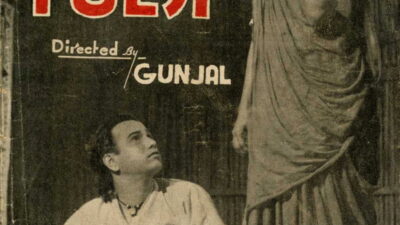
गीत विंग · गीत-पट्टिका · Song Plate
मैं तुलसी श्री कृष्ण को प्यारी
Mai Tulsi Shri Krishna Ko Pyari
फ़िल्म का शीर्षक-भजन — तुलसी स्वयं को श्रीकृष्ण की प्रिय घोषित करती है।
भावभक्ति · आध्यात्मिक
भाषाhindi स्वरूपUnknown
श्रेय
The Creditsसूत्र-वाक्य · The Hook
सूत्र-वाक्य
फ़िल्म का शीर्षक-भजन — तुलसी स्वयं को श्रीकृष्ण की प्रिय घोषित करती है।
In EnglishThe film's title bhajan — Tulsi declares herself beloved of Krishna.
पट्टिका-लेख
The Monographपरिचय Overview
'मैं तुलसी श्री कृष्ण को प्यारी' तुलसी (1941) का शीर्षक-परिभाषित भजन है, जिसका संगीत हरिश्चंद्र बाली का और बोल पंडित फणि के हैं। यह सीधे फ़िल्म के भक्ति-विषय पर आधारित है — पवित्र तुलसी श्रीकृष्ण की प्रिया, जो वैष्णव परंपरा का एक आधार है। संगीत-पट्टी के विषयगत केंद्र के रूप में यह उस भक्ति-मुहावरे को साकार करता है जिसने इस चित्र को आधार दिया। उपलब्ध स्रोतों में गायकों के नाम दर्ज नहीं हैं।
अंग्रेज़ी में पढ़ें · Read in English
'Mai Tulsi Shri Krishna Ko Pyari' is the title-defining bhajan of Tulsi (1941), with music by Harishchandra Bali and lyrics by Pandit Phani. It draws directly on the devotional theme of the film — the sacred tulsi (basil) as the beloved of Krishna, a cornerstone of Vaishnava tradition. As the thematic centre of the soundtrack it embodies the bhakti idiom that anchored the picture. Singer credits are not documented in surviving sources.
काव्य The Poetry
गीत की केंद्रीय संकल्पना — तुलसी स्वयं प्रथम पुरुष में श्रीकृष्ण की प्रिया के रूप में बोलती है — सदियों की वैष्णव भक्ति-कविता से उद्भूत है। वार्षिक तुलसी-विवाह अनुष्ठान में पवित्र तुलसी का भगवान विष्णु या कृष्ण से विधिपूर्वक विवाह होता है; यह गीत उस मिथक को सक्रिय करता है — पौधे को ही वाणी देकर। पंडित फणि, जिन्होंने फ़िल्म का समस्त वाचिक-ढाँचा रचा, निर्गुण और सगुण भक्ति परंपराओं के पदों के ढंग पर एक शास्त्रीय भक्ति-शैली में काम किया — बोलचाल के फ़िल्मी मुहावरे से नहीं। 'प्यारी' (प्रिया) शब्द वियोगिनी परंपरा का पूरा भार वहन करता है — तुलसी को केवल एक पवित्र वस्तु के रूप में नहीं बल्कि एक तड़पती भक्त के रूप में स्थापित करता है जिसकी दिव्य प्रेम की अभिव्यक्ति मानवीय विरह की भाषा में है। ऐसे गीत का गायन श्रोताओं के लिए स्वयं एक भक्ति-कृत्य था — वे तुलसी के साथ उस घोषणा में सम्मिलित होने के लिए आमंत्रित थे और उस सम्मिलन के माध्यम से अपनी भक्ति को साकार करते थे। उद्घोषणात्मक प्रथम पुरुष — 'मैं' — की एक विशेष शक्ति है: यह एक याचना नहीं बल्कि पहचान का एक कथन है।
अंग्रेज़ी में पढ़ें · Read in English
The lyric's central conceit — the Tulsi plant speaking in the first person as the beloved of Krishna — draws on centuries of Vaishnava bhakti poetry. In the annual Tulsi Vivah ceremony, the sacred basil is ritually wed to Lord Vishnu or Krishna; the song activates this mythology by giving voice to the plant itself. Pandit Phani, who wrote the film's entire textual fabric, worked in a classical bhakti register rather than the colloquial film-song idiom: the address is direct, devotional, and formally structured in the manner of the padas of the nirgun and sagun bhakti traditions. The word 'pyari' (beloved) carries the full weight of the virahini tradition — positioning Tulsi not merely as a sacred object but as an ardent devotee whose love for the divine is expressed in the language of human longing. Singing such a song was itself a devotional act for audiences, who were invited to join Tulsi in her declaration and, through that joining, to enact their own bhakti. The declarative first person — 'mai' (I am) — has a particular force: it is a statement of identity, not a petition.
कहानी The Story
तुलसी (1941) दादा गुंजल द्वारा निर्देशित एक भक्ति-फ़िल्म थी, जो वैष्णव परंपरा की पवित्र तुलसी के इर्द-गिर्द बुनी गई थी। फ़िल्म में मुख्य भूमिका में त्रिलोक कपूर और नीला थे; सहायक कलाकारों में पंडित बद्री प्रसाद शामिल थे — जो उसी वर्ष वनमाला (1941) के लिए संगीत भी दे रहे थे — और अनंत मराठे थे। संगीत-निर्देशक हरिश्चंद्र बाली बंबई-कलकत्ता परिपथ के अनुभवी संगीतकार थे, जिन्होंने के.एल. सहगल की विख्यात रचना 'बाबुल मोरा नैहर छूटो ही जाए' (एचएमवी, 1935) का संयोजन किया था। पंडित फणि को केवल गीतकार के रूप में नहीं बल्कि फ़िल्म के लेखक और संवाद-लेखक के रूप में भी श्रेय दिया गया था, जिसने पटकथा और गीतों के बीच एक असाधारण एकीकृत रचनात्मक दृष्टि बनाई। 'मैं तुलसी श्री कृष्ण को प्यारी' शीर्षक-परिभाषित भजन है — स्वयं तुलसी श्रीकृष्ण की प्रिया के रूप में अपनी स्थिति घोषित करती है। उस दौर की भक्ति-फ़िल्में, जो बंबई के साधारण स्टूडियो-बजट पर बनती थीं, अपने संगीत-पट्टी पर भक्ति-भाव संप्रेषित करने के लिए निर्भर थीं: यह शीर्षक-भजन एक तुलसी-विवाह-मिथक पर आधारित कथा के ध्वनि और आध्यात्मिक केंद्र के रूप में स्थापित था।
अंग्रेज़ी में पढ़ें · Read in English
Tulsi (1941) was a devotional film directed by Dada Gunjal, centring on the sacred Tulsi plant of Vaishnava tradition. The film starred Trilok Kapoor in the lead role alongside Neela; the supporting cast included Pandit Badri Prasad — who also composed music for the contemporaneous Vanmala (1941) — and Anant Marathe. Harishchandra Bali, an experienced Bombay–Calcutta-circuit composer who had arranged K.L. Saigal's celebrated 'Babul Mora Naihar Chhooto' (HMV, 1935), scored the film. Pandit Phani was credited not merely as lyricist but as the film's writer and dialogue-writer as well, creating an unusually unified textual vision across the screenplay and the songs. 'Mai Tulsi Shri Krishna Ko Pyari' is the title-defining bhajan — the sacred basil plant itself declaring its status as the beloved of Sri Krishna. Devotional films of the period, produced on modest studio budgets in Bombay, depended on their soundtrack to carry bhakti sentiment: the title bhajan was the film's sonic and spiritual anchor, placed at the conceptual heart of a narrative built around the Tulsi Vivah mythology.
वर्गीकरण
ClassificationGenre
अन्य विवरण
More Details- https://en.wikipedia.org/wiki/Naushad
- https://atulsongaday.me/tag/harishchandra-bali/
- https://www.imdb.com/title/tt0216305/
- https://www.hindilyrics4u.com/movie/tulsi_1941.htm
- https://www.indianfilmhistory.com/movie-details/tulsi
References
रोचक तथ्य
Margin Notesतुलसी (1941) का निर्देशन दादा गुंजाल ने किया और इसमें त्रिलोक कपूर मुख्य भूमिका में थे, जो आगे चलकर 1940 और 1960 के दशक तक हिंदी सिनेमा के सबसे पहचाने जाने वाले चरित्र अभिनेताओं में से एक बने।
अंग्रेज़ी में पढ़ें · Read in English
Tulsi (1941) was directed by Dada Gunjal and starred Trilok Kapoor, who went on to become one of Hindi cinema's most recognizable character actors through the 1940s and 1960s.
पंडित फणि ने तुलसी (1941) में लेखक, संवाद-लेखक और गीतकार — तीनों भूमिकाएँ निभाईं — यह असामान्य त्रिस्तरीय भूमिका फ़िल्म को उसकी नाटकीय और संगीतमय सामग्री में एक एकीकृत साहित्यिक पहचान देती थी।
अंग्रेज़ी में पढ़ें · Read in English
Pandit Phani served as writer, dialogue-writer and lyricist of Tulsi (1941) — an unusual triple role that gave the film an integrated textual identity across its dramatic and musical content.
फ़िल्म के संगीतकार हरिश्चंद्र बाली ने इससे पहले के.एल. सहगल के लिए 'बाबुल मोरा नैहर छूटो ही जाए' (1935) की संगीत-संरचना की थी — यह रिकॉर्डिंग प्रारंभिक सवाक् युग की सबसे प्रतिष्ठित एचएमवी सिंगलों में से एक बनी।
अंग्रेज़ी में पढ़ें · Read in English
Harishchandra Bali, the film's composer, had earlier arranged 'Babul Mora Naihar Chhooto Hi Jaaye' (1935) for K.L. Saigal — a recording that became one of the most celebrated HMV singles of the early talkie era.
पवित्र तुलसी के पौधे की धार्मिक भूमिका — वार्षिक तुलसी विवाह समारोह में विष्णु से विधिवत विवाह — फ़िल्म की कथा और इस शीर्षक भजन, दोनों का भक्ति-केंद्र बनती है।
अंग्रेज़ी में पढ़ें · Read in English
The sacred Tulsi plant's theological role — ritually married to Vishnu in the annual Tulsi Vivah ceremony — forms the devotional core of both the film's narrative and this title bhajan.
नमूना-पट्टी
The Specimen Table| शीर्षक | मैं तुलसी श्री कृष्ण को प्यारी · Mai Tulsi Shri Krishna Ko Pyari |
|---|---|
| फ़िल्म | तुलसी · 1941 |
| वर्ष · युग | 1941 |
| गायक | बद्री प्रसाद |
| गीतकार | Pandit Phani |
| संगीतकार | Harishchandra Bali |
| स्वरूप | Unknown |
| भाषा | hindi |
| भाव | भक्ति · आध्यात्मिक |
| बोल-स्थिति | केवल झलक |
जुड़े हुए पन्ने
Connected Plates · The Graph Made Visibleअटलस में कोई पन्ना अकेला नहीं — इस गीत से जुड़े गीत, कलाकार, फ़िल्म, राग-ताल-विधा, सब यहाँ से खुलते हैं।
कलाकार · The Artists
फ़िल्म · The Film
साझा कीजिए · Share this Plate