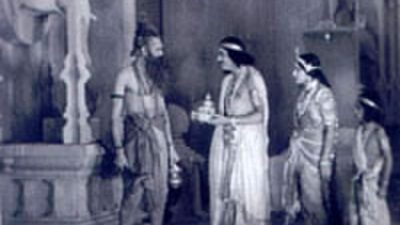
गीत विंग · गीत-पट्टिका · Song Plate
काश मैं कोयलिया बन जाती
Kash Main Koyaliya Ban Jati
काश मैं कोयलिया बन जाती — जादुई बंधन (1941) का एक उदास तृष्णा-गीत।
भावWistful · Yearning
भाषाhindi गतिमध्यम स्वरूपएकल महिला
श्रेय
The Creditsसूत्र-वाक्य · The Hook
सूत्र-वाक्य
काश मैं कोयलिया बन जाती — जादुई बंधन (1941) का एक उदास तृष्णा-गीत।
In EnglishWould that I were a koyal — a wistful longing-song from Jadui Bandhan (1941).
पट्टिका-लेख
The Monographपरिचय Overview
'काश मैं कोयलिया बन जाती' जादुई बंधन (1941) के लिए दर्ज दस गीतों में से एक है — नानूभाई वकील निर्देशित, संगीत राम गोपाल पांडे का और बोल पंडित अनुज के। 'काश मैं कोयल बन जाती' की कामना कोयल को मुक्त, करुण अभिव्यक्ति के प्रतीक के रूप में जगाती है — उस दौर में आम लोक-रोमांटिक शैली में एक उदास नायिका का एकल।
अंग्रेज़ी में पढ़ें · Read in English
'Kash Main Koyaliya Ban Jati' is one of the ten songs documented for Jadui Bandhan (1941), directed by Nanubhai Vakil with music by Ram Gopal Pandey and lyrics by Pandit Anuj. The wish 'if only I were a koyal (cuckoo)' invokes the songbird as an emblem of free, plaintive expression — a wistful heroine's solo in the folk-romantic vein common to the period.
काव्य The Poetry
कोयलिया (कोयल) पपीहे के साथ उत्तर भारतीय पद्य के दो सबसे प्रसिद्ध पक्षियों में से एक है। जहाँ पपीहे की पुकार मानसून और विरह का संकेत देती है, वहाँ कोयल स्वयं गीत की मिठास और प्रवाह का प्रतीक है — बेरोकटोक, हृदयस्पर्शी अभिव्यक्ति का आदर्श। 'काश मैं कोयलिया बन जाती' की कामना केवल मुक्ति की इच्छा नहीं है बल्कि सुंदर गाने और सुने जाने की स्वतंत्रता की इच्छा है — एक स्त्री-स्वर से गाई जाने पर यह एक विशेष रूप से स्त्रैण अभिव्यक्ति बन जाती है जो उस आवाज़ के लिए आकांक्षा व्यक्त करती है जो भेदती है, हिलाती है, रोकी नहीं जाती। गीतकार पंडित अनुज हिंदी फ़िल्म-गीत की लोक-प्रेरित देशज परंपरा में काम करते थे जहाँ ऐसे पक्षी-कामना के रूपक रूपांतरण की लालसा व्यक्त करने के स्थापित उपकरण थे। शीर्षक में 'कोयलिया' का प्रयोग — 'कोयल' का कोमल, स्नेही रूप — इस लालसा को कुछ छोटा और व्यक्तिगत बनाता है, जैसे इच्छा पक्षी की शक्ति के लिए नहीं बल्कि उसकी आत्मीयता के लिए है — वह छोटी-सी आवाज़ जो कान के पास बोले, कुछ ऐसा कहे जो शब्दों के लिए बहुत कोमल हो।
अंग्रेज़ी में पढ़ें · Read in English
The koyaliya (cuckoo, koyal) is, alongside the papiha, the two most storied birds in North Indian verse. While the papiha's cry signals monsoon and separation, the koyal represents the sweetness and fluency of song itself — the ideal of effortless, heartfelt expression. To wish 'if only I were a cuckoo' ('kash main koyaliya ban jati') is to desire not just freedom but the freedom to sing beautifully and be heard — a specifically feminine articulation when sung by a woman's voice, expressing the aspiration toward a voice that pierces, that moves, that is not stopped. Pandit Anuj, the lyricist, worked within the folk-inspired vernacular tradition of Hindi film song where such bird-wish motifs were established devices for expressing the longing for transformation. The title's use of 'koyaliya' — the diminutive, endearing form of 'koyal' — softens the longing into something small and personal, as if the wish is not for the bird's power but for its intimacy, its small voice close to the ear, expressing something too tender for words.
कहानी The Story
जादुई बंधन (1941) का निर्देशन नानूभाई वकील (23 मई 1902 – 29 दिसंबर 1980) ने किया था, जो एक अग्रणी गुजराती-मूल के फ़िल्मकार थे जो मूक-युग से हिंदी फ़िल्में बना रहे थे। फ़िल्म में सरोजिनी, शिराज़ और पहलवान-से-अभिनेता बनने वाले बाबूराव पहलवान थे — उस दौर की फ़ैंटेसी और साहसिक फ़िल्मों की उदार कलाकार-मंडलियों को प्रतिबिम्बित करते हुए। संगीत राम गोपाल पांडे ने रचा और बोल पंडित अनुज के थे। 'जादुई बंधन' शीर्षक ही इसका स्वर निर्धारित करता है: एक फ़ैंटेसी-साहसिक फ़िल्म जिसमें जादुई शक्तियाँ पात्रों को बाँधती हैं — एक ऐसी शैली जो शानदार दृश्यों और लालसा व आश्चर्य के गीतों दोनों की अनुमति देती थी। ऐसी फ़िल्म में 'काश मैं कोयलिया बन जाती' नायिका का विरह-गीत रहा होगा — वह आत्मनिरीक्षी एकल जिसमें एक स्त्री पात्र की रूपांतरण और स्वतंत्रता की इच्छा काव्य के सबसे पुराने माध्यम से व्यक्त होती है — पक्षी-कामना के रूपक से।
अंग्रेज़ी में पढ़ें · Read in English
Jadui Bandhan (1941) was directed by Nanubhai Vakil (23 May 1902 – 29 December 1980), a pioneering Gujarati-origin filmmaker who had been making Hindi films since the silent era. The film starred Sarojini, Shiraz, and the wrestler-turned-actor Baburao Pahelwan — a roster reflecting the eclectic casts of fantasy and adventure films of the period. Music was composed by Ram Gopal Pandey with lyrics by Pandit Anuj, and the film's title 'Jadui Bandhan' (Magical Bondage) sets its tone: a fantasy-adventure in which magical forces bind the characters, a genre that allowed for both spectacular set-pieces and songs of yearning and wonder. Within such a film, 'Kash Main Koyaliya Ban Jati' would have served as the heroine's longing number — the introspective solo in which a female character's desire for transformation and freedom is expressed through the oldest of poetic vehicles, the bird-wish. Nanubhai Vakil directed extensively through the 1950s, making him one of the longer-lived professional directors of the 1930s generation.
वर्गीकरण
Classification- Tempo
- Medium
Genre
अन्य विवरण
More Details- https://en.wikipedia.org/wiki/Jadui_Bandhan
- https://en.wikipedia.org/wiki/Nanubhai_Vakil
- https://www.imdb.com/title/tt0376679/
References
रोचक तथ्य
Margin Notesनिर्देशक नानूभाई वकील (1902-1980) मूक युग से ही हिंदी फ़िल्में बना रहे थे और 1950 के दशक तक निर्देशन करते रहे — वे भारतीय सिनेमा में 1930 के दशक की पीढ़ी के सबसे लंबे समय तक सक्रिय रहे निर्देशकों में से एक थे।
अंग्रेज़ी में पढ़ें · Read in English
Director Nanubhai Vakil (1902–1980) had been making Hindi films since the silent era and continued directing through the 1950s — one of the longest-active directors of the 1930s generation in Indian cinema.
जादुई बंधन (1941) की कलाकार-मंडली में बाबूराव पहलवान भी शामिल थे, जो पहलवानी से अभिनय में आए थे — यह उस दौर की उस प्रथा को दर्शाता है, जिसमें साहसिक और फंतासी शैली की फ़िल्मों में प्रशिक्षित अभिनेताओं के साथ-साथ शारीरिक रूप से सक्षम कलाकारों को भी भूमिकाएँ दी जाती थीं।
अंग्रेज़ी में पढ़ें · Read in English
The cast of Jadui Bandhan (1941) included Baburao Pahelwan, a wrestler-turned-actor, reflecting the period's practice of casting physical performers in the adventure and fantasy genres alongside trained actors.
कोयल संस्कृत और हिंदी काव्य की आदर्श गीत-चिड़िया रही है, कम-से-कम कालिदास के समय से — जिनकी मेघदूत और अन्य रचनाओं में कोयल की कूक को विरह और वसंत के बिंब के रूप में प्रयोग किया गया है — पंडित अनुज का यह गीत सीधे इसी परंपरा में रचा गया।
अंग्रेज़ी में पढ़ें · Read in English
The koyal (Indian cuckoo) has been the paradigm songbird of Sanskrit and Hindi poetry since at least the time of Kalidasa, whose Meghaduta and other works use the koyal's song as an image of longing and spring — a tradition Pandit Anuj's lyric inhabited directly.
राम गोपाल पांडे ने 1940 के दशक की कई हिंदी फंतासी और साहसिक फ़िल्मों के लिए संगीत रचा — इस शैली के लिए सामाजिक फ़िल्मों की तुलना में कहीं व्यापक स्वर-फलक की आवश्यकता होती थी, जिसमें एक ही साउंडट्रैक के भीतर अचरज, भय, वीरता और विरह — सभी को समाहित करना पड़ता था।
अंग्रेज़ी में पढ़ें · Read in English
Ram Gopal Pandey composed music for multiple 1940s Hindi fantasy and adventure films, a genre that required a broader tonal palette than social dramas, encompassing wonder, fear, heroism and longing within a single soundtrack.
नमूना-पट्टी
The Specimen Table| शीर्षक | काश मैं कोयलिया बन जाती · Kash Main Koyaliya Ban Jati |
|---|---|
| फ़िल्म | जादुई बंधन · 1941 |
| वर्ष · युग | 1941 |
| गीतकार | Pandit Anuj (S. L. Shrivastav) |
| संगीतकार | Ram Gopal Pandey |
| स्वरूप | एकल महिला |
| गति | मध्यम |
| भाषा | hindi |
| भाव | Wistful · Yearning |
| बोल-स्थिति | केवल झलक |
जुड़े हुए पन्ने
Connected Plates · The Graph Made Visibleअटलस में कोई पन्ना अकेला नहीं — इस गीत से जुड़े गीत, कलाकार, फ़िल्म, राग-ताल-विधा, सब यहाँ से खुलते हैं।
कलाकार · The Artists
फ़िल्म · The Film
साझा कीजिए · Share this Plate