गीत विंग · गीत-पट्टिका · Song Plate
जाये देव नगरिया जाये
Jaye Dev Nagariya Jaye
प्रभात की संत-फ़िल्म 'संत सखू' (1941) का एक भक्ति-गीत, केशवराव भोले के भजन-रंगी संगीत में रचा हुआ।
भावउत्सव · भक्ति · आध्यात्मिक
भाषाhindi गतिमध्यम स्वरूपभक्ति
श्रेय
The Creditsसूत्र-वाक्य · The Hook
सूत्र-वाक्य
प्रभात की संत-फ़िल्म 'संत सखू' (1941) का एक भक्ति-गीत, केशवराव भोले के भजन-रंगी संगीत में रचा हुआ।
In EnglishA devotional number from Prabhat's saint-film 'Sant Sakhu' (1941), set to Keshavrao Bhole's bhajan-flavoured score.
पट्टिका-लेख
The Monographपरिचय Overview
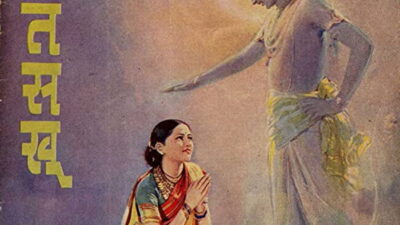
"जाये देव नगरिया जाये" फ़िल्म संत सखू (1941) में आता है — पूना की प्रभात फ़िल्म कंपनी द्वारा निर्मित और दामले–फ़त्तेलाल जोड़ी द्वारा निर्देशित हिंदी-मराठी संत-जीवनी। संगीत केशवराव भोले का है। फ़िल्म का संगीत महाराष्ट्रीय भक्ति परंपरा के भक्ति-भजन और अभंग मुहावरे में निहित है, जो प्रभात की प्रसिद्ध संत-फ़िल्म परंपरा के अनुरूप है। यहाँ पूरे बोल नहीं दिए गए हैं; यह केवल एक मेटाडेटा और खोज पृष्ठ है।
अंग्रेज़ी में पढ़ें · Read in English
"Jaye Dev Nagariya Jaye" appears in Sant Sakhu (1941), the Hindi-Marathi saint biography produced by the Prabhat Film Company of Poona and directed by the Damle–Fattelal partnership. The music is by Keshavrao Bhole. The film's score is rooted in the devotional bhajan and abhang idiom of the Maharashtrian Bhakti tradition, in keeping with Prabhat's celebrated lineage of saint films. Full lyrics are not reproduced here; this is a metadata and discovery page only.
काव्य The Poetry
भक्ति-गीत 'जाये देव नगरिया जाये' — 'ईश्वर का नगर जाता है, चला जाता है' — में अभंग का स्वर है, महाराष्ट्रीय संत-कवि परंपरा की प्राथमिक काव्य-विधा, जो यहाँ हिंदी गीत में रूपांतरित हुई है। अभंग विशिष्ट रूप से पंढरपुर के विठोबा (विट्ठल) को संबोधित होता है, और 'देव नगरिया' (ईश्वर का नगर/धाम) पंढरपुर यात्रा परंपरा की अनुगूँज है जहाँ हज़ारों श्रद्धालु दिव्य नगर की ओर चलते हैं। टेक में 'जाये-जाये' (जाता है, जाता है) की पुनरावृत्ति यात्रा की गति और दिव्य क्षण के बीत जाने की मधुर-कड़वी अनुभूति — दोनों को व्यक्त करती है — जो महाराष्ट्र की वारकरी परंपरा की विशेषता है, जो भक्ति को किसी वस्तु के स्वामित्व की जगह निरंतर आकांक्षा के रूप में रूपाकृत करती है। केशवराव भोले की ऐसे पदों की स्वर-संयोजना लगातार अभंग की धुन-शब्दावली पर आधारित रही: सरल, निरंतर, भैरवी-सदृश रागों में निहित जो विस्तार की जगह पुनरावृत्ति के माध्यम से गहरा भावनात्मक भार वहन करती है।
अंग्रेज़ी में पढ़ें · Read in English
The devotional lyric 'Jaye Dev Nagariya Jaye' — 'The divine city goes, it departs' — carries the tone of the abhang, the Marathi saint-poet tradition's primary poetic form, adapted here into a Hindi lyric. The abhang is characteristically addressed to Vithoba (Vitthal) of Pandharpur, and the phrase dev nagariya (city/abode of God) evokes the Pandharpur pilgrimage tradition where thousands annually walk to the divine city. The word jaye-jaye (goes, it goes) in the repeating refrain communicates both the movement of the pilgrimage and the bittersweet quality of the divine moment passing — a feeling characteristic of the Varkari tradition of Maharashtra, which frames devotion as a constant reaching-toward rather than a possession. Keshavrao Bhole's musical setting for such texts consistently drew on the abhang's melodic vocabulary: simple, sustained, rooted in Bhairavi-adjacent modes that carry profound emotional weight through repetition rather than elaboration.
कहानी The Story
संत सखू (1941) पूना की प्रभात फ़िल्म कंपनी — वही स्टूडियो जिसने संत तुकाराम (1936) और संत ज्ञानेश्वर (1940) जैसी ऐतिहासिक संत-फ़िल्में बनाईं — द्वारा निर्मित और प्रसिद्ध दामले-फ़त्तेलाल जोड़ी के साथ राजा नेने द्वारा निर्देशित थी। यह महाराष्ट्रीय संत सखू के जीवन पर आधारित हिंदी-मराठी द्विभाषी फ़िल्म थी, जिसमें हंसा वाडकर ने सखू की भूमिका निभाई; गौरी, शंकरराव कुलकर्णी, शांता मुजुमदार, सुमित्रा और मास्टर छोटू सहायक भूमिकाओं में थे। संगीत केशवराव भोले ने रचा, जो 1933 से प्रभात के संगीत-निर्देशक थे; इस फ़िल्म में उनके सहायक वसंत देसाई थे, जो बाद में हिंदी सिनेमा के अधिक प्रतिष्ठित संगीतकारों में से एक बने। गीत पी.एल. संतोषी (आठ गीत) और पंडित मुखराम शर्मा (दो गीत) ने लिखे, छह गीत अश्रेयित रहे। संपूर्ण संगीत-पट्टी के लिए प्रलेखित गायकों में विनोदिनी दीक्षित, वसंत देसाई, वसंत दीक्षित, सुमित्रा और मंजू हैं — लेकिन इस विशिष्ट गीत के लिए प्रति-गीत श्रेय संरक्षित नहीं है।
अंग्रेज़ी में पढ़ें · Read in English
Sant Sakhu (1941) was produced by the Prabhat Film Company of Poona — the studio responsible for landmark saint-films including Sant Tukaram (1936) and Sant Dnyaneshwar (1940) — and was directed by the celebrated Damle–Fattelal duo along with Raja Nene. It was a Hindi-Marathi bilingual depicting the life of the Maharashtrian saint Sakhu, played by Hansa Wadkar, with Gauri, Shankar Rao Kulkarni, Shanta Mujumdar, Sumitra, and Master Chhotu in supporting roles. Music was composed by Keshavrao Bhole, who had been Prabhat's music director since 1933; his assistant on this film was Vasant Desai, who would later become one of Hindi cinema's more distinguished composers. The songs were written by P.L. Santoshi (eight songs) and Pandit Mukhram Sharma (two songs), with six songs left uncredited. Singers documented for the overall soundtrack include Vinodini Dixit, Vasant Desai, Vasant Dixit, Sumitra, and Manju — but per-song attribution for this specific track is not preserved.
विरासत The Legacy
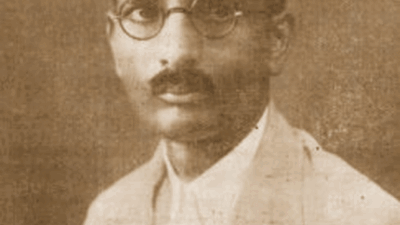
संत सखू (1941) प्रभात फ़िल्म कंपनी की प्रसिद्ध संत-फ़िल्म परंपरा में महत्त्वपूर्ण स्थान रखती है — वह शृंखला जो संत तुकाराम (1936, उस वर्ष वेनिस फ़िल्म महोत्सव के सर्वश्रेष्ठ विदेशी फ़िल्म पुरस्कार-विजेता) से संत ज्ञानेश्वर (1940) और संत सखू (1941) तक चली। केशवराव भोले के इन फ़िल्मों में संगीत-योगदान महाराष्ट्र की भक्ति परंपरा को हिंदी-भाषी सिनेमा में समेकित करने में एक मील का पत्थर हैं, और तत्कालीन सहायक वसंत देसाई के साथ उनका सहयोग भारतीय फ़िल्म संगीत में एक प्रमुख एकल करियर का पूर्वाभास देता है। भोले ने बाद में मुंबई और पुणे के आकाशवाणी केंद्रों में संगीत-निर्देशक के रूप में कार्य किया। हालाँकि संत सखू के अलग-अलग गीत अक्सर पुनरुज्जीवित नहीं होते, लेकिन फ़िल्म को प्रभात स्टूडियो और संत-फ़िल्म शैली दोनों के इतिहासों में लगातार संदर्भित किया जाता है।
अंग्रेज़ी में पढ़ें · Read in English
Sant Sakhu (1941) carries significance within Prabhat Film Company's celebrated lineage of saint-films — a sequence that ran from Sant Tukaram (1936, winner of the Venice Film Festival's best foreign film award that year) through Sant Dnyaneshwar (1940) and Sant Sakhu (1941). Keshavrao Bhole's musical contributions to these films represent a landmark in the incorporation of Maharashtra's Bhakti tradition into Hindi-language cinema, and his collaboration with the then-assistant Vasant Desai prefigures one of the major solo careers in Indian film music. Bhole himself later served as music director at All India Radio stations in Mumbai and Pune. While the individual songs of Sant Sakhu are not frequently revived, the film as a unit is consistently referenced in histories of both the Prabhat studio and the sant-film genre.
वर्गीकरण
Classification- Tempo
- Medium
Genre
अन्य विवरण
More Details- https://en.wikipedia.org/wiki/Sant_Sakhu
- https://indiancine.ma/DKI/info
- https://en.wikipedia.org/wiki/Keshavrao_Bhole
- https://www.hindigeetmala.net/movie/sant_sakhu.htm
References
रोचक तथ्य
Margin Notesसंत सखू (1941) का निर्माण प्रभात फ़िल्म कंपनी ने किया था, जिसकी पूर्ववर्ती संत-फ़िल्म संत तुकाराम (1936) ने वेनिस फ़िल्म फेस्टिवल में सर्वश्रेष्ठ विदेशी फ़िल्म का पुरस्कार जीता था — उस दौर के भारतीय सिनेमा के लिए यह एक असाधारण उपलब्धि थी।
अंग्रेज़ी में पढ़ें · Read in English
Sant Sakhu (1941) was produced by Prabhat Film Company, whose preceding saint-film Sant Tukaram (1936) had won the Venice Film Festival prize for best foreign film — an extraordinary achievement for Indian cinema of that era.
फ़िल्म के तीन निर्देशक थे: वी. दामले, एस. फत्तेलाल और राजा नेने — दामले-फत्तेलाल की साझेदारी प्रभात की अधिकांश ऐतिहासिक फ़िल्मों के लिए ज़िम्मेदार थी।
अंग्रेज़ी में पढ़ें · Read in English
The film had three directors: V. Damle, S. Fattelal, and Raja Nene — the Damle-Fattelal partnership was responsible for most of Prabhat's landmark productions.
वसंत देसाई, जिन्होंने इस फ़िल्म में केशवराव भोले के संगीत-सहायक के रूप में काम किया, आगे चलकर स्वयं एक प्रशंसित संगीत निर्देशक बने, और बाद में बिमल रॉय सहित कई निर्देशकों के साथ काम किया।
अंग्रेज़ी में पढ़ें · Read in English
Vasant Desai, who served as Keshavrao Bhole's music assistant on this film, went on to become a celebrated music director in his own right, later working with directors including Bimal Roy.
गीत मुख्यतः पी.एल. संतोषी ने लिखे, जिन्होंने फ़िल्म के सोलह गीतों में से आठ का योगदान दिया; वे आगे चलकर 1950 के दशक की हिंदी सिनेमा के एक प्रमुख गीतकार और संवाद-लेखक बने।
अंग्रेज़ी में पढ़ें · Read in English
The songs were written primarily by P.L. Santoshi, who contributed eight of the film's sixteen songs; he later became a prominent lyricist and dialogue writer in 1950s Hindi cinema.
नमूना-पट्टी
The Specimen Table| शीर्षक | जाये देव नगरिया जाये · Jaye Dev Nagariya Jaye |
|---|---|
| फ़िल्म | संत सखू · 1941 |
| वर्ष · युग | 1941 |
| संगीतकार | Keshavrao Bhole |
| स्वरूप | भक्ति |
| गति | मध्यम |
| भाषा | hindi |
| भाव | उत्सव · भक्ति · आध्यात्मिक |
| लोकप्रियता | Obscure |
| बोल-स्थिति | केवल झलक |
जुड़े हुए पन्ने
Connected Plates · The Graph Made Visibleअटलस में कोई पन्ना अकेला नहीं — इस गीत से जुड़े गीत, कलाकार, फ़िल्म, राग-ताल-विधा, सब यहाँ से खुलते हैं।
कलाकार · The Artists
फ़िल्म · The Film
साझा कीजिए · Share this Plate