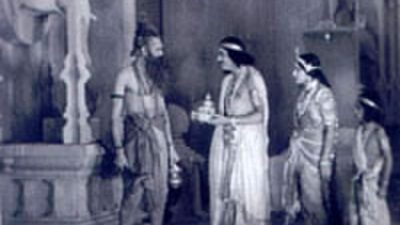
गीत विंग · गीत-पट्टिका · Song Plate
हम तुम दोनों प्रीत के बंदी
Hum Tum Dono Preet Ke Bandi
'हम तुम दोनों, प्रीत के बंदी' — मेरी ख़्वाहिश (1941) का प्रेम-रंगत वाला युगल भाव का गीत।
भावरोमांटिक
भाषाhindi गतिमध्यम स्वरूपयुगल
श्रेय
The Creditsसूत्र-वाक्य · The Hook
सूत्र-वाक्य
'हम तुम दोनों, प्रीत के बंदी' — मेरी ख़्वाहिश (1941) का प्रेम-रंगत वाला युगल भाव का गीत।
In English'We two, both captives of love' — a romantic duet-flavoured number from Meri Khwahish (1941).
पट्टिका-लेख
The Monographपरिचय Overview
मेरी ख़्वाहिश (1941) के आठ गीतों के संगीत से एक रोमांटिक गीत, संगीतकार वसंत और शांति कुमार को श्रेय, बोल बालम परदेसी और ए. के. सिंधु के। दो प्रेमियों को स्वेच्छा से 'प्रीत के बंदी' बताने का शीर्षक-बिंब आरंभिक हिंदी सिनेमा की एक प्रचलित रोमांटिक कल्पना है, यहाँ सादी, गीत-अनुकूल हिंदी में। फ़िल्म के गीतों के गायक श्रेय उपलब्ध संदर्भों में दर्ज नहीं हैं; 'युगल' गीत-प्रकार बोल के दो-प्रेमी ढाँचे से अनुमानित है और अपुष्ट है।
अंग्रेज़ी में पढ़ें · Read in English
A romantic song from the eight-song score of Meri Khwahish (1941), credited to composers Vasant and Shanti Kumar with verse by Baalam Pardesi and A. K. Sindhu. The title's image of two lovers as willing 'captives of love' (preet ke bandi) is a stock romantic conceit of early Hindi cinema, here in plain, song-friendly Hindi. The film's per-song singer credits are not documented in available references; the song-type 'Duet' is inferred from the lyric's plural-lover framing and is unconfirmed.
काव्य The Poetry
'प्रीत के बंदी' वाक्यांश — प्रेम के कैदी — हिंदुस्तानी काव्य में स्व के स्वैच्छिक समर्पण का एक शास्त्रीय रूपक है। 'बंदी' शब्द भक्ति-काव्य में भी आता है — मीराबाई स्वयं को 'हरि के बंदी' कहती हैं — लेकिन रोमांटिक फ़िल्मी बोल में, कारागार स्वयं प्रेम है, कोई देवता नहीं। 'हम तुम दोनों' की पूर्व-स्थापना से यह बोल इस बिंब को एक समानतावादी संधि में बदल देता है: न कोई प्रेमी शक्ति-संपन्न है, दोनों समान रूप से बँधे हैं। यह शास्त्रीय उर्दू ग़ज़ल के उस विशिष्ट पदानुक्रम से सूक्ष्मतः भिन्न है जहाँ प्रेमी पीड़ा भोगता है और प्रेमिका दूर रहती है। बालम परदेसी और ए.के. सिंधु, सादी फ़िल्म-अनुकूल हिंदी में लिखते हुए, इस बिंब को लोकतांत्रिक उष्मा देते हैं। शीर्षक में निहित युगल-संरचना इस पारस्परिकता को और पुष्ट करती है: यह साझी क़ैद के रूप में प्रेम है, वर्चस्व नहीं।
अंग्रेज़ी में पढ़ें · Read in English
The phrase 'preet ke bandi' (captives of love) is a classic Hindustani metaphor for the voluntary surrender of the self to love. The word 'bandi' (prisoner, captive) appears in bhakti poetry — Mirabai calls herself 'Hari ke bandi' (captive of Hari) — but in romantic film verse the prison is love itself rather than a deity. By prefacing this with 'hum tum dono' (both of us), the lyric turns the image into an egalitarian pact: neither lover holds power over the other; both are equally bound. This is subtly distinct from the typical hierarchy of classical Urdu ghazal, where the lover suffers while the beloved remains indifferent. The lyricists Baalam Pardesi and A. K. Sindhu, writing in plain, song-friendly Hindi, give the image democratic warmth. The duet structure the title implies — 'we two' together — further reinforces the mutuality: this is love as shared captivity, not domination.
कहानी The Story
मेरी ख़्वाहिश (1941) गीत-सूचियों में आठ गीतों वाली एक निर्माण इकाई के रूप में दर्ज है — संगीतकार वसंत और शांति कुमार, बोल बालम परदेसी और ए.के. सिंधु के। गीत और संगीत दोनों पक्षों पर दोहरा श्रेय उस दौर के छोटे बंबई स्टूडियो में प्रचलित सहकारी, कार्य-विभाजित व्यवस्था को दर्शाता है, जहाँ दो-सदस्यीय संगीत-रचना दल स्वर या दृश्य-प्रकार के अनुसार गीत बाँट सकता था और दो गीतकार पद्य-लेखन का बोझ साझा करते थे। 'हम तुम दोनों प्रीत के बंदी' एक केंद्रीय रोमांटिक गीत के रूप में पढ़ा जाता है — दो प्रेमियों को स्वेच्छा से 'प्रेम के बंदी' बताना वह भावनात्मक उद्घोषणा है जो फ़िल्म की रोमांटिक कथा को स्थापित करती और कहानी में एक पुनरावृत्ति-बिंदु की भूमिका निभाती। फ़िल्म के शीर्षक में उर्दू-व्युत्पन्न 'ख़्वाहिश' (इच्छा, लालसा) बड़े स्टूडियो प्रणाली के बाहर निर्मित 1940 के दशक की आरंभिक सामाजिक-रोमांटिक फ़िल्म के लिए अवरुद्ध या उत्कट आकांक्षा की एक मानक नाटकीय शैली का संकेत देती है।
अंग्रेज़ी में पढ़ें · Read in English
Meri Khwahish (1941) is documented in song catalogues as an eight-song production with music by composers Vasant and Shanti Kumar, and verse by Baalam Pardesi and A. K. Sindhu. The dual credit on both the lyric and music sides points to the collaborative, task-divided arrangements common in smaller Bombay studios of the era, where a two-person composing team might split songs by register or scene-type while two lyricists divided the verse-writing load. 'Hum Tum Dono Preet Ke Bandi' reads as a central romantic number — its framing of two lovers as willing 'captives of love' is the kind of emotional declaration that would anchor the film's romantic narrative and serve as a reprise point in the story. The Urdu-derived 'khwahish' (desire, longing) in the film's title signals a story of thwarted or passionate aspiration, a standard dramatic register for the early 1940s social-romantic film produced outside the larger studio system.
वर्गीकरण
Classification- Tempo
- Medium
Genre
अन्य विवरण
More Details- https://en.wikipedia.org/wiki/List_of_Hindi_films_of_1941
- https://www.hindigeetmala.net/movie/1941.php
References
रोचक तथ्य
Margin Notesमेरी ख़्वाहिश (1941) में दोहरा गीतकार-श्रेय (बालम परदेसी और ए.के. सिंधु) और दोहरा संगीत-निर्देशक श्रेय (वसंत और शांति कुमार) था, जो बड़े स्टूडियो तंत्र से बाहर के छोटे बॉम्बे प्रोडक्शनों में आम सहयोगात्मक संगीत-व्यवस्थाओं को दर्शाता है।
अंग्रेज़ी में पढ़ें · Read in English
Meri Khwahish (1941) featured dual lyricist credits (Baalam Pardesi and A. K. Sindhu) and dual music-director credits (Vasant and Shanti Kumar), reflecting the collaborative scoring arrangements common in small Bombay productions outside the major studio system.
शीर्षक 'मेरी ख़्वाहिश' (मेरी इच्छा/मेरी चाह), फ़िल्म को 1940 के दशक की शुरुआत की उन प्रेम-सामाजिक फ़िल्मों की परंपरा में रखता है, जिनके शीर्षक नायक/नायिका की भावनात्मक स्थिति की घोषणा करते थे — यह परंपरा समकालीन लोकप्रिय उर्दू साहित्य से उधार ली गई थी।
अंग्रेज़ी में पढ़ें · Read in English
The title 'Meri Khwahish' (My Desire / My Longing) places the film in the tradition of early 1940s romantic-social films whose titles announced the protagonist's emotional state, a convention borrowed from contemporary Urdu popular literature.
बालम परदेसी के दर्ज गीत-श्रेय मुख्यतः 1939-1943 की अवधि में केंद्रित हैं, अधिकांशतः छोटे बॉम्बे प्रोडक्शनों के लिए; मेरी ख़्वाहिश उन्हें दिए गए अपेक्षाकृत अधिक संपूर्ण एकल-फ़िल्म कार्यों में से एक है।
अंग्रेज़ी में पढ़ें · Read in English
Baalam Pardesi's documented lyric credits are concentrated in the 1939–1943 period, mostly for smaller Bombay outfits; Meri Khwahish is among the more complete single-film assignments attributed to him.
नमूना-पट्टी
The Specimen Table| शीर्षक | हम तुम दोनों प्रीत के बंदी · Hum Tum Dono Preet Ke Bandi |
|---|---|
| फ़िल्म | मेरी ख़्वाहिश · 1941 |
| वर्ष · युग | 1941 |
| गीतकार | बालम परदेसी, A. K. Sindhu |
| संगीतकार | Vasant, Shanti Kumar |
| स्वरूप | युगल |
| गति | मध्यम |
| भाषा | hindi |
| भाव | रोमांटिक |
| बोल-स्थिति | केवल झलक |
जुड़े हुए पन्ने
Connected Plates · The Graph Made Visibleअटलस में कोई पन्ना अकेला नहीं — इस गीत से जुड़े गीत, कलाकार, फ़िल्म, राग-ताल-विधा, सब यहाँ से खुलते हैं।
कलाकार · The Artists
फ़िल्म · The Film
साझा कीजिए · Share this Plate