गीत विंग · गीत-पट्टिका · Song Plate
गंगा जमुना भागीरथी
Ganga Jamuna Bhagirathi
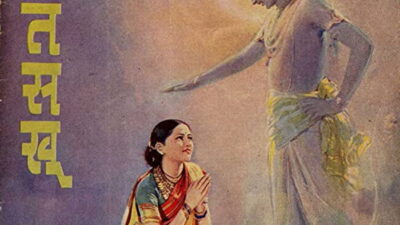
प्रभात की संत-फ़िल्म 'संत सखू' (1941) का एक भक्ति-गीत, केशवराव भोले के भजन-रंगी संगीत में रचा हुआ।
भावभक्ति · शांत · आध्यात्मिक
भाषाhindi गतिमध्यम स्वरूपभक्ति
श्रेय
The Creditsसूत्र-वाक्य · The Hook
सूत्र-वाक्य
प्रभात की संत-फ़िल्म 'संत सखू' (1941) का एक भक्ति-गीत, केशवराव भोले के भजन-रंगी संगीत में रचा हुआ।
In EnglishA devotional number from Prabhat's saint-film 'Sant Sakhu' (1941), set to Keshavrao Bhole's bhajan-flavoured score.
पट्टिका-लेख
The Monographपरिचय Overview
"गंगा जमुना भागीरथी" फ़िल्म संत सखू (1941) में आता है — पूना की प्रभात फ़िल्म कंपनी द्वारा निर्मित और दामले–फ़त्तेलाल जोड़ी द्वारा निर्देशित हिंदी-मराठी संत-जीवनी। संगीत केशवराव भोले का है। फ़िल्म का संगीत महाराष्ट्रीय भक्ति परंपरा के भक्ति-भजन और अभंग मुहावरे में निहित है, जो प्रभात की प्रसिद्ध संत-फ़िल्म परंपरा के अनुरूप है। यहाँ पूरे बोल नहीं दिए गए हैं; यह केवल एक मेटाडेटा और खोज पृष्ठ है।
अंग्रेज़ी में पढ़ें · Read in English
"Ganga Jamuna Bhagirathi" appears in Sant Sakhu (1941), the Hindi-Marathi saint biography produced by the Prabhat Film Company of Poona and directed by the Damle–Fattelal partnership. The music is by Keshavrao Bhole. The film's score is rooted in the devotional bhajan and abhang idiom of the Maharashtrian Bhakti tradition, in keeping with Prabhat's celebrated lineage of saint films. Full lyrics are not reproduced here; this is a metadata and discovery page only.
काव्य The Poetry
तीन पवित्र नदियों — गंगा, यमुना, भागीरथी (गंगा का वह पौराणिक नाम जो भगीरथ की तपस्या से स्वर्ग से अवतरित हुई) — का आह्वान संस्कृत और लोक-भाषा भक्ति-काव्य के सबसे प्राचीन साहित्यिक उपकरणों में से एक है। तीर्थ-यात्रा साहित्य में पवित्र नदियों का नाम लेना स्वयं एक शुद्धि-कर्म है: शब्द जल का पुण्य वहन करते हैं। तुलसीदास के रामचरितमानस में और वारकरी संप्रदाय के मराठी संतों — तुकाराम, नामदेव, एकनाथ — ने पवित्र नदियों और तीर्थों का आह्वान भक्त की आध्यात्मिक शुद्धता की आकांक्षा के सूचक के रूप में बार-बार किया। संत सखू के संदर्भ में, जहाँ सखूबाई को उसके उत्पीड़क परिवार द्वारा वास्तविक तीर्थों तक जाने से वंचित किया जाता है, नदियों का गीत में नाम लेना एक कल्पनाशील तीर्थयात्रा है: भक्त शारीरिक यात्रा के बजाय आवाज़ और भक्ति के माध्यम से पवित्र भूगोल तक पहुँचता है। केशवराव भोले की संगीत-रचना, वारकरी परंपरा में निहित — अपने चक्रीय, सम्मोहक सुरों और सुलभ शब्द-उच्चारण के साथ — इस पाठ को उचित चिंतनशील गहराई देती। बोल उद्धरण के लिए अनुपलब्ध हैं।
अंग्रेज़ी में पढ़ें · Read in English
The invocation of the three sacred rivers — Ganga, Yamuna, Bhagirathi (the mythological name for the Ganga in its descent from heaven, channelled by the sage Bhagiratha's penance) — is among the oldest literary devices in Sanskrit and vernacular devotional poetry. In tirtha-yatra literature, naming the sacred rivers is itself an act of purification: the words carry the virtue of the waters. Tulsidas in the Ramcharitmanas and the Marathi saints of the Varkari sampraday — Tukaram, Namdev, Eknath — frequently invoked holy rivers and tirthas as markers of the devotee's aspiration to spiritual purity. In the context of Sant Sakhu, where Sakhubai is denied the freedom to visit physical tirthas by her oppressive household, naming the rivers in song is a form of imaginative pilgrimage: the bhakta accesses sacred geography through voice and devotion rather than bodily travel. Keshavrao Bhole's setting, rooted in Varkari musical tradition with its emphasis on cyclical, hypnotic melodic patterns and accessible syllabification, would have given this text its appropriate contemplative depth. The lyrics are unavailable for direct citation.
कहानी The Story
"गंगा जमुना भागीरथी" संत सखू (1941) का एक भक्ति-गीत है — पूना की प्रभात फ़िल्म कंपनी द्वारा निर्मित और विख्यात दामले-फ़त्तेलाल जोड़ी (वी. दामले, एस. फ़त्तेलाल) तथा राजा नेने द्वारा निर्देशित हिंदी-मराठी द्विभाषी संत-जीवनी। संगीत केशवराव भोले का और बोल पी.एल. संतोषी व पं. मुखराम शर्मा के थे। हंसा वाडकर ने मुख्य भूमिका सखूबाई की निभाई — महाराष्ट्र की एक कट्टर वारकरी भक्त स्त्री जिसकी भक्ति उसकी क्रूर सास और नंद द्वारा परखी जाती है। इस भक्ति-उत्पीड़न की कथा में तीन पवित्र नदियों — गंगा, यमुना और पौराणिक भागीरथी — का आह्वान आध्यात्मिक सांत्वना और शुद्धि का क्षण बन जाता है। सखू की यह प्रार्थना उसके संकट की किसी पराकाष्ठा के साथ आती होगी, पवित्र नदी-नाम दैवीय साक्षी और अनुग्रह की पुकार के रूप में। केशवराव भोले, जो 1933 से प्रभात के लिए संगीत रच रहे थे, ने फ़िल्म के भक्ति-गीतों को वारकरी अभंग मुहावरे में रचा — जो स्टूडियो की संत-फ़िल्म शैली की स्थापित पहचान थी।
अंग्रेज़ी में पढ़ें · Read in English
"Ganga Jamuna Bhagirathi" is a devotional song from Sant Sakhu (1941), a bilingual Hindi-Marathi saint biography produced by the Prabhat Film Company of Poona and directed by the celebrated Damle-Fattelal partnership (V. Damle, S. Fattelal) together with Raja Nene. Music was by Keshavrao Bhole, with lyrics by P.L. Santoshi and Pt. Mukhram Sharma. Hansa Wadkar plays the lead role of Sakhubai, a devoutly Varkari woman of Maharashtra whose piety is tested by an oppressive mother-in-law and sister-in-law; Shankar Kulkarni appeared as her husband. Within this narrative of bhakti under persecution, a devotional invocation of the three sacred rivers — Ganga, Yamuna, and the mythical Bhagirathi — functions as a moment of spiritual solace and purification. Sakhu's prayer would have coincided with a crisis in her oppression, the sacred river-names serving as an appeal to divine witness and grace. Keshavrao Bhole, who had been composing for Prabhat since 1933, set the film's devotional numbers in the Varkari abhang idiom that was the studio's established signature for its saint-film genre.
विरासत The Legacy
संत सखू (1941) का IMDb रेटिंग 8.2 है — जो उन लोगों के बीच इसकी स्थायी आलोचनात्मक प्रतिष्ठा को दर्शाता है जिन्होंने बचे हुए प्रिंट देखे हैं — यह 1941 की उच्चतम रेटेड हिंदी फ़िल्मों में से एक है। यह प्रभात की विख्यात संत-फ़िल्म परंपरा — संत तुकाराम (1936, वेनिस फ़िल्म महोत्सव में पुरस्कृत), संत ज्ञानेश्वर (1940), और संत सखू (1941) — का अंग माना जाता है, जिसने भारतीय भक्ति फ़िल्म की निश्चित सिनेमाई भाषा स्थापित की। प्रभात की संत-फ़िल्मों के लिए केशवराव भोले का संगीत भारतीय भक्ति फ़िल्म-संगीत के आधारशिला के रूप में देखा जाता है; वारकरी अभंग और पश्चिमी वाद्य-वृंद के उनके एकीकरण ने पीढ़ियों को प्रभावित किया। हंसा वाडकर, जिन्होंने सखू की भूमिका निभाई, मराठी सिनेमा की प्रसिद्ध अभिनेत्री बनीं और बाद में "सांगते ऐका" नामक मराठी आत्मकथा लिखी जो भारतीय सिनेमा की प्रारंभिक महिला कलाकारों के जीवन का एक महत्त्वपूर्ण दस्तावेज़ बन गई।
अंग्रेज़ी में पढ़ें · Read in English
Sant Sakhu (1941) carries an IMDb rating of 8.2, reflecting its enduring critical regard among those who have seen surviving prints — placing it among the highest-rated Hindi films of 1941. It is considered part of Prabhat's celebrated lineage of saint films — Sant Tukaram (1936, winner of a prize at the Venice Film Festival), Sant Dnyaneshwar (1940), and Sant Sakhu (1941) — which established the definitive cinematic language for the Indian bhakti film. Keshavrao Bhole's music for Prabhat's saint films is regarded as foundational to Indian devotional film music; his integration of Varkari abhang with Western orchestral textures influenced generations of subsequent composers. Hansa Wadkar, who played Sakhu, became one of the celebrated actresses of Marathi cinema and later wrote a notable autobiography in Marathi, "Sangtye Aika," that became an important document of the lives of early Indian film performers. The Damle-Fattelal direction partnership is still recognised as one of Indian cinema's most important creative collaborations.
वर्गीकरण
Classification- Tempo
- Medium
Genre
अन्य विवरण
More Details- https://en.wikipedia.org/wiki/Sant_Sakhu
- https://www.imdb.com/title/tt0158915/
- https://en.wikipedia.org/wiki/Keshavrao_Bhole
- https://www.cinemaazi.com/people/keshav-rao-bhole
- https://indiancine.ma/DKI/info
References
रोचक तथ्य
Margin Notesसंत सखू (1941) हिंदी और मराठी, दोनों भाषाओं में बनी एक द्विभाषी फ़िल्म थी, जो प्रभात फ़िल्म कंपनी के पूना स्थित आधार और महाराष्ट्रीय तथा अखिल-भारतीय हिंदी-भाषी दर्शकों तक उसकी एक साथ पहुंच को दर्शाती है।
अंग्रेज़ी में पढ़ें · Read in English
Sant Sakhu (1941) was a bilingual production in both Hindi and Marathi, reflecting Prabhat Film Company's Poona base and its simultaneous reach to Maharashtrian and all-India Hindi-speaking audiences.
दामले-फत्तेलाल की निर्देशक-जोड़ी इससे पहले संत तुकाराम (1936) का निर्देशन कर चुकी थी, जो 1937 के वेनिस फ़िल्म फेस्टिवल में किसी अंतरराष्ट्रीय समारोह में पुरस्कार पाने वाली पहली भारतीय फ़िल्म बनी थी।
अंग्रेज़ी में पढ़ें · Read in English
The Damle-Fattelal directing duo had previously directed Sant Tukaram (1936), which became the first Indian film to receive a prize at an international festival — at the Venice Film Festival in 1937.
केशवराव भोले 1933 में प्रभात फ़िल्म कंपनी से जुड़े और 1940 के दशक तक स्टूडियो के प्रमुख संगीत निर्देशक रहे; उन्हें पश्चिमी वाद्यवृंद उपकरणों को वारकरी भक्ति परंपराओं के साथ व्यवस्थित रूप से जोड़ने वाले शुरुआती भारतीय फ़िल्म संगीतकारों में से एक माना जाता है।
अंग्रेज़ी में पढ़ें · Read in English
Keshavrao Bhole joined Prabhat Film Company in 1933 and was the studio's primary music director through the 1940s; he is credited as one of the earliest Indian film composers to systematically integrate Western orchestral instruments with Varkari devotional traditions.
इस फ़िल्म की IMDb रेटिंग 8.2 है, जो इसे 1941 की उन दर्शकों के बीच सबसे अधिक सम्मानित हिंदी-भाषी फ़िल्मों में से एक बनाती है, जिन्होंने इसकी बची हुई अभिलेखीय प्रतियां देखी हैं।
अंग्रेज़ी में पढ़ें · Read in English
The film carries an IMDb rating of 8.2, making it one of the most highly regarded Hindi-language productions of 1941 among viewers who have encountered surviving archival prints.
नमूना-पट्टी
The Specimen Table| शीर्षक | गंगा जमुना भागीरथी · Ganga Jamuna Bhagirathi |
|---|---|
| फ़िल्म | संत सखू · 1941 |
| वर्ष · युग | 1941 |
| संगीतकार | Keshavrao Bhole |
| स्वरूप | भक्ति |
| गति | मध्यम |
| भाषा | hindi |
| भाव | भक्ति · शांत · आध्यात्मिक |
| लोकप्रियता | Obscure |
| बोल-स्थिति | केवल झलक |
जुड़े हुए पन्ने
Connected Plates · The Graph Made Visibleअटलस में कोई पन्ना अकेला नहीं — इस गीत से जुड़े गीत, कलाकार, फ़िल्म, राग-ताल-विधा, सब यहाँ से खुलते हैं।
कलाकार · The Artists
फ़िल्म · The Film
साझा कीजिए · Share this Plate