गीत विंग · गीत-पट्टिका · Song Plate
धिक्कार मोहे धिक्कार
Dhikkar Mohe Dhikkar
1941 की भक्ति-फ़िल्म तुलसी का आत्म-निंदा का एक गीत।
भावतीव्र · उदास
भाषाhindi स्वरूपUnknown
श्रेय
The Creditsसूत्र-वाक्य · The Hook
सूत्र-वाक्य
1941 की भक्ति-फ़िल्म तुलसी का आत्म-निंदा का एक गीत।
In EnglishA song of self-reproach from the 1941 devotional film Tulsi.
पट्टिका-लेख
The Monographपरिचय Overview
'धिक्कार मोहे धिक्कार' तुलसी (1941) का एक गीत है, जिसका संगीत हरिश्चंद्र बाली का और बोल पंडित फणि के हैं। शीर्षक — 'धिक्कार', लज्जा या आत्म-निंदा का भाव — एक करुण, अंतर्मुखी रचना की ओर संकेत करता है, जो इस शैली की नैतिक और भक्ति-नाट्यता के अनुरूप है। उपलब्ध स्रोतों में गायकों के नाम दर्ज नहीं हैं।
अंग्रेज़ी में पढ़ें · Read in English
'Dhikkar Mohe Dhikkar' is a song from Tulsi (1941), with music by Harishchandra Bali and lyrics by Pandit Phani. The title — 'dhikkar', an expression of shame or self-reproach — suggests a sorrowful, introspective piece, consistent with the moral and devotional dramaturgy of the genre. Singer credits are not documented in the surviving sources.
काव्य The Poetry
'धिक्कार मोहे धिक्कार' — 'मुझे धिक्कार है! धिक्कार!' — में द्विगुण पुनरावृत्ति एक नाटकीय-तीव्रता की युक्ति है जो भक्ति-नैतिक काव्य में मानक है। 'धिक्कार' संस्कृत-व्युत्पन्न है और 'शर्म' या 'लज्जा' जैसे निजी लज्जा-शब्दों से अधिक सामूहिक-नैतिक भार रखता है: शर्म आंतरिक व्यक्तिगत लज्जा है, लज्जा सामाजिक संकोच है, जबकि 'धिक्कार' एक निर्णय है — वह निंदा जो एक समाज, एक नैतिक न्यायाधिकरण, या ईश्वरीय साक्षी के रूप में समझी जाने वाली अंतरात्मा देती है। दोहरे रूप ('धिक्कार... धिक्कार') में वह जुनूनी आत्म-निंदा प्रतिध्वनित होती है जो भक्ति-आख्यान में आध्यात्मिक समन्वय से पहले आती है। पंडित फणि, जिन्होंने तुलसी के सभी गीत लिखे, एक नाटककार की भावात्मक उत्कर्ष की समझ को अपनी गीत-रचना में लाए: यह गीत केवल शर्म की अभिव्यक्ति नहीं बल्कि उसका नाटकीय प्रदर्शन है, जो दर्शकों को पात्र के आत्म-निर्णय से परोक्ष रूप से भाव-विभोर करने के लिए रचा गया है।
अंग्रेज़ी में पढ़ें · Read in English
The title 'Dhikkar Mohe Dhikkar' — 'Shame on me! Shame!' — deploys doubled repetition as a rhetorical intensification standard in devotional-moral poetry. 'Dhikkar' is Sanskrit-derived and carries stronger communal-ethical weight than personal shame-words like 'sharm' or 'lajja': while sharm is internalized private shame and lajja is social embarrassment, 'dhikkar' implies a verdict — the kind of condemnation delivered by a community, a moral tribunal, or one's own conscience understood as divine witness. The doubled form ('dhikkar... dhikkar') mirrors the obsessive self-reproach that precedes spiritual reconciliation in the devotional narrative: the character must say it twice because once is insufficient to express the depth of their moral failure. Pandit Phani, who wrote all of Tulsi's lyrics, brought a dramatist's understanding of emotional escalation to his lyric work: the song is not merely an expression of shame but a dramatic performance of it, designed to move the audience vicariously through the character's self-judgment. In bhakti devotional poetry, self-reproach songs of this type — from Surdas's 'main hari bin dekha na jau' through the Meera bhajans of acknowledged sinfulness — are structurally essential to the devotional narrative arc of fall, recognition, and grace.
कहानी The Story
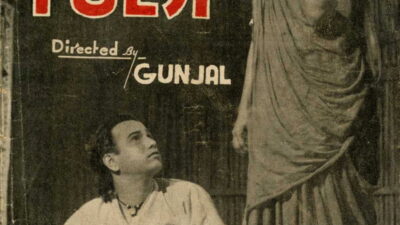
तुलसी (1941) का निर्देशन दादा गुंजाल ने किया था और इसकी रचनात्मक ज़िम्मेदारी असामान्य रूप से एक ही हाथ में थी: पंडित फणि ने फ़िल्म की कहानी, पटकथा, संवाद और सभी गीत लिखे — जिससे फ़िल्म की नैतिक और भक्ति-दृष्टि असाधारण रूप से एकसंगत रही। कलाकारों में शालिनी मर्दोलकर, त्रिलोक कपूर, श्रीनिवास और नीला शामिल थे; संगीत हरिश्चंद्र बाली का था। 'तुलसी' शीर्षक में दोहरी भक्ति-महत्ता है: तुलसी (तुलसी का पौधा) वैष्णव परंपरा में लक्ष्मी-वृंदा का स्वरूप मानकर पूजी जाती है; और तुलसीदास (लगभग 1532–1623) रामचरितमानस के संत-कवि हैं। फ़िल्म के प्रलेखित गीत-शीर्षक इसके भक्ति-नैतिक स्वर की पुष्टि करते हैं। 'धिक्कार मोहे धिक्कार' — 'मुझे धिक्कार है! धिक्कार!' — आत्म-निंदा का एक गीत है, जो उस नाटकीय महत्त्वपूर्ण क्षण में रखा गया जब कोई पात्र अपने अपराध को पहचानता है। भक्ति-फ़िल्म के नाट्य-विधान में आत्म-निंदा-गीत नैतिक धुरी का काम करता है — प्रायश्चित से पहले पहचान का वह क्षण।
अंग्रेज़ी में पढ़ें · Read in English
Tulsi (1941) was directed by Dada Gunjal with an unusually concentrated creative authority: Pandit Phani wrote the film's story, screenplay, dialogue, and all songs — making the film's moral and devotional vision exceptionally coherent. The cast included Shalini Mardolkar, Trilok Kapoor, Shrinavas, and Neela; music was composed by Harishchandra Bali. The film's title carries double devotional significance: Tulsi (Ocimum tenuiflorum, holy basil) is a plant sacred in Vaishnavite practice, worshipped as a manifestation of Lakshmi-Vrinda; and Tulsidas (c.1532–1623) is the saint-poet of the Ramcharitmanas. The film's documented song titles confirm its devotional-moral register: 'Svarg Hai Bharat Desh Hamara' (Our India is heaven), 'Suno Prabhu Ji Meri Pukaar' (Hear my call, O Lord), and 'Main Tulasee Shree Krishana Ko Pyari' (I, Tulsi, am beloved to Shri Krishna). 'Dhikkar Mohe Dhikkar' — 'Shame on me! Shame!' — is a song of self-reproach, placed at a dramatically crucial moment: the point when a character recognizes their transgression. In devotional film dramaturgy, the self-reproach song functions as the ethical pivot — the recognition scene before redemption begins. Singer credits for this number are not documented in surviving sources.
वर्गीकरण
ClassificationGenre
अन्य विवरण
More Details- https://en.wikipedia.org/wiki/Tulsi_(film)
- http://www.filmssongs.in/movies/detail/tulsi-i-2561
- https://www.hindilyrics4u.com/movie/tulsi_1941.htm
References
रोचक तथ्य
Margin Notesतुलसी (1941) एक दुर्लभ एकल-लेखक फ़िल्म थी: पंडित फणि ने कहानी, पटकथा, संवाद और सभी गीत लिखे — रचनात्मक नियंत्रण का यह असाधारण संकेंद्रण फ़िल्म की नैतिक और भक्ति-दृष्टि को असाधारण सुसंगति प्रदान करता था।
अंग्रेज़ी में पढ़ें · Read in English
Tulsi (1941) was a rare single-author film: Pandit Phani wrote the story, screenplay, dialogue, and all songs — an unusual concentration of creative control that gave the film's moral and devotional vision exceptional coherence.
'धिक्कार' (लज्जा, भर्त्सना) संस्कृत-मूल शब्द है और 'शर्म' या 'लज्जा' जैसे व्यक्तिगत लज्जा-शब्दों की तुलना में अधिक सामूहिक-नैतिक भार रखता है; शीर्षक में इसकी पुनरावृत्ति — 'धिक्कार मोहे धिक्कार' — भक्ति-नैतिक अलंकार में प्रचलित एक आलंकारिक तीव्रीकरण है।
अंग्रेज़ी में पढ़ें · Read in English
'Dhikkar' (shame, condemnation) is Sanskrit-derived and carries stronger communal-ethical weight than personal shame words like 'sharm' or 'lajja'; its doubling in the title — 'dhikkar mohe dhikkar' — is a rhetorical intensification standard in devotional moral rhetoric.
फ़िल्म के कलाकारों में त्रिलोक कपूर शामिल थे, जो 1930-1950 के दशक की पौराणिक और भक्ति फ़िल्मों में एक भरोसेमंद उपस्थिति थे और बाद में 1950 के दशक के उत्तरार्ध की कई पौराणिक प्रस्तुतियों में शिव की भूमिका के लिए प्रतिष्ठित हुए।
अंग्रेज़ी में पढ़ें · Read in English
The film's cast included Trilok Kapoor, a reliable presence in mythological and devotional films of the 1930s–1950s who later became iconic for his portrayal of Shiva in several mythological productions of the late 1950s.
फ़िल्म के संगीत निर्देशक हरिश्चंद्र बाली मुख्यतः भक्ति शैली में काम करते थे; ऐसी फ़िल्मों के लिए संगीत रचने हेतु सामाजिक फ़िल्म की हल्की रोमानी शैली के बजाय शास्त्रीय भक्ति-संगीत रूपों से घनिष्ठ निकटता आवश्यक होती थी।
अंग्रेज़ी में पढ़ें · Read in English
Harishchandra Bali, the film's music director, worked primarily in the devotional genre; composing for such films required close proximity to classical devotional music forms rather than the lighter romantic style of the social film.
नमूना-पट्टी
The Specimen Table| शीर्षक | धिक्कार मोहे धिक्कार · Dhikkar Mohe Dhikkar |
|---|---|
| फ़िल्म | तुलसी · 1941 |
| वर्ष · युग | 1941 |
| गीतकार | Pandit Phani |
| संगीतकार | Harishchandra Bali |
| स्वरूप | Unknown |
| भाषा | hindi |
| भाव | तीव्र · उदास |
| बोल-स्थिति | केवल झलक |
जुड़े हुए पन्ने
Connected Plates · The Graph Made Visibleअटलस में कोई पन्ना अकेला नहीं — इस गीत से जुड़े गीत, कलाकार, फ़िल्म, राग-ताल-विधा, सब यहाँ से खुलते हैं।
कलाकार · The Artists
फ़िल्म · The Film
साझा कीजिए · Share this Plate