गीत विंग · गीत-पट्टिका · Song Plate
बढ़ते चलो जवानो
Badhte Chalo Jawano
'हमराही' का कूच-गीत — नौजवानों से आगे बढ़ते रहने का आह्वान, उस फ़िल्म में जिसकी परिणति एक तुड़वाई गई हड़ताल है।
भावप्रेरणादायक · तीव्र · विद्रोही
भाषाhindi गतिमध्यम स्वरूपसमूह गान
श्रेय
The Creditsसूत्र-वाक्य · The Hook
सूत्र-वाक्य
'हमराही' का कूच-गीत — नौजवानों से आगे बढ़ते रहने का आह्वान, उस फ़िल्म में जिसकी परिणति एक तुड़वाई गई हड़ताल है।
In EnglishHamrahi's marching chorus — a call to the young to keep moving forward, in a film whose climax is a broken factory strike.
पट्टिका-लेख
The Monographपरिचय Overview
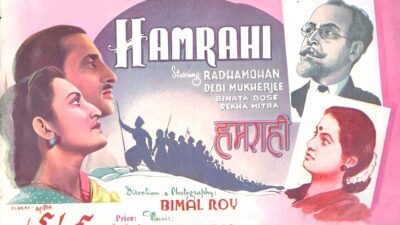
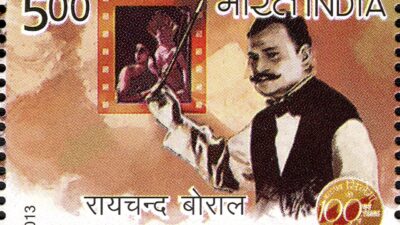
'हमराही' के दो समवेत गीतों में से दूसरा, और इन दोनों में अकेला ऐसा जो फ़िल्म के लिए लिखा गया — ठाकुर से उधार नहीं लिया गया। मुंशी ज़ाकिर हुसैन के हिंदी बोल 'जवानो' को संबोधित करते हैं और उन्हें आगे बढ़ते रहने के लिए कहते हैं; आर.सी. बोराल इसे सामूहिक कूच-गीत की तरह रचते हैं। विकिपीडिया का संगीत-विवरण दर्ज करता है कि फ़िल्म के दो गीत समवेत स्वर में गाए गए, और हमने जितने भी सूचीपत्र देखे — hindigeetmala.net समेत — उनमें से कोई इस गीत पर किसी एकल आवाज़ का नाम नहीं देता, इसलिए यहाँ कोई गायक-दावा नहीं किया गया।
अंग्रेज़ी में पढ़ें · Read in English
The second of Hamrahi's two chorus numbers and the only one written for the film rather than borrowed from Tagore. Munshi Zakir Hussain's Hindi lyric addresses jawano — the young — and urges them to keep advancing; R.C. Boral sets it as a group march. Wikipedia's account of the soundtrack notes that two of the film's songs were sung as chorus, and neither hindigeetmala.net nor any other catalogue we consulted names an individual voice on this one, so no singer is claimed here.
संगीत The Music
कूच-गीत आर.सी. बोराल के भंडार में सबसे कम विशिष्ट चीज़ है — और यहाँ दिलचस्प भी ठीक इसीलिए है। जहाँ 'हमराही' का बाक़ी संगीत एकल आवाज़, प्रील्यूड और स्वर-माधुर्य पर टिका है, यह गीत लय पर टिका है: चलने की चाल की स्थिर गति, इतने छोटे वाक्यांश कि भीड़ उन्हें दोहरा सके, और बोराल ने बिनोता बोस के लिए जो अलंकृत एकल पंक्ति लिखी उसकी जगह यहाँ एकस्वर। यह सर्वोत्तम अर्थ में उपयोगी संगीत है — परदे पर शरीरों को और उसी के ज़रिये दर्शक-दीर्घा को हिलाने के लिए लिखा गया।
अंग्रेज़ी में पढ़ें · Read in English
A march is the least characteristic thing in R.C. Boral's catalogue, and that is exactly why it is interesting here. Where the rest of the Hamrahi score is built on solo voice, prelude and melodic sweetness, this number is built on pulse: a steady walking tempo, phrases cut short enough for a crowd to sing back, and unison rather than the ornamented single line Boral wrote for Binota Bose. It is functional music in the best sense — written to move bodies on screen and, by extension, an audience in the stalls.
काव्य The Poetry
संबोधन सीधा है: जवानो, बढ़ते चलो। ज़ाकिर हुसैन उसी सादे, बिना अलंकार वाली हिंदुस्तानी में लिखते हैं जिसे स्वाधीनता-पूर्व के आह्वान-गीत बरतते थे — न फ़ारसीनिष्ठ कठिनाई, न ऐसा रूपक जिसे खोलना पड़े, बस छोटी आदेशात्मक पंक्तियाँ जिन्हें समूह उठा सके। ध्यान देने लायक़ यह है कि बोल क्या नहीं करते। वे न किसी शत्रु का नाम लेते हैं, न किसी साम्राज्य का, न किसी नेता का। जिस कथा में एक करोड़पति ग़रीब लेखक का उपन्यास चुरा लेता है और अपने ही मज़दूरों की हड़ताल तुड़वाने गुंडे भेजता है, उसके साथ पढ़ने पर यह अस्पष्टता सतर्कता कम और दुहरा निशाना ज़्यादा लगती है: वही शब्द एक साथ उपनिवेश-विरोधी और पूँजी-विरोधी दोनों पाठों में काम करते हैं।
अंग्रेज़ी में पढ़ें · Read in English
The address is straightforward: jawano, young men, keep going. Zakir Hussain writes in the plain, unornamented Hindustani register that pre-independence exhortation songs used — no Persianate difficulty, no metaphor that needs unpacking, short imperative lines that a group can carry. What is worth noticing is what the lyric does not do. It names no enemy, no empire and no leader. Read alongside a plot in which a millionaire steals a poor writer's novel and hires goons to break his own workers' strike, the vagueness reads less like caution than like double aim: the same words serve the anti-colonial and the anti-capitalist reading at once.
कहानी The Story
'हमराही' 1945 में आई — स्वाधीनता आंदोलन के आख़िरी दौर में, और उस बंगाल-अकाल के दो वर्ष बाद जिसकी छाया बिमल रॉय की बांग्ला मूल फ़िल्म पर पड़ी थी। इसे बनाने वाला कलकत्ता का स्टूडियो न्यू थिएटर्स कोई राजनीतिक निर्माण-गृह नहीं था, फिर भी यह फ़िल्म उसकी सबसे खुली राजनीतिक कृति है: एक आदर्शवादी अख़बारी लेखक, साहित्य-चोर उद्योगपति, एक हड़ताल, और एक धनी स्त्री जो अपने वर्ग से बाहर निकल आती है। नौजवानों को आगे बढ़ने के लिए कहता समवेत गीत इसी ढाँचे का हिस्सा है, प्रेमकथा का नहीं। यह गीत परदे पर किस दृश्य में फ़िल्माया गया, यह हमारे उपलब्ध स्रोतों में दर्ज नहीं है और इसलिए यहाँ इसका दावा नहीं किया गया।
अंग्रेज़ी में पढ़ें · Read in English
Hamrahi was released in 1945, in the last stretch of the independence movement and two years after the Bengal famine that shadows Bimal Roy's Bengali original. New Theatres, the Calcutta studio that made it, was not a political production house, but this film is its most openly political picture: an idealistic newspaper writer, a plagiarising industrialist, a strike, and a rich woman who walks out of her class. A chorus urging the young forward belongs to that architecture rather than to the romance. The exact sequence in which it is picturised is not documented in the sources available to us, and is not asserted here.
विरासत The Legacy
यह उस संकलन का सबसे गुमनाम गीत है जिसे ख़ुद मुख्यतः एक ही रचना के लिए याद किया जाता है, और इसका कोई स्वतंत्र परवर्ती जीवन नहीं रहा: न कोई प्रसिद्ध पुनर्गायन, न किसी संकलन में जगह, न ग्रामोफ़ोन की कोई किंवदंती। इसका महत्व दस्तावेज़ी है। 'हमराही' का संगीत वह बिंदु है जहाँ आर.सी. बोराल — वही संगीतकार जिन्होंने 1930 के दशक में न्यू थिएटर्स में पार्श्वगायन की नींव रखी — एक ही फ़िल्म के लिए, एक ही वर्ष में, कारख़ाने की हड़ताल का कूच-गीत और ठाकुर का भावी राष्ट्रगान दोनों रच रहे थे — हिंदी फ़िल्म संगीत की अग्रिम पंक्ति से उनके ओझल होने से ठीक एक मौसम पहले।
अंग्रेज़ी में पढ़ें · Read in English
This is the most obscure song on a soundtrack that is itself remembered chiefly for one number, and it has never had an independent afterlife: no famous cover, no anthology placement, no gramophone legend. Its interest is documentary. Hamrahi's score is the point at which R.C. Boral — the composer who built playback singing at New Theatres in the 1930s — was writing a factory-strike march and Tagore's future national anthem for the same picture, in the same year, a season before he faded from the front rank of Hindi film music.
वर्गीकरण
Classification- Tempo
- Medium
Genre
अन्य विवरण
More Details- https://en.wikipedia.org/wiki/Hamrahi_(1945_film)
- https://www.hindigeetmala.net/movie/humrahi.htm
- https://www.songsofyore.com/best-songs-of-1945-and-the-winners-are/
- http://cinemacorridor.blogspot.com/2013/01/bimal-roys-first-film-new-theatres.html
References
रोचक तथ्य
Margin Notes'हमराही' पर विकिपीडिया की प्रविष्टि दर्ज करती है कि फ़िल्म के दो गीत समवेत स्वर में गाए गए; यह और 'जन गण मन' वही दो हैं, और दोनों पर किसी पार्श्वगायक का नाम दर्ज नहीं है।
अंग्रेज़ी में पढ़ें · Read in English
Wikipedia's Hamrahi entry records that two of the film's songs were sung as chorus; this and 'Jana Gana Mana' are the two, and neither carries a named playback singer.
मुंशी ज़ाकिर हुसैन के बोलों पर बने 'हमराही' के गीतों में यह अकेला है जो एकल नहीं है — ज़ाकिर हुसैन के बाक़ी चारों गीत महिला एकल हैं।
अंग्रेज़ी में पढ़ें · Read in English
It is the only one of Hamrahi's seven songs written to Munshi Zakir Hussain's lyric that is not a solo — the other four Zakir Hussain numbers are all female solos.
नमूना-पट्टी
The Specimen Table| शीर्षक | बढ़ते चलो जवानो · Badhte Chalo Jawano |
|---|---|
| फ़िल्म | हमराही · 1945 |
| वर्ष · युग | 1945 |
| गीतकार | मुंशी ज़ाकिर हुसैन |
| संगीतकार | Rai Chand Boral |
| स्वरूप | समूह गान |
| गति | मध्यम |
| भाषा | hindi |
| भाव | प्रेरणादायक · तीव्र · विद्रोही |
| लोकप्रियता | Obscure |
| बोल-स्थिति | केवल झलक |
जुड़े हुए पन्ने
Connected Plates · The Graph Made Visibleअटलस में कोई पन्ना अकेला नहीं — इस गीत से जुड़े गीत, कलाकार, फ़िल्म, राग-ताल-विधा, सब यहाँ से खुलते हैं।
कलाकार · The Artists
फ़िल्म · The Film
साझा कीजिए · Share this Plate