शास्त्र विंग · वाद्य-पट्टिका · Instrument Plate
यक्षगान घंटियाँ
Yakshagana Bells
अन्य नामयक्षगान ताल / Yakshagana Tala (रागद्धारी उपकरण का पारंपरिक नाम) · गुब्बिताळ / Gubbitaala (बडगुतिट्टु शैली में प्रचलित नाम) · Yakshagana cymbal / Yakshagana finger bells
परिचय
OverviewYakshagana bells — a small, dome-shaped pair cast from a special panchaloha-like alloy — sit in the hand of the bhagavata (the lead singer-director) and hold the entire rhythmic architecture of Yakshagana theatre together. Not the vocal mimicry of a sarangi, nor the elaborate bol vocabulary of a tabla — their job is far more specific: a continuous, sharp, piercing clang by which the bhagavata anchors his own singing as well as the chande and maddale players, while a subtle 'closed strike' (husi) cues the whole ensemble to an imminent change. When these same bells are left alone with just the maddale — no costume, no dance — an entire independent art form is born: Talamaddale, whose very name is a fusion of these two instruments.
वर्गीकरण
ClassificationNatya Shastra Category
घन (Ghana — ठोस, स्वतः-ध्वनित वाद्य)
भरतमुनि के नाट्यशास्त्र में वर्णित चार वाद्य वर्गों — तत (तार), सुषिर (फूँक), अवनद्ध (चर्म-मढ़े) और घन (ठोस आघात वाद्य) — में यक्षगान की घंटियाँ 'घन' वर्ग में आती हैं, क्योंकि ध्वनि दो ठोस धातु-पिंडों के परस्पर टकराने से उत्पन्न होती है, किसी झिल्ली या तार के कंपन से नहीं।
In Bharata Muni's four-fold Natya Shastra classification — tata (stringed), sushira (wind), avanaddha (membranophone) and ghana (solid concussion instruments) — Yakshagana bells belong to the ghana category: sound is produced by two solid metal bodies striking each other, not by a vibrating membrane or string.
Western Category
Idiophone — concussion bells (clashed/struck pair)
Western Family
Paired hand-bell / finger-cymbal family (kin to manjira, talam, jalra, elathalam, kartal-type clashed idiophones found across Indian devotional and folk performance)
Sub Classification
Regional Style Variants
बनावट
PhysicalDescription Hindi
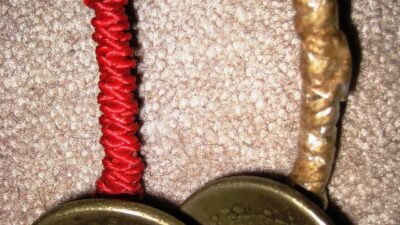
यक्षगान की घंटियाँ छोटी, मोटी, गुम्बदाकार धातु की जोड़ी हैं, जो किसी विशेष पंचधातु-सदृश मिश्रधातु से ढाली जाती हैं ताकि एक चमकीली, तीखी और दूर तक सुनाई देने वाली झनझनाहट उत्पन्न हो। दोनों घंटियाँ एक धागे (या डोरी) से आपस में तथा वादक (भागवत) के हाथ से बँधी रहती हैं — वादक धागा पकड़ता है और एक घंटी के किनारे को दूसरी घंटी के मुख से टकराता है।
Description English
Yakshagana bells are a small, thick, dome-shaped pair of metal bells cast from a special panchaloha-like (traditionally five-metal) alloy chosen to produce a bright, sharp, far-carrying clang. The two bells are joined to each other and to the player's (bhagavata's) hand by a thread — the player holds the thread and strikes the edge of one bell against the face of the other.
Bells
2 (एक जोड़ी / one matched pair, held and struck together)
गुम्बदाकार, ठोस, मोटी दीवार वाली धातु घंटियाँ (चपटी झांझ नहीं)
Dome-shaped, solid, thick-walled metal bells (not flat cymbal discs)
छोटी — उँगलियों में पकड़ी जा सकने योग्य ('finger bells'); बडगुतिट्टु परंपरा में इन्हें 'small thick metallic pair of finger bells' के रूप में वर्णित किया गया है
Small — sized to be held between the fingers ('finger bells'); the Badagu Tittu tradition describes them explicitly as 'a small thick metallic pair of finger bells'
विशेष मिश्रधातु, परंपरागत रूप से 'पंचधातु' (पाँच धातुओं का मिश्रण) कहा गया — सामान्य पंचधातु में स्वर्ण, रजत, ताँबा, जस्ता और लौह शामिल होते हैं, यद्यपि यक्षगान की घंटियों के लिए ठीक-ठीक पाँचों धातुओं की स्वतंत्र पुष्टि उपलब्ध स्रोतों में नहीं मिलती
A special alloy, traditionally described as 'five-metal' (panchaloha-type) — generic panchaloha is composed of gold, silver, copper, zinc and iron, though an independent confirmation of the exact five metals used specifically for Yakshagana bells was not found in available sources
गहरे, धूसर-काले रंग की धातु बनावट — जो इस मिश्रधातु और घंटियों के नियमित प्रयोग/हाथ के तेल से बनने वाली सतह-पर्त (patina) का परिणाम मानी जाती है
Connecting Cord
धागा
Thread/cord
दोनों घंटियों को आपस में जोड़ने वाला और वादक की उँगलियों/हाथ में स्थिर पकड़ बनाने वाला धागा या डोरी।
A thread or cord that joins the two bells and gives the player a stable grip in the hand/fingers while playing.
Pitch And Keys
प्रत्येक जोड़ी की अपनी एक निश्चित, प्राय: बहुत ऊँची पिच होती है, जो सामान्यतः गायक (भागवत) के स्वर की पिच से मेल नहीं खाती — क्योंकि घंटियों की भूमिका ताल-रक्षा है, स्वर-संगत नहीं, इसलिए गायक किसी भी 'की' (आकार/पिच) की घंटी बजा सकता है। फिर भी भागवत सामान्यतः एक से अधिक जोड़ी ('कुंजियाँ'/keys) साथ रखते हैं और मंच, प्रसंग या व्यक्तिगत रुचि के अनुसार बदलते रहते हैं।
Each pair has a single fixed pitch, generally very high, that does not need to match the singer's vocal pitch — because the bells' function is tala-keeping, not tonal accompaniment, a bhagavata can perform with a bell-pair of any pitch. Even so, bhagavatas typically keep more than one pair ('keys' of differing size/pitch) and switch between them according to venue, composition or personal preference.
Manufacturing Note Hindi
उपलब्ध सार्वजनिक स्रोतों में यक्षगान घंटियों के लिए विशिष्ट ढलाईकार, कार्यशाला या निर्माण-केंद्र का नाम दर्ज नहीं मिला; परंपरागत रूप से ये तटीय कर्नाटक के स्थानीय धातुकर्मियों द्वारा घंटा-धातु (bell-metal) शैली की ढलाई विधि से बनाई जाती रही हैं — इस विवरण की और पुष्टि आवश्यक है।
Frets
लागू नहीं — यह एक तार वाद्य नहीं बल्कि एक ठोस, आघात-आधारित (concussion) घंटा-युग्म है; अतः फ्रेट, तार या धनुष जैसी कोई संरचना इसमें नहीं होती।
Not applicable — this is not a string instrument but a solid, concussion-based bell pair; it has no frets, strings or bow.
ध्वनि-चरित्र
SoundTonal Character Hindi
यक्षगान की घंटियों की ध्वनि तीखी, चमकीली और भेदक (piercing) होती है — यह ढोल जैसे भारी वाद्यों (चंडे, मद्दले) और भागवत के गायन के बीच से भी स्पष्ट सुनाई देती है, ठीक वैसे ही जैसे किसी वाद्यवृंद में उच्च-पिच वाला संकेत-वाद्य कार्य करता है।
Tonal Character English
The tone of Yakshagana bells is sharp, bright and piercing — able to cut clearly through the heavier drums (chande, maddale) and the bhagavata's own singing, functioning much like a high-pitched cueing instrument within the ensemble.
Timbre
उज्ज्वल धात्विक झंकार, बिना किसी विशिष्ट स्वर-सप्तक संबद्धता के — प्रत्येक जोड़ी की स्वयं की स्थिर, ऊँची पिच होती है
अंग्रेज़ी में पढ़ें · Read in English
Bright metallic clang without a specific melodic pitch-class relationship — each pair carries its own fixed, high pitch
Range
एकल, स्थिर, अत्यंत ऊँची पिच प्रति जोड़ी (कोई स्वर-सप्तक या रागात्मक परास नहीं — यह एक तालवाद्य है, सुर-वाद्य नहीं)
अंग्रेज़ी में पढ़ें · Read in English
A single, fixed, very high pitch per pair (no melodic octave range — this is a rhythm instrument, not a pitched melodic one)
Dynamic Range
मध्यम कुल ध्वनि-आयतन किंतु तीव्र भेदन-क्षमता — सामान्य प्रहार से लेकर तेज़ लय में द्रुत हाथ-घुमाव तक
अंग्रेज़ी में पढ़ें · Read in English
Moderate overall volume but high acoustic penetration — from a normal single strike to a rapid hand-roll during fast tempo passages
Techniques
श्रवण-कक्ष · The Listening Room
देखें-सुनें
Yakshagana Talamaddale Part-1 | Balipa Narayana Bhagavatharu · 59:11
Yakshagana Talamaddale Part-2 | Balipa Narayana Bhagavatharu · 57:53
Ekavyakti Taalamaddale Yakshagana | 89th BVB & Infosys Foundation Cultural Outreach Program · 1:35:15
अन्य विवरण
More DetailsTimbre
उज्ज्वल धात्विक झंकार, बिना किसी विशिष्ट स्वर-सप्तक संबद्धता के — प्रत्येक जोड़ी की स्वयं की स्थिर, ऊँची पिच होती है
रोचक तथ्य
Margin Notesएक दिवंगत कलाकार की निजी घंटियाँ — विकिमीडिया कॉमन्स पर उपलब्ध यक्षगान घंटियों की प्रतिनिधि छवि (Ybells.jpg) वास्तव में दिवंगत यक्षगान कलाकार तालेबैलु पटेल महाबलैया की निजी घंटियाँ दर्शाती है — इसे 19 मई 2009 को छायाकार 'Raguks' द्वारा खींचा गया।
The representative image of Yakshagana bells on Wikimedia Commons (Ybells.jpg) actually depicts the personal bells of the late Yakshagana performer Talebailu Patel Mahabalaiah — photographed on 19 May 2009 by photographer 'Raguks'.
तालमद्दले नाम की उत्पत्ति — बिना वेशभूषा और नृत्य के प्रस्तुत होने वाली गायन-संवाद विधा 'तालमद्दले' का नाम स्वयं दो वाद्यों — 'ताल' (घंटियाँ) और 'मद्दले' (ढोल) — के मेल से बना है, जो इस विधा में घंटियों के केंद्रीय स्थान को दर्शाता है।
The name of 'Talamaddale' — the costume-free, dance-free sung-narrative genre — is itself a fusion of two instrument names: 'Tala' (the bells) and 'Maddale' (the drum), reflecting the bells' central place in this art form.
'हुसि' — मौन में छिपा संकेत — जब भागवत घंटियों को इस तरह टकराता है कि कोई गूँज न बचे, तो यह 'बंद प्रहार' अन्य वादकों के लिए एक मूक किंतु स्पष्ट संकेत है कि लय या गति बदलने वाली है — यह भारतीय वाद्यवृंद-संगीत में अंतर-वादक संचार की एक दुर्लभ, सूक्ष्म तकनीक है।
When the bhagavata strikes the bells so that no ring survives, this 'closed strike' is a silent but unmistakable cue to the other musicians that the rhythm or tempo is about to change — a rare, subtle technique of inter-musician communication within Indian ensemble music.
गायक की आवाज़ से बेपरवाह पिच — अधिकांश भारतीय संगत-वाद्यों (जैसे तानपूरा) के विपरीत, यक्षगान की घंटियों की पिच जान-बूझकर गायक के स्वर से मेल खाने की आवश्यकता नहीं रखती — क्योंकि इनका कार्य केवल ताल-रक्षा है, स्वर-संगत नहीं। इसीलिए भागवत किसी भी 'की' (आकार) की घंटी बजा सकता है।
Unlike most Indian accompanying instruments (such as the tanpura), Yakshagana bells are not required to match the singer's vocal pitch by design — their function is purely tala-keeping, not tonal accompaniment. This is why a bhagavata can perform with a bell-pair of any 'key' (size/pitch).
दो शैलियाँ, दो नाम — बडगुतिट्टु (उत्तरी) शैली में भागवत की उँगली-घंटियों को स्थानीय रूप से 'गुब्बिताळ' भी कहा जाता है, जबकि तेंकुतिट्टु (दक्षिणी) शैली में इन्हीं घंटियों के साथ जागटे और चक्रताल जैसे अतिरिक्त वाद्य भी बजाए जाते हैं।
In the Badagu Tittu (northern) style, the bhagavata's finger bells are locally also called 'gubbitaala', while in the Tenku Tittu (southern) style the same bells are combined with additional instruments like jaagate and chakrataala.
'एकव्यक्ति तालमद्दले' — एकल प्रस्तुति — तालमद्दले की एक विशेष उपशैली 'एकव्यक्ति तालमद्दले' में एक अकेला भागवत-कलाकार घंटियों की संगत में संपूर्ण कथा — संवाद, तर्क और गायन सहित — स्वयं प्रस्तुत करता है; यह आज भी सांस्कृतिक संस्थाओं द्वारा नियमित रूप से आयोजित की जाती है।
A special sub-form of Talamaddale called 'Ekavyakti Talamaddale' has a single bhagavata-performer present an entire narrative — dialogue, argument and song — alone, accompanied by the bells; this format continues to be regularly organized by cultural institutions today.
सवाल-जवाब
Questions & Answersयक्षगान की घंटियाँ क्या हैं?
यक्षगान की घंटियाँ एक विशेष पंचधातु-सदृश मिश्रधातु से बनी उँगली-घंटियों की जोड़ी हैं, जिन्हें कर्नाटक के यक्षगान लोक-रंगमंच में भागवत (मुख्य गायक-निर्देशक) प्रस्तुति की गति और लय बनाए रखने के लिए बजाता है।
यक्षगान की घंटियाँ मंजीरा या तालम् से कैसे अलग हैं?
मंजीरा और तालम् आमतौर पर बड़ी, चपटी झांझ-जोड़ियाँ हैं जो भजन-कीर्तन और सामूहिक भक्ति-संगीत में प्रयुक्त होती हैं। यक्षगान की घंटियाँ इसके विपरीत छोटी, गुम्बदाकार और विशेष रूप से एक अकेले भागवत द्वारा संपूर्ण नाट्य-प्रस्तुति के संचालन हेतु बनाई जाती हैं, और इनकी पिच जान-बूझकर गायक के स्वर से स्वतंत्र रखी जाती है।
तालमद्दले क्या है और यक्षगान घंटियों से इसका क्या संबंध है?
तालमद्दले यक्षगान की एक उपशैली है जिसमें बिना वेशभूषा और नृत्य के, केवल बैठकर, भागवत और मद्दले-वादक संपूर्ण कथा गायन व संवाद के माध्यम से प्रस्तुत करते हैं। इस विधा का नाम ही 'ताल' (घंटियाँ) और 'मद्दले' (ढोल) — इन दो वाद्यों के मेल से बना है।
यक्षगान की घंटियों में 'बंद प्रहार' या 'हुसि' का क्या अर्थ है?
जब भागवत घंटियों को इस प्रकार बजाता है कि कोई गूँज (overtone) न बचे और ध्वनि अचानक थम जाए, तो यह 'बंद प्रहार' या 'हुसि' कहलाता है — यह अन्य वादकों को यह संकेत देता है कि लय या गति में परिवर्तन आने वाला है।
क्या यक्षगान की घंटियाँ गायक के स्वर से मेल खाती हैं?
आमतौर पर नहीं — प्रत्येक जोड़ी की अपनी एक निश्चित, प्रायः बहुत ऊँची पिच होती है जो गायक के स्वर से मेल खाना आवश्यक नहीं समझा जाता, क्योंकि इनका कार्य केवल ताल-रक्षा है। भागवत अक्सर अलग-अलग पिच ('कुंजियों') की कई जोड़ियाँ साथ रखते हैं।
नमूना-पट्टी
The Specimen Table| नाम | यक्षगान घंटियाँ · Yakshagana Bells |
|---|---|
| अन्य नाम | यक्षगान ताल / Yakshagana Tala (रागद्धारी उपकरण का पारंपरिक नाम) · गुब्बिताळ / Gubbitaala (बडगुतिट्टु शैली में प्रचलित नाम) · Yakshagana cymbal / Yakshagana finger bells |
| प्रकार | वाद्य · Instruments |
साझा कीजिए · Share this Plate