शास्त्र विंग · वाद्य-पट्टिका · Instrument Plate
ज़ाइलोफोन
Xylophone
अन्य नामजाइलोफोन · सिलोफ़ोन (आम हिंदी उच्चारण) · Xylophone (Greek: xylon 'wood' + phone 'sound')
परिचय
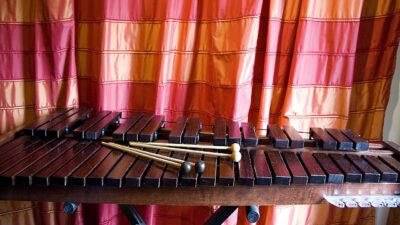
Overviewज़ाइलोफोन 'काठ की आवाज़' है — लकड़ी की क्रमबद्ध पट्टियों पर हथौड़ी की चोट से निकलती चटकीली, हँसती-सी खनक, जिसे नीचे लटकी अनुनादक नलियाँ गुँजाती हैं। भारतीय शास्त्रीय संगीत की मींड और श्रुति-सूक्ष्मता इस तयशुदा-स्वर वाद्य पर संभव नहीं, फिर भी 1950-70 के हिंदी फ़िल्म-संगीत ने इसे गले लगाया — गायक की पंक्तियों के बीच चमकते फिलर और चाँदनी-सी झिलमिलाहट के रूप में। मुंबई के पारसी लॉर्ड परिवार — कावस, कर्सी और बुजी लॉर्ड — के हाथों यह बर्मन-युग के ऑर्केस्ट्रा का एक अनमोल, पर गुमनाम रंग बन गया।
अंग्रेज़ी में पढ़ें · Read in English
The xylophone is 'the voice of wood' — the crisp, laughing ring of mallets on ordered wooden bars, amplified by the resonator tubes hung below. Indian classical meend and microtonal shruti are impossible on this fixed-pitch instrument, yet the Hindi film music of the 1950s-70s embraced it — as a glittering filler between a singer's lines and a moonlit shimmer. In the hands of Mumbai's Parsi Lord family — Cawas, Kersi and Buji Lord — it became a treasured, if anonymous, colour in Burman-era orchestration.
वर्गीकरण
ClassificationNatya Shastra Category
घन (Ghana - solid struck idiophones)
नाट्यशास्त्र की चार वाद्य-कोटियों में ज़ाइलोफोन 'घन' वर्ग में आता है — वे ठोस वाद्य जो स्वयं आघात से बजते हैं, जिनमें अलग से किसी तनी हुई झिल्ली या तार की आवश्यकता नहीं होती। जैसे मंजीरा, घटम और जलतरंग घन वाद्य हैं, वैसे ही काठ की पट्टियों पर हथौड़ी की चोट से बजने वाला ज़ाइलोफोन एक निश्चित-स्वर घन वाद्य है।
Among the four instrument categories of the Natya Shastra, the xylophone belongs to 'Ghana' — solid instruments that sound by their own body being struck, needing no stretched membrane or string. Just as manjira, ghatam and jaltarang are Ghana instruments, the xylophone — sounded by mallets striking wooden bars — is a definite-pitch Ghana (idiophone).
Western Category
Pitched (tuned) percussion idiophone
Western Family
Mallet / keyboard-percussion family (alongside marimba, vibraphone and glockenspiel)
Sub Classification
बनावट
PhysicalDescription Hindi
ज़ाइलोफोन में लकड़ी की चपटी पट्टियों (बार) की एक कतार पियानो की तरह क्रम से जमाई जाती है — बड़ी पट्टियाँ नीची आवाज़, छोटी पट्टियाँ ऊँची आवाज़। हर पट्टी के नीचे धातु की नली (रेज़ोनेटर) लगी होती है जो उस स्वर को गुँजाकर तेज़ और स्पष्ट करती है। कलाकार दोनों हाथों में हथौड़ियाँ (मैलेट) पकड़कर पट्टियों को बीच में चोट देता है, जिससे तीखी, चमकीली और झट से बुझ जाने वाली आवाज़ निकलती है।
Description English
The xylophone lays out flat wooden bars in a row like a piano keyboard — longer bars for lower notes, shorter bars for higher. Beneath each bar hangs a metal resonator tube that amplifies and clarifies the pitch. The player holds a mallet in each hand (often four in two hands for advanced work) and strikes the centre of the bars, producing a bright, sharp, quickly-decaying tone.
Body
Trapezoidal keyboard frame, bars graded from long (low) to short (high)
समलंब ढाँचा जिसमें पट्टियाँ लंबी (नीचा स्वर) से छोटी (ऊँचा स्वर) की ओर क्रमबद्ध
Frame of wood or tubular metal on a wheeled or folding stand
लकड़ी या धातु की नली का ढाँचा, पहियेदार या मोड़ने योग्य स्टैंड पर
80-95 (playing surface at waist/chest height on stand)
One tuned metal resonator tube suspended below each bar
Bars
Typically 3.5 to 4 octaves (about 42-49 bars)
Flat tuned wooden bars, arranged in two rows like piano naturals and sharps
चपटी स्वर-मिलित काठ पट्टियाँ, पियानो के सफ़ेद-काले सुरों की तरह दो कतारों में जमी हुई
Traditionally rosewood (शीशम/rosewood); modern instruments often use synthetic 'Kelon'/fibreglass bars for durability and tuning stability
परंपरागत रूप से शीशम (rosewood); आधुनिक वाद्यों में टिकाऊपन के लिए अक्सर सिंथेटिक 'केलॉन'/फ़ाइबरग्लास पट्टियाँ
हर पट्टी नीचे से घिसकर (undercut) सटीक स्वर में मिलाई जाती है — बीच से घिसने पर स्वर नीचा होता है, सिरों से घिसने पर ऊँचा।
Each bar is tuned by undercutting the underside — shaving the middle lowers the pitch, shaving the ends raises it.
Resonators
अनुनादक नलियाँ
Resonator tubes
Vertical metal tubes tuned to each bar's fundamental, hung directly below the bars to reinforce and project the tone
हर पट्टी के मूल स्वर में मिली हुई खड़ी धातु-नलियाँ, जो सीधे पट्टी के नीचे लटककर ध्वनि को गुँजाती और आगे फेंकती हैं
Simpler/older and folk xylophones may omit resonators, giving a drier, softer 'clack'
Mallets
मैलेट (हथौड़ी)
Mallets
A rounded head of hard rubber, plastic, or wood on a rattan or birch handle
रैटन या बर्च की डंडी पर सख़्त रबड़, प्लास्टिक या लकड़ी का गोल सिरा
Held one per hand (or two per hand for four-mallet playing); the harder the head, the brighter and more cutting the tone
एक हाथ में एक (उन्नत वादन में एक हाथ में दो); सिरा जितना सख़्त, स्वर उतना ही तीखा और चमकीला
Frame And Stand
ढाँचा एवं स्टैंड
Frame and stand
The bars rest on cord-suspended posts at their nodal points so they can vibrate freely; the whole assembly sits on a height-adjustable stand
पट्टियाँ अपने कंपन-रहित बिंदुओं (नोडल पॉइंट) पर डोरी से टँगी खूँटियों पर रखी जाती हैं ताकि वे स्वतंत्र रूप से गूँज सकें; पूरा ढाँचा ऊँचाई-समायोज्य स्टैंड पर टिका होता है
Pitch Layout
ज़ाइलोफोन पर स्वर स्थिर और निश्चित होते हैं — हर पट्टी एक ही पश्चिमी बारह-स्वरीय (क्रोमैटिक) पिच देती है। इसीलिए भारतीय संगीत की 'मींड' (सुरों के बीच सरकना) या श्रुति-सूक्ष्मता इस पर संभव नहीं; यह सारंगी या बाँसुरी के विपरीत एक 'तयशुदा-स्वर' वाद्य है।
The xylophone's pitches are fixed and discrete — each bar gives one Western twelve-tone (chromatic) pitch. Hence Indian 'meend' (sliding between notes) or microtonal shruti nuance is not possible on it; unlike the sarangi or bansuri, it is a fixed-pitch instrument.
ध्वनि-चरित्र
SoundTonal Character Hindi
ज़ाइलोफोन की आवाज़ चटकीली, स्पष्ट और झटपट बुझ जाने वाली होती है — 'टप-टप' या 'टक-टक' जैसी लकड़ी की खनक। यह न रोती है न ठहरती है; इसका सुर पल भर चमककर बुझ जाता है, इसीलिए यह हल्केपन, चंचलता, शरारत और तेज़ लय के लिए आदर्श है।
Tonal Character English
The xylophone's sound is crisp, clear and quickly-decaying — a woody 'tick-tock' sparkle. It neither weeps nor sustains; each note glints for an instant and is gone, which makes it ideal for lightness, playfulness, mischief and quick rhythm.
Timbre
Bright, dry, sharp, percussive; woody attack with very short sustain
Range
Roughly 3.5-4 octaves (commonly from F below middle C upward); the orchestral xylophone sounds one octave HIGHER than written
Dynamic Range
From a soft tap to a piercing, cutting sparkle that slices through a full orchestra
Techniques
सुनने का मार्गदर्शन
The Listening Guideज़ाइलोफोन को पहचानना हो तो 1950-70 के दशक के हिंदी गीत सुनिए और गायक के रुकते ही उन चमकीली 'टप-टप' लड़ियों पर कान दीजिए जो पंक्तियों के बीच झिलमिला जाती हैं। फिर सां-सां का 'दांस माकाब्र' सुनिए, जहाँ यह कंकालों की खड़खड़ाहट बनकर बजता है। अंत में एक शुद्ध ज़ाइलोफोन स्केल सुनकर उसकी सूखी, कटी हुई खनक मन में बसा लीजिए।
अंग्रेज़ी में पढ़ें · Read in English
To learn the xylophone's voice, play Hindi songs of the 1950s-70s and listen, the moment the singer pauses, for those bright 'tick-tick' runs that glitter between lines — that is often the xylophone or its cousin the vibraphone. Then hear Saint-Saens' 'Danse Macabre', where it becomes the rattle of dancing skeletons. Finally listen to a plain xylophone scale and fix its dry, clipped sparkle in your ear.
परिचय
Identity- Year Of Origin
- 1874
अन्य विवरण
More DetailsTimbre
Bright, dry, sharp, percussive; woody attack with very short sustain
रोचक तथ्य
Margin Notesज़ाइलोफोन बनाम मारिम्बा — ज़ाइलोफोन और मारिम्बा दोनों काठ-पट्टी वाद्य हैं, पर ज़ाइलोफोन ऊँचा, चटकीला और सूखा बजता है (सख़्त हथौड़ी), जबकि मारिम्बा नीचा, गर्म और गोल बजता है (नरम हथौड़ी और लंबे रेज़ोनेटर)। एक चंचल है, दूसरा गंभीर।
Both the xylophone and marimba are wooden-bar instruments, but the xylophone plays high, bright and dry (hard mallets), while the marimba is low, warm and round (soft mallets, longer resonators). One is playful, the other grave.
मानव का सबसे प्राचीन मधुर वाद्य — काठ की क्रमबद्ध पट्टियों को बजाने का विचार दुनिया के अलग-अलग कोनों में स्वतंत्र रूप से पैदा हुआ — अफ़्रीका का बलाफ़ोन, इंडोनेशिया का गम्बांग, मध्य अमेरिका का मारिम्बा। ज़ाइलोफोन इसी विश्वव्यापी विचार का पश्चिमी, ऑर्केस्ट्रा-परिष्कृत रूप है।
The idea of playing ordered wooden bars arose independently across the world — the balafon of Africa, the gambang of Indonesia, the marimba of Central America. The xylophone is the Western, orchestra-refined form of this universal idea.
गुमनाम हाथ, अमर आवाज़ — कर्सी लॉर्ड (1935-2016) हिंदी फ़िल्म-संगीत के सबसे व्यस्त सत्र-वादकों में से एक थे — अकॉर्डियन, कीबोर्ड और ज़ाइलोफोन/वाइब्राफ़ोन जैसे मैलेट वाद्यों में निपुण। कहा जाता है कि उन्होंने अपने जीवनकाल में हज़ारों रिकॉर्डिंग्स में बजाया, फिर भी उनका नाम आम श्रोता के लिए अनजाना रहा।
Kersi Lord (1935-2016) was one of Hindi film music's busiest session players — a master of accordion, keyboards and mallet instruments like the xylophone and vibraphone. He is said to have played on thousands of recordings across his lifetime, yet his name stayed unknown to the ordinary listener.
मींड क्यों नहीं? — सारंगी या बाँसुरी पर एक स्वर से दूसरे तक फिसलना (मींड) संभव है, पर ज़ाइलोफोन पर हर पट्टी एक निश्चित पश्चिमी स्वर देती है — बीच के सूक्ष्म श्रुति-स्वर उस पर नहीं मिलते। इसीलिए यह भारतीय राग-वादन का नहीं, बल्कि लय, रंग और फिलर का वाद्य है।
On the sarangi or bansuri one can slide from note to note (meend), but on the xylophone each bar gives one fixed Western pitch — the microtonal shrutis in between are unavailable. Hence it is not an instrument of Indian raga-playing, but of rhythm, colour and fill.
सवाल-जवाब
Questions & Answersज़ाइलोफोन क्या है?
ज़ाइलोफोन एक निश्चित-स्वर ताल-वाद्य (घन वाद्य) है जिसमें लकड़ी की चपटी पट्टियाँ पियानो की तरह क्रम से जमी होती हैं। इन्हें हथौड़ियों (मैलेट) से बजाया जाता है और हर पट्टी के नीचे लगी अनुनादक नली आवाज़ को गुँजाती है। इसकी ध्वनि चटकीली, स्पष्ट और झट से बुझ जाने वाली होती है।
क्या ज़ाइलोफोन एक भारतीय वाद्य है?
नहीं, ज़ाइलोफोन मूलतः पश्चिमी ऑर्केस्ट्रा का वाद्य है (हालाँकि काठ-पट्टी वाद्य अफ़्रीका, इंडोनेशिया व मध्य अमेरिका में भी प्राचीन हैं)। यह भारतीय फ़िल्म-संगीत में पश्चिमी ऑर्केस्ट्रेशन के साथ आया और 1950-70 के दशक में हिंदी गीतों की चमकीली फिलर-ध्वनि बना।
हिंदी फ़िल्म-संगीत में ज़ाइलोफोन किसने बजाया?
मुंबई के पारसी लॉर्ड परिवार — कावस लॉर्ड और उनके पुत्र कर्सी एवं बुजी लॉर्ड — हिंदी फ़िल्म-संगीत में ज़ाइलोफोन व अन्य मैलेट वाद्यों के प्रमुख वादक थे। कर्सी लॉर्ड एस.डी. बर्मन, आर.डी. बर्मन और लक्ष्मीकांत-प्यारेलाल के लिए वर्षों तक सत्र-वादक रहे।
ज़ाइलोफोन और मारिम्बा में क्या अंतर है?
दोनों काठ-पट्टी वाद्य हैं, पर ज़ाइलोफोन ऊँचा, चटकीला और सूखा बजता है (सख़्त हथौड़ी, छोटे रेज़ोनेटर), जबकि मारिम्बा नीचा, गर्म और गोल बजता है (नरम हथौड़ी, लंबे रेज़ोनेटर)। ऑर्केस्ट्रा का ज़ाइलोफोन लिखे स्वर से एक सप्तक ऊँचा बजता है।
ज़ाइलोफोन पर भारतीय राग क्यों नहीं बजाए जाते?
ज़ाइलोफोन के स्वर पश्चिमी बारह-स्वरीय पद्धति में स्थिर होते हैं, इसलिए इस पर राग की श्रुति-सूक्ष्मता या 'मींड' (सुरों के बीच सरकना) संभव नहीं। इसीलिए फ़िल्म-संगीत में इसे राग-एकल के लिए नहीं, बल्कि लय, रंग और फिलर के लिए प्रयोग किया गया।
नमूना-पट्टी
The Specimen Table| नाम | ज़ाइलोफोन · Xylophone |
|---|---|
| अन्य नाम | जाइलोफोन · सिलोफ़ोन (आम हिंदी उच्चारण) · Xylophone (Greek: xylon 'wood' + phone 'sound') |
| उद्गम | 1874 |
| प्रकार | वाद्य · Instruments |
साझा कीजिए · Share this Plate