शास्त्र विंग · वाद्य-पट्टिका · Instrument Plate
वाइब्राफ़ोन
Vibraphone
अन्य नामवाइब्स · वाइब्राहार्प (Vibraharp) · Vibraphone (also: vibes) · वाइब्राफ़ोन
परिचय
Overviewवाइब्राफ़ोन, प्यार से 'वाइब्स', एक पश्चिमी धातु-पट्टी वाद्य है जिसकी अॅल्युमिनियम पट्टियों को मुलायम मैलेट से बजाया जाता है, और जिसकी हर अनुनाद-नलिका में लगी मोटर-चालित घूमती तश्तरी स्वर में एक झिलमिलाती काँपन भर देती है। सन् 1921 में अमेरिका की लीडी कंपनी में जन्मे और डीगन द्वारा परिष्कृत इस वाद्य को लायनल हैम्पटन ने जैज़ का सम्मानित साज़ बनाया; भारत में केर्सी लॉर्ड ने इसे हिंदी फ़िल्म-संगीत के स्वप्निल इंटरल्यूड का प्राण बना दिया। यह राग का नहीं, वातावरण और चाँदनी-सी चमक का वाद्य है।
अंग्रेज़ी में पढ़ें · Read in English
The vibraphone — affectionately 'the vibes' — is a Western metal-bar instrument whose aluminium bars are struck with soft mallets, and whose motor-driven rotating disc in each resonator tube lends the tone a shimmering quiver. Born at the Leedy company in America in 1921 and refined by Deagan, it was made a respected jazz voice by Lionel Hampton; in India, Kersi Lord made it the soul of the dreamy interlude in Hindi film music. It is an instrument not of raga but of atmosphere and moonlit shimmer.
वर्गीकरण
ClassificationNatya Shastra Category
घन (Ghana — solid/struck idiophones)
नाट्यशास्त्र के चार वाद्य-वर्गों में वाइब्राफ़ोन 'घन वाद्य' श्रेणी में आता है — अर्थात् ठोस धातु की पट्टियों पर आघात से बजने वाला यंत्र, जिसमें ध्वनि उत्पन्न करने के लिए किसी तार या झिल्ली की नहीं, बल्कि स्वयं ठोस पदार्थ की कम्पन-शीलता की आवश्यकता होती है। मंजीरा और जलतरंग की भाँति यह भी घन वर्ग का है, किन्तु इसकी पट्टियाँ स्वरबद्ध (tuned) होती हैं।
Among the four instrument classes of the Natya Shastra, the vibraphone belongs to the 'Ghana' (solid/idiophone) category — an instrument sounded by striking solid bars, requiring neither string nor membrane but the resonance of the solid material itself. Like the manjira and jaltarang it is a Ghana instrument, but its bars are precisely tuned to definite pitches.
Western Category
Pitched (mallet/keyboard) percussion — struck metal idiophone
Western Family
Mallet-percussion family (kin to xylophone, marimba, glockenspiel; distinguished by aluminium bars, resonator fans and a sustain pedal)
Sub Classification
बनावट
PhysicalDescription Hindi
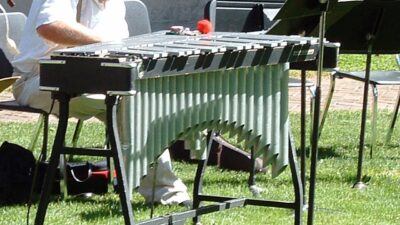
वाइब्राफ़ोन एक बड़ी, मेज़नुमा धातु-पट्टी वाद्य है जिसमें अॅल्युमिनियम की चपटी पट्टियों की दो पंक्तियाँ पियानो की चाबियों की तरह क्रम से लगी होती हैं। प्रत्येक पट्टी के नीचे एक धातु का अनुनाद-नलिका (resonator tube) लटकती है, और इन नलिकाओं के मुँह पर छोटी-छोटी घूमती हुई तश्तरियाँ (डिस्क/पंखे) लगी होती हैं जिन्हें एक विद्युत मोटर घुमाती है — यही घूमती तश्तरियाँ वाइब्राफ़ोन की विशिष्ट काँपती, झिलमिलाती ध्वनि रचती हैं।
Description English
The vibraphone is a large, table-like metal-bar instrument with two rows of flat aluminium bars laid out like a piano keyboard. Beneath each bar hangs a metal resonator tube, and at the mouth of each tube sits a small rotating disc (a fan or 'butterfly valve') spun by an electric motor — it is these spinning discs that create the vibraphone's signature shimmering, pulsing vibrato.
Body
Rectangular table-frame with two staggered rows of bars
आयताकार मेज़नुमा ढाँचा, जिस पर दो सोपानी पंक्तियों में पट्टियाँ
Tubular steel/aluminium frame on wheels; tuned aluminium alloy bars
पहियों पर टिका इस्पात/अॅल्युमिनियम का ढाँचा; स्वरबद्ध अॅल्युमिनियम-मिश्र-धातु की पट्टियाँ
88-92 (playing height, adjustable)
One tuned metal resonator tube hangs below each bar; each tube is fitted with a rotating disc at its top opening
Strings
The vibraphone has NO strings; sound comes from struck aluminium bars, not vibrating strings
None — resonance is produced by tuned metal resonator tubes below each bar, not by sympathetic strings
No drone strings; the vibraphone is a melodic/harmonic pitched-percussion instrument
Bow
मैलेट (हथौड़ियाँ)
Mallets
Wooden or plastic core wound with soft yarn or cord, on rattan or fibreglass shafts
35-40
The player holds two to four mallets and strikes the bars; softer mallets give a warm, mellow tone, harder ones a brighter attack. A bow may also be drawn across a bar's edge for a sustained, singing sound (bowed vibraphone).
Tuning Pegs
स्थायी स्वर (कारख़ाने में निर्धारित)
Fixed factory tuning
Bars are permanently tuned at manufacture by shaving metal from the underside; there are no player-adjustable tuning pegs. The instrument stays in fixed twelve-tone equal temperament.
Bridge
डोरी-निलंबन (सस्पेंशन कॉर्ड)
Suspension cord / bar rail
Each bar rests on posts at its nodal points and is suspended on a cord so it can vibrate freely above its resonator tube
Cord and felt-cushioned rails
Frets
वाइब्राफ़ोन में न फ्रेट होते हैं, न ही मीड (glissando) संभव है — इसकी पट्टियाँ स्थिर, अलग-अलग स्वरों पर बँधी होती हैं। भारतीय राग की सूक्ष्म श्रुतियाँ और मीड इस पर नहीं बजाई जा सकतीं; यही इसे शास्त्रीय संगत के बजाय वातावरण एवं इंटरल्यूड का वाद्य बनाता है।
The vibraphone has neither frets nor the ability to bend pitch (meend/glissando) — its bars are fixed at discrete pitches. The microtonal shrutis and glides of Indian raga cannot be played on it; this is precisely why it is used for atmosphere and interludes rather than as a raga-accompaniment instrument.
Special Mechanism
मोटर-चालित कम्पन एवं सस्टेन पेडल
Motor-driven vibrato and sustain pedal
वाइब्राफ़ोन की दो अनूठी युक्तियाँ हैं: (1) प्रत्येक अनुनाद-नलिका के मुँह पर लगी घूमती तश्तरी, जिसे एक विद्युत मोटर चलाती है — इसकी गति बढ़ाने-घटाने से काँपन (vibrato) तेज़ या मंद होती है, और मोटर बंद कर देने पर स्वर सीधा-स्पष्ट रहता है; (2) पियानो जैसा एक पैर-पेडल (डैम्पर बार) जो सभी पट्टियों को एक साथ मौन या गुंजायमान रख सकता है, जिससे स्वर लंबे खिंचते हैं या तुरन्त थम जाते हैं।
The vibraphone has two unique mechanisms: (1) a rotating disc at the mouth of every resonator tube, driven by an electric motor — speeding or slowing the motor makes the vibrato faster or slower, and switching the motor off leaves a pure, straight tone; and (2) a piano-style foot pedal (a felt damper bar) that mutes or frees all the bars at once, letting notes ring on or stop instantly.
ध्वनि-चरित्र
SoundTonal Character Hindi
वाइब्राफ़ोन की ध्वनि ठंडी, चमकीली और स्वप्निल होती है — मानो चाँदनी को स्वर में ढाल दिया गया हो। धातु की पट्टियों से उठती स्पष्ट झंकार में मोटर-चालित काँपन एक तैरती, झिलमिलाती परत जोड़ देता है, जो जैज़ और फ़िल्मी इंटरल्यूड को रहस्यमय, रोमानी रंग देता है।
Tonal Character English
The vibraphone's tone is cool, glistening and dream-like — as if moonlight had been cast into sound. The clear ring of its metal bars carries a floating, shimmering layer from the motor-driven vibrato, lending jazz and film interludes a mysterious, romantic colour.
Timbre
Bell-like, metallic yet mellow; sustained and shimmering, with a soft attack and long ring
Range
Typically three octaves, F3–F6 (standard); some extended models reach 3.5–4 octaves
Dynamic Range
Moderate — from a barely-there whisper of tapped bars to a full ringing chord; naturally soft, so often placed close to microphones in the studio
Techniques
सुनने का मार्गदर्शन
The Listening Guideवाइब्राफ़ोन को पहचानना हो तो 1960-70 के दशक के हिंदी फ़िल्मी गीतों के इंटरल्यूड पर कान लगाइए — मुखड़े और अंतरे के बीच जब एक चमकीली, काँपती धातु-ध्वनि तैरती है, प्रायः वही वाइब्राफ़ोन है। एकल-रूप सुनना हो तो लायनल हैम्पटन या गैरी बर्टन का जैज़ सुनिए। मोटर की गति पर ध्यान दीजिए — धीमी लहर रोमांस रचती है, तेज़ थरथराहट बेचैनी, और मोटर-बंद स्वर एक शांत ठहराव।
अंग्रेज़ी में पढ़ें · Read in English
To recognise the vibraphone, listen to the interludes of 1960s–70s Hindi film songs — when a bright, quivering metallic sound floats between the mukhda and antara, it is often the vibraphone. To hear it solo, turn to the jazz of Lionel Hampton or Gary Burton. Listen for the motor speed — a slow wave conjures 'romance', a fast shimmer 'unease', and a motor-off tone 'stillness'.
परिचय
Identity- Year Of Origin
- 1921
अन्य विवरण
More DetailsTimbre
Bell-like, metallic yet mellow; sustained and shimmering, with a soft attack and long ring
रोचक तथ्य
Margin Notesनाम में छिपी मशीन — वाइब्राफ़ोन इतिहास का पहला वाद्य है जिसमें कम्पन (vibrato) एक विद्युत-मोटर से उत्पन्न होता है। लीडी कंपनी के अभियंता हरमन विंटरहॉफ़ ने सन् 1922 के आसपास मोटर से घूमती तश्तरियाँ लगाकर यह 'काँपती' ध्वनि पाई, और इसी vibrato से वाद्य का नाम पड़ा।
The vibraphone is history's first instrument in which vibrato is produced by an electric motor. Leedy's engineer Herman Winterhoff achieved this quivering tone around 1922 by fitting motor-spun discs, and it is from this vibrato that the instrument was named.
डीगन का सुधार और पैर-पेडल — आरंभिक लीडी वाइब्राफ़ोन की इस्पात-पट्टियाँ बेसुरी थीं। सन् 1927 के आसपास जे. सी. डीगन कंपनी ने बेहतर स्वरबद्ध अॅल्युमिनियम-पट्टियाँ और पियानो जैसा डैम्पर-पेडल जोड़ा — यही आधुनिक वाइब्राफ़ोन का आधार बना।
The early Leedy vibraphone's steel bars were out of tune. Around 1927 the J. C. Deagan Company added better-tuned aluminium bars and a piano-like damper pedal — the foundation of the modern vibraphone.
जैज़ का सम्मान, हैम्पटन का हाथ — लायनल हैम्पटन ने वाइब्राफ़ोन को जैज़ का प्रतिष्ठित एकल-वाद्य बनाया। सन् 1930 में लुई आर्मस्ट्रॉन्ग के एक सत्र में उन्हें वाइब्राफ़ोन बजाने को कहा गया, और वहीं से यह उनका मुख्य साज़ बन गया; उनके पीछे मिल्ट जैक्सन और गैरी बर्टन जैसे उस्ताद आए।
Lionel Hampton made the vibraphone a prestigious jazz solo instrument. Asked to play it at a 1930 Louis Armstrong session, it became his primary instrument; masters like Milt Jackson and Gary Burton followed in his wake.
केर्सी लॉर्ड और भारतीय इंटरल्यूड — केर्सी लॉर्ड (1935-2016) एक तालवादक-परिवार से आए और पिता से लातिन तालवाद्य सीखे; फिर उन्होंने वाइब्राफ़ोन, ज़ाइलोफ़ोन तथा ग्लॉकनश्पील को हिंदी फ़िल्म-आर्केस्ट्रा में स्थापित किया। एक अनुमान के अनुसार वे लगभग 5,000 गीतों की रचना-प्रक्रिया से जुड़े रहे, और उनकी मैलेट-ध्वनि 1960-70 के दशक के अनेक फ़िल्मी इंटरल्यूड में सुनी जा सकती है।
Kersi Lord (1935-2016) came from a family of percussionists and learned Latin percussion from his father; he then established the vibraphone, xylophone and glockenspiel in the Hindi film orchestra. He is estimated to have been involved in the making of some 5,000 songs, and his mallet sound can be heard in many film interludes of the 1960s-70s.
सवाल-जवाब
Questions & Answersवाइब्राफ़ोन क्या है?
वाइब्राफ़ोन एक पश्चिमी धातु-पट्टी वाद्य (idiophone) है जिसकी अॅल्युमिनियम पट्टियों को मुलायम मैलेट से बजाया जाता है। इसकी विशेषता है प्रत्येक अनुनाद-नलिका में लगी मोटर-चालित घूमती तश्तरी, जो स्वर में एक झिलमिलाती काँपन (vibrato) उत्पन्न करती है। इसमें पियानो जैसा एक सस्टेन-पेडल भी होता है।
वाइब्राफ़ोन का आविष्कार कब और कहाँ हुआ?
वाइब्राफ़ोन को सन् 1921 में संयुक्त राज्य अमेरिका (इंडियानापोलिस) की लीडी मैन्युफ़ैक्चरिंग कंपनी ने पहली बार बाज़ार में उतारा। अभियंता हरमन विंटरहॉफ़ ने मोटर-चालित काँपन विकसित की, और सन् 1927 के आसपास डीगन कंपनी ने इसे स्वरबद्ध अॅल्युमिनियम पट्टियों और पैर-पेडल के साथ परिष्कृत किया।
हिंदी फ़िल्म-संगीत में वाइब्राफ़ोन कौन लाया?
हिंदी फ़िल्म-संगीत में वाइब्राफ़ोन के सबसे बड़े सूत्रधार केर्सी लॉर्ड (1935-2016) थे — एक तालवादक, एकॉर्डियन-वादक और अरेंजर। उन्होंने वाइब्राफ़ोन, ज़ाइलोफ़ोन और ग्लॉकनश्पील को बॉलीवुड आर्केस्ट्रा में स्थापित किया और नौशाद, आर. डी. बर्मन तथा शंकर-जयकिशन जैसे संगीतकारों के साथ काम किया।
क्या वाइब्राफ़ोन पर भारतीय राग बजाया जा सकता है?
नहीं — वाइब्राफ़ोन की पट्टियाँ पियानो की तरह स्थिर, समान-स्वरान्तर (equal temperament) पर बँधी होती हैं, इसलिए इस पर राग की सूक्ष्म श्रुतियाँ, मीड और गमक नहीं बजाई जा सकतीं। यही कारण है कि यह राग-संगत का नहीं, बल्कि वातावरण और फ़िल्मी इंटरल्यूड का वाद्य है।
वाइब्राफ़ोन की मोटर क्या करती है?
वाइब्राफ़ोन की मोटर प्रत्येक अनुनाद-नलिका के मुँह पर लगी छोटी तश्तरियों को घुमाती है। जब ये तश्तरियाँ घूमती हैं तो नलिका में हवा का प्रवाह बदलता है और स्वर में एक लहर-सी काँपन (vibrato) पैदा होती है। मोटर की गति बढ़ाने से काँपन तेज़ होती है, और मोटर बंद कर देने पर स्वर सीधा-स्पष्ट रहता है।
नमूना-पट्टी
The Specimen Table| नाम | वाइब्राफ़ोन · Vibraphone |
|---|---|
| अन्य नाम | वाइब्स · वाइब्राहार्प (Vibraharp) · Vibraphone (also: vibes) · वाइब्राफ़ोन |
| उद्गम | 1921 |
| प्रकार | वाद्य · Instruments |
साझा कीजिए · Share this Plate