शास्त्र विंग · वाद्य-पट्टिका · Instrument Plate
टमक
Tamak
अन्य नामटमक · तमक · टामाक (Santali: Tamak') · टुमडाक-टमक जोड़ी में (paired with Tumdak)
परिचय
Overviewटमक संथाल परगना का गहरा बास-नगाड़ा है — लोहे की चादर से गढ़ा कड़ाहनुमा खोल, भैंस के चमड़े से मढ़ा एकल मुख, और दो लकड़ी की डंडियों से बजने वाली गड़गड़ाती ध्वनि। दो-मुख वाले तुमडाक के साथ जोड़ी में यह संथाली नृत्य, विवाह (बापला) और बाहा-सोहराय पर्वों की धड़कन है; किसी दरबार का परिष्कृत वाद्य नहीं, बल्कि एक समुदाय की सामूहिक साँस।
अंग्रेज़ी में पढ़ें · Read in English
The Tamak is the deep bass kettledrum of Santhal Pargana — a bowl-shaped shell beaten from iron sheet, a single head of buffalo hide, and a rumbling sound struck out with two wooden sticks. Paired with the two-headed Tumdak it is the heartbeat of Santhali dance, weddings (Bapla) and the Baha and Sohrai festivals; not the refined instrument of a court but the collective breath of a community.
वर्गीकरण
ClassificationNatya Shastra Category
अवनद्ध (Avanaddha - covered/membranophone percussion)
नाट्यशास्त्र के चार वाद्य-वर्गों में टमक 'अवनद्ध' वर्ग में आता है — वे वाद्य जिनका मुख चमड़े से मढ़ा (ढका) जाता है और आघात से ध्वनि उत्पन्न होती है। टमक एक एकल-मुख कड़ाहनुमा नगाड़ा (kettledrum) है जिसकी गहरी बास ध्वनि लय का आधार रखती है।
Among the four instrument classes of the Natya Shastra, the Tamak belongs to 'Avanaddha' — instruments whose mouth is covered (stretched) with hide and sounded by striking. The Tamak is a single-headed bowl/kettledrum whose deep bass voice lays the rhythmic foundation.
Western Category
Kettledrum (single-headed membranophone)
Western Family
Timpani/kettledrum family — a hemispherical metal-shell drum struck with beaters, akin in form to the naqqara/nagara and to European timpani, but a folk instrument of fixed booming pitch
Sub Classification
बनावट
PhysicalDescription Hindi
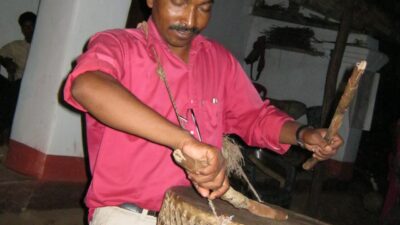
टमक एक बड़ा, एकल-मुख कड़ाहनुमा नगाड़ा है जिसका खोल लोहे या धातु की चादर से बना होता है — ऊपर से चौड़ा कटोरा और नीचे की ओर सँकरा (शंक्वाकार)। इसके चौड़े मुख पर भैंस या गाय के मोटे चमड़े को कसकर मढ़ा जाता है, और इसे लकड़ी की दो डंडियों (छड़ों) से पीटा जाता है। यह संथाली संगीत का गहरा बास-वाद्य है, जो प्रायः दो-मुख वाले तुमडाक के साथ जोड़ी में बजता है।
Description English
The Tamak is a large, single-headed kettledrum whose shell is beaten from iron or metal sheet — a wide bowl at the top narrowing towards the base (conical). Its broad mouth is tightly covered with thick buffalo or cow hide, and it is struck with two wooden sticks (beaters). It is the deep bass voice of Santhali music, most often played as a pair with the two-headed Tumdak.
Body
Hemispherical bowl / kettle, conical and narrowing at the base
अर्धगोलाकार कटोरा/कड़ाह, नीचे की ओर शंक्वाकार और सँकरा
Beaten iron or metal sheet (a metal shell, unlike the wood/clay shells of most Indian drums)
पीटी हुई लोहे या धातु की चादर (अधिकांश भारतीय ढोलों के लकड़ी/मिट्टी के खोल के विपरीत धातु का खोल)
35-46 (head 14-18 inches across)
The hollow metal bowl acts as the resonating chamber, projecting a deep, booming low tone
Head
1 (single-headed)
One large playing head stretched over the wide mouth of the metal bowl
धातु के कड़ाह के चौड़े मुख पर तानी हुई एक बड़ी वादन-झिल्ली (मुख)
Thick buffalo hide or cow hide (कच्चा चमड़ा)
14-18
Laced and pulled taut over the rim; tension is set by leather/rope lacing rather than fine tuning — the Tamak sounds a fixed deep pitch
Beaters
डंडी / छड़
Sticks / beaters
2 (a pair)
Wood (plain wooden sticks)
Held one in each hand and struck alternately on the single head; there is no hand-playing on the Tamak (unlike the companion Tumdak, which is played by hand)
Lacing And Mounting
बंधन / कसाई
Lacing / binding
चमड़े या रस्सी की बद्धियों से मुख को खोल पर कसा जाता है। भारी होने के कारण टमक को प्रायः ज़मीन पर रखकर, या गले/कमर में टाँगकर, या किसी सहारे पर रखकर बजाया जाता है।
Leather or rope lacing binds the head to the shell. Being heavy, the Tamak is usually played resting on the ground, slung from the neck/waist, or set on a support.
Frets
टमक एक ताल-वाद्य (नगाड़ा) है — इसमें तार या फ्रेट नहीं होते। यह स्वर नहीं, अपितु गहरी बास लय उत्पन्न करता है।
The Tamak is a percussion instrument (kettledrum) — it has no strings or frets. It produces not melody but deep bass rhythm.
ध्वनि-चरित्र
SoundTonal Character Hindi
टमक की ध्वनि गहरी, गूँजती और गड़गड़ाती बास है — मानो दूर से आती वज्र-गर्जना। इसका स्वर स्थिर और भारी होता है, जो संथाली नृत्य की धड़कन को आधार देता है और पूरे गाँव में सुनाई देता है।
Tonal Character English
The Tamak's sound is deep, resonant and thunderous bass — like distant rolling thunder. Its tone is fixed and heavy, anchoring the pulse of Santhali dance and carrying across an entire village.
Timbre
Booming, dark, low-pitched; a broad, weighty attack with a short sustaining boom from the metal bowl
Range
Low, fixed pitch (a single deep fundamental) — the Tamak is a rhythm and bass anchor, not a melodic instrument
Dynamic Range
Powerful and loud by nature — built to be heard over open-air group dance and large gatherings; dynamics come from stroke force and density rather than pitch
Techniques
सुनने का मार्गदर्शन
The Listening Guideटमक को समझना हो तो पहले उसकी गहरी बास को शरीर में महसूस कीजिए — यह कानों से पहले धड़कन में उतरती है। फिर टमक और तुमडाक के संवाद को पकड़िए: टमक भारी, स्थिर नींव रखता है और तुमडाक उस पर फुर्तीली ताल बुनता है। बाहा या सोहराय के सामूहिक नृत्य-वीडियो देखिए, जहाँ पंक्तिबद्ध नर्तक टमक की धड़कन पर पैर मिलाते हैं।
अंग्रेज़ी में पढ़ें · Read in English
To understand the Tamak, first feel its deep bass in your body — it reaches the pulse before it reaches the ear. Then follow the dialogue of Tamak and Tumdak: the Tamak lays a heavy, steady foundation while the Tumdak weaves nimble rhythm over it. Watch communal dance videos of Baha or Sohrai, where rows of dancers step in time to the Tamak's beat. Listen to a 'Tumdak-Tamak dukan' (jugalbandi/duel), where two players hold a competitive conversation — here rhythm itself becomes language.
अन्य विवरण
More DetailsTimbre
Booming, dark, low-pitched; a broad, weighty attack with a short sustaining boom from the metal bowl
रोचक तथ्य
Margin Notesधातु का खोल — दुर्लभ बनावट — भारतीय ताल-वाद्यों में टमक इस मायने में असामान्य है कि इसका खोल लोहे/धातु की चादर से पीटकर बनाया जाता है, जबकि तबला, पखावज, ढोलक जैसे वाद्यों के खोल लकड़ी के और तुमडाक/मृदंग के मिट्टी के होते हैं। धातु का कटोरा ही उसकी गहरी, गूँजती बास का रहस्य है।
Among Indian percussion, the Tamak is unusual in that its shell is beaten from iron/metal sheet, whereas drums like tabla, pakhawaj and dholak have wooden shells and the tumdak/mridang have clay ones. The metal bowl is the secret of its deep, resonant bass.
टमक और नगाड़े का रिश्ता — संथाल परगना में छोटे नगाड़े को भी क्षेत्रीय रूप से 'टमक' कहा जाता है। रूप में टमक उत्तर भारत के नगाड़े और मध्य-एशियाई नक़्क़ारा परिवार से मिलता-जुलता है — सभी अर्धगोलाकार कड़ाहनुमा, डंडियों से बजने वाले नगाड़े हैं।
In Santhal Pargana a small nagara is also called 'Tamak' regionally. In form the Tamak resembles the North Indian nagara and the Central Asian naqqara family — all hemispherical bowl-drums played with sticks.
पर्व-विशिष्ट धुनें — संथाली संगीत में हर पर्व की अपनी ताल-धुनें होती हैं — बाहा (वसंत फूल-पर्व) की धुन सोहराय (फ़सल-पर्व) से भिन्न है, और उन धुनों की लय उसी पर्व के नृत्य को प्रतिबिंबित करती है। टमक उन धड़कनों को थामने वाला आधार-वाद्य है।
In Santhali music each festival has its own rhythmic tunes — the Baha (spring flower festival) tune differs from Sohrai (harvest festival), and each tune's rhythm mirrors that festival's dance. The Tamak is the foundation drum that holds those beats.
सामूहिकता का वाद्य — शास्त्रीय एकल-वादन परंपरा के विपरीत, टमक किसी नामी विरतुओसो का नहीं, बल्कि समुदाय का वाद्य है। इसे प्रायः पुरुष बजाते हैं और पूरा गाँव — स्त्री-पुरुष — पंक्तिबद्ध होकर उसी लय पर सामूहिक नृत्य करता है।
Unlike the classical solo-recital tradition, the Tamak belongs not to a celebrated virtuoso but to the community. It is usually played by men, while the whole village — women and men — dances in communal rows to its rhythm.
सवाल-जवाब
Questions & Answersटमक क्या है?
टमक संथाल जनजाति का एक बड़ा एकल-मुख कड़ाहनुमा नगाड़ा है, जिसका खोल लोहे/धातु की चादर से बनता है और चौड़े मुख पर भैंस या गाय का चमड़ा मढ़ा होता है। इसे दो लकड़ी की डंडियों से बजाया जाता है और यह संथाली नृत्य की गहरी बास लय का आधार है।
टमक किस क्षेत्र का वाद्य है?
टमक मुख्यतः संथाल परगना — झारखंड, पश्चिम बंगाल, ओडिशा और बांग्लादेश (दिनाजपुर) के संथाल आदिवासी क्षेत्र का वाद्य है। यह संथाल समुदाय के पर्वों, विवाहों और नृत्यों में बजता है।
टमक और तुमडाक में क्या अंतर है?
टमक लोहे के खोल वाला एकल-मुख कड़ाहनुमा नगाड़ा है जिसे दो डंडियों से बजाया जाता है और यह गहरी बास देता है। तुमडाक मिट्टी के खोल वाला दो-मुख हस्त-ढोल है जिसे हाथों से बजाया जाता है और यह बारीक ताल बुनता है। दोनों 'तुमडाक-टमक' जोड़ी में बजते हैं।
टमक किन अवसरों पर बजाया जाता है?
टमक संथाल पर्वों — बाहा (फूल-पर्व), सोहराय (फ़सल-पर्व), करम — तथा बापला (विवाह) और धार्मिक अनुष्ठानों में बजता है। संथाल मान्यता में इसे विशेष पवित्र शक्ति वाला माना जाता है।
क्या टमक का प्रयोग बॉलीवुड में होता है?
मुख्यधारा के बॉलीवुड में टमक विरल है, किंतु जनजातीय-विषयक और क्षेत्रीय (झारखंडी/संथाली) सिनेमा तथा लोक-फ़्यूज़न संगीत में इसकी गहरी बास गूँज आदिवासी परिवेश और उत्सव-दृश्यों को प्रामाणिकता देती है।
नमूना-पट्टी
The Specimen Table| नाम | टमक · Tamak |
|---|---|
| अन्य नाम | टमक · तमक · टामाक (Santali: Tamak') · टुमडाक-टमक जोड़ी में (paired with Tumdak) · Tamak' (Santali orthography with glottal stop) |
| प्रकार | वाद्य · Instruments |
साझा कीजिए · Share this Plate