शास्त्र विंग · वाद्य-पट्टिका · Instrument Plate
सुरनाई
Surnai
अन्य नामसुरना · सुरनई · शहनाई (कश्मीरी लोक रूप) · Surna
परिचय
Overviewसुरनाई कश्मीर की वादियों की बुलंद पुकार है — अठारह इंच की लकड़ी की शंक्वाकार नली, सात स्वर-छिद्र और एक दोहरा रीड, जिसकी तीखी आवाज़ बिना किसी यंत्र के पूरे मैदान को भर देती है। सुरना/ज़ुर्ना परिवार का यह भारतीय सदस्य ढोल और नगाड़े के साथ मिलकर भांड पाथर लोक-नाट्य की धड़कन बनता है, और हर विवाह-जुलूस व उत्सव में मंगल-ध्वनि गूँजाता है।
अंग्रेज़ी में पढ़ें · Read in English
The surnai is the loud cry of the Kashmir valley — an eighteen-inch conical wooden pipe with seven finger holes and a double reed, whose sharp voice fills an entire open ground without any amplification. This Indian member of the surna/zurna family joins the dhol and nagara to become the heartbeat of Bhand Pather folk theatre, and sounds the note of auspiciousness at every wedding procession and festival.
वर्गीकरण
ClassificationNatya Shastra Category
सुषिर (Sushira - wind instruments)
सुषिर वर्ग में सुरनाई एक फूँक-वाद्य है जो हवा के स्तंभ के कंपन से ध्वनि उत्पन्न करती है। इसका शंक्वाकार छिद्र और दोहरा रीड इसे शहनाई तथा नादस्वरम के समान 'शॉम' (shawm) परिवार में रखता है।
In the Sushira (wind) category of the Natya Shastra, the surnai is an air-column instrument that produces sound by the vibration of a column of air. Its conical bore and double reed place it in the same 'shawm' family as the shehnai and nadaswaram.
Western Category
Double-reed woodwind (conical-bore shawm)
Western Family
Shawm family (oboe/zurna family — the ancestor of the modern oboe; sibling to Turkish zurna, Iranian sorna, and Indian shehnai)
Sub Classification
बनावट
PhysicalDescription Hindi
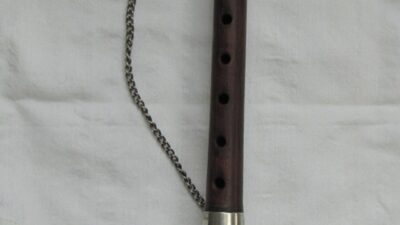
सुरनाई एक लगभग अठारह इंच (~45 सेमी) लंबी लकड़ी की शंक्वाकार नली है, जिसके अगले भाग में सात स्वर-छिद्र और सिरे पर फैला हुआ घंटी-मुख (bell mouth) होता है। ऊपरी सिरे पर एक दोहरा रीड (double reed) लगा होता है जिसे होठों के बीच दबाकर फूँका जाता है। यह शहनाई की अपेक्षा अधिक कच्ची, तेज़ और खुली हवा में गूँजने वाली आवाज़ देती है, इसलिए यह कश्मीर के भांड पाथर लोक-नाट्य और बरात-जुलूसों का प्रमुख वाद्य है।
Description English
The surnai is an approximately eighteen-inch (~45 cm) conical wooden pipe with seven finger holes on the front and a flared bell mouth at the end. A double reed fixed at the top is pressed between the lips and blown. Louder, rawer and more open-air-piercing than its refined cousin the shehnai, it is the lead melody instrument of Kashmir's Bhand Pather folk theatre and of wedding (baraat) processions.
Body
Straight conical pipe widening into a flared bell
सीधी शंक्वाकार नली जो सिरे पर फैलकर घंटी-मुख बनाती है
Seasoned hardwood — traditionally walnut, apricot, mulberry or other fruit-tree wood of the Kashmir valley
पकी हुई कठोर लकड़ी — परंपरागत रूप से अखरोट, खुबानी, शहतूत या कश्मीर घाटी की अन्य फल-वृक्ष की लकड़ी
40-48
The conical bore itself is the resonator; the widening bell projects and amplifies the tone for open-air performance
Strings
सुरनाई एक तार-रहित फूँक-वाद्य है — इसमें कोई तार नहीं होते; ध्वनि दोहरे रीड और हवा के स्तंभ से बनती है।
The surnai is a stringless wind instrument — it has no strings; sound is produced by the double reed and the vibrating air column.
Not applicable — the surnai is an aerophone, not a chordophone
Reed
Double reed
दोहरा रीड (double reed)
Two thin blades of cut and shaved cane/reed bound together, sometimes seated on a small metal staple (bocal)
काटकर घिसे हुए सरकंडे/नरकट की दो पतली परतें एक साथ बँधी हुई, कभी-कभी छोटे धातु के नल (staple) पर जड़ी हुई
दोहरा रीड सुरनाई की आत्मा है — इसे होठों के बीच दबाकर वादक तेज़ दबाव से फूँकता है, जिससे तीखी और भेदने वाली ध्वनि निकलती है। कई वादक होठों को टिकाने के लिए एक छोटी चकती (pirouette) का उपयोग करते हैं।
The double reed is the soul of the surnai — pressed between the lips and blown with high pressure, it yields the instrument's sharp, penetrating cry. Many players use a small lip-disc (pirouette) to rest the lips against for sustained blowing.
Finger Holes
7 (front), sometimes with an additional thumb hole
7 (सामने), कभी-कभी एक अतिरिक्त अंगूठा-छिद्र सहित
सात स्वर-छिद्रों को उँगलियों से खोलकर-बंद करके स्वर बदले जाते हैं; उँगलियों के आधे-खुले प्रयोग से मींड और सूक्ष्म स्वर भी संभव हैं।
Pitch is changed by opening and closing the seven finger holes; half-holing and finger shading allow meend (glides) and microtonal shadings.
Bell
घंटी-मुख
Bell mouth
The flared open end (often reinforced or capped with brass/metal) that radiates and amplifies the sound outward
Wood, frequently ringed or belled with brass/metal
Frets
सुरनाई में फ्रेट नहीं होते — यह एक फूँक-वाद्य है; स्वर उँगलियों की छिद्र-क्रिया और फूँक के दबाव से नियंत्रित होते हैं।
The surnai has no frets — as a wind instrument, pitch is governed by finger-hole covering and breath pressure.
ध्वनि-चरित्र
SoundTonal Character Hindi
सुरनाई की ध्वनि तेज़, तीखी और भेदने वाली है — इतनी बुलंद कि बिना किसी विद्युत यंत्र के पूरे गाँव या मैदान में गूँज जाए। इसमें उत्सव, वीरता और लोक-नाट्य का उल्लास बसा है; साथ ही करुण धुनों में यह वादी की पुकार-सी लगती है।
Tonal Character English
The surnai's tone is loud, sharp and piercing — powerful enough to carry across an entire village or open ground without any amplification. It carries festivity, valour and the theatrical exuberance of folk drama; in plaintive melodies it can sound like the very call of the valley.
Timbre
Bright, reedy, buzzing and penetrating (characteristic double-reed 'nasal' brilliance)
Range
Roughly two octaves, dictated by the seven finger holes and overblowing
Dynamic Range
Predominantly loud and forceful — designed for open-air projection rather than intimate soft playing
Techniques
सुनने का मार्गदर्शन
The Listening Guideसुरनाई को खुले मन से सुनिए — यह मैदान का वाद्य है, कमरे का नहीं। पहले ढोल-नगाड़े के साथ इसकी त्रयी में डूबिए, फिर अकेली सुरनाई की लम्बी, बिना साँस टूटे चलती तान पर ध्यान दीजिए। भांड पाथर के किसी दृश्य के साथ सुनिए, जहाँ हर मोड़ पर इसका स्वर बदलता है।
अंग्रेज़ी में पढ़ें · Read in English
Listen to the surnai with an open mind and open ears — it is not an intimate instrument but an instrument of the open ground. First hear its trio with dhol and nagara, and watch how the three together build a theatrical scene. Then focus on a solo surnai's long, unbroken phrase — that is the marvel of circular breathing. Listen alongside a Bhand Pather episode, where the surnai's tone shifts at every turn of the drama.
परिचय
Identity- Year Of Origin
- 1300
अन्य विवरण
More DetailsTimbre
Bright, reedy, buzzing and penetrating (characteristic double-reed 'nasal' brilliance)
रोचक तथ्य
Margin Notesएक ही जड़, तीन नाम — सुरनाई (कश्मीर), सोरना/सुरना (ईरान) और ज़ुर्ना (तुर्की व मध्य एशिया) — ये सब एक ही शॉम-वाद्य के क्षेत्रीय नाम हैं। यही कारण है कि अंग्रेज़ी विकिपीडिया पर 'Surnai' खोजने पर वह 'Zurna' पृष्ठ पर पहुँचा देता है।
Surnai (Kashmir), sorna/surna (Iran) and zurna (Turkey and Central Asia) are all regional names of the same shawm instrument. This is why searching 'Surnai' on English Wikipedia redirects to the 'Zurna' page.
शॉम — आधुनिक ओबो का पूर्वज — सुरनाई जिस शॉम-परिवार की सदस्य है, वही परिवार यूरोप पहुँचकर आधुनिक ओबो (oboe) का पूर्वज बना। यानी कश्मीर की सुरनाई और पश्चिमी वाद्यवृंद का ओबो दूर के रिश्तेदार हैं।
The shawm family to which the surnai belongs is the same family that, on reaching Europe, became the ancestor of the modern oboe. In other words, the Kashmiri surnai and the Western orchestra's oboe are distant cousins.
बिना बिजली के मंच — भांड पाथर पारंपरिक रूप से खुले मैदान में, बिना किसी ध्वनि-प्रणाली के होता है। सुरनाई की भेदने वाली आवाज़ ही वह 'माइक' है जो कहानी को दूर बैठे दर्शक तक पहुँचाती है।
Bhand Pather is traditionally staged in the open, with no sound system. The surnai's piercing voice is the very 'microphone' that carries the story to spectators sitting far away.
सवाल-जवाब
Questions & Answersसुरनाई क्या है?
सुरनाई एक दोहरा-रीड फूँक-वाद्य है — लगभग अठारह इंच की लकड़ी की शंक्वाकार नली जिसमें सात स्वर-छिद्र और सिरे पर घंटी-मुख होता है। यह कश्मीर के भांड पाथर लोक-नाट्य का प्रमुख धुन-वाद्य है और सुरना/ज़ुर्ना शॉम-परिवार का सदस्य है।
सुरनाई और शहनाई में क्या अंतर है?
दोनों एक ही शॉम-परिवार के दोहरा-रीड वाद्य हैं और दोनों के नाम में फ़ारसी 'नाय' (नरकट) है। सुरनाई खुले मैदान व लोक-नाट्य की अधिक बुलंद, कच्ची आवाज़ वाली कश्मीरी शाखा है, जबकि शहनाई इसका दरबारी-परिष्कृत, शास्त्रीय-मंच वाला रूप है।
सुरनाई कहाँ और किसके साथ बजाई जाती है?
सुरनाई मुख्यतः जम्मू और कश्मीर में, विशेषकर भांड पाथर लोक-नाट्य में बजाई जाती है, जहाँ यह ढोल और नगाड़े के साथ त्रयी बनाती है। यह बरात-जुलूसों, मेलों और गाँव के उत्सवों में भी सुनी जाती है।
क्या सुरनाई एक लुप्तप्राय वाद्य है?
हाँ, सुरनाई मुख्यतः कश्मीर की भांड पाथर मंडलियों और भगत/भांड समुदायों में ही जीवित है। आधुनिक मनोरंजन और परंपरा के क्षरण के कारण कुशल वादक घट गए हैं, पर रंगकर्मियों और सांस्कृतिक संस्थाओं के पुनरुद्धार-प्रयासों से यह परंपरा बनी हुई है।
सुरनाई का नाम कहाँ से आया?
'सुरनाई' फ़ारसी जड़ों 'सुर' (उत्सव/भोज) और 'नाय' (नरकट/बाँसुरी) से बनी है — अर्थात् 'उत्सव की नरकट-बाँसुरी'। यही 'नाय' आगे 'शहनाई' में भी है। ईरान में इसे सोरना/सुरना और तुर्की व मध्य एशिया में ज़ुर्ना कहते हैं।
नमूना-पट्टी
The Specimen Table| नाम | सुरनाई · Surnai |
|---|---|
| अन्य नाम | सुरना · सुरनई · शहनाई (कश्मीरी लोक रूप) · Surna · Surnai (also: Surnāī, Sornai) |
| उद्गम | 1300 |
| प्रकार | वाद्य · Instruments |
साझा कीजिए · Share this Plate