शास्त्र विंग · वाद्य-पट्टिका · Instrument Plate
सारिंदा
Sarinda
अन्य नामसरिंदा · सारंडा (सिख कीर्तन परंपरा में 'सरंदा' / Saranda) · सरिंजा (बंगाल / Sarinja) · सेरजा / सेरेंजा (असम-त्रिपुरा जनजातीय / Serja, Serenja)
परिचय
Overviewसारिंदा लोक-भारत की धड़कन है — लकड़ी के एक ही टुकड़े से गढ़ा, कमर से कटा और नीचे चमड़े से मढ़ा धनुष-वाद्य, जिसकी खुरदरी आवाज़ सीधे मिट्टी से उठती लगती है। यह दरबारों का नहीं, गाँव-मेलों, नाव-घाटों और सूफ़ी-भक्ति महफ़िलों का वाद्य है। बाउल-फ़कीरी से लेकर सिख कीर्तन और संताल धोद्रो बानम तक, यह भारत के लोक-हृदय की वह आवाज़ है जो विलुप्ति से जूझते हुए भी गूँज रही है।
अंग्रेज़ी में पढ़ें · Read in English
The sarinda is the heartbeat of folk India — a bowed instrument carved from a single block of wood, waisted at the middle and covered below with skin, whose grainy voice seems to rise straight out of the soil. It belongs not to courts but to village fairs, riverside ghats and Sufi-devotional gatherings. From Baul and Fakiri to Sikh kirtan and the Santal dhodro banam, it is the voice of India's folk heart, still sounding even as it fights extinction.
वर्गीकरण
ClassificationNatya Shastra Category
तत (Tata - stringed instruments)
तत वर्ग में सारिंदा एक धनुष-चालित तंतु-वाद्य है, जो गज़ (धनुष) के घर्षण से ध्वनि उत्पन्न करता है। यह लोक-परंपरा का वाद्य है, इसलिए शास्त्रीय सारंगी की तुलना में इसका ढाँचा सरल और खुला होता है।
In the Tata (stringed) category, the sarinda is a bow-driven chordophone that produces sound through the friction of a horsehair bow. As a folk instrument, its structure is simpler and more open than the classical sarangi.
Western Category
Bowed string instrument (folk fiddle)
Western Family
Fiddle / bowed-lute family — a short-necked bowed lute carved from a single block, related in form to the sarangi but with a deeply waisted, partly open belly
Sub Classification
बनावट
PhysicalDescription Hindi
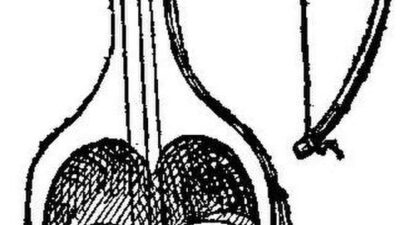
सारिंदा लकड़ी के एक ही ठोस टुकड़े से तराशा गया धनुष-वाद्य है। इसका शरीर बीच में गहराई से कटा हुआ (कमरदार / waisted) होता है — ऊपरी भाग खुला रहता है जबकि निचला कटोरा-नुमा हिस्सा चमड़े (झिल्ली) से मढ़ा जाता है। यही खुली-बंद बनावट इसे सारंगी से अलग और तुरंत पहचान योग्य बनाती है।
Description English
The sarinda is a bowed instrument carved from a single solid block of wood. Its body is deeply waisted at the middle — the upper part is left open while the lower bowl is covered with a stretched animal-skin (parchment) membrane. This distinctive open-above, skin-below form makes it instantly recognisable and sets it apart from the sarangi.
Body
Deeply waisted, boat- or figure-eight-shaped body with an open upper chamber and a rounded lower resonator
गहरी कमर वाला, नाव या अंग्रेज़ी '8' जैसा आकार — ऊपर खुला कक्ष और नीचे गोल अनुनाद-कटोरा
Single block of wood (traditionally toon/red cedar, sheesham/Indian rosewood, or jackwood in eastern India)
लकड़ी का एक ही टुकड़ा (परंपरागत रूप से टून/लाल देवदार, शीशम, या पूर्वी भारत में कटहल की लकड़ी)
55-75
Lower bowl covered with stretched animal skin (goat/deer parchment) over which the bridge rests; the open upper waist projects the tone outward
Strings
Primary playing (melody) strings run over a skin-mounted bridge
Fine resonating (tarab) strings — plentiful in eastern-Indian and Punjabi saranda forms, few or none in the simplest Rajasthani/tribal folk sarindas
Some folk forms add one or two thicker drone strings; the simplest sarindas rely only on the main strings
Bow
गज़ / कमानी
Gaz (bow)
Curved wooden stick strung with horsehair
50-65
Held in the right hand and drawn across the strings while the instrument rests vertically; the loose horsehair tension is adjusted by the player's grip
Tuning Pegs
खूँटी
Khunti (pegs)
Large wooden friction pegs mounted in the open upper chamber for the main strings, plus small side pegs for any sympathetic strings; the pegbox is often carved into decorative scroll or bird shapes in tribal variants
Bridge
घोड़ी / पुल
Ghodi (bridge)
A wooden bridge that sits on the skin-covered lower belly, transmitting string vibration into the parchment membrane
Wood or bone, resting on the stretched skin
Frets
सारिंदा में कोई फ्रेट नहीं होते — वादक तारों को सीधे उँगलियों (प्रायः नाख़ून या पोर) से दबाकर मींड और लोक-सुरों की फिसलन पैदा करता है।
The sarinda is fretless — the player stops the strings directly with the fingers (often the nails or fingertips), producing the sliding meend and vocal glides characteristic of folk melody.
ध्वनि-चरित्र
SoundTonal Character Hindi
सारिंदा की आवाज़ खुरदरी, मिट्टी-सी और गहरी लोक-भावना से भरी होती है। चमड़े की झिल्ली इसे एक नम, गूँजती हुई पकड़ देती है — यह सारंगी जितनी परिष्कृत नहीं, पर उससे कहीं अधिक ज़मीनी और कच्ची-सच्ची लगती है, मानो कोई गाँव का गायक गला खोलकर गा रहा हो।
Tonal Character English
The sarinda's voice is earthy, grainy and steeped in deep folk feeling. The skin membrane lends it a moist, throaty resonance — less polished than the sarangi but far more rustic and raw, like a village singer opening his throat in the open air.
Timbre
Warm, buzzing, nasal-earthy resonance coloured by the parchment belly
Range
Roughly two octaves around the mid vocal register, matched to the folk singer it accompanies
Dynamic Range
Moderate — designed to carry a single voice in an open-air or courtyard setting without amplification
Techniques
सुनने का मार्गदर्शन
The Listening Guideसारिंदा का रस लेना हो तो पहले उसकी खुरदराहट से दोस्ती कीजिए — यह चिकनी सारंगी नहीं, बल्कि मिट्टी-सी कच्ची आवाज़ है। सुनिए कैसे अकेला सारिंदा गायक की हर पंक्ति को दोहराकर उससे 'बात' करता है। बंगाल की भवैया या बाउल से शुरुआत कीजिए, फिर सरहदी परंपरा का एकल वादन सुनिए। यह देहात की खुली हवा में गूँजता, अंतरंग लोक-अनुभव है।
अंग्रेज़ी में पढ़ें · Read in English
When listening to the sarinda, first embrace its roughness — it is not smooth like the sarangi but earthy and raw, and that is its soul. Notice how a lone sarinda echoes and 'converses' with every line of the singer. Begin with Bengal's Bhawaiya or Baul, then hear the solo playing of the Pakistani Sarhadi tradition — both carry the same weeping, singing folk spirit.
परिचय
Identity- Year Of Origin
- 1600
अन्य विवरण
More DetailsTimbre
Warm, buzzing, nasal-earthy resonance coloured by the parchment belly
रोचक तथ्य
Margin Notesएक लकड़ी, दो दुनिया — सारिंदा का ऊपरी खुला भाग और निचला चमड़े से मढ़ा कटोरा एक ही लकड़ी के टुकड़े से तराशे जाते हैं। यही 'आधा खुला, आधा बंद' ढाँचा इसे ध्वनि में सारंगी से अलग — अधिक खुली और गूँजती — बनाता है।
The sarinda's open upper part and skin-covered lower bowl are carved from the same single block of wood. This 'half-open, half-closed' structure gives it a tone distinct from the sarangi — more open and resonant.
पक्षी-नुमा खूँटीघर — असम-त्रिपुरा के जनजातीय संस्करणों (सेरजा/सेरेंजा) में खूँटीघर को अक्सर पक्षी या मोर के सिर के आकार में तराशा जाता है, जिससे हर वाद्य एक हस्तशिल्प-मूर्ति बन जाता है।
In the tribal versions of Assam and Tripura (Serja/Serenja), the pegbox is often carved into the shape of a bird's or peacock's head, turning each instrument into a piece of sculptural folk craft.
अकेला वाद्य, पूरी महफ़िल — बाउल, फ़कीरी और मुर्शिदी परंपराओं में अक्सर केवल एक सारिंदा ही पूरे गीत की संगत करता है — न तबला, न हारमोनियम। वाद्य गायक की हर पंक्ति दोहराकर उससे संवाद करता है।
In the Baul, Fakiri and Murshidi traditions a single sarinda often accompanies an entire song — no tabla, no harmonium. The instrument echoes and converses with every line the singer sings.
सरहद पार की साझी विरासत — सारिंदा राजस्थान-पंजाब से लेकर पाकिस्तान के ख़ैबर-पख़्तूनख़्वा, बलूचिस्तान, अफ़ग़ानिस्तान और नेपाल तक फैला है। सरहदों के बावजूद यह वाद्य एक साझी लोक-धरोहर बना हुआ है, जिसे हर क्षेत्र ने अपनी आवाज़ दी है।
The sarinda spans from Rajasthan and Punjab to Pakistan's Khyber Pakhtunkhwa, Balochistan, Afghanistan and Nepal. Across borders it remains a shared folk heritage that each region has given its own voice.
सवाल-जवाब
Questions & Answersसारिंदा क्या है?
सारिंदा एक भारतीय लोक धनुष-वाद्य है, जो लकड़ी के एक ही टुकड़े से तराशा जाता है। इसका शरीर बीच में गहराई से कटा (कमरदार) होता है — ऊपर खुला और नीचे चमड़े से मढ़ा। यह बाउल, फ़कीरी, भवैया और सिख कीर्तन जैसी लोक व भक्ति परंपराओं में गायक की संगत के लिए बजाया जाता है।
सारिंदा और सारंगी में क्या अंतर है?
दोनों धनुष से बजते तंतु-वाद्य हैं, पर सारंगी शहरी-दरबारी शास्त्रीय संगीत का परिष्कृत वाद्य है, जबकि सारिंदा ग्रामीण-लोक वाद्य है। सारिंदा का ढाँचा सरल, आंशिक रूप से खुला होता है और उसका निचला भाग चमड़े से मढ़ा होता है।
सारिंदा कहाँ-कहाँ बजाया जाता है?
सारिंदा राजस्थान, पंजाब, बंगाल, असम और त्रिपुरा से लेकर पाकिस्तान (ख़ैबर-पख़्तूनख़्वा, बलूचिस्तान), अफ़ग़ानिस्तान और नेपाल तक फैला है। बंगाल-असम में यह बाउल व भवैया, पंजाब में सिख कीर्तन (सरंदा) और जनजातीय समुदायों में लोक-गायकी की संगत करता है।
क्या सारिंदा का संताल धोद्रो बानम से संबंध है?
हाँ। संताल जनजाति के 'धोद्रो बानम' वाद्य को सारिंदा का ही संतति-रूप माना जाता है — बानम की लंगर-नुमा आकृति सारिंदा की कमरदार बनावट से ही उपजी है।
क्या सारिंदा आज भी प्रयोग होता है?
हाँ, पर यह एक लुप्तप्राय लोक वाद्य है। बंगाल-असम के बाउल व भवैया गायक, जनजातीय (बोडो, त्रिपुरी, संताल) समुदाय और पाकिस्तान के कुछ उस्ताद इसे संजोए हुए हैं; 'दोहार' जैसे समूह इसे लोक-फ़्यूज़न मंचों पर फिर से लौटा रहे हैं।
नमूना-पट्टी
The Specimen Table| नाम | सारिंदा · Sarinda |
|---|---|
| अन्य नाम | सरिंदा · सारंडा (सिख कीर्तन परंपरा में 'सरंदा' / Saranda) · सरिंजा (बंगाल / Sarinja) · सेरजा / सेरेंजा (असम-त्रिपुरा जनजातीय / Serja, Serenja) · Sarinda (also: Saarindaa, Sārindā) |
| उद्गम | 1600 |
| प्रकार | वाद्य · Instruments |
साझा कीजिए · Share this Plate