शास्त्र विंग · वाद्य-पट्टिका · Instrument Plate
सरंदा
Saranda
अन्य नामसरंदा · सरन्दा · गुरु सरंदा (Guru's Saranda) · Saranda (also: Sarandaa, Saraṇdā)
परिचय
Overviewसरंदा 'गुरु का साज़' है — पाँचवें गुरु, गुरु अर्जन देव जी द्वारा रचा गया एक गहरे कंठ वाला धनुष-वाद्य, जो लकड़ी के एक ही टुकड़े से तराशकर बकरी की खाल से मढ़ा जाता है। तीन आँत की सुर-तारें और उनके नीचे लगभग तीस तरब तारें मिलकर एक ऐसी गूँजती, हृदयस्पर्शी ध्वनि रचती हैं जिसे 'आत्मा को सुख देने वाली' कहा गया। सदियों तक यह हरिमंदिर साहिब में शबद-कीर्तन की संगत करता रहा; हारमोनियम के प्रसार से लुप्तप्राय होकर अब गुरमत संगीत के पुनरुद्धार के साथ यह फिर स्वर पा रहा है।
अंग्रेज़ी में पढ़ें · Read in English
The saranda is the 'Guru's instrument' — a deep-voiced bowed instrument created by the fifth Guru, Guru Arjan Dev Ji, carved from a single block of wood and covered with goat skin. Its three gut melody strings and roughly thirty sympathetic strings together weave a resonant, heart-touching sound long called 'soul-pleasing'. For centuries it accompanied shabad-kirtan in Harmandir Sahib; nearly lost to the spread of the harmonium, it is finding its voice again with the revival of Gurmat Sangeet.
वर्गीकरण
ClassificationNatya Shastra Category
तत (Tata - stringed instruments)
तत वर्ग में सरंदा एक धनुष-आधारित वाद्य यंत्र है जिसकी ध्वनि गज (धनुष) के तारों पर घर्षण से उत्पन्न होती है। यह गुरमत संगीत की 'तंती साज़' परंपरा का प्रमुख वाद्य है।
In the Tata (stringed) category of Natya Shastra classification, the saranda is a bow-driven instrument whose sound is produced by friction of the bow (gaj) against gut strings. It is a principal 'tanti saaj' (stringed instrument) of the Gurmat Sangeet tradition.
Western Category
Bowed string instrument
Western Family
Fiddle / bowed-lute family (a large, deep-bodied relative of the sarangi and sarinda, with a skin-covered resonator)
Sub Classification
बनावट
PhysicalDescription Hindi
सरंदा एक बड़ा, गहरे शरीर वाला धनुष-वाद्य है जिसे लकड़ी के एक ही टुकड़े को खोखला करके बनाया जाता है। इसका निचला अनुनाद-कक्ष बकरी की खाल से मढ़ा होता है, जिस पर पुल (bridge) टिका रहता है। इसका खुला, कटोरे जैसा वक्ष इसे गहरी, गूँजती हुई ध्वनि देता है — यही कारण है कि इसे पुरुष कंठ की संगत के लिए आदर्श माना गया।
Description English
The saranda is a large, deep-bodied bowed instrument carved from a single block of wood and hollowed out. Its lower resonating chamber is covered with a stretched goat-skin membrane on which the bridge rests. Its open, bowl-like chest gives it a deep, resonant tone — which is why it was considered the ideal accompaniment for the male voice.
Body
Deep waisted body with a large open bowl-shaped resonating chamber (broad chest, narrowing waist)
गहरा, कमरदार शरीर जिसमें एक बड़ा खुला कटोरेनुमा अनुनाद-कक्ष होता है (चौड़ा वक्ष, संकरी कमर)
Single block of Indian Tunn wood (Toona ciliata, comparable to red cedar); lower belly covered with stretched goat skin
भारतीय टुन्न लकड़ी का एक ही टुकड़ा (लाल देवदार के समान); निचला भाग खिंची हुई बकरी की खाल से मढ़ा
80-100
Large open bowl chamber with a goat-skin soundboard that amplifies the deep, warm resonance characteristic of the instrument
Strings
Three main gut melody strings, bowed to carry the tune and follow the vocalist
Fine resonating strings (तरब / tarab) running beneath the main strings that vibrate in sympathy and create a shimmering halo of sound
Thicker strings that hold the drone / lower tonal foundation while the raag is developed
Bow
गज
Gaj
Wooden or bamboo stick strung with horsehair
60-75
Drawn across the three main gut strings while the instrument is held upright in the lap
Tuning Pegs
खूँटी
Khunti
Large wooden pegs at the head that tension and tune the main gut strings; smaller side pegs tune the sympathetic (tarab) strings
Bridge
घोड़ी / पुल
Ghori / Pul
Flat bridge resting on the goat-skin belly that transmits string vibration to the resonating chamber
Traditionally ivory or bone; now commonly rosewood
Frets
सरंदा में फ्रेट नहीं होते — वादक तारों को सीधे उँगली के नाखून या पोर से दबाकर बजाता है, जिससे मीड (सूक्ष्म स्लाइड) और कंठ-जैसे स्वर-परिवर्तन संभव होते हैं।
The saranda is fretless — the player stops the strings directly with the nail or fingertip, enabling meend (microtonal glide) and voice-like pitch inflection that hugs the singer's line.
ध्वनि-चरित्र
SoundTonal Character Hindi
सरंदा की ध्वनि गहरी, भरी-पूरी और गंभीर है — एक बड़े कटोरेनुमा वक्ष और खाल की मढ़ाई से उपजी गूँज जो हृदय को छू लेती है। इसे 'आत्मा को सुख देने वाली' ध्वनि कहा गया है, जो शबद-कीर्तन की भक्ति-भावना के लिए आदर्श है।
Tonal Character English
The saranda's tone is deep, full and grave — a resonance born of its large bowl-shaped chest and skin membrane that reaches straight to the heart. It has long been described as a 'soul-pleasing' sound, ideally suited to the devotional feeling of shabad-kirtan.
Timbre
Warm, dark and enveloping, with a shimmering sympathetic-string halo; fuller and lower than the sarangi
Range
Low to middle register, favouring the deep vocal range of a male singer
Dynamic Range
Wide and rich; capable of meditative softness and resonant projection in a gurdwara without amplification
Techniques
सुनने का मार्गदर्शन
The Listening Guideसरंदा का रस लेना हो तो किसी शांत क्षण में बैठिए और उसकी गहरी, गूँजती ध्वनि को भीतर उतरने दीजिए। गज की धीमी खिंचाई से उठते स्वर को सुनिए और देखिए कैसे वह गायक की पंक्ति के पीछे मीड में सरकता है। शुरुआत किसी शबद-कीर्तन से कीजिए — वहीं इसकी आत्मा खुलती है, जहाँ यह कंठ की छाया बनकर चलता है।
अंग्रेज़ी में पढ़ें · Read in English
To hear the saranda, sit in a quiet moment and let its deep, resonant sound settle into you. Notice how a slow draw of the bow lifts a note and glides in meend behind the singer's line. Begin with a shabad-kirtan where the saranda moves as a shadow of the voice — that is its soul.
परिचय
Identity- Year Of Origin
- 1590
अन्य विवरण
More DetailsTimbre
Warm, dark and enveloping, with a shimmering sympathetic-string halo; fuller and lower than the sarangi
रोचक तथ्य
Margin Notesगुरु का साज़ — सरंदा उन दुर्लभ वाद्यों में है जिनकी रचना का श्रेय स्वयं एक गुरु को दिया जाता है। गुरु अर्जन देव जी ने इसे शबद-गायन के लिए बनाया और अपने सिखों को इसके साथ कीर्तन का अभ्यास करने की प्रेरणा दी — इसलिए इसे 'गुरु साज़' में गिना जाता है।
The saranda is among the rare instruments whose creation is credited to a Guru himself. Guru Arjan Dev Ji made it for shabad-singing and urged his Sikhs to practise kirtan on it — which is why it is counted among the 'Guru saaj'.
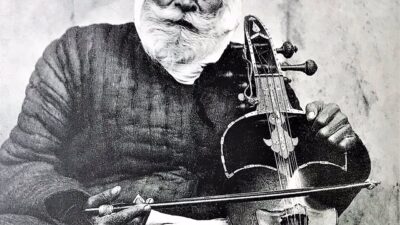
70 वर्षों की सेवा — लगभग 1920 की एक तस्वीर में संत शाम सिंह सेवापंथी (बाबा शाम सिंह), हज़ूरी रागी, अपने सरंदा के साथ दिखते हैं। कहा जाता है कि उन्होंने स्वर्ण मंदिर (हरिमंदिर साहिब) में लगभग 70 वर्षों तक कीर्तन-सेवा की।
In a photograph from around 1920, Sant Shaam Singh Sewapanthi (Baba Shaam Singh), a Hazoori Raagi, is seen with his saranda. He is said to have given nearly 70 years of kirtan service at the Golden Temple (Harmandir Sahib).
हारमोनियम से विस्थापन — बीसवीं सदी में सस्ते और सुलभ हारमोनियम ने सरंदा, ताऊस और रबाब जैसे तंती साज़ को गुरुद्वारा-कीर्तन से लगभग हटा दिया। इन्हें बचाने के लिए ही आगे चलकर गुरमत संगीत पुनरुद्धार आंदोलन खड़ा हुआ।
In the twentieth century the cheap, portable harmonium all but removed tanti saaj like the saranda, taus and rabab from gurdwara kirtan. It was to save these that the Gurmat Sangeet revival movement later arose.
खाल की गूँज — सारंगी के पूर्ण-लकड़ी वक्ष के विपरीत, सरंदा का निचला भाग बकरी की खाल से मढ़ा होता है — ठीक जैसे सरोद या रबाब में। यही खाल की झिल्ली इसे इसकी विशिष्ट गहरी, नम और गूँजती ध्वनि देती है।
Unlike the sarangi's all-wooden chest, the saranda's lower belly is covered with goat skin — much like the sarod or rabab. It is this skin membrane that gives it its distinctive deep, warm and resonant voice.
सवाल-जवाब
Questions & Answersसरंदा क्या है?
सरंदा एक सिख धनुष-आधारित तंत्री वाद्य है जिसे पाँचवें सिख गुरु, गुरु अर्जन देव जी द्वारा परिकल्पित और निर्मित माना जाता है। इसे लकड़ी के एक टुकड़े से तराशा जाता है, इसका निचला भाग बकरी की खाल से मढ़ा होता है, और यह शबद-कीर्तन की संगत के लिए बना है।
सरंदा किसने बनाया?
परंपरा के अनुसार सरंदा को पाँचवें सिख गुरु, गुरु अर्जन देव जी (1563–1606) ने स्वयं परिकल्पित और निर्मित किया — कुछ स्रोतों के अनुसार मात्र 13 वर्ष की आयु में — और इसे शबद-गायन के लिए प्रयोग किया।
सरंदा और सारंगी में क्या अंतर है?
सारंगी का पूरा वक्ष लकड़ी का होता है और यह हिंदुस्तानी शास्त्रीय संगत के लिए है, जबकि सरंदा बड़ा होता है, इसका निचला भाग बकरी की खाल से मढ़ा होता है, और यह विशेष रूप से सिख शबद-कीर्तन के लिए गुरु अर्जन देव जी द्वारा बनाया गया 'गुरु साज़' है।
सरंदा के कितने तार होते हैं?
सरंदा में तीन मुख्य आँत (gut) की सुर-तारें होती हैं और लगभग तीस (30-36) तरब (सहानुभूतिशील) तारें होती हैं, जो इसकी गहरी, गूँजती ध्वनि को समृद्ध बनाती हैं।
सरंदा आज भी बजाया जाता है?
हाँ, पर यह दुर्लभ है। बीसवीं सदी में हारमोनियम ने इसे लगभग विस्थापित कर दिया था, किंतु भाई बलदीप सिंह और प्रोफ़ेसर सुरिंदर सिंह जैसे संगीतज्ञों के गुरमत संगीत पुनरुद्धार प्रयासों से आज युवा कीर्तनकार इसे पुनः बजा रहे हैं।
नमूना-पट्टी
The Specimen Table| नाम | सरंदा · Saranda |
|---|---|
| अन्य नाम | सरंदा · सरन्दा · गुरु सरंदा (Guru's Saranda) · Saranda (also: Sarandaa, Saraṇdā) |
| उद्गम | 1590 |
| प्रकार | वाद्य · Instruments |
साझा कीजिए · Share this Plate