शास्त्र विंग · वाद्य-पट्टिका · Instrument Plate
पिनाक वीणा
Pinaka Veena
अन्य नामपिनाकी वीणा · पिनाक · Pinaki Vina · Pinak
परिचय
Overviewपिनाक वीणा — शिव के धनुष के नाम पर बनी एक विलुप्त, एकतंत्री संगीत-धनुष, जिसे स्वयं एक गज़ से बजाया जाता था और जिस पर सरकती डण्डी से स्वर फिसलते थे। नान्यदेव और शार्ङ्गदेव के ग्रन्थों से लेकर सॉल्विन्स के 1800 के चित्रों तक प्रलेखित, यह वह आदि-कड़ी है जहाँ से भारतीय गज़-वाद्यों की परम्परा — रावणहत्था और सारंगी तक — आरम्भ होती है।
अंग्रेज़ी में पढ़ें · Read in English
The pinaka veena — an extinct single-stringed musical bow named after Shiva's bow, itself sounded with a bow, its notes chosen by a stick sliding along the one string. Documented from the treatises of Nanyadeva and Sarngadeva to Solvyns' drawings of 1800, it is the ancestral link from which India's tradition of bowed strings — through the ravanahatha to the sarangi — begins.
वर्गीकरण
ClassificationNatya Shastra Category
तत (Tata - stringed instruments)
तत (तार) वर्ग में पिनाक वीणा एक अत्यन्त प्राचीन 'वीणा' है — एक एकतंत्री संगीत-धनुष जिसे गज़ (कमानी) से बजाया जाता था। संगीतरत्नाकर में गिनाई गई दस वीणाओं में इसका नाम 'पिनाकी' के रूप में आता है। यह भारतीय गज़-वाद्यों (धनुष से बजने वाले तार-वाद्यों) की आदि-पूर्वज मानी जाती है।
In the Tata (stringed) category, the Pinaka Veena is one of the most ancient 'veenas' — a single-stringed musical bow that was itself sounded with a bow. It is listed as 'Pinaki' among the ten veenas enumerated in the Sangita Ratnakara. It is regarded as an early ancestor of India's bowed string instruments (those played with a bow).
Western Category
Bowed musical bow (single-string chordophone)
Western Family
Musical-bow / stick-zither family; a bowed ancestor of the fiddle-type chordophones rather than a lute
Sub Classification
बनावट
PhysicalDescription Hindi
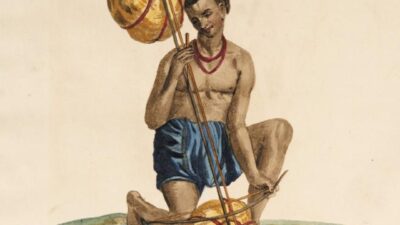
पिनाक वीणा एक लम्बी, धनुषाकार लकड़ी की छड़ (दण्ड) से बनी थी जिसके दोनों सिरे ऊपर की ओर मुड़े रहते थे — ठीक वैसे ही जैसे तीर चलाने वाला धनुष। इसके ऊपर केवल एक ही तार (धातु का तंतु) तना रहता था। छड़ के एक या दोनों सिरों पर बड़े तूँबे (लौकी) अनुनादक के रूप में लगे होते थे। वादक इस लम्बे दण्ड को कंधे पर टिकाकर, दूसरा सिरा भूमि पर रखकर बजाता था। यही रचना इसे रुद्र वीणा (बीन) से अलग करती है — रुद्र वीणा सीधी, कठोर दण्ड-वीणा है जिसमें अनेक तार और परदे (frets) होते हैं, जबकि पिनाक वीणा एक झुका हुआ, बिना परदे का, एकतंत्री संगीत-धनुष है।
Description English
The Pinaka Veena was made from a long, bow-shaped wooden bar (danda) whose two ends curved upward — exactly like an archer's bow. Only a single string (a wire) was stretched over it. One or both ends of the bar carried large gourds acting as resonators. The player rested the tall bar on the shoulder with the other end on the ground. This construction distinguishes it from the rudra veena (been) — which is a straight, rigid stick-zither with many strings and frets — whereas the pinaka veena is a curved, fretless, single-string musical bow.
Body
Long upward-curved bow (arc), like an archer's bow
लम्बा, ऊपर की ओर मुड़ा हुआ धनुषाकार दण्ड (तीर-कमान जैसा)
Wood (bamboo or hardwood bar) with dried bottle-gourd resonators
लकड़ी (बाँस अथवा कठोर लकड़ी का दण्ड) और सूखे तूँबे (लौकी) के अनुनादक
~120-150 (estimated from Solvyns illustrations; tall enough to rest on the ground and rise over the player's shoulder)
One or two gourd (tumba) resonators fixed at the ends of the bar; a 1456 record notes a second resonator being added
Strings
A single wire string — the defining feature of the pinaka veena
None — unlike the later sarangi, the pinaka veena had no sympathetic (tarab) strings; its resonance came entirely from the gourd chambers
The lone bowed string sustains a continuous tone over which the slide-stick shapes pitch
Bow
गज़ / कमानी
Gaz (bow)
A separate bow, described by early observers as resembling a double-bass bow, drawn across the single string
unknown (contemporary illustrations show a short curved bow)
The single string is bowed with one hand ('a bow like that of a bass is prest upon this chord') while the other hand works a little stick against the string
Tuning Pegs
खूँटी
Peg
A tuning peg at the head end tensioned the single wire string against the curved bar
Bridge
घुड़च / सेतु
Bridge
A bridge over the gourd resonator transmitted the string's vibration into the gourd chamber
Wood or bone
Frets
पिनाक वीणा में कोई परदे (frets) नहीं थे। वादक तार पर एक छोटी छड़ी (डण्डी) टिकाकर उसे ऊपर-नीचे सरकाता था — ठीक वैसे ही जैसे स्लाइड-गिटार पर काँच की बोतल सरकाई जाती है — जिससे निरन्तर मींड (glissando) और सूक्ष्म स्वर सम्भव होते थे।
The pinaka veena had no frets. The player rested a small stick against the string and slid it up and down — in the same way a glass bottle slides on a slide-guitar's strings — producing continuous meend (glissando) and microtonal pitch.
ध्वनि-चरित्र
SoundTonal Character Hindi
पिनाक वीणा की ध्वनि गहरी, गूँजती और सतत होती थी। एक ही तार पर गज़ चलने से एक अखण्ड, कण्ठ-जैसी टेर बनती थी, जिस पर सरकती डण्डी से स्वर फिसलते हुए निकलते थे। यही 'बोलती-सी' निरन्तरता इसे भारतीय गज़-वाद्य परम्परा का आदि-स्वर बनाती है।
Tonal Character English
The pinaka veena's tone was deep, resonant and continuous. Bowing the lone string produced an unbroken, voice-like drone over which the sliding stick let pitches glide. This 'speaking' continuity makes it the founding voice of India's bowed-string tradition.
Timbre
Single-string bowed drone, gourd-warmed, buzzing and reedy; closer to a bowed monochord than to a modern violin's clarity
Range
Roughly two octaves along the single string, chosen entirely by the sliding stopping-stick
Dynamic Range
Moderate — sustained and continuous rather than percussive; volume shaped by bow pressure
Techniques
सुनने का मार्गदर्शन
The Listening Guideपिनाक वीणा की कोई रिकॉर्डिंग नहीं बची, इसलिए इसकी ध्वनि उसके वंशजों में सुनिए। पहले रावणहत्था सुनिए — राजस्थान के भोपा गायक एकल तार पर गज़ फेरकर जो सतत, फिसलती टेर निकालते हैं, वही पिनाक वीणा के सबसे निकट है। फिर सारंगी की मींड में देखिए कि 'तार पर सरकती डण्डी' का वही बीज कैसे मानव-कण्ठ जैसी आवाज़ में खिला।
अंग्रेज़ी में पढ़ें · Read in English
Since no recording of the pinaka veena survives, imagine its sound through its descendants. First hear the ravanahatha — the Bhopa balladeers of Rajasthan bow it on a single string; its continuous, sliding drone is the closest living echo of the pinaka veena. Then hear the meend of the sarangi and consider how this very idea of 'a stick sliding on one string' later blossomed into the voice-like sarangi.
परिचय
Identity- Year Of Origin
- 1100
अन्य विवरण
More DetailsTimbre
Single-string bowed drone, gourd-warmed, buzzing and reedy; closer to a bowed monochord than to a modern violin's clarity
रोचक तथ्य
Margin Notesशिव के धनुष का नाम — 'पिनाक' शिव के धनुष का नाम है। जिस प्रकार उस धनुष से तीर छूटता था, उसी धनुषाकार दण्ड पर गज़ चलाकर पिनाक वीणा से नाद उत्पन्न होता था — विनाश और सृजन दोनों एक ही आकृति में।
'Pinaka' is the name of Shiva's bow. Just as arrows flew from that bow, sound was drawn with a gaz across the bow-shaped bar of the pinaka veena — destruction and creation sharing one form.
दस वीणाओं में स्थान — 13वीं शताब्दी के 'संगीतरत्नाकर' (शार्ङ्गदेव) में एकतंत्री, नकुल, त्रितन्त्रिका, चित्रा, विपञ्ची, मत्तकोकिल, आलापिनी, किन्नरी, पिनाकी और निःशङ्क — इन दस वीणाओं की सूची है, जिनमें पिनाक वीणा भी सम्मिलित है।
The 13th-century Sangita Ratnakara (Sarngadeva) lists ten veenas — Ekatantri, Nakula, Tritantrika, Chitra, Vipanchi, Mattakokila, Alapini, Kinnari, Pinaki and Nihshanka — among which the pinaka veena is counted.
1456 का दूसरा तूँबा — एक 1456 ई. के अभिलेख में उल्लेख है कि पिनाक वीणा में दूसरा अनुनादक (तूँबा) जोड़ा गया — यह दर्शाता है कि लुप्त होने से पहले भी यह वाद्य विकसित होता रहा।
A 1456 record notes that a second resonator (gourd) was added to the pinaka veena — showing that even before vanishing, the instrument kept evolving.
रुद्र वीणा से भ्रम — देखने में पिनाक वीणा और रुद्र वीणा (बीन) मिलती-जुलती लग सकती हैं, पर वे मूलतः भिन्न हैं: रुद्र वीणा सीधी, कठोर, बहु-तार, परदों वाली और प्लक की जाने वाली दण्ड-वीणा है; पिनाक वीणा झुकी हुई, एकतंत्री, बिना-परदे और गज़ से बजने वाली संगीत-धनुष है।
The pinaka veena and the rudra veena (been) may look alike, but they are fundamentally different: the rudra veena is a straight, rigid, many-stringed, fretted, plucked stick-zither; the pinaka veena is a curved, single-stringed, fretless, bowed musical bow.
सवाल-जवाब
Questions & Answersपिनाक वीणा क्या है?
पिनाक वीणा एक प्राचीन, अब विलुप्त भारतीय वाद्य है — एक एकतंत्री 'संगीत-धनुष' जिसका शरीर तीर-कमान की तरह ऊपर मुड़ा रहता था और जिसे स्वयं एक गज़ (कमानी) से बजाया जाता था। स्वर एक ही तार पर डण्डी सरकाकर निकाले जाते थे। इसका नाम शिव के धनुष 'पिनाक' पर पड़ा।
पिनाक वीणा में कितने तार होते थे?
पिनाक वीणा में केवल एक ही तार होता था (धातु का तंतु), और कोई परदे (frets) नहीं थे। पूरी धुन उसी एक तार पर एक छोटी डण्डी सरकाकर बजाई जाती थी।
पिनाक वीणा का उल्लेख किन ग्रन्थों में मिलता है?
इसका आरम्भिक उल्लेख नान्यदेव (लगभग 1097-1133 ई.) के 'सरस्वती-हृदयालंकार' में मिलता है, और 13वीं शताब्दी के 'संगीतरत्नाकर' (शार्ङ्गदेव) में गिनाई गई दस वीणाओं में 'पिनाकी' के रूप में इसका स्थान है।
पिनाक वीणा और सारंगी में क्या सम्बन्ध है?
पिनाक वीणा गज़ से बजने वाले भारतीय तार-वाद्यों की आदि-कड़ी मानी जाती है। एक तार पर डण्डी सरकाकर मींड निकालने की जिस धारणा का यह प्रतिनिधित्व करती है, वही आगे चलकर सारंगी की समृद्ध, मानव-कण्ठ जैसी मींड-कला में परिपक्व हुई।
क्या पिनाक वीणा आज भी बजाई जाती है?
नहीं, पिनाक वीणा प्रायः विलुप्त है — 1810 तक यह अत्यन्त दुर्लभ हो चुकी थी और इसकी कोई सजीव वादन-परम्परा नहीं बची। इसका ज्ञान मुख्यतः ग्रन्थों, रागमाला चित्रों और फ्रांस बाल्थाज़ार सॉल्विन्स के रेखाचित्रों से मिलता है। इसका लोक-वंशज रावणहत्था आज भी राजस्थान में बजता है।
नमूना-पट्टी
The Specimen Table| नाम | पिनाक वीणा · Pinaka Veena |
|---|---|
| अन्य नाम | पिनाकी वीणा · पिनाक · Pinaki Vina · Pinak · Pināka Vīṇā |
| उद्गम | 1100 |
| प्रकार | वाद्य · Instruments |
साझा कीजिए · Share this Plate