शास्त्र विंग · वाद्य-पट्टिका · Instrument Plate
मुखवीणा
Mukhavina
अन्य नाममुख वीणा · मुखवीणै · முகவீணை (Mugaveenai / Tamil) · Mukha Veena
परिचय
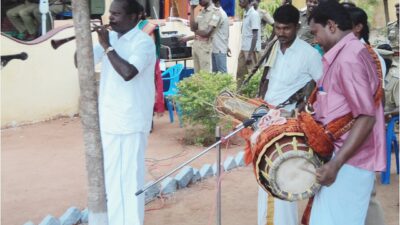
OverviewThe mukhavina — 'the veena played with the mouth' — is a tiny double-reed wind instrument of South India, the portable little brother of the nadaswaram. When air passes through this foot-and-a-half wooden tube, the shrill, auspicious cry that rises has for centuries been the soul of temple processions and village festivals. Today it stands on the brink of extinction, yet its keyless body holds a freedom of Indian shruti and gamaka that no Western oboe possesses.
वर्गीकरण
ClassificationNatya Shastra Category
सुषिर (Sushira - wind / hollow instruments)
सुषिर वर्ग वे वाद्य हैं जिनमें फूँक से हवा भरकर ध्वनि उत्पन्न की जाती है। मुखवीणा एक द्विजिह्वा (डबल-रीड) सुषिर वाद्य है, जिसमें दो पतली सरकंडे की जीभें आपस में कंपन कर तीव्र, भेदक स्वर पैदा करती हैं।
The Sushira category comprises instruments sounded by blowing air through a hollow body. The mukhavina is a double-reed (dwijihva) Sushira instrument, in which two thin cane reeds vibrate against one another to produce a sharp, penetrating tone.
Western Category
Double-reed wind instrument (aerophone)
Western Family
Oboe / shawm family (a conical-bore double-reed shawm, kin to the shehnai and nadaswaram, and analogous to the Western oboe)
Sub Classification
बनावट
PhysicalDescription Hindi
मुखवीणा नादस्वरम का एक छोटा, हल्का रूप है — प्रायः केवल डेढ़ फुट (लगभग 45 सेमी) लंबा। इसमें एक शंक्वाकार लकड़ी का नाल, अंत में फैला हुआ लकड़ी का घंटा (bell), और मुख पर एक द्विजिह्वा (डबल-रीड) लगी होती है। यह शहनाई के आकार का है पर उससे भी नन्हा, और नादस्वरम की भारी-भरकम बनावट का सुवाह्य संस्करण है।
Description English
The mukhavina is a small, light form of the nadaswaram — usually only about a foot and a half (roughly 45 cm) long. It has a conical wooden body, a flared wooden bell at the end, and a double reed at the mouth. It resembles the shehnai but is even smaller, and is a portable version of the bulkier nadaswaram.
Body
Slender conical tube widening into a flared bell
पतला शंक्वाकार नाल जो अंत में फैले घंटे में खुलता है
Seasoned hardwood (traditionally aacha / blackwood or similar dense wood), the same timber family used for the nadaswaram
पक्की कठोर लकड़ी (परंपरागत रूप से आच्चा/काली लकड़ी जैसी सघन काष्ठ, वही जो नादस्वरम में प्रयुक्त होती है)
40-50
Conical bore terminating in a flared wooden bell that projects the sound outward
Bell
काष्ठ घंटा
Wooden bell (anasu)
मुखवीणा की एक विशेषता — इसका घंटा लकड़ी का बना होता है, जबकि उत्तर भारतीय शहनाई का घंटा प्रायः धातु का होता है। लकड़ी का घंटा स्वर को थोड़ी मृदुता देते हुए भी उसे दूर तक पहुँचाता है।
A distinguishing feature of the mukhavina — its bell is made of wood, whereas the North Indian shehnai typically has a metal bell. The wooden bell projects the sound while lending it a slightly softer edge.
Wood (unlike shehnai's metal bell)
Reed
जीवाली / द्विजिह्वा
Seevali (double reed)
मुख पर लगी दो पतली सरकंडे की जीभें, जो नादस्वरम की रीड का लघु रूप हैं। फूँकने पर ये आपस में कंपन कर स्वर उत्पन्न करती हैं। वादक प्रायः कई अतिरिक्त रीड साथ रखते हैं क्योंकि वे शीघ्र घिस जाती हैं।
Two thin cane reeds at the mouth, a diminutive form of the nadaswaram's reed assembly. When blown, they vibrate against each other to produce the tone. Players usually carry several spare reeds, as they wear out quickly.
Cane / reed grass, bound to a small metal staple
Finger Holes
7 principal playing holes (plus small tuning holes near the bell)
स्वर-छिद्र
Finger holes
मुखवीणा में कोई चाबियाँ (keys) नहीं होतीं — वादक सीधे उँगलियों से छिद्रों को पूरा या आधा ढककर स्वर बदलता है। चाबियों के अभाव के कारण ही यह सूक्ष्म श्रुतियाँ और गमक (कर्नाटक संगीत की आत्मा) सहजता से उत्पन्न कर पाती है।
The mukhavina has no keys — the player changes pitch by fully or half-covering the holes directly with the fingers. Precisely because it lacks keys, it can freely produce the fine shrutis (microtones) and gamakas (ornaments) essential to Carnatic music.
Frets
यह एक सुषिर (फूँक) वाद्य है, अतः इसमें फ्रेट नहीं होते; स्वर छिद्रों को ढककर और फूँक के दबाव से नियंत्रित होता है।
As a wind instrument, it has no frets; pitch is controlled by covering finger holes and by breath pressure.
Size Comparison
लगभग डेढ़ फुट (40-50 सेमी)
लगभग ढाई फुट (75-95 सेमी)
मुखवीणा नादस्वरम से काफ़ी छोटी होती है, इसीलिए इसका स्वर ऊँचा और तीखा होता है।
The mukhavina is considerably smaller than the nadaswaram, which is why its pitch is higher and shriller.
ध्वनि-चरित्र
SoundTonal Character Hindi
मुखवीणा का स्वर ऊँचा, तीखा और भेदक है — खुले में, मंदिर के जुलूसों और लोक-नृत्यों के कोलाहल के बीच भी दूर तक सुनाई देता है। इसकी ध्वनि में मांगलिकता और उत्सव का भाव है, फिर भी छोटे आकार के कारण नादस्वरम से अधिक चंचल और चटख।
Tonal Character English
The mukhavina's tone is high, sharp and penetrating — carrying far even amid the din of temple processions and folk dances in the open air. Its sound is auspicious and festive, yet, being smaller, it is more nimble and shrill than the nadaswaram.
Timbre
Bright, reedy, nasal and piercing (typical of double-reed shawms)
Range
Roughly two octaves, in a high register; exact range varies with the reed and the maker
Dynamic Range
Loud and projecting by nature — designed for outdoor, unamplified performance
Techniques
अन्य विवरण
More DetailsTimbre
Bright, reedy, nasal and piercing (typical of double-reed shawms)
रोचक तथ्य
Margin Notesनादस्वरम का छोटा भाई — मुखवीणा नादस्वरम का ठीक छोटा रूप है — प्रायः केवल डेढ़ फुट लंबा, जबकि नादस्वरम ढाई फुट या उससे भी बड़ा होता है। छोटे आकार के कारण इसका स्वर ऊँचा और तीखा होता है, और इसे साथ लेकर चलना आसान होता है — इसीलिए यह जुलूसों और चलते-फिरते लोक-प्रदर्शनों का वाद्य बना।
The mukhavina is a scaled-down nadaswaram — usually only about a foot and a half long, whereas the nadaswaram is two and a half feet or more. Its small size makes its tone higher and shriller and makes it easy to carry — which is why it became the instrument of processions and mobile folk performance.
लकड़ी का घंटा, शहनाई से भिन्न — जहाँ उत्तर भारतीय शहनाई का घंटा प्रायः धातु का होता है, वहीं मुखवीणा का घंटा लकड़ी का बना होता है। यही छोटी-सी बात इसके स्वर को शहनाई से थोड़ा भिन्न रंग देती है।
Whereas the North Indian shehnai typically has a metal bell, the mukhavina's bell is made of wood. This small difference gives its tone a slightly different colour from the shehnai.
एक साँस, अंतहीन धुन — मुखवीणा वादक 'चक्रीय श्वास' (circular breathing) की कला जानते हैं — गालों में हवा भरकर नाक से साँस लेते हुए बिना रुके बजाते रहना। इसी से जुलूस भर धुन कभी नहीं टूटती, मानो वाद्य साँस लेता ही न हो।
Mukhavina players master the art of 'circular breathing' — storing air in the cheeks and inhaling through the nose while continuing to blow. This lets the melody run unbroken through an entire procession, as if the instrument never takes a breath.
सवाल-जवाब
Questions & Answersमुखवीणा क्या है?
मुखवीणा दक्षिण भारत का एक छोटा द्विजिह्वा (डबल-रीड) फूँक-वाद्य है — नादस्वरम का लघु, सुवाह्य रूप। नाम में 'वीणा' के बावजूद यह तारवाला वाद्य नहीं, बल्कि मुख से फूँककर बजाया जाने वाला वाद्य है, जो मुख्यतः मंदिर-जुलूसों और लोक-संगीत में बजता है।
मुखवीणा और नादस्वरम में क्या अंतर है?
मुखवीणा नादस्वरम का छोटा रूप है — प्रायः केवल डेढ़ फुट लंबा, जबकि नादस्वरम ढाई फुट या अधिक। छोटे आकार से मुखवीणा का स्वर ऊँचा व तीखा होता है और उसे साथ ले जाना आसान होता है, इसलिए वह लोक-संगीत और जुलूसों में अधिक प्रचलित है।
मुखवीणा में चाबियाँ क्यों नहीं होतीं?
मुखवीणा में पश्चिमी ओबो जैसी चाबियाँ नहीं होतीं। वादक सीधे उँगलियों से छिद्रों को पूरा या आधा ढककर स्वर बदलता है। इसी कारण यह भारतीय श्रुतियों और गमक की सूक्ष्मता को स्वतंत्र रूप से निकाल पाती है, जो कर्नाटक संगीत के लिए आवश्यक है।
क्या मुखवीणा आज भी बजाई जाती है?
मुखवीणा आज एक लुप्तप्राय वाद्य है। यह मुख्यतः तमिलनाडु व कर्नाटक के मंदिर-अनुष्ठानों और कुछ लोक-मंडलियों में ही बची है, और इसके गिने-चुने पारंपरिक वादक शेष हैं। कुछ कलाकार ऑनलाइन दस्तावेज़ीकरण द्वारा इसे पुनर्जीवित करने का प्रयास कर रहे हैं।
नमूना-पट्टी
The Specimen Table| नाम | मुखवीणा · Mukhavina |
|---|---|
| अन्य नाम | मुख वीणा · मुखवीणै · முகவீணை (Mugaveenai / Tamil) · Mukha Veena · Mukhaveena · Mukavina |
| प्रकार | वाद्य · Instruments |
साझा कीजिए · Share this Plate