शास्त्र विंग · वाद्य-पट्टिका · Instrument Plate
मारिंगोड
Maryngod
अन्य नामका मारिंगोड (Ka Maryngod) · Maryngod (also spelt Maryngud, Mary ngod) · खासी शोक-सारंगी (Khasi mourning fiddle)
परिचय
Overviewमारिंगोड मेघालय की खासी जनजाति का शोक-वाद्य है — दो-तीन धातु की तारों वाली एक हस्त-निर्मित लोक-सारंगी, जिसे घुटनों के बीच खड़ा रखकर गज़ से बजाया जाता है। इसकी रुँधी, कराहती आवाज़ 'शोक की सारंगी' कहलाती है; अंत्येष्टि पर इस पर 'जमलू' विलाप-धुन बजती है। यह भारतीय संगीत के उस विशाल, प्रायः अनसुने पूर्वोत्तरी संसार का प्रतिनिधि है, जो राग और फ़िल्म-संगीत की मुख्यधारा से परे अपनी ही परंपरा में जीवित है।
अंग्रेज़ी में पढ़ें · Read in English
The Maryngod is the mourning instrument of the Khasi people of Meghalaya — a hand-made folk fiddle of two or three metal strings, held upright between the knees and sounded with a bow. Its raw, keening voice is called the 'mourning fiddle'; at funerals it plays the lament 'Jamlu.' It represents that vast, often-unheard Northeastern world of Indian music that lives in its own tradition, beyond the mainstream of raga and film song.
वर्गीकरण
ClassificationNatya Shastra Category
तत (Tata - stringed instruments)
ध्वनि-उत्पादन की दृष्टि से मारिंगोड एक तत (तंतु/तार) वाद्य है — यह गज़ (धनुष) से तारों को घिसकर बजता है। परंतु यह शास्त्रीय नाट्यशास्त्र परंपरा का वाद्य नहीं है, बल्कि मेघालय की खासी जनजातीय लोक-परंपरा का वाद्य है; इसे यहाँ केवल वर्गीकरण की सुविधा के लिए तत वर्ग में रखा गया है।
In terms of sound production the Maryngod is a Tata (chordophone / stringed) instrument — it is bowed with a horsehair bow drawn across the strings. It is not, however, an instrument of the classical Natya Shastra canon; it belongs to the Khasi tribal folk tradition of Meghalaya, and is placed in the Tata category here only for classificatory convenience.
Western Category
Bowed string instrument (folk fiddle)
Western Family
Fiddle / spike-fiddle family — held upright and bowed like a small cello, positioned between the legs
Sub Classification
बनावट
PhysicalDescription Hindi
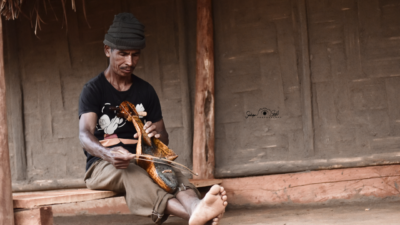
मारिंगोड एक हस्त-निर्मित खासी लोक-सारंगी है। इसकी दो या तीन धातु की तारें एक खोखले लकड़ी के ढाँचे पर तनी होती हैं। यह आकार में एक अन्य खासी वाद्य 'सारोंग' जैसा है, परंतु मारिंगोड में लकड़ी की एक मोटी, समेकित परत होती है। इसे सेलो की तरह दोनों घुटनों के बीच खड़ा रखकर, गज़ (धनुष) से बजाया जाता है — दाहिना हाथ गज़ चलाता है और बायाँ हाथ तारों पर उँगलियाँ रखकर स्वर बदलता है।
Description English
The Maryngod is a hand-carved Khasi folk fiddle. Two or three metal strings are stretched over a hollowed wooden frame. In shape it resembles another Khasi instrument, the Sarong, but the Maryngod has a thick, amalgamated wooden coating. It is held upright between the knees like a cello and sounded with a horsehair bow — the right hand draws the bow while the left hand stops the strings to change the melody.
Body
Hollowed, elongated wooden frame (resonator carved from a single block)
एक ही लकड़ी के टुकड़े से तराशा गया खोखला, लंबवत ढाँचा
Wood (locally sourced hardwood), often with an animal-skin or thick wooden soundboard
लकड़ी (स्थानीय कठोर लकड़ी), प्रायः खाल या मोटी लकड़ी की ध्वनि-पटल के साथ
not standardized (hand-made; sized to rest between the player's legs)
Single hollowed wooden resonating chamber; the thick amalgamated wood coating distinguishes it from the related Sarong
Strings
Metal playing strings stretched over the hollowed frame
The Maryngod has no separate bank of sympathetic (resonating) strings — unlike the North-Indian sarangi. Its warmth comes from the hollow wooden body alone.
With only two or three strings, the lowest string is often bowed as a sustained drone under the lament melody
Bow
गज़ (धनुष)
Bow
Curved stick strung with horsehair
not standardized
Drawn across the metal strings while the instrument is held upright between the legs, cello-fashion
Tuning Pegs
खूँटी
Tuning pegs
Wooden pegs set into the neck; strings are tightened or loosened by hand to tune by ear
Bridge
घोड़ी (पुल)
Bridge
Wooden bridge that carries the string vibration onto the hollow body
Wood
Frets
मारिंगोड फ्रेट-रहित है — कलाकार बाएँ हाथ की उँगलियों से सीधे तारों को दबाता है, जिससे स्वरों के बीच सरकती हुई (ग्लाइड) मींड-सी ध्वनि सम्भव होती है — यही इसे मानवीय विलाप के इतना निकट बनाती है।
The Maryngod is fretless — the player presses the strings directly with the left-hand fingers, allowing gliding, sliding pitch between notes. This vocal, sliding quality is what makes it so close to human weeping in the mourning songs.
ध्वनि-चरित्र
SoundTonal Character Hindi
मारिंगोड की आवाज़ गहरी, रुँधी और शोकाकुल है — यही कारण है कि खासी परंपरा में इसे 'शोक की सारंगी' कहा जाता है। जब गज़ धीरे-धीरे तारों पर चलता है, तो एक लंबी, कराहती, मानव-कंठ जैसी लय उभरती है जो रोने और विलाप के सबसे निकट है।
Tonal Character English
The Maryngod's voice is deep, keening and sorrowful — which is why Khasi tradition calls it the 'mourning fiddle.' As the bow moves slowly across the strings, it produces a long, wailing, voice-like line that is closest of all to weeping and lament.
Timbre
Reedy, raw, plaintive; a single sustained bowed line rather than bright resonance
Range
Modest — the two or three strings cover roughly the vocal range of a lament rather than several octaves
Dynamic Range
Intimate; built for keening, sustained expression close to the human voice
Techniques
सुनने का मार्गदर्शन
The Listening Guideमारिंगोड सुनते समय गति की तलाश मत कीजिए — इसकी आत्मा ठहराव और विलाप में बसती है। एक ही लंबे गज़-प्रहार को रोने की तरह उठते-गिरते सुनिए, और फ्रेट-रहित तार पर उँगली के सरकने से बनी बहती मींड को महसूस कीजिए। यह उत्सव का नहीं, शोक और अंतर्मन का वाद्य है।
अंग्रेज़ी में पढ़ें · Read in English
When listening to the Maryngod, do not look for speed — its soul is in stillness. Hear how a single long bow-stroke rises and falls like weeping, and how the finger slides between notes on the fretless string. Begin with a solo by players such as Rani Maring; then feel the grieving mood of 'Jamlu.' This is an instrument of the inner life, not of celebration.
अन्य विवरण
More DetailsTimbre
Reedy, raw, plaintive; a single sustained bowed line rather than bright resonance
रोचक तथ्य
Margin Notesजमलू — विलाप की धुन — मारिंगोड पर बजने वाली शोक-धुन 'जमलू' कहलाती है। यह अंत्येष्टि और शोक के अवसरों की धुन है, जिसमें समुदाय का साझा विलाप स्वर पाता है। मारिंगोड को इन्हीं शोक-गीतों के लिए बनाया और अपनाया गया।
The mourning tune played on the Maryngod is called 'Jamlu.' It is the melody of funerary and grieving occasions, in which a community's shared lament finds voice. The Maryngod was shaped and adopted precisely for these songs of mourning.
सारोंग से समानता — मारिंगोड आकार में एक अन्य खासी वाद्य 'सारोंग' जैसा है, पर मारिंगोड में लकड़ी की एक मोटी, समेकित परत होती है। दाहिना हाथ गज़ चलाता है और बायाँ हाथ तारों को दबाकर धुन बदलता है।
The Maryngod resembles another Khasi instrument, the Sarong, in shape, but the Maryngod has a thick, amalgamated wooden coating. The right hand works the bow while the left hand stops the strings to change the tune.
पारंपरिक वाद्य-वृंद का अंग — शोक के अलावा, अन्य अवसरों पर मारिंगोड बाँसुरी, मारिंथिंग (जबड़े-वीणा) और ढोल-नगाड़ों जैसे तालवाद्यों के साथ बजता है, और नोंगक्रेम नृत्य जैसे पर्वों में खासी वाद्य-वृंद का हिस्सा बनता है।
Beyond mourning, on other occasions the Maryngod plays together with the flute, the marynthing (Jew's harp) and percussion, and joins the Khasi ensemble at festivals such as the Nongkrem Dance.
छवि की कहानी — इस पृष्ठ की मुख्य छवि (विकिमीडिया कॉमन्स, सिंकुपार सिंगक्ली द्वारा, CC BY-SA 4.0) 2023 के 'विकी लव्स फोकलोर' फोटो-प्रतियोगिता के लिए ली गई थी, जो लुप्तप्राय लोक-परंपराओं को दस्तावेज़ित करने का वैश्विक अभियान है।
The hero image on this page (Wikimedia Commons, by Sainkupar Syngkli, CC BY-SA 4.0) was taken for the 2023 'Wiki Loves Folklore' photo contest, a global effort to document endangered folk traditions.
सवाल-जवाब
Questions & Answersमारिंगोड क्या है?
मारिंगोड मेघालय की खासी जनजाति का एक दो या तीन तार वाला गज़-वाद्य (लोक-सारंगी) है। इसे सेलो की तरह घुटनों के बीच खड़ा रखकर बजाया जाता है और यह मुख्यतः शोक व विलाप के गीतों का पवित्र वाद्य है।
मारिंगोड को 'शोक की सारंगी' क्यों कहते हैं?
खासी परंपरा में मारिंगोड को पवित्र माना जाता है और यह विशेष रूप से अंत्येष्टि व शोक के अवसरों पर बजता है। इस पर बजने वाली विलाप-धुन को 'जमलू' कहते हैं, जिसमें स्त्री-पुरुष दोनों विलाप करते हैं।
मारिंगोड में कितनी तारें होती हैं?
मारिंगोड में दो या तीन धातु की तारें होती हैं, जो एक खोखले लकड़ी के ढाँचे पर तनी होती हैं। यह फ्रेट-रहित होता है, इसलिए उँगली सरकाकर स्वरों के बीच बहती हुई (मींड) ध्वनि निकलती है।
क्या मारिंगोड हिंदी फ़िल्म संगीत या राग-प्रणाली में इस्तेमाल होता है?
नहीं। मारिंगोड मुख्यधारा के बॉलीवुड/हिंदी-फ़िल्म संगीत या हिंदुस्तानी राग-प्रणाली का वाद्य नहीं है। यह खासी जनजातीय लोक-परंपरा का वाद्य है और भारत की संगीत-विविधता में पूर्वोत्तर की आवाज़ का प्रतिनिधित्व करता है।
मारिंगोड सारोंग और दुइतारा से कैसे संबंधित है?
मारिंगोड आकार में खासी वाद्य 'सारोंग' जैसा है (दोनों गज़ से बजते हैं), पर मारिंगोड में मोटी, समेकित लकड़ी की परत होती है। दुइतारा चार तारों वाला खासी लूट है जिसे उँगलियों से बजाया जाता है — तीनों मेघालय की खासी तंतु-वाद्य परंपरा का हिस्सा हैं।
नमूना-पट्टी
The Specimen Table| नाम | मारिंगोड · Maryngod |
|---|---|
| अन्य नाम | का मारिंगोड (Ka Maryngod) · Maryngod (also spelt Maryngud, Mary ngod) · खासी शोक-सारंगी (Khasi mourning fiddle) |
| प्रकार | वाद्य · Instruments |
साझा कीजिए · Share this Plate