शास्त्र विंग · वाद्य-पट्टिका · Instrument Plate
माराकास
Maracas
अन्य नाममाराका (एकवचन) · रम्बा शेकर (Rumba shaker) · चाक-चाक (Chac-chac) · Maraca / Maracas (also: Rumba shaker)
परिचय
Overviewमाराकास एक जोड़ी खोखली खड़खड़ हैं — मूलतः सूखी लौकी में बीज भरकर बनी — जो हिलाने पर सूखी, दानेदार खनक उत्पन्न करती हैं। लैटिन अमेरिका और कैरिबियन की स्वदेशी जड़ों से निकलकर यह सोन, रुम्बा और साल्सा की जान बनीं, और हॉलीवुड-लैटिन प्रभाव के रास्ते हिंदी सिनेमा के कैबरे व नृत्य-गीतों में 'लैटिन तड़के' के रूप में पहुँचीं। यह अस्वर-निश्चित ताल-वाद्य लय में झिलमिलाहट और गति जोड़ता है।
अंग्रेज़ी में पढ़ें · Read in English
Maracas are a pair of hollow rattles — traditionally a dried gourd filled with seeds — that produce a dry, granular shimmer when shaken. Rising from the indigenous roots of Latin America and the Caribbean, they became the lifeblood of son, rumba and salsa, and by way of Hollywood-Latin influence reached Hindi-cinema cabaret and dance numbers as a 'Latin garnish'. This unpitched rhythm instrument adds glitter and motion to the beat.
वर्गीकरण
ClassificationNatya Shastra Category
घन (Ghana - solid/self-sounding idiophones)
माराकास एक पश्चिमी वाद्य है, अतः इसे नाट्यशास्त्र की चार वादय-श्रेणियों में प्रत्यक्ष स्थान प्राप्त नहीं है। किंतु अपनी प्रकृति से यह 'घन' वर्ग का वाद्य है — जैसे मंजीरा, घुंघरू और खड़ताल, माराकास भी अपने ठोस शरीर के भीतर बीज/छर्रों के टकराने से स्वयं ध्वनि उत्पन्न करता है; इसमें न कोई तार है, न चर्म-मुख, न फूँकी हुई हवा। यह हिलाकर बजाया जाने वाला (शेकन) खड़खड़ वाद्य है।
Maracas is a Western instrument and therefore has no native place in the Natya Shastra's four vadya categories. By its nature, however, it belongs to the 'Ghana' (solid, self-sounding idiophone) class — like manjira, ghungroo and khartal, the maracas produce sound by the seeds/shot rattling inside a solid body; there are no strings, no membrane, and no blown air. It is a shaken rattle idiophone.
Western Category
Percussion idiophone (shaken vessel rattle)
Western Family
Rattle family — Hornbostel-Sachs 112.13 (vessel rattles); played in a pitched pair, one slightly higher than the other
Sub Classification
बनावट
PhysicalDescription Hindi
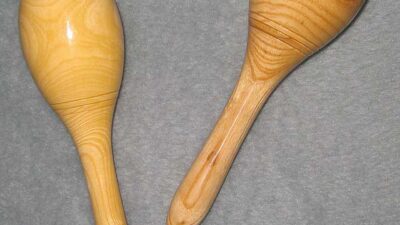
माराकास एक जोड़ी खोखले, गोल-अंडाकार खड़खड़ वाद्य हैं जिनमें एक पकड़ने का हत्था लगा होता है। पारंपरिक रूप से इन्हें सूखी लौकी (हिगुएरा/कलाबश) को खोखलाकर, भीतर सूखे बीज, कंकड़ या छोटे मनके भरकर बनाया जाता है। हिलाने पर भीतरी दाने खोल की दीवार से टकराते हैं और वह विशिष्ट 'शश-शश' खड़खड़ाहट उत्पन्न होती है।
Description English
Maracas are a pair of hollow, egg- or globe-shaped rattles fitted with a handle. Traditionally they are made by hollowing out a dried gourd (higüera/calabash), filling it with dry seeds, pebbles or small beads. When shaken, the loose contents strike the inner shell wall, producing the characteristic dry 'shh-shh' rattle.
Body
Egg / globe / pear shaped hollow shell on a handle
हत्थे पर लगा अंडाकार, गोल या नाशपाती-आकार का खोखला खोल
Dried gourd (calabash) traditionally; modern versions of turned wood, moulded plastic, or wound leather/rawhide
परंपरागत रूप से सूखी लौकी (कलाबश); आधुनिक रूप में तराशी लकड़ी, ढला प्लास्टिक, या लपेटा हुआ चमड़ा/रॉहाइड
15-25 (including handle)
The hollow shell itself is the resonator; its size and wall thickness set the pitch and 'crack' of the sound
Fill
dozens to a few hundred loose particles per shell
The rattling agent — the sound-maker of the instrument
भरन-सामग्री (खनक पैदा करने वाले कण) — यही वाद्य की असली ध्वनि-स्रोत है
Dried seeds (originally), or lead/steel shot, dried beans, plastic pellets, glass beads
More particles give a smoother 'wash'; fewer, larger particles give a sharper, more articulate 'chick'
अधिक व बारीक कण मुलायम, बहती हुई खनक देते हैं; कम व मोटे कण तीखा, स्पष्ट 'चिक' देते हैं
Handle
हत्था / डंडी
Handle
Wood or moulded plastic, inserted through the neck of the shell and often glued/pinned
Gripped in the fist; the player controls attack by how sharply the wrist stops the shaking motion
Played As
जोड़ी में
In a pair
माराकास लगभग हमेशा जोड़ी में बजाए जाते हैं — एक हाथ में एक। दायाँ (या ऊँचा) माराका सामान्यतः थोड़ा छोटा और ऊँचे स्वर का होता है, बायाँ बड़ा और नीचे स्वर का, जिससे दोनों के बीच एक हल्का स्वर-अंतर बना रहता है।
Maracas are almost always played as a pair — one in each hand. The right (or higher) maraca is usually a touch smaller and higher pitched, the left larger and lower, giving a subtle two-pitch interplay.
Frets
माराकास एक अस्वर-निश्चित (अनपिच्ड) ताल-वाद्य है — इसमें राग या स्वर नहीं बजते, केवल लय और रंग जुड़ते हैं। इसकी 'पिच' केवल खोल के आकार से मोटे तौर पर तय होती है।
The maracas are an unpitched rhythm instrument — they do not play ragas or melody, only rhythm and colour. Their rough 'pitch' is set only by shell size.
ध्वनि-चरित्र
SoundTonal Character Hindi
माराकास की ध्वनि सूखी, दानेदार और खनकती हुई है — रेत की बौछार जैसी, जो लय को एक चमक और झिलमिलाहट देती है। यह कभी अग्रभूमि में नहीं आती, पर इसकी अनुपस्थिति तुरंत महसूस होती है; यह संगीत को हल्का, नाचता हुआ और उष्णकटिबंधीय रंग देती है।
Tonal Character English
The maracas' sound is dry, granular and shimmering — like a spray of sand that lends the rhythm a sparkle and glitter. It rarely comes to the foreground, yet its absence is instantly felt; it makes music feel light, dancing and tropical.
Timbre
Dry, high-frequency, noise-based 'shh/chick' — sustain is short and controlled entirely by the wrist
Range
Unpitched (percussion); broadly a high-frequency band, the pair split into a slightly lower and slightly higher shell
Dynamic Range
Soft continuous 'wash' to sharp accented 'crack' — dynamics are shaped by shake speed and how abruptly the motion is stopped
Techniques
सुनने का मार्गदर्शन
The Listening Guideमाराकास को पहचानना हो तो किसी लैटिन नृत्य-गीत की तह में बजती उस निरंतर 'शश-शश' खनक पर कान टिकाइए जो बीट के बीच की खाली जगह भर देती है, और फिर वही चमक पुराने हिंदी कैबरे-नंबरों में बोंगो के साथ ढूँढिए — वह कभी लय का नेता नहीं, केवल उसका श्रृंगार है।
अंग्रेज़ी में पढ़ें · Read in English
To spot the maracas, turn your ear to any Cuban son or salsa track and find that continuous 'shh-shh' sheet behind the beat, filling the space between the pulses. Then hunt the same shimmer in old Hindi cabaret numbers — that light glitter riding beside the bongos and trumpet. Notice that it never leads the rhythm; it only makes it sparkle.
अन्य विवरण
More DetailsTimbre
Dry, high-frequency, noise-based 'shh/chick' — sustain is short and controlled entirely by the wrist
रोचक तथ्य
Margin Notesसबसे सरल, सबसे पुराना — खड़खड़ (रैटल) मनुष्य के सबसे प्राचीन वाद्यों में से एक है — बीज भरा खोखला फल हिलाना संगीत जितना ही पुराना है। माराकास इसी आदिम विचार का परिष्कृत, नामांकित रूप है।
The rattle is among humanity's oldest instruments — shaking a hollow seed-filled fruit is as old as music itself. The maracas are the refined, named form of this primal idea.
एक झटके में दो ध्वनियाँ — कुशल वादक एक ही झटके में दाने पहले खोल के अगले भाग से, फिर लौटकर पिछले भाग से टकराते हैं — यानी एक गति से दो स्पष्ट आघात। यही 'फ्रंट-एंड-बैक' तकनीक तेज़ लयों का रहस्य है।
A skilled player makes the contents strike the front of the shell and then, on the return, the back — two distinct hits from one motion. This 'front-and-back' technique is the secret of fast patterns.
पर्दे के पीछे का वाद्य — हिंदी फ़िल्मी कैबरे में माराकास लगभग कभी पर्दे पर नहीं दिखते, फिर भी उनकी खनक हर उस नृत्य-दृश्य में मौजूद रहती है जिसे 'विदेशी' या 'क्लब' रंग देना होता था — एक अदृश्य पर अनिवार्य वादक।
In Hindi-film cabaret the maracas are almost never shown on screen, yet their shimmer is present in every dance scene that needed a 'foreign' or 'club' colour — an invisible but indispensable player.
सवाल-जवाब
Questions & Answersमाराकास क्या है?
माराकास एक जोड़ी खोखली खड़खड़ (रैटल) है जो मूलतः सूखी लौकी में बीज भरकर बनाई जाती है। हिलाने पर भीतरी दाने खोल से टकराते हैं और सूखी, दानेदार खनक उत्पन्न करते हैं। यह एक अस्वर-निश्चित लैटिन अमेरिकी ताल-वाद्य है।
माराकास किस श्रेणी का वाद्य है?
माराकास एक 'इडियोफ़ोन' (स्वयं-ध्वनित वाद्य) है — यह अपने ठोस शरीर से ध्वनि उत्पन्न करता है, न कि तार, चर्म या फूँकी हवा से। भारतीय वर्गीकरण में यह 'घन' वर्ग (मंजीरा, घुंघरू जैसा) के समकक्ष है।
हिंदी फ़िल्मी संगीत में माराकास का क्या उपयोग है?
हिंदी सिनेमा में माराकास मुख्यतः कैबरे, क्लब और नृत्य-गीतों में 'लैटिन तड़के' के रूप में बजते थे। 1950-70 के दशक में अरेंजरों ने बोंगो-कोंगा के साथ माराकास का प्रयोग विदेशी, चमकदार नृत्य-माहौल रचने के लिए किया।
माराकास कैसे बजाए जाते हैं?
माराकास को जोड़ी में, एक-एक हाथ में पकड़कर हिलाया जाता है। कलाई के झटके से भीतरी दाने खोल की दीवार से टकराते हैं; झटके को अचानक रोकने से स्पष्ट आघात और लगातार हिलाने से बहती हुई खनक बनती है।
नमूना-पट्टी
The Specimen Table| नाम | माराकास · Maracas |
|---|---|
| अन्य नाम | माराका (एकवचन) · रम्बा शेकर (Rumba shaker) · चाक-चाक (Chac-chac) · Maraca / Maracas (also: Rumba shaker) |
| प्रकार | वाद्य · Instruments |
साझा कीजिए · Share this Plate