शास्त्र विंग · वाद्य-पट्टिका · Instrument Plate
कमायचा
Kamaicha
अन्य नामकमायचा · कमायचा (Kamaycha) · कमायचा / खमायचा (Khamaycha) · Kamayacha
परिचय
Overviewकमायचा राजस्थान के थार मरुस्थल का प्राचीन गज-वाद्य है — आम की लकड़ी के एक ही टुकड़े से तराशा और बकरी की खाल से मढ़ा गोल-पेट वाद्य, जिसकी आँत की ताँतें और इस्पात के तरब मिलकर गहरी, रेगिस्तानी गूँज रचते हैं। यह मांगणियार समुदाय की संगीत-परंपरा का हृदय है; पद्मश्री सकर ख़ान की गज ने इसे विश्व-मंच तक पहुँचाया। आज लुप्तप्राय होने पर भी, 'केसरिया बालम' जैसी माँड रचनाओं में इसकी आवाज़ थार की समूची विरह-वेदना बोल उठती है।
अंग्रेज़ी में पढ़ें · Read in English
The kamaicha is an ancient bowed instrument of Rajasthan's Thar Desert — a round-bellied instrument carved from a single block of mango wood and faced with goat skin, whose gut strings and steel sympathetics together create a deep, desert resonance. It is the heart of the Manganiar community's musical tradition; the bow of Padma Shri Sakar Khan carried it to the world stage. Endangered today, its voice in Maand pieces like 'Kesariya Balam' still speaks all the longing of the Thar.
वर्गीकरण
ClassificationNatya Shastra Category
तत (Tata - stringed instruments)
नाट्यशास्त्र के 'तत' वर्ग में कमायचा एक गज-आधारित तार-वाद्य है जो घोड़े के बालों वाले धनुष के घर्षण से ध्वनि उत्पन्न करता है। यह गज-वाद्यों (bowed chordophones) की उसी परिवार से है जिसमें सारंगी और चिकारा आते हैं।
In the Tata (stringed) category of the Natya Shastra, the kamaicha is a bow-driven chordophone that produces sound through the friction of a horsehair bow against its strings. It belongs to the same bowed family as the sarangi and chikara.
Western Category
Bowed string instrument
Western Family
Spike-fiddle / bowed lute family (a bowed bowl-lute related to the Persian kamancheh and the Indian sarangi)
Sub Classification
बनावट
PhysicalDescription Hindi
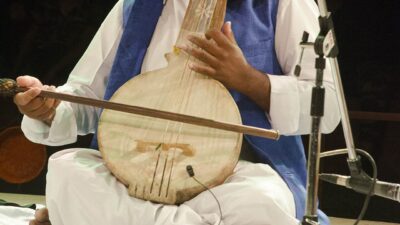
कमायचा राजस्थान के थार मरुस्थल का एक प्राचीन गज-वाद्य है — धनुष से बजने वाला तार-वाद्य। इसका सबसे विशिष्ट अंग इसका बड़ा, गोल कटोरे-जैसा अनुनादक (resonator) है, जिसे बकरी की खाल से मढ़ा जाता है। पूरा ढाँचा प्रायः आम की लकड़ी के एक ही टुकड़े से तराशा जाता है। खाल से मढ़ा यह गोल पेट कमायचा को उसकी गहरी, मिट्टी-सी, गूँजती आवाज़ देता है — जो सारंगी से भिन्न और अधिक 'रेगिस्तानी' सुनाई देती है।
Description English
The kamaicha is an ancient bowed string instrument of Rajasthan's Thar Desert. Its most distinctive feature is a large, round, bowl-shaped resonator whose face is covered with goat skin. The whole body is typically carved from a single block of mango wood. This skin-covered round belly gives the kamaicha its deep, earthy, resonant voice — distinct from and warmer than the sarangi, with an unmistakably 'desert' character.
Body
Large round bowl resonator with a short, stout neck (bowl-lute / spike-fiddle form)
छोटी, मोटी गर्दन के साथ बड़ा गोल कटोरे-नुमा अनुनादक (कटोरा-लूट रूप)
Single block of mango wood, hollowed into a bowl
आम की लकड़ी का एक ही टुकड़ा, अंदर से खोखला कर कटोरे का आकार दिया गया
70-90
Round bowl face covered with stretched goat skin (leather membrane), unlike the fully wooden sarangi
गोल कटोरे का मुँह तनी हुई बकरी की खाल (चर्म-झिल्ली) से मढ़ा — पूर्णतः लकड़ी की सारंगी से भिन्न
Skin-topped wooden bowl that projects a warm, drum-like resonance
Strings
Primary bowed melody strings that carry the tune and follow the singer's voice
Fine resonating steel strings that vibrate in sympathy with the bowed strings, creating a shimmering halo and long sustain
Lower gut/steel strings that supply a steady tonal drone under the melody
Bow
गज
Gaz
Curved wooden stick strung with horsehair
55-70
Held in the right hand and drawn across the gut strings while the instrument rests near-vertically against the seated player's body
Tuning Pegs
खूँटी
Khunti
Large wooden pegs set into the neck and pegbox that tension the gut and steel strings
Bridge
घोड़ी
Ghodi (bridge)
A bridge seated on the taut goat-skin face that transmits string vibration into the skin-topped bowl
Wood or bone resting on the skin membrane
Frets
कमायचा में फ्रेट नहीं होते — कलाकार अपनी उँगलियों से सीधे तारों को दबाकर मींड (सरकन) और सूक्ष्म स्वर-भेद निकालते हैं, जिससे यह मानव-कंठ के पास पहुँचता है।
The kamaicha is fretless — the player presses the strings directly with the fingers to produce meend (glissando) and fine microtonal shading, letting it 'sing' close to the human voice.
ध्वनि-चरित्र
SoundTonal Character Hindi
कमायचा की ध्वनि गहरी, गर्म और मिट्टी-सी है — रेगिस्तान की खुली हवा और अलाव की-सी ऊष्मा लिए। खाल से मढ़ा गोल पेट इसे ढोल-जैसी भरी गूँज देता है, जबकि इस्पात के अनुनाद तार ऊपर एक झिलमिलाता प्रभामंडल रचते हैं। यह विरह, भक्ति और उल्लास — तीनों को समान अधिकार से गा सकता है।
Tonal Character English
The kamaicha's tone is deep, warm and earthy — carrying the open air and firelit warmth of the desert. Its skin-covered bowl gives a full, drum-like resonance while the steel sympathetic strings weave a shimmering halo above. It can voice longing, devotion and celebration with equal authority.
Timbre
Warm, rounded, faintly buzzing/ringing resonance from the skin membrane and sympathetic strings
Range
Roughly two to three octaves around the singer's tonic; pitched to accompany the human voice
Dynamic Range
Wide — from an intimate murmur under a solo voice to a driving, full-bodied sound in ensemble with dholak and khartal
Techniques
सुनने का मार्गदर्शन
The Listening Guideकमायचा का रस लेना हो तो किसी शांत कोने में बैठिए और गज की पहली खिंचती आवाज़ पर ध्यान टिकाइए। खाल-मढ़े गोल पेट की ढोल-जैसी गर्म गूँज और ऊपर झिलमिलाते तरब के तारों को अलग-अलग पहचानिए। धीमी माँड 'केसरिया बालम' से शुरुआत कीजिए; फिर मांगणियार गायक और कमायचा के बीच के संवाद को सुनिए। ढोलक-खड़ताल जुड़ते ही यह मरुस्थल का उत्सव बन जाता है।
अंग्रेज़ी में पढ़ें · Read in English
To hear the kamaicha, sit in a quiet corner and settle on the first drawn note of the bow. Notice how the skin-covered belly gives a warm, drum-like resonance while the sympathetic strings shimmer above. Begin with a slow Maand — 'Kesariya Balam' — then follow the dialogue between the Manganiar singer and the kamaicha. When dholak and khartal join, it becomes the celebration of the desert itself.
अन्य विवरण
More DetailsTimbre
Warm, rounded, faintly buzzing/ringing resonance from the skin membrane and sympathetic strings
रोचक तथ्य
Margin Notesसकर ख़ान और विश्व-मंच — जैसलमेर के हमीरा गाँव के सकर ख़ान (1938–2013) को कमायचा का सर्वश्रेष्ठ वादक माना जाता है। उन्होंने यहूदी मेनुहिन, रवि शंकर और जॉर्ज हैरिसन के साथ मंच साझा किया, और 2012 में उन्हें पद्मश्री तथा 1991 में संगीत नाटक अकादमी पुरस्कार से सम्मानित किया गया।
Sakar Khan (1938–2013) of Hamira village, Jaisalmer, is regarded as the greatest exponent of the kamaicha. He shared the stage with Yehudi Menuhin, Ravi Shankar and George Harrison, and was honoured with the Padma Shri in 2012 and the Sangeet Natak Akademi Award in 1991.
मांगणियार समुदाय — मांगणियार थार मरुस्थल — बाड़मेर, जैसलमेर और सीमावर्ती सिंध — के मुस्लिम वंशानुगत लोक-कलाकार हैं, जो पीढ़ियों से हिंदू राजपूत व अन्य संरक्षकों के लिए गाते-बजाते आए हैं। कमायचा उनकी संगीत-परंपरा का प्रधान स्वर-वाद्य है।
The Manganiar are Muslim hereditary folk musicians of the Thar Desert — Barmer, Jaisalmer and bordering Sindh — who for generations have performed for Hindu Rajput and other patrons. The kamaicha is the principal melodic instrument of their musical tradition.
कमांचे से कमायचा तक — 'कमायचा' नाम फ़ारसी 'कमांचे' से जुड़ा है, जो 'कमान' (धनुष) से बना है। यह गज-वाद्य फ़ारस व मध्य एशिया से थार तक पहुँचा और यहाँ इसका एक विशिष्ट राजस्थानी रूप विकसित हुआ — बड़े, खाल-मढ़े गोल पेट वाला।
The name 'kamaicha' is linked to the Persian 'kamancheh', itself from 'kaman' (bow). This bowed instrument travelled from Persia and Central Asia to the Thar, where it developed a distinct Rajasthani form — with a large, skin-covered round belly.
एक लुप्तप्राय शिल्प — कमायचा बनाना अपने आप में एक दुर्लभ शिल्प है — आम की लकड़ी को कटोरे-सा खोखला करना और उस पर बकरी की खाल कसना कुछ ही परिवारों को आता है। वादकों के साथ-साथ ये कारीगर भी घटते जा रहे हैं, जिससे वाद्य विलुप्ति के खतरे में है।
Making a kamaicha is itself a rare craft — hollowing mango wood into a bowl and stretching goat skin over it is known to only a few families. Along with the players, these craftspeople are dwindling, leaving the instrument at risk of extinction.
सवाल-जवाब
Questions & Answersकमायचा क्या है?
कमायचा राजस्थान के थार मरुस्थल का एक प्राचीन गज-वाद्य (धनुष से बजने वाला तार-वाद्य) है। इसका बड़ा गोल पेट बकरी की खाल से मढ़ा होता है और पूरा ढाँचा आम की लकड़ी से तराशा जाता है। यह मांगणियार समुदाय की संगीत-परंपरा का प्रधान स्वर-वाद्य है।
कमायचा में कितने तार होते हैं?
एक पूर्ण कमायचा प्रायः 17 तारों वाला होता है — लगभग 3-4 मुख्य वादन तार बकरी की आँत के और शेष लगभग 14 अनुनाद तार इस्पात के, जो ध्वनि को झिलमिलाती गूँज देते हैं।
कमायचा किस चीज़ से बना होता है?
कमायचा का शरीर आम की लकड़ी के एक ही टुकड़े से तराशा जाता है, और उसका गोल पेट बकरी की खाल से मढ़ा जाता है। यही इसे सारंगी से अलग, ढोल-जैसी गर्म गूँज देता है।
सकर ख़ान कौन थे?
सकर ख़ान (1938–2013) जैसलमेर के हमीरा गाँव के मांगणियार कलाकार थे, जिन्हें कमायचा का सर्वश्रेष्ठ वादक माना जाता है। उन्हें 2012 में पद्मश्री मिला और उन्होंने यहूदी मेनुहिन तथा रवि शंकर जैसे कलाकारों के साथ मंच साझा किया।
क्या कमायचा एक लुप्तप्राय वाद्य है?
हाँ। कमायचा अब बहुत कम मांगणियार परिवारों तक सीमित रह गया है; इसे बनाने वाले कारीगर और इसे साधने वाले वादक — दोनों घट रहे हैं। मरु-महोत्सव, विश्व-संगीत रिकॉर्डिंग और सकर ख़ान के वंशज इसे जीवित रखे हुए हैं।
नमूना-पट्टी
The Specimen Table| नाम | कमायचा · Kamaicha |
|---|---|
| अन्य नाम | कमायचा · कमायचा (Kamaycha) · कमायचा / खमायचा (Khamaycha) · Kamayacha · Kamancha (Rajasthani) |
| प्रकार | वाद्य · Instruments |
इस वाद्य के गीत
Songs of this Instruments
साझा कीजिए · Share this Plate