शास्त्र विंग · वाद्य-पट्टिका · Instrument Plate
हारमोनिका (माउथ ऑर्गन)
Harmonica
अन्य नाममाउथ ऑर्गन · मुख अंग · ब्लूज़ हार्प (Blues Harp) · Mouth Organ
परिचय
Overviewहारमोनिका, यानी माउथ ऑर्गन, यूरोप में जन्मा वह मुक्त-रीड वायु-वाद्य है जो साँस और दो हथेलियों के सहारे बजता है — भीतर पीतल की स्वर-पत्तियाँ, बाहर बस फूँक और खींच। बॉलीवुड में यह 'आवारगी', 'सफ़र' और 'दोस्ती' का प्रतीक-वाद्य बना, जिसकी सबसे यादगार मिसाल 'है अपना दिल तो आवारा' की वह प्रस्तावना है जिसे नौजवान आर.डी. बर्मन ने बजाया।
अंग्रेज़ी में पढ़ें · Read in English
The harmonica, or mouth organ, is the Europe-born free-reed wind instrument played with breath and two cupped hands — brass reeds within, only blow and draw without. In Bollywood it became the emblem of 'wandering', 'the road' and 'friendship', its most memorable instance being the prelude to 'Hai Apna Dil To Awara', played by a young R.D. Burman.
वर्गीकरण
ClassificationNatya Shastra Category
सुषिर (Sushira - wind/aerophone instruments)
नाट्यशास्त्र की मूल चार-वर्गीय पद्धति में हारमोनिका जैसा कोई पश्चिमी वाद्य नहीं था, किंतु ध्वनि-उत्पादन के आधार पर यह 'सुषिर' (वायु/फूँक से बजने वाले) वर्ग में आता है — यहाँ ध्वनि हवा के प्रवाह से कंपित होने वाली धातु की मुक्त-रीड (स्वर-पत्ती) से उत्पन्न होती है।
The original four-fold Natya Shastra system did not include Western instruments like the harmonica, but by its sound-production mechanism it belongs to the 'Sushira' (wind/aerophone) category — its sound arises from metal free-reeds set vibrating by a stream of air (breath).
Western Category
Free-reed aerophone (wind instrument)
Western Family
Free-reed family — a cousin of the harmonium, accordion, melodica, and the ancient Chinese sheng
Sub Classification
बनावट
PhysicalDescription Hindi
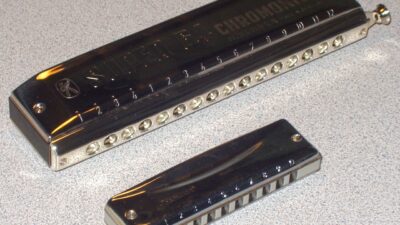
हारमोनिका, यानी माउथ ऑर्गन, एक छोटा-सा हथेली में समा जाने वाला मुक्त-रीड वायु-वाद्य है। इसके भीतर पीतल की पतली स्वर-पत्तियाँ (रीड) होती हैं; बजाने वाला जब छिद्रों में से हवा फूँकता या खींचता है तो ये रीड कंपन कर के स्वर पैदा करती हैं। न कोई तार, न कोई की-बोर्ड — केवल साँस, होंठ और हथेली से पूरा संगीत।
Description English
The harmonica, or mouth organ, is a small, palm-sized free-reed wind instrument. Inside sit thin brass reeds; as the player blows air into the holes or draws it back out, these reeds vibrate to produce notes. No strings, no keyboard — the entire music is made with breath, lips and cupped hands.
Body
Small rectangular bar held sideways against the lips
छोटी आयताकार पट्टी, जिसे बगल में होंठों से सटाकर बजाया जाता है
Comb of wood (pearwood), plastic (ABS) or metal, sandwiched between two brass reed plates and metal cover plates
बीच में लकड़ी (नाशपाती की लकड़ी), प्लास्टिक या धातु की 'कंघी', उसके दोनों ओर पीतल की रीड-प्लेट और ऊपर-नीचे धातु के कवर-प्लेट
10-16 (diatonic ~10 cm; chromatic ~14-16 cm)
A row of individual air chambers (cells) in the comb, one per hole; the cupped hands act as a movable resonator
Reeds
Brass or bronze free-reeds riveted over slots in the reed plate
पीतल या काँसे की मुक्त-रीड, जो रीड-प्लेट के छिद्रों पर कीलक से जड़ी होती हैं
Each hole thus gives two different notes — one on the blow, one on the draw — which is the harmonica's defining genius of compactness.
Cover Plates
कवर-प्लेट
Cover plates
Stainless steel, chrome-plated brass or nickel
Metal covers over the reed plates that project and shape the sound and give the player a surface to hold and cup
Mouthpiece
मुखपत्र (छिद्र-पंक्ति)
Mouthpiece / hole row
The row of 10 (diatonic) or 12-16 (chromatic) holes the player's lips travel along to select notes and chords
Slide Button
Chromatic harmonica only
स्लाइड बटन
Slide button
क्रोमैटिक हारमोनिका में दाईं ओर एक स्प्रिंग वाला बटन होता है; दबाने पर हवा एक अर्ध-स्वर (सेमीटोन) ऊँची दूसरी रीड-पंक्ति की ओर मुड़ जाती है, जिससे सभी बारह स्वर बजाना संभव होता है।
On the chromatic harmonica a spring-loaded button on the right, when pressed, redirects the air to a second set of reeds a semitone higher, making all twelve chromatic notes available.
Windsaver Valves
विंड-सेवर वाल्व
Windsaver valves
Thin plastic flaps (mostly on chromatic harmonicas) that seal the unused reed slot so breath is not wasted and response stays crisp
Frets
हारमोनिका में तार या फ्रेट नहीं होते — स्वर हवा के प्रवाह की दिशा (फूँक/खींच), छिद्र-चयन और डायटॉनिक में 'बेंडिंग' (साँस से स्वर झुकाना) से नियंत्रित होते हैं।
The harmonica has no strings or frets — pitch is governed by air direction (blow/draw), hole selection, and, on diatonic harps, 'bending' (lowering a note by shaping the airflow).
ध्वनि-चरित्र
SoundTonal Character Hindi
हारमोनिका की आवाज़ उजली, रीड-भरी और अजीब तरह से 'बोलती हुई' होती है — एक ही साँस में यह चुलबुली और खुशमिज़ाज भी हो सकती है और दूसरी ही पल में तन्हा, आवारा और उदास भी। यही दोहरा स्वभाव इसे बॉलीवुड के सफ़र-भरे, रूमानी प्रस्तावना-संगीत का चहेता बनाता है।
Tonal Character English
The harmonica's voice is bright, reedy and oddly 'speaking' — in one breath it can be cheeky and cheerful, in the next lonely, wandering and wistful. This dual nature is exactly what made it the darling of Bollywood's travelling, romantic prelude music.
Timbre
Bright, buzzing free-reed tone; tremolo models add a shimmering wavering beat, chromatic models give a smoother mellow voice
Range
Diatonic 10-hole spans about three octaves; chromatic models cover three to four full chromatic octaves
Dynamic Range
Intimate and soft to piercing and cutting; hand-cupping and cover-plate design shape volume and colour
Techniques
सुनने का मार्गदर्शन
The Listening Guideहारमोनिका का मज़ा लेना हो तो 'है अपना दिल तो आवारा' की शुरुआती माउथ-ऑर्गन धुन से शुरुआत कीजिए — बस उन पहले सेकंडों में डूबिए। फिर 'दोस्ती' और 'शोले' के टुकड़े सुनिए। इसके बाद कोई एकल क्रोमैटिक हारमोनिका वादन सुनिए ताकि वाद्य की पूरी रेंज खुले, और ध्यान दीजिए कि हथेलियों का खुलना-बंद होना आवाज़ में कैसा लहराता कंपन भर देता है।
अंग्रेज़ी में पढ़ें · Read in English
Begin with the opening prelude of 'Hai Apna Dil To Awara' — just those first few seconds of mouth organ, in which the whole 'vagabond' mood settles. Then hear the harmonica passages of 'Dosti' and 'Sholay'. Follow with a good solo chromatic harmonica performance to reveal the instrument's full range. Listen closely for how the opening and closing of the hands adds a 'wah-wah' to the tone.
परिचय
Identity- Year Of Origin
- 1821
अन्य विवरण
More DetailsTimbre
Bright, buzzing free-reed tone; tremolo models add a shimmering wavering beat, chromatic models give a smoother mellow voice
रोचक तथ्य
Margin Notesपंचम का पहला 'साज़' — माउथ ऑर्गन — आर.डी. बर्मन (पंचम) का नाम हारमोनिका से गहराई से जुड़ा है। 'है अपना दिल तो आवारा' (1958) की प्रस्तावना उन्हीं की फूँकी हुई मानी जाती है, जब वे बहुत युवा थे और संगीत उनके पिता एस.डी. बर्मन का था। आगे 'दोस्ती' (1964) में भी उनका हारमोनिका सुना जाता है।
R.D. Burman (Pancham) is deeply associated with the harmonica. The prelude of 'Hai Apna Dil To Awara' (1958) is credited to him, played when he was very young while his father S.D. Burman composed the score. His harmonica is also heard in 'Dosti' (1964).
डायटॉनिक बनाम क्रोमैटिक — 10-छिद्र डायटॉनिक ('ब्लूज़ हार्प') एक ही सुर (key) में बजता है और ब्लूज़-लोक संगीत का प्रिय है; क्रोमैटिक हारमोनिका में एक स्लाइड बटन होता है जो सभी बारह स्वर देता है — इसी पर फ़िल्मी और जाज़ धुनें बजती हैं।
The 10-hole diatonic ('blues harp') plays in a single key and is the favourite of blues and folk; the chromatic harmonica has a slide button that gives all twelve notes — the type used for film and jazz melodies.
स्वर 'झुकाने' की कला — बेंडिंग — डायटॉनिक हारमोनिका पर साँस के दबाव और मुँह की गुहा बदलकर स्वर को नीचे 'झुकाया' जाता है। यही 'बेंडिंग' ब्लूज़ की रोती-सी आवाज़ पैदा करती है और भारतीय मींड-जैसे फिसलाव के क़रीब पहुँचती है।
On a diatonic harmonica, altering breath pressure and mouth cavity 'bends' a note downward. This bending produces the crying sound of the blues and approaches an Indian meend-like glide.
अंतरिक्ष में बजने वाला पहला वाद्य — दिसंबर 1965 में जेमिनी-6 मिशन में अंतरिक्ष यात्री वॉली शिर्रा ने एक नन्ही हारमोनिका बजाई थी — इतिहास में अंतरिक्ष में बजाया गया पहला संगीत-वाद्य। यह इस छोटे वाद्य की सर्वव्यापकता का प्रतीक है।
In December 1965, on the Gemini 6 mission, astronaut Wally Schirra played a tiny harmonica — the first musical instrument played in space, a fitting emblem of this little instrument's ubiquity.
सवाल-जवाब
Questions & Answersहारमोनिका और माउथ ऑर्गन में क्या अंतर है?
कोई अंतर नहीं — 'हारमोनिका' और 'माउथ ऑर्गन' एक ही वाद्य के दो नाम हैं। भारत में इसे आमतौर पर 'माउथ ऑर्गन' कहा जाता है। यह एक मुक्त-रीड वायु-वाद्य है, जिसे होंठों से छिद्रों में हवा फूँककर और खींचकर बजाया जाता है।
'है अपना दिल तो आवारा' में हारमोनिका किसने बजाया था?
'है अपना दिल तो आवारा' (सोलहवाँ साल, 1958) की मशहूर माउथ-ऑर्गन प्रस्तावना नौजवान राहुल देव बर्मन (पंचम) की बजाई मानी जाती है, जबकि गीत का संगीत उनके पिता सचिन देव बर्मन ने दिया था।
डायटॉनिक और क्रोमैटिक हारमोनिका में क्या फ़र्क है?
10-छिद्र डायटॉनिक हारमोनिका ('ब्लूज़ हार्प') एक ही सुर (key) में बजता है और ब्लूज़-लोक संगीत के लिए प्रयोग होता है। क्रोमैटिक हारमोनिका में एक स्लाइड बटन होता है जो सभी बारह स्वर देता है, इसलिए इस पर जटिल फ़िल्मी और जाज़ धुनें बजाई जा सकती हैं।
क्या हारमोनिका भारतीय शास्त्रीय संगीत का वाद्य है?
नहीं। हारमोनिका यूरोप में जन्मा एक पश्चिमी वाद्य है और पारंपरिक हिंदुस्तानी या कर्नाटक शास्त्रीय संगीत का अंग नहीं है। हालाँकि इसका बॉलीवुड फ़िल्म-संगीत, ब्लूज़, लोक-संगीत और भारतीय शौक़िया संगीत में व्यापक उपयोग हुआ है।
हारमोनिका का आविष्कार किसने और कब किया?
हारमोनिका का मुक्त-रीड सिद्धांत प्राचीन चीनी वाद्य 'शेंग' से आया। यूरोप में 1821 के आसपास जर्मन घड़ीसाज़ क्रिश्चियन फ्रीड्रिख बुशमैन ने 'आउरा' बनाया, 1825 के आसपास योज़ेफ़ रिष्टर ने आधुनिक डायटॉनिक रूप विकसित किया, और 1857 में माटिआस होनर ने इसका बड़े पैमाने पर उत्पादन शुरू कर इसे दुनिया भर में फैलाया।
नमूना-पट्टी
The Specimen Table| नाम | हारमोनिका (माउथ ऑर्गन) · Harmonica |
|---|---|
| अन्य नाम | माउथ ऑर्गन · मुख अंग · ब्लूज़ हार्प (Blues Harp) · Mouth Organ · Harp (colloquial) |
| उद्गम | 1821 |
| प्रकार | वाद्य · Instruments |
साझा कीजिए · Share this Plate