शास्त्र विंग · वाद्य-पट्टिका · Instrument Plate
गुम्मेटा
Gummeta
अन्य नामगुम्मेटि (Gummeti) · डक्की (Dakki) · बुडिके (Budike) · Gummeta (also: Gummeṭā, Gummeti)
परिचय
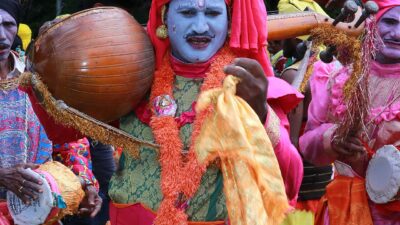
Overviewगुम्मेटा मिट्टी का एक घड़ेनुमा ताल-वाद्य है जिसके मुख पर खाल मढ़ी होती है और पिछले सिरे पर एक खुला छिद्र रहता है, जिसे हथेली से खोल-बंदकर स्वर को गाती-सी लोच दी जाती है। आंध्र-तेलंगाना की बर्राकथा में यह कथा की धड़कन है — दो सहवाचक इसे गले में लटकाए ताल देते, टेक दोहराते और हास्य से कथा में रंग भरते हैं। 'डक्की' और 'बुडिके' इसके क्षेत्रीय नाम हैं; गोवा-कर्नाटक का बड़ा रिश्तेदार 'घुमोट' कहलाता है।
अंग्रेज़ी में पढ़ें · Read in English
The gummeta is an earthen pitcher-shaped drum, its mouth covered with a skin membrane and its rear end left open — an aperture the player opens and closes with the palm to give the pitch a singing bend. In the Burrakatha of Andhra and Telangana it is the heartbeat of the tale, slung from the neck of two co-performers who keep the beat, echo the refrain and colour the story with humour. 'Dakki' and 'budike' are its regional names; its larger Goa-Karnataka relative is the 'ghumot'.
वर्गीकरण
ClassificationNatya Shastra Category
अवनद्ध (Avanaddha - membranophones / drums)
नाट्यशास्त्र के चार वाद्य-वर्गों में गुम्मेटा 'अवनद्ध वाद्य' (चमड़े से मढ़े ताल-वाद्य) की श्रेणी में आता है। यह मिट्टी के घड़े पर मढ़ी खाल पर आघात से ध्वनि उत्पन्न करता है, अतः यह एक झिल्ली-वाद्य (membranophone) है।
Among the four instrument categories of the Natya Shastra, the gummeta belongs to 'Avanaddha vadya' (skin-covered percussion). It produces sound when a skin membrane stretched over an earthen pot is struck, making it a membranophone.
Western Category
Membranophone — single-headed earthenware pot-drum (goblet/kettle-pot family)
Western Family
Clay pot-drum family (kin to the Goan ghumot; distinct from the un-membraned ghatam)
Sub Classification
बनावट
PhysicalDescription Hindi
गुम्मेटा एक मिट्टी (टेराकोटा) का घड़ेनुमा ताल-वाद्य है जिसके चौड़े मुख पर पशु-खाल (प्रायः बकरे की खाल) मढ़ी होती है, और दूसरे सिरे पर एक खुला छिद्र रहता है। वादक इसे गले में पट्टे से लटकाकर दोनों हाथों से बजाता है — एक हाथ खाल पर आघात करता है, दूसरा पिछले छिद्र को खोल-बंद कर स्वर को घटाता-बढ़ाता है। बर्राकथा में यह घड़ा ही कथा की धड़कन बन जाता है।
Description English
The gummeta is an earthenware (terracotta) pitcher-shaped percussion instrument, its wide mouth covered with an animal-skin membrane (usually goat-skin), and an open aperture at the other end. The player slings it from the neck by a strap and plays with both hands — one strikes the membrane while the other opens and closes the rear aperture to bend the pitch. In Burrakatha this humble pot becomes the pulse of the tale.
Body
Rounded pitcher / pot form, wider at the drumming mouth and tapering to an open aperture
गोल घड़े का आकार — बजाने वाले मुख पर चौड़ा, पिछले खुले छिद्र की ओर संकरा
Baked clay / terracotta (earthen pot), sometimes a repurposed household water-pot
पकी हुई मिट्टी / टेराकोटा (मिट्टी का घड़ा), कभी-कभी घर के जल-पात्र को ही वाद्य बना लिया जाता है
25-40 (varies with the pot; Goa/Karnataka ghumot form is larger)
The hollow clay pot body itself is the single resonating chamber; the open rear aperture lets the player modulate resonance and pitch
Membrane
Stretched taut over the wide mouth of the pot
घड़े के चौड़े मुख पर कसकर मढ़ी हुई
Animal skin — commonly goat-skin (the related Goan ghumot historically used monitor-lizard skin, now banned and replaced by goat-skin)
पशु-खाल — प्रायः बकरे की खाल (सम्बन्धित गोवा के 'घुमोट' में पहले गोह की खाल प्रयुक्त होती थी, जो अब प्रतिबंधित है और बकरे की खाल से बदल दी गई है)
Laced or glued/bound around the rim of the earthen mouth
Rear Aperture
पिछला छिद्र
Rear opening
घड़े के पिछले (संकरे) सिरे पर बना खुला मुँह, जिसे वादक हथेली से खोल-बंदकर 'वाह-वाह' जैसी स्वर-लोच (पिच बेंड) उत्पन्न करता है — यही गुम्मेटा की सबसे विशिष्ट क्रिया है।
The open mouth at the pot's narrow rear end; the player opens and closes it with the palm to create a 'wah-wah' pitch-bending glissando — the gummeta's most characteristic gesture.
Carrying Strap
पट्टा / डोरी
Neck strap
A cloth or rope strap by which the pot is hung around the neck or shoulder so both hands stay free to play — essential for the standing, moving performance style of Burrakatha.
Playing Position
वादक खड़े होकर घड़े को गले में लटकाता है; दाहिना हाथ खाल पर ताल देता है और बायाँ हाथ पिछले छिद्र को साधता है।
The player stands with the pot slung from the neck; the right hand keeps the beat on the membrane while the left hand governs the rear aperture.
Frets
यह ताल-वाद्य है, अतः इसमें फ्रेट या स्वर-पर्दे नहीं होते; स्वर-लोच केवल पिछले छिद्र और आघात-स्थान से सधती है।
Being a percussion instrument it has no frets or pitched stops; tonal inflection comes only from the rear aperture and the striking position on the membrane.
ध्वनि-चरित्र
SoundTonal Character Hindi
गुम्मेटा की ध्वनि गहरी, मिट्टी-सी गूँजदार और बोलती हुई होती है — 'गुम्-गुम्' जैसी थाप, जिसमें पिछले छिद्र को खोलते ही स्वर ऊपर-नीचे लहराता है। यह लोक-कथा के उतार-चढ़ाव, हास्य और वीर-रस को धड़कन देता है।
Tonal Character English
The gummeta's tone is deep, earthy and vocal — a resonant 'gum-gum' thud that swoops up and down as the rear aperture opens and closes. It gives a heartbeat to the rise and fall, the humour and the heroism of the folk tale.
Timbre
Warm, hollow, clay-resonant with a rubbery 'talking' bend; punchy attack with a short, boomy decay
Range
Low, un-pitched percussive register with a modulated pitch-glide of roughly an octave via the rear aperture
Dynamic Range
Moderate to loud — designed to carry an open-air village audience without amplification
Techniques
सुनने का मार्गदर्शन
The Listening Guideगुम्मेटा को समझने का सबसे अच्छा तरीका है किसी पूरी बर्राकथा प्रस्तुति में डूबना। ध्यान दीजिए कि कैसे मुख्य कथावाचक की पंक्ति के तुरंत बाद गुम्मेटा 'टेक' को थाप से दोहराती है, और कैसे वीर-रस में स्वर ऊँचा तथा हास्य में चंचल हो जाता है — यह जादू पिछले छिद्र की लोच से आता है।
अंग्रेज़ी में पढ़ें · Read in English
To understand the gummeta, listen to a full Burrakatha performance. Notice how the gummeta's beat echoes the refrain after the narrator's line, and how the rear-aperture bend lifts the pitch in heroic passages and makes it playful in comic ones. Follow the call-and-response between the two co-performers and the lead singer — that is where the gummeta truly lives.
अन्य विवरण
More DetailsTimbre
Warm, hollow, clay-resonant with a rubbery 'talking' bend; punchy attack with a short, boomy decay
रोचक तथ्य
Margin Notesएक घड़ा, अनेक नाम — यही मिट्टी का पॉट-ड्रम आंध्र-तेलंगाना में 'गुम्मेटा/गुम्मेटि', तथा अन्यत्र 'डक्की' और 'बुडिके' कहलाता है; गोवा-कर्नाटक का बड़ा रूप 'घुमोट' है। नाम बदलते हैं, पर आत्मा वही — मिट्टी में गूँजती लोक-लय।
This same clay pot-drum is called 'gummeta/gummeti' in Andhra-Telangana, and 'dakki' and 'budike' elsewhere; the larger Goa-Karnataka form is the 'ghumot'. The names change, but the soul is one — a folk rhythm resonating in earthen clay.
जन-जागरण की थाप — 20वीं सदी में प्रजा नाट्य मंडली जैसे सांस्कृतिक संगठनों ने बर्राकथा को सामाजिक और राजनैतिक संदेश फैलाने का माध्यम बनाया। शेख़ नज़र जैसे बर्राकथा कलाकारों की मंडलियों में गुम्मेटा की थाप जनता को कथा और उसके संदेश से बाँध देती थी।
In the 20th century, cultural organisations like the Praja Natya Mandali turned Burrakatha into a medium for spreading social and political messages. In the troupes of Burrakatha artists such as Sheikh Nazar, the gummeta's beat bound audiences to the tale and its message.
घर का पात्र, मंच का वाद्य — गुम्मेटा ग्रामीण संसाधनशीलता का सुंदर उदाहरण है — जो घड़ा कल तक पानी भरता था, उस पर खाल मढ़कर उसे कथा का ताल-वाद्य बना लिया जाता है। यही सादगी इसे 'जन-वाद्य' बनाती है।
The gummeta is a beautiful example of rural resourcefulness — the very pot that held water is fitted with a skin and turned into the drum of the tale. That simplicity is what makes it a true 'people's instrument'.
घटम से भिन्न — गुम्मेटा और कर्नाटक-शास्त्रीय 'घटम' दोनों मिट्टी के घड़े हैं, पर एक अंतर मूलभूत है: घटम पर कोई खाल नहीं होती और वह खुले मुख वाला पात्र है, जबकि गुम्मेटा के मुख पर खाल मढ़ी होती है — इसलिए घटम इडियोफोन है और गुम्मेटा झिल्ली-वाद्य (मेम्ब्रेनोफोन)।
The gummeta and the Carnatic-classical 'ghatam' are both clay pots, but one difference is fundamental: the ghatam has no skin and is an open-mouthed vessel, whereas the gummeta's mouth is covered with a membrane — so the ghatam is an idiophone while the gummeta is a membranophone.
सवाल-जवाब
Questions & Answersगुम्मेटा क्या है?
गुम्मेटा आंध्र प्रदेश एवं तेलंगाना का एक मिट्टी का घड़ेनुमा ताल-वाद्य है, जिसके मुख पर पशु-खाल मढ़ी होती है। यह बर्राकथा नामक तेलुगु कथा-गायन परंपरा का प्रमुख ताल-वाद्य है। इसे 'डक्की' और 'बुडिके' भी कहते हैं।
गुम्मेटा कैसे बजाया जाता है?
वादक इसे गले में पट्टे से लटकाकर खड़े होकर बजाता है। एक हाथ मुख की खाल पर थाप देता है, जबकि दूसरा हाथ घड़े के पिछले खुले छिद्र को खोल-बंदकर स्वर को 'वाह-वाह' की तरह ऊपर-नीचे मोड़ता है।
बर्राकथा में गुम्मेटा की क्या भूमिका है?
बर्राकथा मंडली में तीन कलाकार होते हैं — बीच में मुख्य कथावाचक तंबूरा थामे, और दोनों ओर दो सहवाचक (वंतलु) गुम्मेटा बजाते हैं। ये ताल देते, टेक दोहराते और हास्य-टिप्पणियों से कथा में रंग भरते हैं। गुम्मेटा ही कथा की धड़कन है।
गुम्मेटा और घटम में क्या अंतर है?
दोनों मिट्टी के घड़े हैं, पर घटम पर कोई खाल नहीं होती और वह खुले मुख वाला पात्र है (इडियोफोन), जबकि गुम्मेटा के मुख पर खाल मढ़ी होती है (झिल्ली-वाद्य / मेम्ब्रेनोफोन)। घटम कर्नाटक-शास्त्रीय संगीत का है, गुम्मेटा तेलुगु लोक-कथा-गायन का।
गुम्मेटा और घुमोट में क्या संबंध है?
घुमोट गुम्मेटा का बड़ा रिश्तेदार है, जो गोवा एवं कर्नाटक में प्रचलित है और मुख्यतः धार्मिक उत्सवों में बजता है। दोनों एक ही मिट्टी-घड़ा-वाद्य परिवार के हैं।
नमूना-पट्टी
The Specimen Table| नाम | गुम्मेटा · Gummeta |
|---|---|
| अन्य नाम | गुम्मेटि (Gummeti) · डक्की (Dakki) · बुडिके (Budike) · Gummeta (also: Gummeṭā, Gummeti) |
| प्रकार | वाद्य · Instruments |
साझा कीजिए · Share this Plate