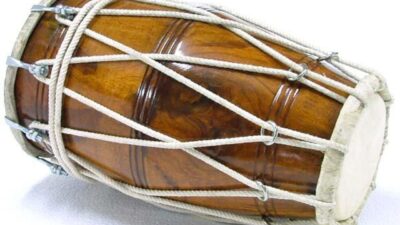
शास्त्र विंग · वाद्य-पट्टिका · Instrument Plate
ढोलकी
Dholki
घर-आँगन का ताल — स्त्री-संगीत की आत्मा · Rhythm of home and courtyard — soul of women's folk music
अन्य नामढोलकी · छोटी ढोलक · नल ढोल · Dhulki
एक पंक्तिढोलकी एक छोटा बेलनाकार दोहरे सिर वाला ड्रम है जो उत्तर भारत की महिलाओं के लोक गीतों — सोहर, होली, काजरी, और विवाह गीतों — की पहचान है।
परिचय
Overviewढोलकी उत्तर भारत की उस संगीत परंपरा का प्रतीक है जो घर-आँगन में जन्मी, माँ-बहनों की गोद में पली, और पीढ़ियों की यादों में बसी है। यह वाद्य यंत्र नहीं — यह एक सांस्कृतिक धरोहर है जिसे उत्तर भारत की महिलाओं ने सदियों से संजोया है। जब भी कोई बच्चा जन्म लेता था, पड़ोस की महिलाएँ इकट्ठा होती थीं और ढोलकी की थाप पर सोहर गाती थीं — यह आनंद की सामूहिक अभिव्यक्ति थी। जब भी विवाह होता था, रातों-रात ढोलकी बजती थी और महिलाएँ गीत गाती थीं। ढोलकी का महत्व इसकी सरलता में है। यह एक जटिल वाद्य यंत्र नहीं है — इसे सीखने के लिए वर्षों की साधना नहीं चाहिए। लेकिन इसकी सरलता ही इसकी शक्ति है। ढोलकी हर साधारण महिला की पहुँच में थी — और इसीलिए लोकगीत परंपरा को जीवित रखने में महिलाओं की भूमिका इतनी महत्वपूर्ण रही है। आधुनिक युग में, जब शहरी जीवन ने कई पारंपरिक प्रथाओं को बदल दिया है, ढोलकी की ताल पर गाए जाने वाले सोहर, काजरी, और विवाह गीत कुछ गाँवों और छोटे शहरों में अभी भी जीवित हैं। ये गाने और ये ताल हमें याद दिलाती हैं कि भारतीय संगीत की असली जड़ें महलों में नहीं, बल्कि साधारण घरों के आँगन में हैं।
अंग्रेज़ी में पढ़ें · Read in English
Dholki symbolizes that North Indian music tradition born in homes and courtyards, nurtured in the lap of mothers and sisters, and embedded in generations of memories. This is not merely an instrument — it is a cultural heritage that North Indian women have preserved for centuries. Whenever a child was born, neighboring women gathered and sang sohar to Dholki beats — this was collective expression of joy. Whenever marriages occurred, Dholki played through nights while women sang songs.
Dholki's importance lies in its simplicity. It is not a complex instrument — learning it does not require years of dedicated practice. But its simplicity is its strength. Dholki was accessible to every ordinary woman — and this is why women's role in keeping folk song traditions alive has been so important.
In the modern era, when urban life has changed many traditional practices, sohar, kajri, and wedding songs sung to Dholki beats still survive in some villages and small towns. These songs and these rhythms remind us that Indian music's true roots lie not in palaces but in the courtyards of ordinary homes.
काव्य-पंक्ति · The Verse
काव्य-पंक्ति
ढोलकी की थाप पर माँ ने सोहर गाया था, उसी धुन में बचपन का पहला पाठ पढ़ाया था।
— उत्तर भारतीय लोककवयित्री Mother sang sohar to Dholki's beat, In that melody life's first lesson we did meet.
वर्गीकरण
ClassificationNatya Shastra
अवनद्ध — चर्म वाद्य यंत्र (दोहरे सिर, बेलनाकार)
Avanaddha — Membranophone (double-headed, cylindrical)
नाट्यशास्त्र के अनुसार ढोलकी 'अवनद्ध' वर्ग में है। यह ढोलक का छोटा रूप है जिसे महिलाएँ लोकगीतों में बजाती हैं।
According to Natya Shastra, Dholki belongs to the 'Avanaddha' class. It is the smaller form of Dholak played by women in folk songs.
Western
Percussion
Double-headed Cylindrical Drum / Membranophone
पश्चिमी वर्गीकरण में ढोलकी एक दोहरे सिर वाला छोटा बेलनाकार ड्रम है।
In Western classification, Dholki is a small double-headed cylindrical drum.
Hornbostel Sachs
211.212.12
Double-headed cylindrical membranophone played with hands and/or sticks
सिनेमा में
In Cinemaहिंदी सिनेमा में ढोलकी की ध्वनि लोकगीत दृश्यों की पहचान है। जब भी गाँव की महिलाएँ मिलकर कोई लोकगीत गाती हैं, ढोलकी की थाप सुनाई देती है। पुराने हिंदी सिनेमा (१९४०-१९७०) के गाँव-आधारित दृश्यों में ढोलकी अनिवार्य थी। फिल्म 'मदर इंडिया' के ग्रामीण दृश्यों में, 'गाइड' के लोकगीत अनुक्रम में, और 'नया दौर' जैसी फिल्मों में ढोलकी की ध्वनि गाँव की आत्मा को जीवित करती थी। आधुनिक फिल्मों में 'दंगल', 'निल बट्टे सन्नाटा' जैसी ग्राम-जीवन पर आधारित फिल्मों में भी ढोलकी सुनाई देती है।
अंग्रेज़ी में पढ़ें · Read in English
In Hindi cinema, Dholki's sound identifies folk song scenes. Whenever village women gather to sing folk songs, Dholki beats are heard. In old Hindi cinema (1940-1970), village-based scenes invariably featured Dholki. In village scenes of 'Mother India', folk song sequences of 'Guide', and films like 'Naya Daur', Dholki's sound kept the village soul alive. Even in modern films based on rural life like 'Dangal', 'Nil Battey Sannata', Dholki can be heard.
वर्तमान स्थिति
Modern Statusविवरण
ढोलकी आज भी उत्तर भारत की ग्रामीण और शहरी दोनों संस्कृतियों में जीवित है। सोहर, काजरी, और लोकगीत परंपराओं में इसकी माँग बनी हुई है। कव्वाली और भजन में इसका उपयोग जारी है। हालांकि, शहरों में इलेक्ट्रॉनिक संगीत और तबले की प्राथमिकता के कारण ढोलकी का प्रयोग कुछ कम हुआ है। लेकिन गाँवों और छोटे शहरों में, और विशेषकर महिलाओं के लोक संगीत में, ढोलकी अपनी जगह मजबूती से बनाए हुए है।
अंग्रेज़ी में पढ़ें · Read in English
Dholki remains alive in both rural and urban cultures of North India. Demand continues in sohar, kajri, and folk song traditions. Its use continues in qawwali and bhajan. However, in cities, Dholki use has somewhat decreased due to preference for electronic music and Tabla. But in villages and small towns, and especially in women's folk music, Dholki maintains its strong place.
Estimated Players
Millions in North India, especially women folk singers
Revival Efforts
लोकगीत परंपराओं के दस्तावेज़ीकरण और संगीत विद्यालयों में ढोलकी की शिक्षा इसे जीवित रख रही है।
अंग्रेज़ी में पढ़ें · Read in English
Documentation of folk song traditions and Dholki instruction in music schools is keeping it alive.
बनावट
Physicalविवरण
ढोलकी ढोलक का एक छोटा संस्करण है। यह बेलनाकार होती है और इसकी लंबाई लगभग ३०-४० सेंटीमीटर और व्यास लगभग १५-२५ सेंटीमीटर होता है। इसे आम, शीशम या अन्य हल्की लकड़ी से बनाया जाता है। दोनों सिरों पर चमड़े की पर्दे होती हैं। एक तरफ की पर्दा मोटी होती है जो गहरी बास आवाज़ देती है, और दूसरी तरफ की पर्दा पतली होती है जो तीखी आवाज़ देती है। पर्दों को रस्सियों से कसा जाता है। ढोलकी को गोद में या पाँवों के बीच रखकर बजाया जाता है। कुछ महिलाएँ इसे बाईं बगल में दबाकर भी बजाती हैं। यह ढोलक की तुलना में हल्की और संभालने में आसान है।
अंग्रेज़ी में पढ़ें · Read in English
Dholki is a smaller version of Dholak. It is cylindrical with length approximately 30-40 cm and diameter approximately 15-25 cm. Made from mango, sheesham or other light wood. Both ends have leather membranes. One side's membrane is thicker giving deep bass sound, the other side's membrane is thinner giving sharp sound. Membranes are tightened with ropes. Dholki is played kept in lap or between feet. Some women also play it pressed under the left arm. It is lighter than Dholak and easier to handle.
Dimensions
30-45 cm (length)
15-25 cm (diameter)
1.5-4 kg
Tuning
रस्सी-खिंचाव और कीचड़ (ट्यूनिंग पेस्ट) की मात्रा से
Rope tension and tuning paste (keechar) quantity
Variable — tuned to match singer's key
2 octave range typical
Construction
हल्की लकड़ी का खोखला बेलनाकार खोल — ढोलक की तुलना में छोटा और हल्का।
Hollow cylindrical shell of light wood — smaller and lighter compared to Dholak.
मोटी चमड़े की पर्दा जो गहरी बास 'धा' की ध्वनि देती है। इसे दाहिने हाथ की हथेली और उंगलियों से बजाया जाता है।
Thick leather membrane giving deep bass 'dha' sound. Played with right hand's palm and fingers.
पतली चमड़े की पर्दा जो तीखी 'ती' की ध्वनि देती है। इसे बाएं हाथ की उंगलियों से बजाया जाता है।
Thin leather membrane giving sharp 'ti' sound. Played with left hand's fingers.
दोनों पर्दों को बांधने और ट्यून करने के लिए रस्सियाँ और धातु के छल्ले।
Ropes and metal rings to bind and tune both membranes.
बड़े सिरे की पर्दा पर लगाया जाने वाला काला पेस्ट (राख, लोहे के बुरादे, और आटे का मिश्रण) जो आवाज़ की गहराई और स्वर को समायोजित करता है।
Black paste (mixture of ash, iron filings, and flour) applied on bass membrane to adjust sound depth and pitch.
ध्वनि-चरित्र
SoundTonal Character
ढोलकी की ध्वनि ढोलक से छोटी लेकिन उतनी ही मधुर होती है। इसकी आवाज़ में एक घरेलू और अंतरंग स्वभाव है — यह उत्सव के बड़े मंच के बजाय घर-आँगन की ताल है। बड़े सिरे की 'धा' और छोटे की 'ती' मिलकर एक नृत्यमयी और उत्सवप्रिय ताल बनाती है। ढोलकी की ध्वनि में एक स्त्रैण कोमलता है जो उत्तर भारत के महिलाओं के लोकगीतों को एक अनूठी पहचान देती है।
अंग्रेज़ी में पढ़ें · Read in English
Dholki's sound is smaller than Dholak but equally melodious. Its sound has a domestic and intimate character — it is the rhythm of home and courtyard rather than a grand festival stage. The bass side's 'dha' and treble's 'ti' together create a dance-like and festive rhythm. Dholki's sound has a feminine gentleness that gives North Indian women's folk songs a unique identity.
Timbre
मधुर, कोमल, और अंतरंग — घर-आँगन की लोक ताल
अंग्रेज़ी में पढ़ें · Read in English
Melodious, gentle, and intimate — folk rhythm of home and courtyard
Dynamic Range
मध्यम — घर के भीतर और छोटे आयोजनों के लिए उपयुक्त
अंग्रेज़ी में पढ़ें · Read in English
Medium — suitable for indoor and smaller gatherings
Comparison
ढोलक का कोमल, घरेलू संस्करण — तबले से भिन्न लेकिन उतना ही लयबद्ध
अंग्रेज़ी में पढ़ें · Read in English
Gentle, domestic version of Dholak — different from Tabla but equally rhythmic
वादन-तकनीक
Playing Techniqueविवरण
ढोलकी बजाने की विधि ढोलक से मिलती-जुलती है। ढोलकी को गोद में या पाँवों के बीच क्षैतिज रखकर बजाया जाता है। दाहिना हाथ बड़े सिरे (बास) पर और बायाँ हाथ छोटे सिरे (ट्रेबल) पर काम करता है। दाहिने हाथ की हथेली से 'धा' और उंगलियों से 'धिन' बजाया जाता है। बाएं हाथ की उंगलियों से 'ता' और 'ती' की ध्वनि निकाली जाती है। छोटे सिरे पर लगा काला 'कीचड़' (ट्यूनिंग पेस्ट) बायें हाथ की एड़ी से लगाकर पर्दे का स्वर समायोजित किया जाता है। ढोलकी के बोल तबले के समान हैं — 'धा-धिन-धिन-धा', 'ता-ती-ती-ता' आदि। यह महिलाओं के लोकगीतों में विशेष ताल शैलियाँ जैसे 'कहरवा', 'दादरा', 'चाँचर' में बजाई जाती है।
अंग्रेज़ी में पढ़ें · Read in English
Dholki playing method is similar to Dholak. Dholki is played placed horizontally in lap or between feet. Right hand works on the bass side (larger head) and left hand on treble side (smaller head). 'Dha' is played with right palm and 'Dhin' with fingers. 'Ta' and 'Ti' sounds are produced with left hand fingers. The black 'keechar' (tuning paste) on the small side is pressed with the left hand heel to adjust membrane pitch. Dholki bols are similar to Tabla — 'dha-dhin-dhin-dha', 'ta-ti-ti-ta' etc. It is played in special rhythmic styles like 'kahara', 'dadra', 'chanchal' in women's folk songs.
Posture
ज़मीन पर बैठकर, ढोलकी को गोद में क्षैतिज रखते हुए; या पाँवों के बीच
अंग्रेज़ी में पढ़ें · Read in English
Sitting on floor with Dholki placed horizontally in lap or between feet
Techniques
बड़े सिरे पर दाहिनी हथेली और उंगलियों से 'धा' और 'धिन' बजाना — ढोलकी का मूलाधार।
Playing 'dha' and 'dhin' on bass head with right palm and fingers — foundation of Dholki.
आठ मात्रा की कहरवा ताल — उत्तर भारतीय लोकगीतों में सबसे प्रचलित। सोहर, काजरी, और होली के गानों में।
Eight-beat Kaharwa taal — most prevalent in North Indian folk songs. In sohar, kajri, and holi songs.
छह मात्रा की दादरा ताल — ठुमरी, लोकगीत, और टप्पे में प्रयोग। लहराती हुई लय।
Six-beat Dadra taal — used in thumri, folk songs, and tappa. Swaying rhythm.
बाएं हाथ की एड़ी से पर्दे पर कीचड़ लगाकर स्वर को ऊपर-नीचे करना — उस्ताद वादकों की विशेष तकनीक।
Applying tuning paste with heel of left hand on membrane to raise or lower pitch — special technique of master players.
दोनों हाथों से तेज़ और अविरत ताड़न — विशेषकर होली के गानों और तेज़ भजनों में।
Fast and continuous striking with both hands — especially in Holi songs and fast bhajans.
निर्माण-प्रक्रिया
Making Processविवरण
ढोलकी बनाना एक पारंपरिक कारीगरी है जो ढोलक बनाने की प्रक्रिया से मिलती-जुलती है, लेकिन आकार में छोटी होती है। आम, शीशम, या नीम की लकड़ी के खंड को खराद पर बेलनाकार आकार दिया जाता है और अंदर से खोखला किया जाता है। लकड़ी को सुखाने में महीने लग सकते हैं। दोनों सिरों पर चमड़े की पर्दे लगाई जाती हैं — एक तरफ मोटी (भैंस/गाय की खाल) और दूसरी तरफ पतली (बकरी की खाल)। रस्सियों से दोनों सिरे बांधे जाते हैं। बड़े सिरे पर 'कीचड़' (काला ट्यूनिंग पेस्ट) लगाया जाता है। अंत में ढोलकी को रंगीन सजावट दी जाती है।
अंग्रेज़ी में पढ़ें · Read in English
Making Dholki is a traditional craft similar to Dholak making but smaller in size. A piece of mango, sheesham, or neem wood is lathe-turned into cylindrical shape and hollowed. Wood drying can take months. Leather membranes are fitted on both ends — thick on one side (buffalo/cow hide) and thin on the other (goatskin). Both ends are laced with ropes. 'Keechar' (black tuning paste) is applied on the bass side. Finally Dholki is given colorful decoration.
Materials
ढोलकी का मुख्य खोल — हल्का और अच्छे अनुरणन के लिए।
Main shell of Dholki — light and for good resonance.
बड़े (बास) सिरे की मोटी पर्दा के लिए।
For thick membrane on bass side.
छोटे (ट्रेबल) सिरे की पतली पर्दा के लिए।
For thin membrane on treble side.
लोहे का बुरादा, राख, और चावल के आटे का मिश्रण जो बास पर्दे पर स्वर नियंत्रण के लिए लगाया जाता है।
Mixture of iron filings, ash, and rice flour applied on bass membrane for pitch control.
Artisan Centers
भारत में तबला, ढोलक और ढोलकी बनाने का सबसे प्रसिद्ध केंद्र। यहाँ के वाद्य यंत्र पूरे देश में प्रसिद्ध हैं।
Most famous center in India for making tabla, dholak and dholki. Instruments from here are famous throughout the country.
काशी में ढोलकी बनाने की लंबी परंपरा है। मंदिरों और संगीत विद्यालयों के कारण माँग अधिक है।
Kashi has a long tradition of making Dholki. Demand is high due to temples and music schools.
उत्तर प्रदेश में ढोलकी और ढोलक बनाने का एक प्रमुख केंद्र।
A major center for making Dholki and Dholak in Uttar Pradesh.
Time To Craft
1-3 weeks
Price Range
₹1,000-12,000
संगीत-समूह में भूमिका
Role In EnsemblePrimary Role
उत्तर भारतीय लोकगीतों में — विशेषकर महिलाओं के सोहर, होली, काजरी, और विवाह गीतों में — ताल का आधार
अंग्रेज़ी में पढ़ें · Read in English
Rhythmic foundation in North Indian folk songs — especially women's sohar, holi, kajri, and wedding songs
Solo Capability
ढोलकी एकल वादन के लिए भी सक्षम है, विशेषकर लोकगीत परंपरा में।
अंग्रेज़ी में पढ़ें · Read in English
Dholki is also capable of solo playing, especially in folk song tradition.
Accompaniment For
बच्चे के जन्म पर महिलाओं द्वारा गाए जाने वाले सोहर गीतों में ढोलकी की ताल अनिवार्य है।
Dholki rhythm is essential in sohar songs sung by women at the birth of a child.
होली के रंगीले उत्सव में ढोलकी की तेज़ और उत्साही ताल पूरे माहौल को जीवंत बनाती है।
In Holi's colorful festival, Dholki's fast and enthusiastic rhythm enlivens the entire atmosphere.
छोटे कव्वाली समूहों और भजन संध्या में ढोलकी की ताल तबले की जगह भी ले लेती है।
In small qawwali groups and bhajan evenings, Dholki rhythm also replaces Tabla.
बरसात और वसंत के लोकगीत काजरी और चैती ढोलकी के बिना अधूरे हैं।
Monsoon and spring folk songs Kajri and Chaiti are incomplete without Dholki.
लोक संगीत में
In Folk Musicढोलकी उत्तर भारत की महिलाओं के लोकगीत संगीत का केंद्रीय वाद्य यंत्र है। पूर्वी उत्तर प्रदेश और बिहार में 'सोहर' (जन्म गीत), 'विवाह गीत', 'काजरी' (बरसात के गाने), और 'चैती' (वसंत के गाने) — सभी में ढोलकी की ताल अनिवार्य है। राजस्थान में भी लोकगीत परंपराओं में ढोलकी का बहुत प्रयोग होता है। कव्वाली परंपरा में — विशेषकर छोटे समूहों में — ढोलकी तबले की जगह लेती है। भजन और जागरण में ढोलकी एक सरल और प्रभावशाली ताल वाद्य है।
अंग्रेज़ी में पढ़ें · Read in English
Dholki is the central instrument of North Indian women's folk song music. In eastern UP and Bihar, 'sohar' (birth songs), 'vivah geet' (wedding songs), 'kajri' (rain songs), and 'chaiti' (spring songs) — all require Dholki rhythm. Rajasthan also uses Dholki widely in folk song traditions. In qawwali tradition — especially in smaller groups — Dholki replaces Tabla. In bhajan and jagran, Dholki is a simple and effective rhythmic instrument.
क्षेत्रीय रूप
Regional Variantsलोकगीत और कव्वाली संगत के लिए प्रयोग। थोड़ी बड़ी और अधिक बास वाली।
Used for folk song and qawwali accompaniment. Slightly larger with more bass.
राजस्थानी लोकगीतों के लिए — थोड़ी छोटी और तीखी आवाज़ वाली।
For Rajasthani folk songs — slightly smaller with sharper sound.
पंजाबी गिद्दा और महिला लोकगीतों में प्रयोग। मजबूत और तेज़ ताल के लिए अनुकूलित।
Used in Punjabi Giddha and women's folk songs. Adapted for strong and fast rhythm.
बिहारी सोहर और विवाह गीतों के लिए — थोड़ी लंबी और मधुर आवाज़ वाली।
For Bihari sohar and wedding songs — slightly longer with melodious sound.
प्रसिद्ध वादक
Famous Playersठुमरी और दादरा की मल्लिका बेगम अख्तर के रियाज़ और प्रारंभिक प्रदर्शनों में ढोलकी की संगत अनिवार्य थी। उनके ठुमरी और काजरी गायन ने ढोलकी की लोकप्रियता को एक नई ऊँचाई दी।
In the riyaz and early performances of Thumri and Dadra queen Begum Akhtar, Dholki accompaniment was essential. Her thumri and kajri singing gave Dholki popularity a new height.
पंडित भीमसेन जोशी के भजन और अभंग गायन के साथ ढोलकी की संगत पारंपरिक रूप से होती थी। उनके प्रदर्शनों में ढोलकी की सरल ताल तबले जितनी ही प्रभावशाली थी।
Dholki accompaniment was traditional with Pandit Bhimsen Joshi's bhajan and abhang singing. In his performances, Dholki's simple rhythm was as effective as Tabla.
कव्वाली के बादशाह के प्रदर्शनों में ढोलकी वादकों की भूमिका महत्वपूर्ण थी। ढोलकी की ताल पर कव्वाली की 'हाहाकार' और 'वाह-वाह' की परंपरा जीवित रही।
Dholki players had an important role in the Qawwali king's performances. The tradition of qawwali's 'huhukar' and 'wah-wah' lived on with Dholki rhythm.
पंडित जसराज के परिवार में भजन गायन की जो परंपरा थी उसमें ढोलकी की सरल ताल का उपयोग होता था — एक घरेलू और भक्तिमय संगीत शैली।
In the bhajan singing tradition of Pandit Jasraj's family, simple Dholki rhythm was used — a domestic and devotional music style.
पूर्वी उत्तर प्रदेश की महान लोक गायिका जिनके सोहर, काजरी, और विवाह गीतों में ढोलकी का वादन उनकी पहचान का हिस्सा था।
Great folk singer of eastern Uttar Pradesh whose sohar, kajri, and wedding songs featured Dholki playing as part of her identity.
राग-उपयुक्तता
Raag Suitabilityपीलू राग की लोक-सुलभता और हल्कापन ढोलकी के घरेलू स्वभाव से पूरी तरह मेल खाता है।
Pilu raag's folk accessibility and lightness perfectly matches Dholki's domestic character.
ठुमरी और लोकगीतों में खमाज राग के साथ ढोलकी की दादरा ताल का संयोजन क्लासिक है।
Combination of Dholki's dadra taal with Khamaj raag in thumri and folk songs is classic.
काफ़ी राग की लोक-परंपरागत प्रकृति ढोलकी के साथ होली और काजरी में आदर्श है।
Kaafi raag's folk-traditional nature is ideal with Dholki in holi and kajri.
भैरवी की भावनात्मक गहराई ढोलकी की अंतरंग आवाज़ के साथ मिलकर अद्भुत भजन और ठुमरी बनाती है।
Bhairavi's emotional depth combined with Dholki's intimate voice creates wonderful bhajan and thumri.
घराना-संबंध
Gharana Connectionsपूर्वी उत्तर प्रदेश और बिहार की पूरबी गायन परंपरा में ढोलकी सर्वप्राथमिक ताल वाद्य है।
In the Poorbi singing tradition of eastern UP and Bihar, Dholki is the primary rhythmic instrument.
बनारस घराने की ठुमरी और दादरा परंपरा में ढोलकी की ताल का विशेष महत्व है।
Dholki rhythm has special importance in the thumri and dadra tradition of Banaras Gharana.
सीखने का मार्ग
Learning Pathविवरण
ढोलकी सीखना ढोलक सीखने जैसा है, लेकिन थोड़ा सरल। शुरुआत में हाथ की सही पकड़ और बुनियादी बोल सीखे जाते हैं। कहरवा और दादरा ताल से शुरुआत होती है। धीरे-धीरे तीनताल और अन्य ताल सीखे जाते हैं। कीचड़ लगाकर स्वर नियंत्रण सीखना एक महत्वपूर्ण कौशल है। उत्तर भारत में कई गुरु-शिष्य परंपरा की विद्यालयों में ढोलकी सिखाई जाती है।
अंग्रेज़ी में पढ़ें · Read in English
Learning Dholki is like learning Dholak but slightly simpler. Initially correct hand grip and basic bols are learned. It starts with Kaharwa and Dadra taal. Gradually Teentaal and other taals are learned. Learning pitch control by applying keechar is an important skill. Dholki is taught in many guru-shishya tradition schools in North India.
Beginner Steps
ढोलकी को गोद में सही तरह से रखना और दोनों हाथों की सही पकड़ सीखना।
Correctly placing Dholki in lap and learning correct grip of both hands.
ढोलकी का मूलाधार बोल जो कहरवा और दादरा ताल का आधार है।
Foundation bol of Dholki which is the basis of Kaharwa and Dadra taal.
आठ मात्रा की कहरवा ताल जो उत्तर भारतीय लोकगीतों में सबसे अधिक प्रयुक्त है।
Eight-beat Kaharwa taal most commonly used in North Indian folk songs.
गायन या लोकगीत के साथ ढोलकी बजाने का अभ्यास — सुर और ताल का तालमेल।
Practice of playing Dholki with singing or folk song — coordination of melody and rhythm.
सामान्य अवधि
6 months to 2 years for folk proficiency; 5+ years for classical accompaniment
संस्थान
हिंदुस्तानी संगीत की प्रतिष्ठित संस्था जहाँ ढोलक और ढोलकी की विधिवत शिक्षा दी जाती है।
Prestigious Hindustani music institution offering formal instruction in Dholak and Dholki.
उत्तर प्रदेश की प्रसिद्ध संगीत परीक्षा संस्था जिसमें ढोलकी परीक्षाएँ आयोजित होती हैं।
UP's famous music examination institution conducting Dholki examinations.
सांस्कृतिक महत्व
Cultural Significanceढोलकी का सांस्कृतिक महत्व इसके स्त्री-स्वभाव में है। यह एक 'महिलाओं का वाद्य' रहा है — न इसलिए कि पुरुष इसे नहीं बजाते, बल्कि इसलिए कि इसने महिलाओं की संगीत परंपरा को जीवित रखा। उत्तर भारत में सोहर गायन एक ऐसी परंपरा है जो माँ से बेटी को मिलती है। ढोलकी इस परंपरा का वाहन है। काजरी और चैती के मौसमी गाने, विवाह की रातों के गीत — ये सब ढोलकी की थाप के बिना अधूरे हैं। ढोलकी स्त्री-जीवन की सुख-दुख की साथी है।
अंग्रेज़ी में पढ़ें · Read in English
Dholki's cultural significance lies in its feminine character. It has been a 'women's instrument' — not because men don't play it, but because it kept women's musical tradition alive. In North India, sohar singing is a tradition passed from mother to daughter. Dholki is the vehicle of this tradition. Seasonal songs of kajri and chaiti, songs of wedding nights — all are incomplete without Dholki's beats. Dholki is the companion of women's joys and sorrows.
सुनने का मार्गदर्शन
The Listening Guideढोलकी को सुनने के लिए सबसे पहले पूर्वी उत्तर प्रदेश या बिहार की लोकगायिका विन्ध्यवासिनी देवी के गाए सोहर या काजरी सुनें। बेगम अख्तर की ठुमरी और दादरा में ढोलकी की संगत सुनें। ढोलकी की आवाज़ में एक घरेलू और स्नेहपूर्ण गुण है जो हृदय को छूता है।
अंग्रेज़ी में पढ़ें · Read in English
To hear Dholki, first listen to sohar or kajri sung by eastern UP or Bihar folk singer Vindhyavasini Devi. Listen to Dholki accompaniment in Begum Akhtar's thumri and dadra. Dholki's sound has a domestic and affectionate quality that touches the heart.
श्रवण-कक्ष · The Listening Room
देखें-सुनें
ढोलकी बजाना सीखें — प्रारंभिक पाठ · ढोलकी शिक्षक · 10:15
सोहर — ढोलकी के साथ लोकगीत · लोकगायिका · 7:30
परिचय
Identity- Year Of Origin
- 1500
वर्गीकरण
Classification- Code
- 211.212.12
- Description
- Double-headed cylindrical membranophone played with hands and/or sticks
- Category
- अवनद्ध — चर्म वाद्य यंत्र (दोहरे सिर, बेलनाकार)
- Category En
- Avanaddha — Membranophone (double-headed, cylindrical)
- Description
- नाट्यशास्त्र के अनुसार ढोलकी 'अवनद्ध' वर्ग में है। यह ढोलक का छोटा रूप है जिसे महिलाएँ लोकगीतों में बजाती हैं।
- Description En
- According to Natya Shastra, Dholki belongs to the 'Avanaddha' class. It is the smaller form of Dholak played by women in folk songs.
Hornbostel Sachs
Natya Shastra
अन्य विवरण
More Details- खोल — Cylindrical Shell — हल्की लकड़ी का खोखला बेलनाकार खोल — ढोलक की तुलना में छोटा और हल्का। · Cylindrical Shell
- बड़ी पर्दा (बायाँ सिरा) — Bass Head — मोटी चमड़े की पर्दा जो गहरी बास 'धा' की ध्वनि देती है। इसे दाहिने हाथ की हथेली और उंगलियों से बजाया जाता है। · Bass Head (Left End)
- छोटी पर्दा (दायाँ सिरा) — Treble Head — पतली चमड़े की पर्दा जो तीखी 'ती' की ध्वनि देती है। इसे बाएं हाथ की उंगलियों से बजाया जाता है। · Treble Head (Right End)
- रस्सी और छल्ले — Lacing — दोनों पर्दों को बांधने और ट्यून करने के लिए रस्सियाँ और धातु के छल्ले। · Ropes and Rings
- कीचड़ (ट्यूनिंग पेस्ट) — Tuning Paste — बड़े सिरे की पर्दा पर लगाया जाने वाला काला पेस्ट (राख, लोहे के बुरादे, और आटे का मिश्रण) जो आवाज़ की गहराई और स्वर को समायोजित करता है। · Tuning Paste (Keechar)
- System
- रस्सी-खिंचाव और कीचड़ (ट्यूनिंग पेस्ट) की मात्रा से
- System En
- Rope tension and tuning paste (keechar) quantity
- Standard Tuning
- Variable — tuned to match singer's key
- Range
- 2 octave range typical
- Timbre
- मधुर, कोमल, और अंतरंग — घर-आँगन की लोक ताल
Construction
Tuning
रोचक तथ्य
Margin Notesढोलकी के बड़े सिरे पर लगाया जाने वाला 'कीचड़' (ट्यूनिंग पेस्ट) एक अनूठी भारतीय आविष्कार है। यह पेस्ट लोहे के बुरादे, राख, और चावल के आटे से बनाया जाता है। इसे धीरे-धीरे लगाने और हटाने से ड्रम की pitch को बिना रस्सियाँ कसे या ढीली किए बदला जा सकता है।
The 'keechar' (tuning paste) applied on Dholki's bass head is a unique Indian invention. Made from iron filings, ash, and rice flour, gradually adding or removing it allows changing the drum's pitch without tightening or loosening ropes.
उत्तर भारत में 'सोहर' गायन की परंपरा में ढोलकी की विशेष भूमिका है — नवजात शिशु के जन्म के बाद घर में महिलाएँ इकट्ठा होती हैं और ढोलकी बजाकर गीत गाती हैं। इन गीतों में माँ के सुख, बच्चे की मंगलकामना, और परिवार की खुशी होती है।
In North India's 'sohar' singing tradition, Dholki has a special role — after a newborn's birth, women gather at home and play Dholki while singing songs. These songs contain mother's happiness, wishes for the child, and family joy.
ढोलकी और ढोलक में मुख्य अंतर आकार का है — ढोलकी ढोलक से छोटी होती है। लेकिन संगीत शास्त्र में ये दोनों अलग-अलग वाद्य यंत्र माने जाते हैं क्योंकि इनके उपयोग के संदर्भ और परंपराएँ भिन्न हैं।
The main difference between Dholki and Dholak is size — Dholki is smaller than Dholak. But in musicology, these are considered distinct instruments because their contexts of use and traditions differ.
कव्वाली में ढोलकी का उपयोग एक ऐतिहासिक परंपरा है। प्रारंभिक कव्वाली — जो दरगाहों और खानकाहों में होती थी — तबले के बजाय ढोलकी पर आधारित थी। आज भी कुछ पारंपरिक कव्वाल ढोलकी को ही पसंद करते हैं।
Use of Dholki in qawwali is a historical tradition. Early qawwali — performed at dargahs and khanqahs — was based on Dholki rather than Tabla. Even today some traditional qawwals prefer Dholki.
बिहार और पूर्वी उत्तर प्रदेश में होली के दौरान 'फाग' गाने की एक विशेष परंपरा है जिसमें पुरुष और महिलाएँ अलग-अलग टोलियों में ढोलकी के साथ होली गाते हैं और कभी-कभी एक-दूसरे को जवाब देते हैं।
In Bihar and eastern UP, there is a special tradition of singing 'phag' during Holi where men and women in separate groups sing Holi with Dholki and sometimes respond to each other.
ढोलकी को तबला से 'सरल' माना जाता है, लेकिन एक उस्ताद ढोलकी वादक तबले जितने ही जटिल बोल निकाल सकता है। ढोलकी की तकनीक और तबले की तकनीक में कई समानताएँ हैं।
Dholki is considered 'simpler' than Tabla, but a master Dholki player can produce bols as complex as Tabla. There are many similarities between Dholki and Tabla technique.
क्या आप जानते हैं?
Did You Knowभारत में 'ढोलकी पार्टी' एक लोकप्रिय विवाह-पूर्व परंपरा है जिसमें दुल्हन के घर की महिलाएँ ढोलकी बजाकर गीत गाती हैं और रात भर नाचती हैं। यह परंपरा आधुनिक 'संगीत समारोह' का पारंपरिक रूप है।
In India, the 'dholki party' is a popular pre-wedding tradition where women of the bride's home play Dholki, sing songs, and dance through the night. This tradition is the traditional form of the modern 'sangeet ceremony'.
ढोलकी बजाना सीखने के लिए आज यूट्यूब और ऑनलाइन प्लेटफॉर्म पर बहुत सी निःशुल्क सामग्री उपलब्ध है। इसने ढोलकी को एक नई पीढ़ी तक पहुँचाया है जो इसे घर पर सीख सकती है।
Much free material is now available on YouTube and online platforms to learn Dholki. This has brought Dholki to a new generation that can learn it at home.
मिराज (महाराष्ट्र) में बनी ढोलकियाँ पूरे भारत में सबसे अधिक लोकप्रिय हैं। मिराज के कारीगरों ने इस कला को इतना परिष्कृत किया है कि मिराज की ढोलकी की आवाज़ और टिकाऊपन में कोई मुकाबला नहीं।
Dholkis made in Miraj (Maharashtra) are most popular throughout India. Miraj artisans have so refined this craft that no one can match the sound and durability of a Miraj Dholki.
सूक्तियाँ
Words of the Masters“ढोलकी की थाप पर माँ के गाने का वो पल — वह जीवन का सबसे सच्चा संगीत था।”
— — उत्तर भारतीय लोककथा“That moment of mother singing to Dholki's beat — that was life's most genuine music.”
“ढोलकी लोक संगीत का वह रत्न है जो महलों से नहीं, झोंपड़ियों की गोद से आया है।”
— — संगीत विद्वान“Dholki is the gem of folk music that came not from palaces but from the lap of humble homes.”
“काजरी बिना ढोलकी — बादल बिना बारिश जैसे।”
“Kajri without Dholki — like clouds without rain.”
— — पूर्वांचल की कहावत
सवाल-जवाब
Questions & Answersढोलकी और ढोलक में क्या फर्क है?
ढोलकी और ढोलक दोनों बेलनाकार दोहरे-सिर वाले ड्रम हैं, लेकिन इनमें आकार और परंपरा के अंतर हैं। ढोलक बड़ा (५०-७० cm) और भारी होता है और सामान्यतः पुरुष बजाते हैं। ढोलकी छोटी (३०-४५ cm), हल्की होती है और पारंपरिक रूप से महिलाओं के लोकगीतों में उपयोग होती है। ढोलक की आवाज़ ढोलकी से अधिक तेज़ और बड़ी होती है। दोनों एक समान तकनीक से बजाए जाते हैं।
सोहर गाने में ढोलकी की क्या भूमिका है?
सोहर उत्तर भारत में नवजात शिशु के जन्म पर गाए जाने वाले गीत हैं। इन गीतों में ढोलकी ताल का आधार है। ढोलकी की 'कहरवा' ताल पर सोहर के बोल गाए जाते हैं। ढोलकी की आवाज़ मधुर और घरेलू होती है जो सोहर के उत्सव के भाव के साथ पूरी तरह मेल खाती है। ढोलकी के बिना सोहर का आनंद और भाव अधूरा माना जाता है।
ढोलकी को तबले का विकल्प क्यों माना जाता है?
ढोलकी को तबले का विकल्प इसलिए माना जाता है क्योंकि दोनों में बहुत समान बोल होते हैं। ढोलकी पर 'धा-धिन-धिन-धा', 'ता-ती' जैसे बोल तबले की तरह ही निकाले जाते हैं। ढोलकी सीखना तबले से सरल और सस्ता है। ग्रामीण और लोक संगीत परिवेश में, जहाँ तबला उपलब्ध नहीं होता, ढोलकी आसानी से उसकी जगह ले लेती है। कव्वाली और भजन में ढोलकी का तबले की जगह उपयोग एक प्राचीन परंपरा है।
इतिहास
The Historyउत्पत्ति — मध्यकाल — अनुमानतः १५वीं-१६वीं सदी Origin
ढोलकी की उत्पत्ति ढोलक की परंपरा से हुई है जो भारत में सहस्राब्दियों पुरानी है। मध्यकाल में, जब बड़े ढोलों और ढोलकों का उपयोग प्रचलित था, उनका एक छोटा और हल्का संस्करण — ढोलकी — महिलाओं के घरेलू उपयोग के लिए विकसित हुआ। यह महिलाओं के लोकगीतों और घरेलू उत्सवों के लिए एक आदर्श वाद्य यंत्र था। उत्तर भारत में सोहर, काजरी, और चैती की परंपराओं ने ढोलकी को एक विशेष पहचान दी।
अंग्रेज़ी में पढ़ें · Read in English
Dholki's origin is from the Dholak tradition which is millennia-old in India. In medieval times, when large Dhols and Dholaks were prevalent, a smaller and lighter version — Dholki — developed for women's domestic use. It was an ideal instrument for women's folk songs and domestic celebrations. In North India, the traditions of sohar, kajri, and chaiti gave Dholki a special identity.
विकास-यात्रा · Evolution
- प्राचीन काल — ढोलक परंपरा बेलनाकार दोहरे-सिर वाले ड्रम की भारत में हज़ारों वर्ष पुरानी परंपरा। ढोलकी इसी परंपरा का छोटा रूप।
- मध्यकाल — महिला लोकगीत परंपरा (१४०० — १८००) ढोलकी का महिलाओं के लोकगीतों में प्रमुख वाद्य के रूप में स्थापित होना। सोहर, काजरी, चैती परंपराओं का विकास।
- ब्रिटिश और स्वतंत्रता काल (१८०० — १९४७) लोकगीत परंपराओं के साथ ढोलकी का मजबूत बने रहना। बेगम अख्तर और अन्य कलाकारों के ज़रिए ढोलकी की ठुमरी संगत का विकास।
- आधुनिक काल (१९४७ — वर्तमान) शहरीकरण के बावजूद लोकगीत परंपराओं में ढोलकी का अस्तित्व। 'ढोलकी पार्टी' जैसी विवाह परंपराओं में नई भूमिका।
प्रमुख पड़ाव · Key Milestones
- 1500 उत्तर भारत में ढोलकी का महिला लोकगीत वाद्य के रूप में स्थापन।
- 1700 सोहर, काजरी, और चैती परंपराओं में ढोलकी की अनिवार्य भूमिका का स्थापन।
- 1900 मिराज (महाराष्ट्र) में व्यावसायिक ढोलकी निर्माण का विकास।
- 1945 बेगम अख्तर के ठुमरी और काजरी गायन के साथ ढोलकी की शास्त्रीय संगत को मान्यता।
- 1970 आकाशवाणी और दूरदर्शन पर लोकगीत कार्यक्रमों में ढोलकी का व्यापक प्रयोग।
- 2010 डिजिटल प्लेटफॉर्म पर ढोलकी वादन की शिक्षा उपलब्ध — नई पीढ़ी तक पहुँच।
नमूना-पट्टी
The Specimen Table| नाम | ढोलकी · Dholki |
|---|---|
| अन्य नाम | ढोलकी · छोटी ढोलक · नल ढोल · Dhulki · Small Dholak · Women's Drum |
| उद्गम | 1500 |
| काल | मध्यकाल — अनुमानतः १५वीं-१६वीं सदी |
| प्रकार | वाद्य · Instruments |
जुड़े हुए पन्ने
Connected Plates · The Graph Made Visibleअटलस में कोई पन्ना अकेला नहीं — इस वाद्य से जुड़े गीत, कलाकार, शास्त्र और कहानियाँ, सब यहाँ से खुलते हैं।
जुड़े गीत · Songs
इस वाद्य के गीत
Songs of this Instruments
साझा कीजिए · Share this Plate