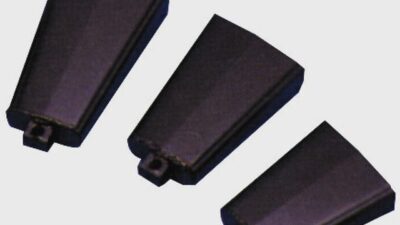
शास्त्र विंग · वाद्य-पट्टिका · Instrument Plate
काउबेल
Cowbell
अन्य नामकाउबेल · सेंसेरो (Cencerro) · कैम्पाना (Campana) · Cowbell (also: hand cowbell, agogo-family idiophone)
परिचय
Overviewकाउबेल संगीत का वह मेहमान है जो खेत से आया — पशु की घंटी, जिसका लटकन निकालकर उसे ताल-वाद्य बना दिया गया। यह गाती नहीं, समय पर मुक्का मारती है: साल्सा की कैम्पाना में गीत का केंद्र, रॉक-फंक का हस्ताक्षर हुक, और बॉलीवुड के डिस्को-कैबरे नंबरों में कभी-कभार पड़ी एक चमकीली, कड़क चोट।
अंग्रेज़ी में पढ़ें · Read in English
The cowbell is music's guest from the pasture — a cattle bell whose clapper was removed to make it a percussion instrument. It does not sing, it punches the time: the centre of a salsa's campana, the signature hook of rock-funk, and, in Bollywood's disco-cabaret numbers, the occasional bright, hard strike.
वर्गीकरण
ClassificationNatya Shastra Category
घन (Ghana - solid/struck idiophones)
काउबेल भारतीय शास्त्रीय वर्गीकरण के अनुसार 'घन वाद्य' श्रेणी में आता है — अर्थात ठोस धातु का वह वाद्य जो स्वयं कंपित होकर ध्वनि उत्पन्न करता है, जैसे मंजीरा, घंटी या घड़ियाल। यह भारतीय परंपरा का मूल वाद्य नहीं है, किंतु प्रकृति में यह मंजीरा-करताल परिवार का पश्चिमी सम्बन्धी है।
By the Indian classical scheme the cowbell belongs to the 'Ghana' (idiophone) category — a solid metal object that vibrates as a whole to produce sound, like the manjira, ghanti or ghadiyal. It is not a native Natya Shastra instrument, but in nature it is a Western cousin of the manjira–kartal family of struck metal idiophones.
Western Category
Struck idiophone (metal hand percussion)
Western Family
Bell / idiophone family (clapperless struck bell; kin to agogô, guiro-section percussion, and the campana of Latin drum kits)
Sub Classification
बनावट
PhysicalDescription Hindi
काउबेल एक चपटी, चतुष्कोणीय शंकु-नुमा धातु की घंटी है जिसका मुँह खुला होता है और भीतर का लटकन (clapper) हटा दिया जाता है — इसीलिए इसे पशु की असली घंटी से अलग करके 'संगीत काउबेल' कहते हैं। इसे हाथ में पकड़कर या स्टैंड पर लगाकर लकड़ी की डंडी से मारा जाता है।
Description English
The cowbell is a flattened, quadrangular truncated-cone metal bell with an open mouth and — crucially — its internal clapper removed; this is what distinguishes the 'musical' cowbell from the true cattle bell. It is held in the hand or clamped to a stand and struck with a wooden stick.
Body
Flattened four-sided truncated pyramid / bell with a wide open mouth
चपटा, चार-फलक वाला कटा-शंकु / खुले मुँह वाली घंटी
Pressed sheet steel (sometimes iron or bronze), welded along a seam
दबाई हुई इस्पात की चादर (कभी लोहा या काँसा), किनारे पर वेल्ड की हुई
10-22 (varies by pitch: smaller = higher, larger = lower)
Open-mouthed hollow shell; the un-damped metal walls ring, the open end projects the tone
Strings
None — the cowbell is a struck idiophone with no strings; the whole metal body is the sounding element
None
None — cowbell provides rhythmic accent, not drone or melody
Bow
डंडी / बीटर
Stick / Beater
Hardwood drumstick or dowel; timbale sticks are common
20-40
Struck (not bowed): the mouth-end gives an open, ringing tone; the closed top/shoulder gives a tight, high 'clop'; damping with the holding hand shortens the ring
Tuning Pegs
लागू नहीं
N/A
No tuning mechanism — pitch is fixed by manufacture; players choose different-sized bells for different pitches
Bridge
लागू नहीं
N/A
No bridge — the whole shell resonates when struck
N/A
Frets
काउबेल में स्वर-विभाजन नहीं होता; यह एक ही स्थिर स्वर देता है। स्वर-वैविध्य केवल अलग-अलग आकार की घंटियों या मारने के स्थान (मुँह बनाम कंधा) और डैम्पिंग से आता है।
The cowbell has no pitch divisions; it sounds a single fixed pitch. Tonal variety comes only from using different-sized bells, from where it is struck (mouth vs. shoulder), and from hand damping.
ध्वनि-चरित्र
SoundTonal Character Hindi
काउबेल की आवाज़ तीखी, धात्विक और भोंथरी (बिना अनुनाद-पूँछ के) होती है — 'क्लोंक-क्लोंक' जैसी कड़क चोट जो ताल की गिनती को चीर कर सामने ले आती है। मुँह पर मारो तो खुली-गूँजती, कंधे पर मारो तो सूखी-ऊँची।
Tonal Character English
The cowbell's sound is sharp, metallic and deliberately un-resonant (little sustain) — a hard 'clonk-clonk' that cuts through a mix and pins the pulse. Struck at the mouth it rings open; struck on the shoulder it is dry and high.
Timbre
Bright, clangorous, inharmonic metallic attack with fast decay
Range
Non-melodic; a single fixed pitch per bell (sets span roughly a low 'gong-y' bell to a high tight bell)
Dynamic Range
Loud and cutting by design — used precisely because it slices through dense percussion and horn sections without amplification
Techniques
सुनने का मार्गदर्शन
The Listening Guideकाउबेल पहचानने की सबसे आसान राह — पहले एक साल्सा या माम्बो सुनिए और उस दोहरावदार 'क्लोंक-क्लोंक' पर कान गड़ाइए जो पूरी धुन को थामे रखती है; फिर 1980 के दशक के बॉलीवुड डिस्को-कैबरे नंबर बजाइए और उन विरल, चमकीली धात्विक चोटों को ढूँढिए जो बीट के ऊपर तैरती हैं। काउबेल कम बजती है, इसलिए हर चोट अलग से सुनाई देती है।
अंग्रेज़ी में पढ़ें · Read in English
To train your ear for the cowbell, first play a salsa or mambo and lock onto the repeating 'clonk-clonk' campana that holds the whole groove together. Then play a classic disco track and hunt for the bright, metallic hits floating above the beat. Finally put on a 1980s Bollywood disco-cabaret number — the cowbell is sparse, so each strike asks for your attention.
परिचय
Identity- Year Of Origin
- 1900
अन्य विवरण
More DetailsTimbre
Bright, clangorous, inharmonic metallic attack with fast decay
रोचक तथ्य
Margin Notesखेत से मंच तक — काउबेल शायद एकमात्र प्रमुख आधुनिक ताल-वाद्य है जो सीधे एक रोज़मर्रा के औज़ार से आया — गाय के गले की घंटी से। लटकन निकालकर, डंडी से बजाकर, चरवाहे के औज़ार को संगीतकार का वाद्य बना दिया गया।
The cowbell is perhaps the only major modern percussion instrument to come straight from an everyday tool — the bell on a cow's neck. Remove the clapper, strike it with a stick, and the herdsman's tool becomes the musician's instrument.
एक घंटी, कई स्वर नहीं — काउबेल स्वर बदल नहीं सकती — हर घंटी का एक ही स्थिर स्वर होता है। इसीलिए परक्यूशनिस्ट अलग-अलग ऊँचाई के स्वर के लिए कई आकार की काउबेल एक साथ रखते हैं (ऊँची, मध्यम, नीची)।
A cowbell cannot change pitch — each bell has a single fixed note. That is why percussionists keep several sizes together for different pitches (high, mid, low).
मुँह बनाम कंधा — एक ही काउबेल से दो अलग रंग निकलते हैं: खुले मुँह के किनारे पर चोट देने से भरी, गूँजती 'क्लोंग'; और बंद कंधे/शीर्ष पर मारने से सूखी, ऊँची 'क्लिक'। इन्हीं दो चोटों को गूँथकर लैटिन कैम्पाना पैटर्न बनता है।
A single cowbell yields two colours: strike the open lip for a full, ringing 'clong'; strike the closed shoulder/top for a dry, high 'click'. Interlocking these two strokes builds the Latin campana pattern.
भारतीय भाई-बंधु — भले काउबेल विदेशी हो, भारतीय संगीत में इसके स्वभाव-भाई भरे हैं — मंजीरा, करताल, घंटी और घुँघरू सभी 'घन वाद्य' हैं जो धातु के स्पंदन से ध्वनि देते हैं। इसलिए भारतीय कान के लिए काउबेल अजनबी नहीं, दूर का रिश्तेदार है।
Though the cowbell is foreign, Indian music is full of its temperamental kin — manjira, kartal, ghanti and ghungroo are all 'ghana' idiophones that sound by the vibration of metal. So to the Indian ear the cowbell is no stranger, but a distant relative.
सवाल-जवाब
Questions & Answersकाउबेल क्या है?
काउबेल एक धातु की परक्यूशन घंटी (घन वाद्य) है जिसका भीतरी लटकन निकाल दिया जाता है और जिसे डंडी से बाहर से मारकर एक कड़क, धात्विक ध्वनि पैदा की जाती है। यह मूल रूप से पशुओं के गले की घंटी से बना और लैटिन तथा पॉप/डिस्को संगीत में ताल-एक्सेंट के रूप में इस्तेमाल होता है।
क्या काउबेल भारतीय शास्त्रीय वाद्य है?
नहीं। काउबेल भारतीय शास्त्रीय संगीत का पारंपरिक वाद्य नहीं है। यह एक पश्चिमी/लैटिन आयात है। हालाँकि यह घन-वाद्य श्रेणी में आता है, जिसमें भारतीय मंजीरा और करताल भी आते हैं। भारतीय संगीत में यह मुख्यतः 1970-80 के डिस्को/लैटिन-शैली फ़िल्मी गीतों में सुनाई देता है।
बॉलीवुड में काउबेल का उपयोग कहाँ होता है?
बॉलीवुड में काउबेल मुख्यतः डिस्को और लैटिन-प्रभावित गीतों में एक्सेंट परक्यूशन के रूप में उपयोग होता है — आर. डी. बर्मन के परक्यूशन-भारी नंबरों और बप्पी लाहिड़ी के डिस्को युग में। इसका उपयोग विरल पर विशिष्ट है: नाइट-क्लब या कैबरे की धड़कन को चमक देती कुछ चुनिंदा चोटें।
काउबेल से अलग-अलग आवाज़ें कैसे निकाली जाती हैं?
काउबेल एक ही स्थिर स्वर देती है, पर आवाज़ का रंग बदला जा सकता है: खुले मुँह के किनारे पर चोट से भरी, गूँजती ध्वनि; बंद कंधे/शीर्ष पर चोट से सूखी, ऊँची क्लिक; और पकड़े हाथ से घंटी को दबाकर गूँज छोटी की जा सकती है। अलग स्वरों के लिए परक्यूशनिस्ट अलग-अलग आकार की काउबेल रखते हैं।
नमूना-पट्टी
The Specimen Table| नाम | काउबेल · Cowbell |
|---|---|
| अन्य नाम | काउबेल · सेंसेरो (Cencerro) · कैम्पाना (Campana) · Cowbell (also: hand cowbell, agogo-family idiophone) |
| उद्गम | 1900 |
| प्रकार | वाद्य · Instruments |
साझा कीजिए · Share this Plate