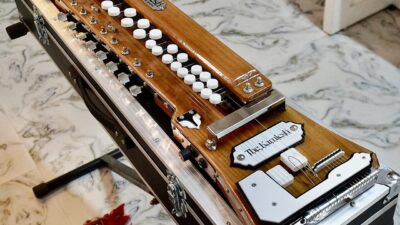
शास्त्र विंग · वाद्य-पट्टिका · Instrument Plate
बुलबुल तरंग
Bulbul Tarang
भारत का बैंजो — मधुरता और सुगमता का सेतु · India's Banjo — bridge between melody and accessibility
अन्य नामभारतीय बैंजो · Indian Banjo · बैंजो (भारत) · जपानी बैंजो
एक पंक्तिबुलबुल तरंग एक कीबोर्ड-नियंत्रित प्लक्ड ज़िदर है जिसमें बटनों को दबाकर तारों पर सुर नियंत्रित होते हैं — यह उत्तर भारत में लोक और हल्के शास्त्रीय संगीत के शौकीनों का प्रिय वाद्य रहा है।
परिचय
Overviewबुलबुल तरंग एक ऐसा वाद्य यंत्र है जिसकी कहानी वैश्वीकरण और स्थानीय अनुकूलन की अद्भुत मिसाल है। जापान के ताईशो काल में बना एक साधारण कीबोर्ड-ज़िदर, भारत पहुँचकर 'बुलबुल तरंग' बन गया — बुलबुल पक्षी की तरंग-जैसी मधुरता से भरा नाम पाया और उत्तर भारत के लाखों घरों का साथी बना। इसकी यात्रा एक अनूठी सांस्कृतिक कथा है। बुलबुल तरंग की सबसे बड़ी विशेषता यह है कि इसने संगीत को 'लोकतांत्रिक' बनाया। सितार या सारंगी सीखने के लिए जो वर्षों का अभ्यास चाहिए, वह बुलबुल तरंग पर हफ्तों में हासिल किया जा सकता है। यही कारण था कि १९५०-७० के दशक में यह भारत के मध्यमवर्गीय परिवारों का प्रिय वाद्य बना। माताएँ अपने बच्चों को, गृहिणियाँ अपने खाली समय में, और संगीत-शिक्षकों ने इसे पहले कदम के रूप में अपनाया। भारत में बुलबुल तरंग का आगमन अनुमानतः १९२०-३० के दशक में हुआ जब जापान और भारत के बीच व्यापारिक संपर्क था। जापानी ताईशो-गोटो के डिज़ाइन को भारतीय कारीगरों ने अपनाया और उसे हिंदुस्तानी संगीत के अनुकूल बनाया। जालंधर के वाद्य-उद्योग ने इसे बड़े पैमाने पर उत्पादित किया। ऑल इंडिया रेडियो के प्रारंभिक दिनों में बुलबुल तरंग एक नियमित वाद्य था। आज जब डिजिटल संगीत का ज़माना है, बुलबुल तरंग एक नॉस्टेल्जिया का प्रतीक भी है। पुरानी पीढ़ी को यह अपने बचपन की याद दिलाता है — दादी-नानी के घर में, रेडियो के गाने के साथ बजती बुलबुल तरंग। यह याद भारतीय मध्यमवर्गीय परिवारों की सांस्कृतिक स्मृति का हिस्सा है।
अंग्रेज़ी में पढ़ें · Read in English
Bulbul Tarang is an instrument whose story is a wonderful example of globalization and local adaptation. A simple keyboard-zither made in Japan's Taisho period arrived in India and became 'Bulbul Tarang' — receiving a name filled with wave-like melodiousness like the bulbul bird, and becoming a companion to millions of North Indian homes. Its journey is a unique cultural narrative.
Bulbul Tarang's greatest achievement is that it 'democratized' music. What requires years of practice on sitar or sarangi can be achieved in weeks on Bulbul Tarang. This is why it became a beloved instrument of Indian middle-class families in the 1950s-70s. Mothers for their children, housewives in their free time, and music teachers adopted it as a first step.
Bulbul Tarang's arrival in India is estimated to be in the 1920s-30s when there was trade contact between Japan and India. Indian artisans adopted the Japanese Taisho-goto design and adapted it for Hindustani music. Jalandhar's instrument industry produced it at scale. All India Radio's early days regularly featured Bulbul Tarang.
Today in the digital music era, Bulbul Tarang is also a symbol of nostalgia. Older generations are reminded of their childhood — Bulbul Tarang playing at grandparents' homes with radio songs. This memory is part of the cultural memory of Indian middle-class families.
काव्य-पंक्ति · The Verse
काव्य-पंक्ति
बुलबुल की तरंग सुनो, हर घर में मिठास है, साधारण तारों में भी असाधारण आवाज़ है।
— उत्तर भारतीय लोक परंपरा Listen to Bulbul's wave, there is sweetness in every home, Even in ordinary strings, there is an extraordinary voice.
वर्गीकरण
ClassificationNatya Shastra
तत वाद्य — तार-युक्त वाद्य, विशेष कीबोर्ड तंत्र सहित
Tata Vadya — Stringed instrument with special keyboard mechanism
नाट्यशास्त्र के वर्गीकरण में बुलबुल तरंग 'तत' श्रेणी में आती है — तार-कंपन से ध्वनि। हालाँकि इसका बटन-तंत्र इसे एक विशेष उपश्रेणी में रखता है।
In Natya Shastra classification, Bulbul Tarang belongs to 'Tata' — sound from string vibration. However, its button mechanism places it in a special sub-category.
Western
Chordophone
Keyboard-operated plucked zither
पश्चिमी संगीत वर्गीकरण में यह एक 'कीबोर्ड ज़िदर' है — कीबोर्ड नियंत्रण और प्लक्ड स्ट्रिंग का अनूठा संयोजन।
In Western classification, this is a 'keyboard zither' — unique combination of keyboard control and plucked string.
Hornbostel Sachs
314.122
Board zither with keyboard mechanism — strings activated by key-operated dampers
सिनेमा में
In Cinemaबुलबुल तरंग का भारतीय सिनेमा में एक विशेष स्थान है — विशेषकर १९४०-१९७० के दशक के हिंदी फिल्मों में। इस काल में जब ग्रामीण या मध्यमवर्गीय घरों का संगीतमय वातावरण दिखाना होता था, तो पृष्ठभूमि में बुलबुल तरंग की उजली, मधुर आवाज़ सुनाई देती थी। कई क्लासिक हिंदी फिल्मों में हीरोइन को बुलबुल तरंग बजाते हुए दिखाया गया है — यह उस समय की 'शिक्षित, संगीत-प्रेमी महिला' की एक लोकप्रिय सांस्कृतिक छवि थी। ऑल इंडिया रेडियो के शुरुआती दिनों में भी बुलबुल तरंग का खूब प्रयोग होता था।
अंग्रेज़ी में पढ़ें · Read in English
Bulbul Tarang holds a special place in Indian cinema — particularly in Hindi films of the 1940s-1970s. In this period, when depicting musical atmosphere of rural or middle-class homes, Bulbul Tarang's bright, melodious sound appeared in the background. Many classic Hindi films show the heroine playing Bulbul Tarang — this was a popular cultural image of the 'educated, music-loving woman' of that era. All India Radio's early days also featured Bulbul Tarang prominently.
वर्तमान स्थिति
Modern Statusविवरण
बुलबुल तरंग आज भी प्रचलन में है, लेकिन उसकी वह लोकप्रियता नहीं रही जो १९५०-७० के दशक में थी। इलेक्ट्रिक गिटार, कीबोर्ड, और डिजिटल संगीत उपकरणों के आगमन ने इसकी जगह ले ली। हालाँकि, भजन-मंडलियों, संगीत विद्यालयों, और शौकिया संगीत-प्रेमियों के बीच यह अभी भी एक लोकप्रिय विकल्प है। जालंधर में बुलबुल तरंग का निर्माण अभी भी जारी है।
अंग्रेज़ी में पढ़ें · Read in English
Bulbul Tarang is still in use today, but doesn't have the popularity it had in the 1950s-70s. Electric guitar, keyboard, and digital music instruments have taken its place. However, it still remains a popular choice among bhajan groups, music schools, and amateur music lovers. Manufacturing of Bulbul Tarang continues in Jalandhar.
Estimated Players
50,000-100,000 active players in India
Revival Efforts
ऑनलाइन शिक्षा और YouTube ट्यूटोरियल ने बुलबुल तरंग को एक नई पीढ़ी तक पहुँचाया है।
अंग्रेज़ी में पढ़ें · Read in English
Online education and YouTube tutorials have brought Bulbul Tarang to a new generation.
बनावट
Physicalविवरण
बुलबुल तरंग एक लंबा, सपाट वाद्य यंत्र है जिसका आकार आयताकार या थोड़ा घुमावदार होता है। इसमें दो पंक्तियों में बटन (कीज़) होती हैं जो एक पियानो जैसे कीबोर्ड की तरह दिखती हैं। प्रत्येक बटन एक छोटे स्टॉपर से जुड़ा होता है जो तार पर एक निश्चित बिंदु पर दबाव देता है। बटन दबाने से वह बिंदु तार को एक निश्चित सुर पर बाँध देता है, और तार को अलग से प्लक किया जाता है। यंत्र में आमतौर पर दो से तीन पंक्तियों में तार होते हैं — एक मेलोडी के लिए और दूसरे ड्रोन के लिए। यंत्र की कुल लंबाई लगभग ७०-९० सेंटीमीटर होती है। इसे गोद में रखकर बजाया जाता है। शरीर आमतौर पर सागवान या देवदार की लकड़ी से बना होता है।
अंग्रेज़ी में पढ़ें · Read in English
Bulbul Tarang is a long, flat instrument with a rectangular or slightly curved shape. It has rows of buttons (keys) resembling a piano-like keyboard. Each button is connected to a small stopper that presses on the string at a specific point. Pressing a button fixes that point on the string to a specific note, and the string is then plucked separately. The instrument typically has two to three rows of strings — one for melody and others for drone. Total instrument length is approximately 70-90 cm. It is played on the lap. The body is usually made from teak or deodar wood.
Dimensions
70-90 cm (length)
18-22 cm
1.5-2.5 kg
Strings Or Keys
बुलबुल तरंग में आमतौर पर ८-१४ तार होते हैं जो दो या तीन पंक्तियों में व्यवस्थित होते हैं। बटनों की संख्या २०-३५ तक हो सकती है।
Bulbul Tarang typically has 8-14 strings arranged in two or three rows. The number of buttons can be 20-35.
8-14 strings; 20-35 buttons
Steel or brass
Tuning
Sa-Re-Ga-Ma-Pa-Dha-Ni पर ट्यून, बटन स्केल निर्धारित करते हैं
Tuned to Sa-Re-Ga-Ma-Pa-Dha-Ni, buttons determine the scale
C major or D major (variable by performer)
2 octaves
Construction
मेलोडी बटन की पंक्तियाँ जो तारों पर स्टॉपर दबाती हैं। ये यंत्र की सबसे विशेष विशेषता हैं।
Rows of melody buttons that press stoppers on strings. These are the instrument's most distinctive feature.
धातु के तार जो यंत्र की पूरी लंबाई में फैले होते हैं — मेलोडी तार और ड्रोन तार।
Metal strings stretched across the full length — melody strings and drone strings.
लकड़ी से बनी पेटी जो ध्वनि को गुंजायमान और प्रवर्धित करती है।
Wooden box that resonates and amplifies the sound.
प्रत्येक बटन से जुड़ा छोटा स्टॉपर जो बटन दबाने पर तार पर दबाव देता है और सुर निर्धारित करता है।
Small stopper connected to each button that presses on the string when the button is pressed, determining the pitch.
दाईं हाथ की उंगली पर लगा छोटा प्लेक्ट्रम जिससे तारों को प्लक किया जाता है।
Small plectrum worn on the right hand finger to pluck the strings.
ध्वनि-चरित्र
SoundTonal Character
बुलबुल तरंग की ध्वनि एक मधुर, उजली, और धातुई चमक वाली होती है — जैसे किसी ने मेंडोलिन और सितार के बीच का रास्ता खोज लिया हो। इसकी आवाज़ में एक 'पिंग' जैसी स्वच्छता है। ड्रोन तारों से एक स्थायी गुंजन बनता है जो मेलोडी को एक आधार देता है। यंत्र की ध्वनि हल्की शास्त्रीय और लोक संगीत के लिए आदर्श है — न बहुत तीखी, न बहुत गहरी।
अंग्रेज़ी में पढ़ें · Read in English
Bulbul Tarang's sound is melodious, bright, and metallic — as if someone found the path between mandolin and sitar. Its voice has a 'ping'-like clarity. The drone strings create a steady hum that gives the melody a foundation. The instrument's sound is ideal for light classical and folk music — not too sharp, not too deep.
Timbre
उजली, धातुई, मधुर — हल्के संगीत की आदर्श आवाज़
अंग्रेज़ी में पढ़ें · Read in English
Bright, metallic, melodious — ideal voice for light music
Dynamic Range
मध्यम — कमरे के अंदर और छोटे सभाओं के लिए उपयुक्त
अंग्रेज़ी में पढ़ें · Read in English
Medium — suitable for indoor and small gatherings
Comparison
ऑटोहार्प की सरलता और सितार की धात्विक चमक का मिश्रण
अंग्रेज़ी में पढ़ें · Read in English
Combination of autoharp's simplicity and sitar's metallic brightness
वादन-तकनीक
Playing Techniqueविवरण
बुलबुल तरंग बजाना अन्य भारतीय वाद्य यंत्रों की तुलना में सीखने में आसान है — इसीलिए यह अमेचर संगीत-प्रेमियों में लोकप्रिय रहा। बायाँ हाथ बटन (कीज़) दबाता है जो तारों पर स्टॉपर लगाते हैं और सुर निर्धारित करते हैं। दाया हाथ उंगली पर लगे प्लेक्ट्रम (मेज़राब) से मेलोडी तार को प्लक करता है। ड्रोन तारों को अलग से खुला छोड़ा जाता है और वे पृष्ठभूमि का सुर देते हैं। बुलबुल तरंग में कोई फ्रेट नहीं होती — बटन ही फ्रेट का काम करते हैं। इससे शुरुआती वादकों के लिए सुर की सटीकता सुनिश्चित करना आसान होता है।
अंग्रेज़ी में पढ़ें · Read in English
Playing Bulbul Tarang is easier to learn than other Indian instruments — that's why it remained popular with amateur music lovers. The left hand presses buttons (keys) that place stoppers on strings and determine pitch. The right hand uses a plectrum (mezrab) worn on a finger to pluck the melody string. Drone strings are left open separately to provide background notes. Bulbul Tarang has no frets — buttons serve as frets. This makes it easier for beginners to ensure pitch accuracy.
Posture
गोद में या मेज़ पर रखकर — बायाँ हाथ बटन के पास, दायाँ तार के पास
अंग्रेज़ी में पढ़ें · Read in English
On lap or table — left hand near buttons, right hand near strings
Techniques
एक बार में एक बटन दबाते हुए एक तार को प्लक करना — सबसे सरल तकनीक।
Pressing one button at a time and plucking one string — the simplest technique.
मेलोडी तार को बजाते हुए ड्रोन तारों को खुला रखना — एक समृद्ध ध्वनि बनाता है।
Playing the melody string while keeping drone strings open — creates a richer sound.
एक बटन से दूसरे बटन पर तेज़ी से जाते हुए मेलोडी बजाना — एक हल्की गमक उत्पन्न होती है।
Playing melody by quickly moving from one button to another — produces a light ornament.
बायाँ हाथ बटन दबाता है और दायाँ प्लक करता है — एक साथ तेज़ गति में। इसमें महारत पाने के लिए अभ्यास चाहिए।
Left hand presses buttons and right plucks — simultaneously at high speed. Practice needed for mastery.
हिंदुस्तानी शास्त्रीय संगीत की तान और आलाप शैली को बुलबुल तरंग पर बजाना — उन्नत तकनीक।
Playing Hindustani classical taan and alaap style on Bulbul Tarang — advanced technique.
निर्माण-प्रक्रिया
Making Processविवरण
बुलबुल तरंग का निर्माण जापानी ताईशो-गोटो के डिज़ाइन पर आधारित है लेकिन भारतीय लकड़ी और तारों से बनाया जाता है। शरीर को अच्छी सागवान या देवदार की लकड़ी से बनाया जाता है। आंतरिक ध्वनि-चैनल सावधानी से डिज़ाइन किए जाते हैं। बटन-तंत्र में प्रत्येक बटन को एक स्टॉपर से जोड़ा जाता है जो तार पर सही सुर-बिंदु पर दबाव दे सके। तारों को सही ट्यूनिंग में चढ़ाया जाता है। यंत्र को पॉलिश किया जाता है और अक्सर मोती-जड़ाव या रंगीन लाख से सजाया जाता है।
अंग्रेज़ी में पढ़ें · Read in English
Bulbul Tarang construction is based on Japanese Taisho-Goto design but made with Indian wood and strings. The body is made from good teak or deodar wood. Internal sound channels are carefully designed. In the button mechanism, each button is connected to a stopper that can press at the correct pitch-point on the string. Strings are tuned to correct pitch. The instrument is polished and often decorated with pearl inlay or colored lacquer.
Materials
शरीर के लिए — गुंजायमान और टिकाऊ लकड़ी।
For the body — resonant and durable wood.
मेलोडी और ड्रोन तारों के लिए — उजली और टिकाऊ।
For melody and drone strings — bright and durable.
बटन के लिए — स्पर्श-सुखद और टिकाऊ।
For buttons — comfortable to touch and durable.
बटन और तार के बीच का सबसे महत्वपूर्ण तंत्र।
The most important mechanism between button and string.
Artisan Centers
भारत का सबसे बड़ा संगीत वाद्य यंत्र उत्पादन केंद्र जहाँ बुलबुल तरंग बड़े पैमाने पर बनती है।
India's largest music instrument manufacturing hub where Bulbul Tarang is made at scale.
पंजाब में बुलबुल तरंग के प्रमुख निर्माता।
Major manufacturers of Bulbul Tarang in Punjab.
उत्तर भारत के प्रमुख शहरों में बुलबुल तरंग की बिक्री और मरम्मत।
Sale and repair of Bulbul Tarang in major North Indian cities.
Time To Craft
2-3 weeks (factory production) or 4-6 weeks (handcrafted)
Price Range
₹800-12,000
संगीत-समूह में भूमिका
Role In EnsemblePrimary Role
एकल मेलोडी वाद्य — विशेषकर हल्के शास्त्रीय और लोक संगीत में
अंग्रेज़ी में पढ़ें · Read in English
Solo melody instrument — especially in light classical and folk music
Solo Capability
बुलबुल तरंग एक पूर्ण एकल वाद्य यंत्र है जो अपने ड्रोन तारों के साथ स्वयं पूर्ण है।
अंग्रेज़ी में पढ़ें · Read in English
Bulbul Tarang is a complete solo instrument that is self-sufficient with its own drone strings.
Accompaniment For
भजन गायन में बुलबुल तरंग एक आसान और मधुर संगत है।
Bulbul Tarang is an easy and melodious accompaniment in bhajan singing.
गज़ल और ठुमरी जैसी शैलियों में बुलबुल तरंग का उपयोग होता है।
Bulbul Tarang is used in styles like ghazal and thumri.
फ़िल्मी गीत सीखने के लिए बुलबुल तरंग अपेक्षाकृत आसान विकल्प है।
For learning film songs, Bulbul Tarang is a relatively easy option.
लोक संगीत में
In Folk Musicबुलबुल तरंग एक अनूठा वाद्य यंत्र है — यह न पूरी तरह 'शास्त्रीय' है, न पूरी तरह 'लोक'। यह उत्तर भारत के मध्यमवर्गीय संगीत संस्कृति का हिस्सा है — वह संस्कृति जो घर में संगीत सीखना चाहती थी लेकिन सितार या सारंगी की जटिल शिक्षा के लिए समय और संसाधन नहीं थे। इसीलिए बुलबुल तरंग एक 'पहुँच-वाली' (accessible) वाद्य बन गई। पंजाब, हरियाणा, और उत्तर प्रदेश में लोक गायकों ने इसे अपने गीतों में शामिल किया। भजन-मंडलियों में यह एक लोकप्रिय संगत वाद्य रहा।
अंग्रेज़ी में पढ़ें · Read in English
Bulbul Tarang is a unique instrument — not entirely 'classical' nor entirely 'folk'. It is part of North India's middle-class music culture — that culture that wanted to learn music at home but didn't have time and resources for the complex learning of sitar or sarangi. That is why Bulbul Tarang became an 'accessible' instrument. In Punjab, Haryana, and UP, folk singers incorporated it into their songs. It remained a popular accompaniment instrument in bhajan groups.
क्षेत्रीय रूप
Regional Variantsबुलबुल तरंग का मूल स्रोत — जापान का ताईशो-गोटो (Taishō-goto) जो १९वीं-२०वीं शताब्दी में विकसित हुआ।
Original source of Bulbul Tarang — Japan's Taisho-goto which developed in the 19th-20th century.
भारतीय लकड़ी और ट्यूनिंग के साथ — हिंदुस्तानी संगीत के स्केल पर ट्यून।
With Indian wood and tuning — tuned to Hindustani music scales.
आधुनिक बुलबुल तरंग के कुछ संस्करणों में इलेक्ट्रिक पिकअप जोड़ा गया है।
Some modern Bulbul Tarang versions have an electric pickup added.
प्रसिद्ध वादक
Famous Playersसितार के महान उस्ताद विलायत खान ने बुलबुल तरंग की तुलना में सितार को श्रेष्ठ माना, लेकिन उन्होंने कहा कि बुलबुल तरंग ने उत्तर भारत में संगीत की रुचि को लोकप्रिय बनाने में योगदान दिया।
Great sitar maestro Ustad Vilayat Khan considered sitar superior to Bulbul Tarang, but acknowledged that Bulbul Tarang contributed to popularizing musical interest in North India.
मुंबई के प्रसिद्ध संगीत शिक्षक बी.आर. देवधर ने बुलबुल तरंग को संगीत शिक्षा के प्रारंभिक वाद्य के रूप में अपने शिष्यों को सुझाया।
Eminent Mumbai music teacher B.R. Deodhar recommended Bulbul Tarang as an introductory instrument to his students for music education.
पंजाबी लोक गायिका गुरमीत बावा ने बुलबुल तरंग को अपने लोक गायन में कभी-कभी प्रयोग किया और इसे एक लोकप्रिय संगत के रूप में पहचाना।
Punjabi folk singer Gurmeet Bawa occasionally used Bulbul Tarang in her folk singing and recognized it as a popular accompaniment.
बुलबुल तरंग की सबसे बड़ी विशेषता यह है कि इसके 'प्रसिद्ध वादक' नहीं हैं — इसे लाखों अमेचर संगीत-प्रेमियों ने बजाया है जिनके नाम इतिहास में नहीं आए।
Bulbul Tarang's greatest distinction is that it has no 'famous players' — it has been played by millions of amateur music lovers whose names never entered history.
जापान में ताईशो काल (१९१२-१९२६) में इस यंत्र का विकास हुआ और यह जापानी महिलाओं में बहुत लोकप्रिय था। इसी से भारतीय बुलबुल तरंग का जन्म हुआ।
This instrument developed in Japan's Taisho period (1912-1926) and was very popular among Japanese women. From this was born the Indian Bulbul Tarang.
राग-उपयुक्तता
Raag Suitabilityयमन की सरल और उजली संरचना बुलबुल तरंग की ध्वनि के साथ अच्छी तरह मेल खाती है।
Yaman's simple and bright structure blends well with Bulbul Tarang's sound.
भैरवी की भावनात्मक गहराई बुलबुल तरंग पर सुंदर ढंग से व्यक्त की जा सकती है।
Bhairavi's emotional depth can be beautifully expressed on Bulbul Tarang.
भूप राग की पाँच-स्वर सरलता बुलबुल तरंग पर बजाने के लिए आदर्श है।
Bhoop raag's five-note simplicity is ideal for playing on Bulbul Tarang.
पहाड़ी राग की लोक-मिठास बुलबुल तरंग की उजली ध्वनि के साथ स्वाभाविक लगती है।
Pahadi raag's folk sweetness sounds natural with Bulbul Tarang's bright sound.
घराना-संबंध
Gharana Connectionsबुलबुल तरंग किसी औपचारिक घराने से नहीं बल्कि उत्तर भारत की घरेलू संगीत परंपरा से जुड़ी है।
Bulbul Tarang is connected not to any formal gharana but to North India's domestic music tradition.
सीखने का मार्ग
Learning Pathविवरण
बुलबुल तरंग सीखना भारतीय वाद्य यंत्रों में सबसे सुलभ अनुभवों में से एक है। पहले सप्ताह में यंत्र की बनावट समझनी पड़ती है और बटन-तार संबंध को महसूस करना होता है। दूसरे सप्ताह तक Sa-Re-Ga-Ma बजाना शुरू हो जाता है। पहले महीने में सरल धुनें और भजन। तीन महीने में अधिकांश लोकप्रिय फ़िल्मी गीत। उन्नत हिंदुस्तानी तकनीक के लिए एक से दो वर्ष का अभ्यास। शुरुआत करने के लिए किसी संगीत विद्यालय की आवश्यकता नहीं — YouTube ट्यूटोरियल और थोड़े अभ्यास से सीखा जा सकता है।
अंग्रेज़ी में पढ़ें · Read in English
Learning Bulbul Tarang is one of the most accessible experiences among Indian instruments. The first week involves understanding the instrument's construction and feeling the button-string relationship. By the second week, playing Sa-Re-Ga-Ma begins. Simple tunes and bhajans in the first month. Most popular film songs in three months. Advanced Hindustani techniques require one to two years of practice. No music school needed to start — can be learned through YouTube tutorials and some practice.
Beginner Steps
पहला सप्ताह — बटन, तार, और स्टॉपर-तंत्र को समझना।
Week one — understanding buttons, strings, and stopper mechanism.
दूसरा सप्ताह — एक-एक बटन दबाते हुए सरल स्केल।
Week two — simple scale pressing one button at a time.
दूसरे महीने से — 'जन गण मन' और सरल भजन।
From second month — 'Jana Gana Mana' and simple bhajans.
तीसरे महीने से — लोकप्रिय हिंदी फ़िल्मी गीत बजाना।
From third month — playing popular Hindi film songs.
सामान्य अवधि
1-3 months for basic proficiency; 1-2 years for advanced playing
संस्थान
कई स्थानीय संगीत विद्यालयों में बुलबुल तरंग की शिक्षा उपलब्ध है।
Many local music schools offer Bulbul Tarang instruction.
आजकल ऑनलाइन ट्यूटोरियल के माध्यम से बुलबुल तरंग सीखना सबसे लोकप्रिय तरीका है।
Online tutorials are currently the most popular way to learn Bulbul Tarang.
सांस्कृतिक महत्व
Cultural Significanceबुलबुल तरंग का सांस्कृतिक महत्व उसकी 'पहुँच' में है — यह वह वाद्य यंत्र है जिसने भारत के करोड़ों लोगों को संगीत सीखने का पहला मौका दिया। महंगे और कठिन शास्त्रीय वाद्यों के विकल्प के रूप में, बुलबुल तरंग ने संगीत को केवल पेशेवरों और उच्च वर्ग की संपत्ति से निकालकर आम लोगों तक पहुँचाया। यह भारतीय संगीत-लोकतंत्र का एक अहम हिस्सा है।
अंग्रेज़ी में पढ़ें · Read in English
Bulbul Tarang's cultural significance lies in its 'accessibility' — it is the instrument that gave millions of Indians their first chance to learn music. As an alternative to expensive and difficult classical instruments, Bulbul Tarang took music from the exclusive domain of professionals and upper classes to ordinary people. It is an important part of Indian musical democracy.
सुनने का मार्गदर्शन
The Listening Guideबुलबुल तरंग सुनने के लिए किसी पुराने ऑल इंडिया रेडियो रिकॉर्डिंग या पुरानी हिंदी फिल्मों के गीतों में इसकी उजली, धातुई आवाज़ खोजें। YouTube पर 'बुलबुल तरंग ट्यूटोरियल' खोजें जहाँ आप इस यंत्र को बजते हुए सुन और देख सकते हैं। इसकी ध्वनि में एक पुराने दौर की मिठास है।
अंग्रेज़ी में पढ़ें · Read in English
To listen to Bulbul Tarang, look for its bright, metallic sound in old All India Radio recordings or old Hindi film songs. Search 'Bulbul Tarang tutorial' on YouTube where you can hear and see the instrument being played. Its sound has a sweetness of a bygone era.
श्रवण-कक्ष · The Listening Room
देखें-सुनें
बुलबुल तरंग — बजाने का तरीका · संगीत शिक्षक · 7:00
बुलबुल तरंग पर भूपाली राग · कलाकार · 5:00
परिचय
Identity- Year Of Origin
- 1910
वर्गीकरण
Classification- Code
- 314.122
- Description
- Board zither with keyboard mechanism — strings activated by key-operated dampers
- Category
- तत वाद्य — तार-युक्त वाद्य, विशेष कीबोर्ड तंत्र सहित
- Category En
- Tata Vadya — Stringed instrument with special keyboard mechanism
- Description
- नाट्यशास्त्र के वर्गीकरण में बुलबुल तरंग 'तत' श्रेणी में आती है — तार-कंपन से ध्वनि। हालाँकि इसका बटन-तंत्र इसे एक विशेष उपश्रेणी में रखता है।
- Description En
- In Natya Shastra classification, Bulbul Tarang belongs to 'Tata' — sound from string vibration. However, its button mechanism places it in a special sub-category.
Hornbostel Sachs
Natya Shastra
अन्य विवरण
More Details- बटन पंक्ति — कीबोर्ड — मेलोडी बटन की पंक्तियाँ जो तारों पर स्टॉपर दबाती हैं। ये यंत्र की सबसे विशेष विशेषता हैं। · Button Row — Keyboard
- तार — स्ट्रिंग्स — धातु के तार जो यंत्र की पूरी लंबाई में फैले होते हैं — मेलोडी तार और ड्रोन तार। · Taar — Strings
- शरीर — ध्वनि-पेटी — लकड़ी से बनी पेटी जो ध्वनि को गुंजायमान और प्रवर्धित करती है। · Body — Sound Box
- स्टॉपर तंत्र — प्रत्येक बटन से जुड़ा छोटा स्टॉपर जो बटन दबाने पर तार पर दबाव देता है और सुर निर्धारित करता है। · Stopper Mechanism
- प्लेक्ट्रम (मेज़राब) — दाईं हाथ की उंगली पर लगा छोटा प्लेक्ट्रम जिससे तारों को प्लक किया जाता है। · Plectrum (Mezrab)
- System
- Sa-Re-Ga-Ma-Pa-Dha-Ni पर ट्यून, बटन स्केल निर्धारित करते हैं
- System En
- Tuned to Sa-Re-Ga-Ma-Pa-Dha-Ni, buttons determine the scale
- Standard Tuning
- C major or D major (variable by performer)
- Range
- 2 octaves
- Timbre
- उजली, धातुई, मधुर — हल्के संगीत की आदर्श आवाज़
Construction
Tuning
रोचक तथ्य
Margin Notesबुलबुल तरंग जापान के ताईशो-गोटो (Taishō-goto) का भारतीय अवतार है। ताईशो-गोटो स्वयं जर्मन ऑटोहार्प से प्रेरित था। इस प्रकार बुलबुल तरंग की वंशावली यूरोप → जापान → भारत की यात्रा करती है।
Bulbul Tarang is the Indian avatar of Japan's Taishō-goto. Taishō-goto itself was inspired by the German Autoharp. Thus Bulbul Tarang's lineage follows the journey Europe → Japan → India.
'बुलबुल' शब्द फ़ारसी से आया है जिसका अर्थ है 'नाइटिंगेल' (कोकिला)। और 'तरंग' संस्कृत-हिंदी शब्द है जिसका अर्थ है 'लहर' या 'धुन'। इस प्रकार इस यंत्र का नाम दो अलग भाषाओं का सुंदर संयोजन है।
'Bulbul' comes from Persian meaning 'nightingale'. And 'Tarang' is a Sanskrit-Hindi word meaning 'wave' or 'melody'. Thus the instrument's name is a beautiful combination of two different languages.
जालंधर (पंजाब) दुनिया का सबसे बड़ा बुलबुल तरंग उत्पादन केंद्र है। यहाँ से बुलबुल तरंग पाकिस्तान, बांग्लादेश, और पश्चिमी देशों में भी निर्यात होती है।
Jalandhar (Punjab) is the world's largest Bulbul Tarang production center. From here, Bulbul Tarang is also exported to Pakistan, Bangladesh, and Western countries.
बुलबुल तरंग को 'भारतीय बैंजो' भी कहा जाता है, लेकिन यह नाम तकनीकी रूप से सटीक नहीं है। बैंजो एक अलग पश्चिमी वाद्य है जबकि बुलबुल तरंग एक कीबोर्ड ज़िदर है। हालाँकि, बाज़ार में यह नाम बहुत प्रचलित है।
Bulbul Tarang is also called 'Indian Banjo', but this name is not technically accurate. Banjo is a different Western instrument while Bulbul Tarang is a keyboard zither. However, this name is very common in the market.
बुलबुल तरंग को सीखने में बहुत कम समय लगता है — एक पियानो की तुलना में जो कीबोर्ड लेआउट समझने में हफ्तों लेता है, बुलबुल तरंग के बटन Sa-Re-Ga-Ma-Pa-Dha-Ni के क्रम में होते हैं जो हिंदी संगीत सीखने वालों के लिए बेहद सहज है।
Bulbul Tarang takes very little time to learn — compared to piano which takes weeks to understand keyboard layout, Bulbul Tarang's buttons are in Sa-Re-Ga-Ma-Pa-Dha-Ni order which is very intuitive for those learning Hindustani music.
क्या आप जानते हैं?
Did You Knowबुलबुल तरंग दुनिया के उन दुर्लभ वाद्य यंत्रों में से एक है जो एशिया के दो देशों (जापान और भारत) की संगीत परंपराओं का संयोजन है।
Bulbul Tarang is among the rare instruments in the world that combines the musical traditions of two Asian countries (Japan and India).
१९४०-५० के दशक में भारत में हर संगीत विद्यालय में बुलबुल तरंग एक अनिवार्य वाद्य थी — बच्चों को इसी से संगीत की बुनियाद सिखाई जाती थी।
In the 1940s-50s in India, Bulbul Tarang was a mandatory instrument in every music school — children were taught the fundamentals of music with it.
बुलबुल तरंग की सबसे कम कीमत (₹८००) इसे भारत के सबसे सस्ते और सुलभ वाद्य यंत्रों में से एक बनाती है।
Bulbul Tarang's lowest price (₹800) makes it one of India's most affordable and accessible instruments.
सूक्तियाँ
Words of the Masters“बुलबुल तरंग ने लाखों भारतीयों को संगीत का पहला स्पर्श दिया — यह संगीत का सबसे बड़ा लोकतांत्रिक कार्य है।”
— — संगीत शिक्षाविद“Bulbul Tarang gave millions of Indians their first touch of music — this is music's greatest democratic act.”
“जापान से आई इस छोटी सी पेटी ने भारत में संगीत क्रांति की — बुलबुल तरंग के बिना उत्तर भारत का घरेलू संगीत अधूरा है।”
— — वाद्य यंत्र इतिहासकार“This small box that came from Japan created a music revolution in India — North Indian domestic music is incomplete without Bulbul Tarang.”
“मेरी माँ ने बुलबुल तरंग से मुझे संगीत सिखाया — यही मेरे संगीत-जीवन की नींव है।”
— — उत्तर भारतीय संगीतकार“My mother taught me music with Bulbul Tarang — this is the foundation of my musical life.”
सवाल-जवाब
Questions & Answersबुलबुल तरंग क्या है और यह कहाँ से आई?
बुलबुल तरंग एक कीबोर्ड-नियंत्रित प्लक्ड ज़िदर है जो जापान के ताईशो-गोटो से आई है। जापान में इसे ताईशो काल (१९१२-१९२६) में विकसित किया गया था। भारत पहुँचकर इसे हिंदुस्तानी संगीत के अनुकूल बनाया गया और 'बुलबुल तरंग' नाम मिला। इसमें बटन दबाकर तारों पर सुर निर्धारित किए जाते हैं।
बुलबुल तरंग सीखना कितना कठिन है?
बुलबुल तरंग भारतीय वाद्य यंत्रों में सबसे सुलभ है। Sa-Re-Ga-Ma-Pa क्रम में बटन होने के कारण, मूल धुनें कुछ हफ्तों में बजाई जा सकती हैं। सरल भजन और लोक गीत एक से दो महीने में सीखे जा सकते हैं। उन्नत शास्त्रीय संगीत के लिए अधिक समय चाहिए।
बुलबुल तरंग और ऑटोहार्प में क्या संबंध है?
बुलबुल तरंग और ऑटोहार्प दोनों का एक ही सिद्धांत है — बटन/कीज़ दबाने पर तारों पर स्टॉपर लगता है और सुर निर्धारित होता है। अंतर यह है कि ऑटोहार्प में एक बटन दबाने पर एक पूरा कॉर्ड (chord) बजता है जबकि बुलबुल तरंग में एक-एक सुर बजाया जाता है। ऑटोहार्प → जापानी ताईशो-गोटो → भारतीय बुलबुल तरंग की यात्रा एक रोचक वाद्य-वंशावली है।
इतिहास
The Historyउत्पत्ति — २०वीं शताब्दी का पूर्वार्द्ध — १९२०-३० का दशक Origin
बुलबुल तरंग की उत्पत्ति जापान के ताईशो-गोटो से हुई — वह यंत्र जो जापान के ताईशो काल (१९१२-१९२६) में बहुत लोकप्रिय था। जापान और भारत के बीच व्यापारिक संपर्क के माध्यम से ताईशो-गोटो भारत पहुँचा। भारतीय कारीगरों ने इसे अपनाया, इसे हिंदुस्तानी संगीत के अनुकूल बनाया, और इसे 'बुलबुल तरंग' नाम दिया — एक नाम जो इसकी बुलबुल-जैसी मधुर ध्वनि को सम्मान देता है।
अंग्रेज़ी में पढ़ें · Read in English
Bulbul Tarang originated from Japan's Taisho-goto — an instrument very popular during Japan's Taisho period (1912-1926). Through trade contacts between Japan and India, Taisho-goto reached India. Indian artisans adopted it, adapted it for Hindustani music, and named it 'Bulbul Tarang' — a name honoring its bulbul-like melodious sound.
विकास-यात्रा · Evolution
- जापानी मूल — ताईशो काल (१९१२-१९२६) जापान में ताईशो-गोटो का विकास हुआ जो जर्मन ऑटोहार्प से प्रेरित था। यह जापानी महिलाओं के बीच बहुत लोकप्रिय था।
- भारतीय अनुकूलन — १९२०-१९५० भारतीय कारीगरों ने ताईशो-गोटो को अपनाया और हिंदुस्तानी संगीत के अनुकूल बनाया। जालंधर में बड़े पैमाने पर उत्पादन शुरू हुआ।
- स्वर्णकाल — १९५०-१९७० बुलबुल तरंग उत्तर भारत के मध्यमवर्गीय परिवारों का सबसे लोकप्रिय घरेलू वाद्य बन गया। AIR पर नियमित प्रसारण।
- गिरावट और अनुकूलन — १९८०-वर्तमान इलेक्ट्रॉनिक वाद्यों के आगमन के साथ बुलबुल तरंग की लोकप्रियता घटी, लेकिन भजन-मंडलियों और संगीत विद्यालयों में इसका प्रयोग जारी है।
प्रमुख पड़ाव · Key Milestones
- 1912 जापान में ताईशो-गोटो का विकास
- 1925 भारत में बुलबुल तरंग का आगमन और भारतीय अनुकूलन
- 1940 जालंधर में बड़े पैमाने पर उत्पादन शुरू
- 1947 ऑल इंडिया रेडियो के शुरुआती प्रसारणों में बुलबुल तरंग
- 1960 उत्तर भारत के संगीत विद्यालयों में बुलबुल तरंग अनिवार्य वाद्य
- 1980 इलेक्ट्रिक गिटार और कीबोर्ड से प्रतिस्पर्धा शुरू
- 2010 YouTube ट्यूटोरियल से बुलबुल तरंग की नई पीढ़ी में रुचि
नमूना-पट्टी
The Specimen Table| नाम | बुलबुल तरंग · Bulbul Tarang |
|---|---|
| अन्य नाम | भारतीय बैंजो · Indian Banjo · बैंजो (भारत) · जपानी बैंजो · ताईशो-गोटो (मूल) |
| उद्गम | 1910 |
| प्रकार | वाद्य · Instruments |
साझा कीजिए · Share this Plate