कलाकार विंग · कलाकार-पट्टिका · Artist Plate
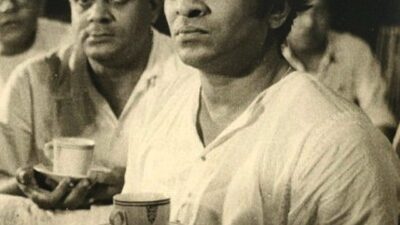
फ्रेडरिक विलियम गाइसबर्ग
फ्रेडरिक विलियम गाइसबर्ग — Frederick William Gaisberg
निधन1951
जीवन-पट्टी
The Life Specimen| नाम | फ्रेडरिक विलियम गाइसबर्ग · फ्रेडरिक विलियम गाइसबर्ग — Frederick William Gaisberg |
|---|---|
| निधन | 1951 |
| भूमिकाएँ | Recording Engineer · निर्माता |
पट्टिका-लेख
The Monographजीवनी Biography
Frederick William Gaisberg (1 January 1873 – 2 September 1951) was an American-born British sound recording pioneer, talent scout, and producer who made the first commercial recordings of Indian music in 1902.
Born in Washington, D.C., Gaisberg began his career as a pianist and assistant to Emile Berliner, the inventor of the disc gramophone. He became one of the Gramophone Company’s most important recording engineers and talent scouts, travelling the world to record musicians from diverse cultures.
In October 1902, Gaisberg arrived in Calcutta (Kolkata), India, on behalf of The Gramophone & Typewriter Ltd., with portable recording equipment. Over six weeks (November-December 1902), he set up a makeshift recording studio in a hotel room and recorded approximately 500 matrices — wax discs that would be shipped to the company’s pressing plant in Hanover, Germany.
Gaisberg’s Calcutta sessions were groundbreaking. He recorded the finest musicians of the era, with Gauhar Jaan being his star artist. In his diary, he described the experience with wonder, noting the extraordinary quality of Indian classical music and the challenges of recording it on the limited technology of the time (each recording could only capture about 3 minutes of music).
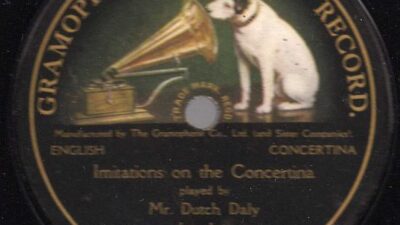
The 78 RPM records pressed from these sessions were shipped back to India in April 1903 and became immediate bestsellers. Gauhar Jaan’s records alone sold thousands of copies, establishing the Indian market as one of the most profitable for the Gramophone Company.
Gaisberg went on to record in many other countries and cultures. He later became an executive at HMV (His Master’s Voice) and was involved in recording many famous Western classical musicians. He wrote about his experiences in his memoir ‘The Music Goes Round’ (1942).
His contribution to Indian music history cannot be overstated — by bringing recording technology to India at the dawn of the 20th century, he captured performances that would otherwise have been lost forever, preserving the voices of a generation of musicians trained in centuries-old traditions.
अन्य विवरण
More Details- Death Year
- 1951
साझा कीजिए · Share this Plate