शास्त्र विंग · वाद्य-पट्टिका · Instrument Plate
घटम
Ghatam
दक्षिण भारतीय संगीत का सबसे अनोखा मिट्टी का बर्तन वाद्य यंत्र · South India's most unique clay pot percussion instrument
अन्य नामघड़ी · घट · घटम् (संस्कृत) · Ghatam
एक पंक्तिघटम एक प्राचीन मिट्टी का बर्तन है जिसे तालबद्ध ढंग से बजाकर संगीत के साथ लय प्रदान की जाती है।
परिचय
Overviewघटम दक्षिण भारतीय संगीत परंपरा का एक अनोखा और प्राचीन वाद्य यंत्र है जो मिट्टी से बना होता है। यह एक साधारण बर्तन प्रतीत होता है, लेकिन इसका संगीतात्मक महत्व और जटिलता अप्रतिम है। घटम के पीछे की परंपरा हजारों वर्षों पुरानी है, और यह कर्नाटक संगीत का एक अभिन्न अंग रहा है। घटम को बजाने के लिए न केवल तकनीकी कौशल की आवश्यकता होती है, बल्कि एक गहरी संगीतात्मक समझ, लय की जानकारी और आध्यात्मिक संचेतना की भी आवश्यकता होती है। एक योग्य घटम वादक अपने हाथों से ऐसी ध्वनियाँ निकाल सकता है जो मानवीय आत्मा को स्पर्श करती हैं। इसकी ध्वनि न तो बहुत तीव्र है और न ही बहुत मंद, बल्कि एक संतुलित और प्राकृतिक गुणवत्ता रखती है। घटम का महत्व इसलिए भी है कि यह दक्षिण भारतीय संस्कृति और सभ्यता का एक प्रतीक है। इसके निर्माण से लेकर वादन तक, यह परंपरा और आधुनिकता का एक सुंदर मिश्रण है। आजकल, जब संगीत तेजी से बदल रहा है और नई तकनीकें आ रही हैं, तब भी घटम अपनी प्राचीन परंपरा को सँभाले हुए है।
अंग्रेज़ी में पढ़ें · Read in English
The ghatam is a unique and ancient instrument of South Indian musical tradition, made from clay. Though it appears to be a simple pot, its musical importance and complexity are unparalleled. The tradition behind the ghatam is thousands of years old and has been an integral part of Carnatic music.
Playing the ghatam requires not only technical skill but also deep musical understanding, knowledge of rhythm, and spiritual awareness. A skilled ghatam player can produce sounds that touch the human soul. Its tone is neither too sharp nor too soft but maintains a balanced and natural quality.
The ghatam's importance lies in its role as a symbol of South Indian culture and civilization. From its creation to its playing, it represents a beautiful blend of tradition and modernity. Even today, as music rapidly evolves with new technologies, the ghatam maintains its ancient tradition.
काव्य-पंक्ति · The Verse
काव्य-पंक्ति
मिट्टी का कलश गाता है नए सुर, लय में बँधा है सदियों का सफर।
— समकालीन कवि The clay pot sings new melodies, Bound in rhythm, centuries of journey.
वर्गीकरण
ClassificationNatya Shastra
अवनद्ध वाद्य (Avanaddha Vadya)
Membrane/Percussion Instrument
नाट्यशास्त्र में अवनद्ध वाद्य की श्रेणी में आता है, जहाँ बर्तन को सीधे हाथों से बजाया जाता है।
Classified as Avanaddha Vadya in Natya Shastra, where the pot is struck directly with hands.
Western
Percussion
Idiophone / Hand Drum
पश्चिमी वर्गीकरण में यह एक आइडिओफोन है जहाँ साधन स्वयं ध्वनि उत्पन्न करता है।
In Western classification, it is an idiophone where the instrument itself vibrates to produce sound.
Hornbostel Sachs
111.212
Hand-struck earthenware pot without membrane
सिनेमा में
In Cinemaघटम का उपयोग बहुत सीमित है हिंदी फिल्मों में, लेकिन कुछ तमिल और कन्नड़ फिल्मों में इसका उपयोग किया गया है। भारतीय संगीत पर केंद्रित डॉक्यूमेंट्री फिल्मों में घटम को दिखाया गया है। हाल के दिनों में, कुछ अंतरराष्ट्रीय फिल्मों में भी भारतीय संगीत के रूप में घटम का उपयोग किया गया है। विक्कु विनयाकराम जैसे प्रसिद्ध घटम कलाकार ने विभिन्न फिल्मों में अपना संगीत योगदान दिया है।
अंग्रेज़ी में पढ़ें · Read in English
Ghatam usage in Hindi films is limited, but it has been featured in some Tamil and Kannada films. Documentary films about Indian music have showcased the ghatam. In recent times, some international films have also used the ghatam as Indian music. Renowned ghatam artists like Vikku Vinayakram have contributed their music to various films.
वर्तमान स्थिति
Modern Statusविवरण
घटम आज भी कर्नाटक संगीत में एक महत्वपूर्ण वाद्य है, परंतु इसकी लोकप्रियता पहले की तुलना में कम हो गई है। आधुनिक समय में, अधिकांश मंचों पर मृदंगम और तबला को तरजीह दी जाती है। हालांकि, विक्कु विनयाकराम जैसे प्रसिद्ध कलाकारों की अंतरराष्ट्रीय सफलता ने घटम को नया जीवन दिया है। आजकल, घटम को विश्वविद्यालयों और संगीत अकादमियों में पढ़ाया जाता है, लेकिन पारंपरिक गुरु-शिष्य परंपरा अभी भी महत्वपूर्ण है।
अंग्रेज़ी में पढ़ें · Read in English
Today, ghatam remains an important instrument in Carnatic music but has declined in popularity compared to earlier times. On modern concert stages, mridangam and tabla are usually preferred. However, the international success of renowned artists like Vikku Vinayakram has given ghatam new life. Currently, ghatam is taught in universities and music academies, though the traditional guru-disciple tradition remains vital.
Estimated Players
200-300 globally
Revival Efforts
घटम के पुनरुद्धार के लिए विभिन्न संगीत संस्थान काम कर रहे हैं। विक्कु विनयाकराम और अन्य कलाकार अंतरराष्ट्रीय मंचों पर घटम को प्रदर्शित कर रहे हैं। भारतीय संगीत की वैश्विक रुचि के कारण, घटम को नई पीढ़ी के शिक्षार्थी सीख रहे हैं।
अंग्रेज़ी में पढ़ें · Read in English
Various music institutions are working to revive the ghatam. Artists like Vikku Vinayakram showcase it on international platforms. The global interest in Indian music has encouraged younger generations to learn the ghatam.
बनावट
Physicalविवरण
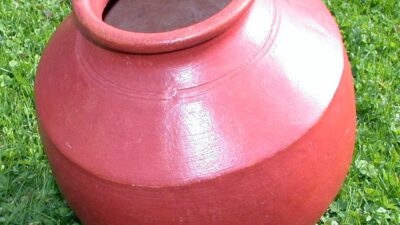
घटम एक गोलाकार मिट्टी का बर्तन है जो आमतौर पर 25-30 सेंटीमीटर व्यास वाला होता है। इसे विशेष प्रकार की मिट्टी से हाथों से तैयार किया जाता है और लकड़ी की आग में पकाया जाता है। घटम का आकार एक बड़े घड़े जैसा होता है, जिसमें एक छोटा सा मुँह होता है। यह पूरी तरह खोखला होता है और इसके अंदर कोई झिल्ली नहीं होती। घटम की दीवारें लगभग 5-8 मिलीमीटर मोटी होती हैं, जो इसे उचित अनुनाद और दृढ़ता देती हैं। बर्तन को बंद करने के लिए कई बार एक पतली झिल्ली (संभवतः भैंस की खाल) को मुँह के ऊपर बाँधा जाता है, लेकिन यह वैकल्पिक है। घटम के निचले भाग में अक्सर एक छोटा सा छेद होता है जो ध्वनि को नियंत्रित करने में मदद करता है।
अंग्रेज़ी में पढ़ें · Read in English
The ghatam is a spherical clay pot typically 25-30 cm in diameter, handcrafted from special clay and fired in a kiln. Its shape resembles a large pot with a small mouth opening. The pot is completely hollow with no internal membrane. The walls are approximately 5-8 mm thick, providing proper resonance and durability. Some ghatams have a small opening at the bottom to regulate sound. A thin membrane may optionally be stretched across the mouth, though this is not always used.
Dimensions
25-30 cm
25-30 cm (diameter)
1.5-2.5 kg
Strings Or Keys
घटम में कोई तार या कुंजी नहीं होती। यह एक एकल दृढ़ बर्तन है जिसे हाथों से बजाया जाता है।
The ghatam has no strings or keys. It is a single solid pot struck with the hands.
None
N/A
Tuning
पिच स्थिर नहीं होती। घटम की ध्वनि मिट्टी की गुणवत्ता और आकार पर निर्भर करती है।
No fixed pitch. The ghatam's tone depends on clay quality and shape.
Not applicable
Variable, typically 1-2 octaves depending on technique
Construction
मिट्टी का गोलाकार बर्तन जो पूरे वाद्य का आधार है।
The spherical earthenware vessel that forms the body of the instrument.
बर्तन के ऊपरी हिस्से का खुला भाग जहाँ से अनुनाद निकलता है।
The open upper portion through which resonance emerges.
बर्तन की पार्श्व दीवारें जो ध्वनि के अनुनाद को नियंत्रित करती हैं।
The side walls that regulate sound resonance.
बर्तन का निचला भाग जहाँ ध्वनि को नियंत्रित करने के लिए छेद हो सकता है।
The bottom of the pot, which may have a hole for sound regulation.
ध्वनि-चरित्र
SoundTonal Character
घटम की आवाज़ गहरी, माँद और सूक्ष्म होती है। यह एक ताली की आवाज़ के समान होती है, परंतु अधिक गहराई और अनुनाद के साथ। हल्के झटकों से तीव्र, पारदर्शी टोन निकलती है, जबकि मज़बूत प्रहार से मोटी और गहरी ध्वनि आती है। घटम की ध्वनि में एक प्राकृतिक, जैविक गुण है जो अन्य पश्चिमी ड्रम्स से अलग है। इसकी ध्वनि संवेदनशील, नाज़ुक और तरंगदार होती है।
अंग्रेज़ी में पढ़ें · Read in English
The ghatam's sound is deep, muted, and subtle. It resembles a clapping sound but with greater depth and resonance. Light taps produce sharp, transparent tones, while strong strikes yield thick, deep sounds. The ghatam has a natural, organic quality distinct from Western drums. Its tone is sensitive, delicate, and wavering.
Timbre
मिट्टी की पारदर्शी ध्वनि, जिसमें प्राकृतिक अनुनाद और गर्माहट है।
अंग्रेज़ी में पढ़ें · Read in English
Transparent earthen tone with natural resonance and warmth.
Dynamic Range
घटम की गतिशील सीमा बहुत विस्तृत है। इसे बहुत नाज़ुक झटकों से लेकर तेज़ प्रहार तक बजाया जा सकता है, जो संगीत में विविधता लाता है।
अंग्रेज़ी में पढ़ें · Read in English
The ghatam has an extensive dynamic range, from delicate taps to powerful strikes, adding musical variety.
Comparison
एक बड़े मिट्टी के घड़े को हाथों से बजाने की आवाज़, या एक टैम्बोरिन के समान, परंतु गहरी और अधिक संवेदनशील।
अंग्रेज़ी में पढ़ें · Read in English
Like striking a large earthen pot by hand, similar to a tambourine but deeper and more nuanced.
वादन-तकनीक
Playing Techniqueविवरण
घटम को बजाना एक कला है जिसमें दक्षता, संवेदनशीलता और लय की गहरी समझ आवश्यक है। वादक घटम को अपनी गोद में रखता है या पैरों के बीच रखता है, और इसे विभिन्न तकनीकों से बजाता है। घटम को बजाने के लिए हाथों के विभिन्न भाग का उपयोग किया जाता है - उँगलियाँ, हथेली, मुठ्ठी और कभी-कभी नाखून। प्रत्येक हिस्से की टक्कर से अलग ध्वनि उत्पन्न होती है। घटम को विभिन्न ताल (लय प्रणाली) में बजाया जाता है, जैसे कि आड़ी, चौपट, खंडचाऊ, मत्त मंदली आदि। वादक को बहुत सूक्ष्म नियंत्रण की आवश्यकता होती है।
अंग्रेज़ी में पढ़ें · Read in English
Playing the ghatam is an art requiring skill, sensitivity, and deep understanding of rhythm. The player holds the pot in their lap or between their legs and strikes it using various techniques. Different parts of the hands—fingers, palms, fists, and sometimes nails—produce distinct sounds. Each strike creates a unique tone. The ghatam is played in various taals (rhythmic systems) such as Aadi, Chauput, Khandachaau, and Mattmandali. Subtle control is essential.
Posture
घटम को बैठकर बजाया जाता है, आमतौर पर पैरों को क्रॉस करके या गद्दी पर बैठकर। बर्तन को गोद में रखा जाता है और बजाया जाता है।
अंग्रेज़ी में पढ़ें · Read in English
The ghatam is played sitting down, typically with legs crossed or on a cushion. The pot is placed in the lap and struck.
Techniques
हथेली से पूरे बर्तन को मारना, जो सबसे सामान्य और मूल तकनीक है। यह एक तीव्र, स्पष्ट ध्वनि उत्पन्न करता है जो लय के आधार को बनाती है।
Striking the entire pot with the palm, the most basic and common technique. It produces a sharp, clear sound forming the rhythmic foundation.
उँगलियों से हल्के झटके देना, जो सूक्ष्म, पारदर्शी और मधुर ध्वनि निकालता है। यह तकनीक तेज़ी से बजाई जाने वाली सूक्ष्मताओं के लिए उपयुक्त है।
Light taps with the fingers producing subtle, transparent, and melodic sounds. Suitable for rapid, intricate passages.
बंद मुठ्ठी से मज़बूत प्रहार, जो गहरी, भारी और प्रभावशाली ध्वनि उत्पन्न करता है। यह तकनीक नाटकीय प्रभाव के लिए उपयोग की जाती है।
Powerful strikes with a closed fist producing deep, heavy, and impactful sounds. Used for dramatic effects.
नाखूनों से बर्तन को खरोंचना या हल्का प्रहार, जो एक विशिष्ट, चमकदार ध्वनि निकालता है। यह उन्नत तकनीक है।
Scraping or light taps with nails producing a distinctive, shimmering sound. An advanced technique.
निर्माण-प्रक्रिया
Making Processविवरण
घटम को बनाने की प्रक्रिया परंपरागत और कौशल-गहन है। सबसे पहले, मिट्टी को तालाब या नदी से लाया जाता है और इसे कई दिनों तक पानी में भिगोया जाता है ताकि वह नरम और प्लास्टिक बन सके। फिर, मिट्टी को पैरों से या हाथों से मसला जाता है ताकि सभी हवा के बुलबुले बाहर निकल जाएँ। एक बार जब मिट्टी तैयार हो जाती है, तो कारीगर इसे चाकी (पहिया) पर रखता है और सूक्ष्मता से गोलाकार बर्तन को आकार देता है। इसके बाद, बर्तन को सूखने के लिए धूप में रखा जाता है, जो आमतौर पर 7-10 दिन लगते हैं। अंत में, सूखे हुए बर्तन को ईंधन (लकड़ी) से जलाई जाने वाली आग में पकाया जाता है, जो 2-3 दिन तक चलती है।
अंग्रेज़ी में पढ़ें · Read in English
The ghatam-making process is traditional and skill-intensive. First, clay is sourced from ponds or rivers and soaked for several days to become soft and plastic. The clay is then kneaded by foot or hand to remove air bubbles. Once prepared, the artisan places the clay on a potter's wheel and carefully shapes it into a spherical pot. The pot is then sun-dried for 7-10 days. Finally, the dried pot is fired in a kiln using wood fuel for 2-3 days.
Materials
विशेष प्रकार की गहरी, भारी मिट्टी जो जल निकासी में समृद्ध है। तमिलनाडु की मिट्टी सबसे अच्छी मानी जाती है।
Special type of heavy, deep clay rich in drainage. Tamil Nadu clay is considered the best.
मिट्टी को नरम करने और कार्य योग्य बनाने के लिए पानी का उपयोग।
Water used to soften the clay and make it workable.
पकाने की प्रक्रिया में ईंधन के रूप में लकड़ी का उपयोग।
Wood used as fuel for the firing process.
Artisan Centers
घटम निर्माण का सबसे प्रसिद्ध केंद्र, जहाँ परंपरागत कारीगर परिवार हजारों वर्षों से इसे बनाते आ रहे हैं।
The most famous center for ghatam production, where traditional artisan families have been making it for thousands of years.
एक अन्य महत्वपूर्ण घटम निर्माण केंद्र, जहाँ उच्च गुणवत्ता के घटम बनाए जाते हैं।
Another important center for ghatam production, known for high-quality instruments.
Time To Craft
3-4 weeks (including drying and firing)
Price Range
₹8,000-50,000 (depending on quality and maker)
संगीत-समूह में भूमिका
Role In EnsemblePrimary Role
घटम मुख्यतः अनुसंगी वाद्य है जो कर्नाटक संगीत में लय और छंद प्रदान करता है। यह तबला या मृदंगम के साथ या उनके स्थान पर बजाया जाता है।
अंग्रेज़ी में पढ़ें · Read in English
The ghatam is primarily an accompanying instrument providing rhythm and meter in Carnatic music. It is played alongside or instead of tabla or mridangam.
Solo Capability
हाँ, घटम को एकल वाद्य के रूप में भी बजाया जा सकता है। कई प्रसिद्ध घटम कलाकार एकल प्रदर्शन करते हैं, जहाँ घटम वाद्य संगीत और ताल दोनों प्रदान करता है।
अंग्रेज़ी में पढ़ें · Read in English
Yes, the ghatam can be performed as a solo instrument. Many renowned ghatam artists perform solo recitals where the ghatam provides both melodic and rhythmic elements.
Accompaniment For
घटम का सबसे महत्वपूर्ण उपयोग कर्नाटक संगीत में है, जहाँ यह मुख्य लय वाद्य है।
The most important use of ghatam is in Carnatic music, where it serves as the primary rhythmic instrument.
घटम भरतनाट्यम नृत्य के साथ बहुत महत्वपूर्ण है, जहाँ यह नर्तकी की गतिविधियों के साथ ताल मिलाता है।
Ghatam is very important in Bharatanatyam dance, where it synchronizes with the dancer's movements.
लोक संगीत में
In Folk Musicघटम मुख्यतः कर्नाटक संगीत की परंपरा में केंद्रित है, लेकिन दक्षिण भारतीय लोक संगीत में भी इसका महत्वपूर्ण स्थान है। तमिल लोक संगीत, तेलुगु लोक संगीत और कन्नड़ लोक संगीत में घटम का उपयोग देखा जा सकता है। ग्रामीण क्षेत्रों में, घटम को त्योहारों, विवाह समारोहों और अन्य सांस्कृतिक आयोजनों में बजाया जाता है। इसका उपयोग धार्मिक और आध्यात्मिक संगीत में भी किया जाता है।
अंग्रेज़ी में पढ़ें · Read in English
The ghatam is primarily centered in Carnatic music tradition but also holds an important place in South Indian folk music. It is used in Tamil, Telugu, and Kannada folk music. In rural areas, the ghatam is played at festivals, weddings, and cultural events. It is also used in religious and spiritual music.
क्षेत्रीय रूप
Regional Variantsदक्षिण भारत में बने घटम परंपरागत आकार और गुणवत्ता में अलग-अलग होते हैं। तमिलनाडु के घटम सबसे प्रसिद्ध माने जाते हैं।
Ghatams made in South India vary in traditional shape and quality. Tamil Nadu ghatams are considered the most renowned.
प्रसिद्ध वादक
Famous Playersविक्कु विनयाकराम घटम के सबसे प्रसिद्ध और सम्मानित कलाकार हैं। उन्होंने 1980 के दशक में शक्ति बैंड के साथ काम किया और अंतरराष्ट्रीय मंच पर घटम को प्रसिद्ध बनाया। उन्होंने तीन ग्रैमी पुरस्कार जीते हैं। उन्होंने घटम को न केवल एक अनुसंगी वाद्य के रूप में, बल्कि एक एकल संगीत वाद्य के रूप में भी स्थापित किया।
Vikku Vinayakram is the most famous and respected ghatam artist. He worked with the band Shakti in the 1980s and brought the ghatam to international prominence. He has won three Grammy Awards. He established the ghatam not just as an accompanying instrument but as a solo musical instrument.
विक्कु विनयाकराम के पिता, टी. एच. विनयाकराम एक प्रसिद्ध घटम वादक थे। उन्होंने कर्नाटक संगीत में घटम को एक महत्वपूर्ण स्थान दिलाया।
T. H. Vinayakram, father of Vikku Vinayakram, was a renowned ghatam player. He established the ghatam's importance in Carnatic music.
समकालीन घटम कलाकार, जिन्होंने आधुनिक काल में घटम को लोकप्रिय बनाने में महत्वपूर्ण योगदान दिया है।
Contemporary ghatam artist who has significantly contributed to popularizing the ghatam in modern times.
राग-उपयुक्तता
Raag Suitabilityभैरव राग की प्राचीन और शास्त्रीय प्रकृति के कारण घटम इसके साथ बहुत उपयुक्त है। इसकी गहरी ध्वनि राग की गंभीरता को बढ़ाती है।
Suitable due to Bhairav's classical nature. Ghatam's deep sound enhances the raga's gravity.
इस राग की सरल और मधुर प्रकृति के अनुसार घटम की स्पष्ट ध्वनि परिपूर्ण है।
The ghatam's clear tone complements Hansdhvani's simple melody.
देशकार एक लोकप्रिय राग है जहाँ घटम की आवाज़ लोक संगीत की भावना को व्यक्त करती है।
Deshkara is a popular raga where ghatam's tone expresses folk music essence.
घराना-संबंध
Gharana Connectionsचेन्नई का घराना घटम निर्माण और वादन की परंपरा का मुख्य केंद्र है।
The Chennai gharana is the primary center of ghatam making and playing tradition.
सामान्यतः दक्षिण भारतीय संगीत परंपरा में घटम का एक सुस्थापित स्थान है।
Generally, ghatam has an established place in South Indian music tradition.
सीखने का मार्ग
Learning Pathविवरण
घटम सीखना एक दीर्घकालीन प्रक्रिया है जिसमें नियमितता, धैर्य और समर्पण आवश्यक है। शुरुआती चरण में, शिक्षार्थी को बेसिक ताली (हाथों से हल्की टक्कर) सीखना होता है। फिर, वह विभिन्न ताल प्रणालियों को सीखता है जैसे कि आड़ी तालम, चौपट तालम आदि। अनुभव के साथ, वादक सूक्ष्मताओं, गति के परिवर्तन और जटिल लय प्रतिमान में प्रवेश करता है। घटम सीखने के लिए एक योग्य गुरु का मार्गदर्शन अत्यावश्यक है।
अंग्रेज़ी में पढ़ें · Read in English
Learning the ghatam is a long-term process requiring regularity, patience, and dedication. In the initial stage, learners practice basic hand strikes and light taps. Then, they learn various taal systems like Aadi Tala and Chauput Tala. With experience, the player enters subtle techniques, tempo changes, and complex rhythmic patterns. Guidance from a qualified guru is essential.
Beginner Steps
सबसे पहले, शिक्षार्थी को हथेली और उँगलियों से हल्के झटके देना सीखना होता है।
First, learners practice gentle strikes with palms and fingers.
सबसे सामान्य तालम (8 मात्रा का चक्र) को सीखना और उसमें ताली को सिंक्रोनाइज़ करना।
Learn the most common tala (8-beat cycle) and synchronize strikes.
बुनियादी लय के पैटर्न और उनके संयोजन को सीखना।
Learn basic rhythmic patterns and their combinations.
सामान्य अवधि
5-10 years for basic proficiency, 15-20 years for mastery
संस्थान
भारत के सबसे प्रसिद्ध संगीत और कला संस्थान में घटम की कक्षाएँ उपलब्ध हैं।
One of India's most prestigious music institutions offering ghatam classes.
घटम शिक्षा के लिए एक महत्वपूर्ण केंद्र।
An important center for ghatam education.
सांस्कृतिक महत्व
Cultural Significanceघटम दक्षिण भारतीय संस्कृति का एक महत्वपूर्ण प्रतीक है। यह न केवल एक संगीत वाद्य है, बल्कि एक सांस्कृतिक धरोहर है जो पीढ़ियों से चली आ रही है। तमिलनाडु और अन्य दक्षिण भारतीय राज्यों में, घटम का उपयोग धार्मिक अनुष्ठानों, त्योहारों और सांस्कृतिक आयोजनों में किया जाता है। यह मिट्टी की सादगी और कला की जटिलता का एक अद्भुत संयोजन है। घटम के माध्यम से, दक्षिण भारतीय संस्कृति की गहराई और सूक्ष्मता को समझा जा सकता है।
अंग्रेज़ी में पढ़ें · Read in English
The ghatam is an important symbol of South Indian culture. It is not just a musical instrument but a cultural heritage passed down through generations. In Tamil Nadu and other South Indian states, the ghatam is used in religious rituals, festivals, and cultural events. It is a wonderful combination of clay's simplicity and art's complexity. Through the ghatam, one can understand the depth and subtlety of South Indian culture.
सुनने का मार्गदर्शन
The Listening Guideघटम को सुनते समय, सबसे पहले इसकी ध्वनि की मौलिकता पर ध्यान दें। विक्कु विनयाकराम के प्रदर्शन से शुरुआत करें, जहाँ आप घटम की पूर्ण क्षमता को समझ सकेंगे। कर्नाटक संगीत के एक पूरे कार्यक्रम को सुनें जहाँ घटम मृदंगम के साथ बजाया जाए। धीरे-धीरे, आप घटम की सूक्ष्मताओं, विभिन्न ताल प्रतिमानों और तकनीकों को समझने लगेंगे।
अंग्रेज़ी में पढ़ें · Read in English
When listening to the ghatam, first pay attention to its original sound. Start with performances by Vikku Vinayakram where you can understand the instrument's full potential. Listen to complete Carnatic music concerts where the ghatam is played alongside mridangam. Gradually, you will understand the ghatam's subtleties, various rhythmic patterns, and techniques.
श्रवण-कक्ष · The Listening Room
देखें-सुनें
घटम एकल - सेल्वगनेश द्वारा · 5:26
टी.एम. कृष्ण - विक्कु विनायकराम के साथ घटम संगीत · 11:16
परिचय
Identity- Year Of Origin
- 1500
वर्गीकरण
Classification- Code
- 111.212
- Description
- Hand-struck earthenware pot without membrane
- Category
- अवनद्ध वाद्य (Avanaddha Vadya)
- Category En
- Membrane/Percussion Instrument
- Description
- नाट्यशास्त्र में अवनद्ध वाद्य की श्रेणी में आता है, जहाँ बर्तन को सीधे हाथों से बजाया जाता है।
- Description En
- Classified as Avanaddha Vadya in Natya Shastra, where the pot is struck directly with hands.
Hornbostel Sachs
Natya Shastra
अन्य विवरण
More Details- घड़ी (मुख्य बर्तन) — मिट्टी का गोलाकार बर्तन जो पूरे वाद्य का आधार है। · Pot Body
- मुँह (द्वार) — बर्तन के ऊपरी हिस्से का खुला भाग जहाँ से अनुनाद निकलता है। · Mouth / Opening
- दीवारें — बर्तन की पार्श्व दीवारें जो ध्वनि के अनुनाद को नियंत्रित करती हैं। · Walls
- आधार — बर्तन का निचला भाग जहाँ ध्वनि को नियंत्रित करने के लिए छेद हो सकता है। · Base
- System
- पिच स्थिर नहीं होती। घटम की ध्वनि मिट्टी की गुणवत्ता और आकार पर निर्भर करती है।
- System En
- No fixed pitch. The ghatam's tone depends on clay quality and shape.
- Standard Tuning
- Not applicable
- Range
- Variable, typically 1-2 octaves depending on technique
Construction
Tuning
Timbre
मिट्टी की पारदर्शी ध्वनि, जिसमें प्राकृतिक अनुनाद और गर्माहट है।
रोचक तथ्य
Margin Notesघटम अपने मिट्टी की सादगी के कारण दक्षिण भारतीय संस्कृति में एक विशेष स्थान रखता है। प्राचीन काल में, इसे रोज़मर्रा की वस्तु माना जाता था, लेकिन बाद में इसे एक कलात्मक वाद्य में रूपांतरित किया गया।
The ghatam holds a special place in South Indian culture due to its clay simplicity. In ancient times, it was considered an everyday object but was later transformed into an artistic instrument.
विक्कु विनयाकराम को घटम को एकल वाद्य के रूप में विश्व मंच पर लाने का श्रेय दिया जाता है। उनकी ग्रैमी पुरस्कार जीतने वाली परियोजनाएँ घटम की अंतरराष्ट्रीय स्वीकृति का प्रमाण हैं।
Vikku Vinayakram is credited with bringing the ghatam as a solo instrument to the world stage. His Grammy-winning projects are proof of the ghatam's international recognition.
घटम की ध्वनि मिट्टी की गुणवत्ता, बर्तन का आकार और आकार, और कारीगर के कौशल पर निर्भर करती है। प्रत्येक घटम अलग ध्वनि उत्पन्न करता है, जो इसे अद्वितीय बनाता है।
The ghatam's sound depends on clay quality, pot shape, and the artisan's skill. Each ghatam produces a different sound, making it unique.
घटम के निर्माण में कुछ कारीगर विशेष प्रकार की मिट्टी का उपयोग करते हैं जो केवल विशेष स्थानों पर पाई जाती है। यह परंपरा पीढ़ियों से चली आ रही है।
Some artisans use special clay found only in specific locations for ghatam making. This tradition has been passed down through generations.
कर्नाटक संगीत में, घटम को अक्सर मृदंगम के साथ बजाया जाता है। दोनों वाद्यों के बीच का संवाद संगीत का एक महत्वपूर्ण हिस्सा है।
In Carnatic music, the ghatam is often played alongside the mridangam. The dialogue between the two instruments is an important part of the music.
क्या आप जानते हैं?
Did You Knowघटम को 'घड़ा' या 'बर्तन' कहा जाता है और यह नाम इसके आकार से ही आया है।
The name 'ghatam' means 'pot' or 'vessel,' derived from its shape.
घटम के बिना कोई तार या झिल्ली नहीं होती - यह पूरी तरह खोखला होता है।
The ghatam has no strings or membranes—it is completely hollow.
विक्कु विनयाकराम को उनके घटम कौशल के लिए महात्मा गांधी का खिताब दिया गया था।
Vikku Vinayakram received recognition from international music festivals for his ghatam mastery.
सूक्तियाँ
Words of the Masters“घटम संगीत नहीं है, यह एक बातचीत है - घटम और वादक के बीच की एक गहरी बातचीत।”
— — विक्कु विनयाकराम“The ghatam is not just music, it is a conversation—a deep dialogue between the pot and the player.”
“मिट्टी से बना यह साधारण वाद्य यंत्र असाधारण संगीत की रचना कर सकता है।”
“This simple earthen instrument made of clay can create extraordinary music.”
— — समकालीन संगीत समालोचक
“घटम बजाना एक कला है जो केवल कौशल नहीं, बल्कि आत्मा की गहराई मांगती है।”
— — कर्नाटक संगीत के शिक्षक“Playing the ghatam is an art that demands not just skill but the depth of the soul.”
सवाल-जवाब
Questions & Answersघटम क्या है?
घटम एक प्राचीन दक्षिण भारतीय संगीत वाद्य है जो मिट्टी से बना होता है। यह एक गोलाकार बर्तन जैसा दिखता है और हाथों से बजाया जाता है। कर्नाटक संगीत में, यह एक महत्वपूर्ण लय वाद्य है।
घटम कैसे बनता है?
घटम को विशेष प्रकार की मिट्टी से हाथों से तैयार किया जाता है। मिट्टी को पहले पानी में भिगोया जाता है, फिर इसे चाकी पर रखकर आकार दिया जाता है। बाद में, इसे धूप में सुखाया जाता है और आग में पकाया जाता है।
घटम को कौन-से संगीत में बजाया जाता है?
घटम मुख्यतः कर्नाटक संगीत में बजाया जाता है। इसे भरतनाट्यम नृत्य में भी उपयोग किया जाता है। कुछ लोक संगीत परंपराओं में भी इसका उपयोग देखा जा सकता है।
इतिहास
The Historyउत्पत्ति — 1500 ईस्वी के आसपास Origin
घटम की उत्पत्ति दक्षिण भारत में हुई, विशेषकर तमिलनाडु में। प्राचीन काल में, घटम एक रोज़मर्रा की घरेलू वस्तु था जिसे पानी या अनाज रखने के लिए उपयोग किया जाता था। बाद में, इसकी ध्वनि की संभावनाओं को समझा गया और इसे संगीत वाद्य में बदल दिया गया। कर्नाटक संगीत के विकास के साथ, घटम का महत्व भी बढ़ता गया और यह एक महत्वपूर्ण वाद्य बन गया।
अंग्रेज़ी में पढ़ें · Read in English
The ghatam originated in South India, particularly Tamil Nadu. In ancient times, it was an everyday household item used for storing water or grain. Later, the potential of its sound was discovered and it was transformed into a musical instrument. With the development of Carnatic music, the ghatam's importance increased and it became an essential instrument.
विकास-यात्रा · Evolution
- 15वीं-16वीं सदी इस अवधि में, घटम को धीरे-धीरे संगीतीय संदर्भ में स्वीकार किया जाने लगा। दक्षिण भारतीय मंदिरों और राजकीय दरबारों में इसका उपयोग बढ़ने लगा।
- 17वीं-18वीं सदी घटम कर्नाटक संगीत का एक महत्वपूर्ण अंग बन गया। इस समय, कई प्रसिद्ध घटम वादकों का उदय हुआ।
- 19वीं-20वीं सदी यह आधुनिक काल है जहाँ घटम को मृदंगम के साथ एक समान स्थान मिलने लगा। शहरी संगीत मंचों पर घटम का प्रदर्शन नियमित हो गया।
प्रमुख पड़ाव · Key Milestones
- 1500 घटम का संगीत के क्षेत्र में प्रवेश
- 1700 कर्नाटक संगीत में घटम का स्थापन
- 1920 टी. एच. विनयाकराम का जन्म और घटम के पुनरुद्धार की शुरुआत
- 1945 विक्कु विनयाकराम का जन्म
- 1980 विक्कु विनयाकराम का अंतरराष्ट्रीय ख्याति की शुरुआत
नमूना-पट्टी
The Specimen Table| नाम | घटम · Ghatam |
|---|---|
| अन्य नाम | घड़ी · घट · घटम् (संस्कृत) · Ghatam · Ghat · Clay Pot Drum |
| उद्गम | 1500 |
| काल | 1500 ईस्वी के आसपास |
| प्रकार | वाद्य · Instruments |
साझा कीजिए · Share this Plate