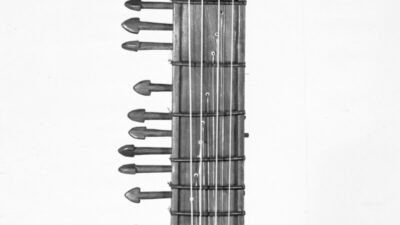
शास्त्र विंग · वाद्य-पट्टिका · Instrument Plate
इसराज
Esraj
बंगाली और उत्तर भारतीय संगीत का एक लुप्तप्राय, नाजुक वाद्य यंत्र
अन्य नामइसराज़ · बंगाली ईरज · fretted bowed string instrument
एक पंक्तिइसराज एक तारदार, धनुष से बजाया जाने वाला वाद्य है जो सितार और सारंगी की विशेषताएँ जोड़ता है
परिचय
Overviewइसराज एक अद्वितीय और संवेदनशील भारतीय वाद्य यंत्र है जो सितार और सारंगी की विशेषताओं को एक में मिलाता है। यह मुख्य रूप से बंगाल में विकसित हुआ और रबीन्द्रनाथ टैगोर के संगीत के साथ घनिष्ठ रूप से जुड़ा है। इसराज की ध्वनि नरम, गहरी और भावपूर्ण होती है। इसे बहुत कम लोग जानते हैं, लेकिन जो भी इसे सुनते हैं, वे इसकी सुंदरता और अनूठेपन से मुग्ध हो जाते हैं। इसराज का इतिहास 19वीं शताब्दी में शुरू होता है जब यह एक हाइब्रिड वाद्य के रूप में विकसित किया गया। इसराज को धनुष से बजाया जाता है, लेकिन इसमें सितार की झलियाँ होती हैं। यह अनूठी विशेषता इसे अन्य सभी भारतीय तारदार वाद्य यंत्रों से अलग करती है। आजकल, इसराज की स्थिति बहुत गंभीर है। कुछ समर्पित संगीतकार इस परंपरा को संरक्षित करने का प्रयास कर रहे हैं, लेकिन जल्द ही यह पूरी तरह विलुप्त हो सकता है।
अंग्रेज़ी में पढ़ें · Read in English
The esraj is a unique and delicate Indian instrument that combines characteristics of both the sitar and sarangi. It was primarily developed in Bengal and is closely linked to Rabindranath Tagore's music. The esraj's sound is soft, deep, and emotionally expressive. Very few people know about it, but whoever hears it is captivated by its beauty and uniqueness.
The esraj's history begins in the 19th century when it was developed as a hybrid instrument. The esraj is played with a bow, but it has sitar-like frets. This unique characteristic distinguishes it from all other Indian string instruments.
Nowadays, the esraj's status is critical. Some dedicated musicians are attempting to preserve this tradition, but it may soon disappear entirely.
काव्य-पंक्ति · The Verse
काव्य-पंक्ति
इसराज की मधुर ध्वनि में बंगाल की विरासत सुनो, जहाँ संगीत और साहित्य एक आत्मा में मिलते हैं।
— रबीन्द्र संगीत परंपरा In the esraj's mellow sound, hear Bengal's heritage, Where music and literature meet in one soul.
वर्गीकरण
ClassificationNatya Shastra
तत् वाद्य (Tat Vadya)
Stringed Instrument
नाट्यशास्त्र में तत् वाद्य वर्ग में आता है, जहाँ तार को धनुष से बजाया जाता है।
Classified as Tat Vadya in Natya Shastra, where strings are played with a bow.
Western
String
Bowed - Fretted
पश्चिमी संगीत वर्गीकरण में यह एक बोड स्ट्रिंग इंस्ट्रूमेंट है।
In Western classification, it is a bowed string instrument.
Hornbostel Sachs
321.321
फ्रेटेड, धनुष से बजाया जाने वाला भारतीय तारदार वाद्य
सिनेमा में
In Cinemaइसराज को बहुत कम भारतीय फ़िल्मों में सुना जाता है। हालांकि, कुछ बंगाली फ़िल्मों में, इसराज को बंगाली संस्कृति को व्यक्त करने के लिए उपयोग किया गया है। रबीन्द्र संगीत पर आधारित फ़िल्मों में भी इसराज का उपयोग देखा गया है।
अंग्रेज़ी में पढ़ें · Read in English
The esraj is rarely heard in Indian films. However, in some Bengali films, the esraj has been used to express Bengali culture. It has also been featured in films based on Rabindra Sangeet.
वर्तमान स्थिति
Modern Statusविवरण
इसराज की आधुनिक स्थिति अत्यंत गंभीर है। यह एक लुप्तप्राय वाद्य है क्योंकि बहुत कम लोग इसे सीख रहे हैं। इसराज की परंपरा मुख्य रूप से बंगाल में जीवंत है, लेकिन वहाँ भी इसकी स्थिति कमजोर हो रही है।
अंग्रेज़ी में पढ़ें · Read in English
The modern status of the esraj is critical. It is an endangered instrument because very few people are learning it. The esraj tradition is mainly alive in Bengal, but even there its status is weakening.
बनावट
Physicalविवरण
इसराज की संरचना सितार और सारंगी का एक हाइब्रिड है। इसमें एक लकड़ी का शरीर है जो सितार की तरह गोल न होकर बेलनाकार या अंडाकार होता है। इसमें झलियाँ (frets) होती हैं जैसे सितार में होती हैं, लेकिन ये झलियाँ नरम होती हैं या हो सकती हैं। इसराज को धनुष (bow) से बजाया जाता है, जैसे सारंगी को। इसमें आमतौर पर 4-5 मुख्य तार होते हैं और कुछ सहानुभूतिशील तार होते हैं। इसराज की सबसे अद्भुत विशेषता यह है कि यह सितार की सरलता और सारंगी की गहराई को जोड़ता है।
अंग्रेज़ी में पढ़ें · Read in English
The esraj's structure is a hybrid of the sitar and sarangi. It has a wooden body that is cylindrical or oval rather than round like a sitar. It has frets like a sitar, but these are softer. The esraj is played with a bow like the sarangi. It typically has 4-5 main strings and some sympathetic strings. The esraj's most remarkable feature is that it combines the sitar's simplicity with the sarangi's depth.
Dimensions
90-100 cm
25-30 cm
20-25 cm
2.5-3.5 kg
Strings Or Keys
इसराज में आमतौर पर 4-5 मुख्य तार और 9-15 सहानुभूतिशील तार होते हैं।
The esraj typically has 4-5 main strings and 9-15 sympathetic strings.
4-5 main + 9-15 sympathetic strings
स्टील (मुख्य तार), पीतल (सहानुभूतिशील तार)
Tuning
बंगाली संगीत प्रणाली या हिंदुस्तानी संगीत प्रणाली।
Bengali music system or Hindustani music system.
सा-सा-पा (Sa-Sa-Pa)
2.5-3 octaves
Construction
लकड़ी से बना अंडाकार या बेलनाकार शरीर।
An oval or cylindrical wooden body.
लंबी गर्दन जिस पर झलियाँ लगी होती हैं।
A long neck with frets attached.
धातु की पट्टियाँ जो नोट्स को निर्दिष्ट करती हैं। इसराज की झलियाँ अक्सर नरम होती हैं।
Metal strips that define the notes. The esraj's frets are often soft.
तारों को ट्यून करने के लिए घूमने वाले पेग।
Rotating pegs for tuning the strings.
ध्वनि-चरित्र
SoundTonal Character
इसराज की ध्वनि मधुर, गहरी और भावपूर्ण होती है। यह सितार की तरह तीव्र नहीं होती, बल्कि सारंगी की तरह मानव आवाज़ जैसी मधुर होती है। इसराज की ध्वनि में एक खास कोमलता है जो इसे विशेष बनाती है।
अंग्रेज़ी में पढ़ें · Read in English
The esraj's sound is mellow, deep, and emotionally expressive. Unlike the sitar's brightness, it produces a voice-like mellowness similar to the sarangi. The esraj has a special gentleness in its sound.
Timbre
मधुर, गहरा, मानव आवाज़ जैसा - जैसे किसी के गहरे विचार सुनना
अंग्रेज़ी में पढ़ें · Read in English
Mellow, deep, voice-like — like listening to someone's profound thoughts
Dynamic Range
मध्यम से व्यापक। इसराज को मधुर ध्वनि के लिए जाना जाता है।
अंग्रेज़ी में पढ़ें · Read in English
Moderate to wide. The esraj is known for its mellowness.
Comparison
इसराज की ध्वनि को अक्सर सारंगी की तरह तुलना की जाती है, लेकिन यह अधिक स्पष्ट और संरचित है।
अंग्रेज़ी में पढ़ें · Read in English
The esraj's sound is often compared to the sarangi, but it is more clear and structured.
वादन-तकनीक
Playing Techniqueविवरण
इसराज बजाना एक अद्भुत कला है जो सितार और सारंगी बजाने की तकनीकों को मिलाती है। संगीतकार इसराज को अपने बाएँ पैर पर रखता है और धनुष का उपयोग करके तार को बजाता है। बाईं ओर की उँगलियाँ झलियों पर दबाव डालकर विभिन्न नोट्स निकालती हैं। इसराज बजाने में सबसे महत्वपूर्ण कौशल धनुष का सही नियंत्रण है।
अंग्रेज़ी में पढ़ें · Read in English
Playing the esraj is a remarkable art that combines sitar and sarangi playing techniques. The musician holds the esraj on the left leg and plays the strings with a bow. Fingers on the left hand press on the frets to produce different notes. The most important skill in playing the esraj is proper bow control.
Posture
संगीतकार बैठी हुई स्थिति में, अपने बाएँ पैर पर इसराज को रखता है।
अंग्रेज़ी में पढ़ें · Read in English
The musician sits with the esraj resting on the left leg.
Techniques
धनुष को सही ढंग से नियंत्रित करना।
Controlling the bow properly.
एक स्वर से दूसरे स्वर तक सरकना।
Sliding from one note to another.
विभिन्न सजावटी तकनीकें।
Various ornamental techniques.
निर्माण-प्रक्रिया
Making Processविवरण
इसराज का निर्माण एक जटिल प्रक्रिया है जिसमें सितार और सारंगी दोनों निर्माण की तकनीकें शामिल हैं। पहले, लकड़ी का चुनाव किया जाता है। फिर शरीर को तराशा जाता है। झलियों को सावधानीपूर्वक लगाया जाता है। तार को स्थापित किया जाता है। अंत में, पूरे यंत्र को ट्यून किया जाता है।
अंग्रेज़ी में पढ़ें · Read in English
Manufacturing an esraj is a complex process involving both sitar and sarangi making techniques. Wood is first selected. The body is carved. Frets are carefully installed. Strings are mounted. Finally, the entire instrument is tuned.
Materials
शरीर के लिए।
For the body.
झलियों और अन्य भागों के लिए।
For frets and other parts.
Artisan Centers
इसराज निर्माण का सबसे महत्वपूर्ण केंद्र।
The most important esraj-making center.
उत्तर भारत में इसराज निर्माण की कुछ परंपरा है।
Some esraj-making tradition exists in North India.
Time To Craft
2-3 months
Price Range
₹20,000-1,50,000+ (पेशेवर-गुणवत्ता वाले इसराज के लिए)
संगीत-समूह में भूमिका
Role In EnsemblePrimary Role
इसराज मुख्य रूप से एक एकल वाद्य या रबीन्द्र संगीत के साथ एक संगत वाद्य है।
अंग्रेज़ी में पढ़ें · Read in English
The esraj is primarily a solo instrument or an accompanying instrument for Rabindra Sangeet music.
Solo Capability
बहुत उच्च। इसराज एक पूर्ण एकल प्रदर्शन प्रस्तुत कर सकता है।
अंग्रेज़ी में पढ़ें · Read in English
Very high. The esraj can present a complete solo performance.
Accompaniment For
इसराज रबीन्द्रनाथ टैगोर के संगीत के लिए विशेष रूप से उपयुक्त है।
The esraj is particularly suited for Tagore's music.
बंगाली गायकों के साथ इसराज का उपयोग होता है।
The esraj accompanies Bengali vocalists.
लोक संगीत में
In Folk Musicइसराज मुख्य रूप से एक शास्त्रीय वाद्य है, लेकिन यह बंगाली लोक संगीत परंपरा में भी पाया जाता है। बंगाल के कुछ क्षेत्रों में, स्थानीय गायन के साथ इसराज का उपयोग किया जाता है।
अंग्रेज़ी में पढ़ें · Read in English
The esraj is primarily a classical instrument, but it is also found in Bengali folk music traditions. In some regions of Bengal, the esraj is used with local singing.
क्षेत्रीय रूप
Regional Variantsबंगाली परंपरा में इसराज की एक विशेष शैली है।
The Bengali tradition has a specific style of esraj.
उत्तर भारतीय परंपरा में इसराज का एक अलग संस्करण है।
North Indian tradition has a different version of the esraj.
प्रसिद्ध वादक
Famous Playersएक महत्वपूर्ण इसराज कलाकार जो इस परंपरा को जारी रखे हुए हैं।
An important esraj artist continuing this tradition.
एक आधुनिक इसराज कलाकार।
A contemporary esraj musician.
राग-उपयुक्तता
Raag Suitabilityइसराज भैरव राग को एक विशेष आयाम देता है।
The esraj gives a unique dimension to Bhairav raga.
इसराज कल्याण राग के लिए उपयुक्त है।
The esraj is suitable for Kalyan raga.
घराना-संबंध
Gharana Connectionsइसराज बंगाली संगीत परंपरा का एक अभिन्न अंग है।
The esraj is an integral part of Bengali music tradition.
सीखने का मार्ग
Learning Pathविवरण
इसराज सीखना अत्यंत दुर्लभ है क्योंकि बहुत कम शिक्षक हैं। जो लोग इसराज सीखना चाहते हैं, उन्हें आमतौर पर कोलकाता या अन्य बंगाली संगीत केंद्रों में एक गुरु खोजना पड़ता है।
अंग्रेज़ी में पढ़ें · Read in English
Learning the esraj is extremely rare because there are very few teachers. Those who wish to learn the esraj must usually find a teacher in Kolkata or other Bengali music centers.
Beginner Steps
सही बैठने की स्थिति और हाथों को पकड़ने का तरीका सीखना।
Learning proper sitting posture and hand position.
धनुष को सही ढंग से नियंत्रित करना।
Learning proper bow control.
विभिन्न नोट्स निकालने का अभ्यास।
Practicing different notes.
सामान्य अवधि
10-15 years for basic proficiency, 25+ years for mastery
संस्थान
कोलकाता में कुछ संगीत महाविद्यालय इसराज पाठ्यक्रम प्रदान करते हैं।
Some Kolkata music colleges offer esraj courses.
सांस्कृतिक महत्व
Cultural Significanceइसराज का सांस्कृतिक महत्व बंगाली संस्कृति और रबीन्द्र संगीत के साथ घनिष्ठ रूप से जुड़ा है। इसराज को 'नवजागरण का वाद्य' भी कहा जाता है क्योंकि यह बंगाली पुनर्जागरण के साथ उभरा। रबीन्द्रनाथ टैगोर के संगीत और कविता में इसराज का एक विशेष स्थान है।
अंग्रेज़ी में पढ़ें · Read in English
The esraj's cultural significance is closely linked to Bengali culture and Rabindra Sangeet. The esraj is also called 'the instrument of renaissance' because it emerged with the Bengali renaissance. The esraj holds a special place in Tagore's music and poetry.
सुनने का मार्गदर्शन
The Listening Guideइसराज को सुनना एक शांत और गहन अनुभव है। पहली बार सुनते समय, आप इसकी नरम ध्वनि से शांत हो सकते हैं। इसराज को धनुष से बजाते हुए सुनते समय, आप एक सुचारु और सांस्कृतिक प्रवाह महसूस करेंगे।
अंग्रेज़ी में पढ़ें · Read in English
Listening to the esraj is a quiet and profound experience. When first listening, you may be soothed by its gentle sound. Hearing the esraj played with a bow creates a smooth and cultured flow.
श्रवण-कक्ष · The Listening Room
देखें-सुनें
एस्राज सीखें - सहानुभूतिशील तार कैसे बदलें · 6:38
एस्राज - राग भैरवी · 3:32
परिचय
Identity- Year Of Origin
- 1800
वर्गीकरण
Classification- Code
- 321.321
- Description
- फ्रेटेड, धनुष से बजाया जाने वाला भारतीय तारदार वाद्य
- Category
- तत् वाद्य (Tat Vadya)
- Category En
- Stringed Instrument
- Description
- नाट्यशास्त्र में तत् वाद्य वर्ग में आता है, जहाँ तार को धनुष से बजाया जाता है।
- Description En
- Classified as Tat Vadya in Natya Shastra, where strings are played with a bow.
Hornbostel Sachs
Natya Shastra
अन्य विवरण
More Details- शरीर (Body) — लकड़ी से बना अंडाकार या बेलनाकार शरीर। · Body
- गर्दन (Neck) — लंबी गर्दन जिस पर झलियाँ लगी होती हैं। · Neck
- झलियाँ (Frets) — धातु की पट्टियाँ जो नोट्स को निर्दिष्ट करती हैं। इसराज की झलियाँ अक्सर नरम होती हैं। · Frets
- पेग (Tuning pegs) — तारों को ट्यून करने के लिए घूमने वाले पेग। · Tuning pegs
- System
- बंगाली संगीत प्रणाली या हिंदुस्तानी संगीत प्रणाली।
- System En
- Bengali music system or Hindustani music system.
- Standard Tuning
- सा-सा-पा (Sa-Sa-Pa)
- Range
- 2.5-3 octaves
- Timbre
- मधुर, गहरा, मानव आवाज़ जैसा - जैसे किसी के गहरे विचार सुनना
Construction
Tuning
रोचक तथ्य
Margin Notesइसराज को रबीन्द्रनाथ टैगोर द्वारा पसंद किया जाता था और उन्होंने कुछ संगीत रचनाएँ इसराज के लिए लिखी थीं।
The esraj was favored by Rabindranath Tagore, who composed some pieces specifically for it.
इसराज की संरचना इतनी जटिल है कि इसे 'सितार और सारंगी का बच्चा' भी कहा जाता है।
The esraj's structure is so complex that it is sometimes called 'the child of the sitar and sarangi.'
इसराज को 'आधुनिक भारतीय वाद्य' माना जाता है क्योंकि इसका विकास अपेक्षाकृत हाल ही में हुआ।
The esraj is considered a 'modern Indian instrument' because its development is relatively recent.
क्या आप जानते हैं?
Did You Knowइसराज को सीखने वाले कलाकारों की संख्या विश्वभर में 50 से कम है, जो इसे सबसे लुप्तप्राय भारतीय वाद्य यंत्रों में से एक बना देता है।
The number of musicians learning the esraj worldwide is less than 50, making it one of the most endangered Indian instruments.
इसराज की सहानुभूतिशील तारें इसे एक बहुत ही 'संगीतात्मक' ध्वनि देती हैं जो सितार की तुलना में अधिक सूक्ष्म है।
The esraj's sympathetic strings give it a very 'musical' sound that is more subtle than the sitar.
इसराज एक ऐसा वाद्य है जो राग परंपरा और रबीन्द्र संगीत दोनों के साथ बजाया जा सकता है।
The esraj is an instrument that can be played both with raga tradition and Rabindra Sangeet.
सूक्तियाँ
Words of the Masters“इसराज एक ऐसा वाद्य है जो दिल से सीधे आत्मा को बोलता है।”
“The esraj is an instrument that speaks directly from the heart to the soul.”
— — बंगाली संगीत परंपरा
“इसराज को सुनना एक गहरे सपने को जीना है।”
“Listening to the esraj is like living a deep dream.”
— — संगीत प्रेमी
सवाल-जवाब
Questions & Answersइसराज क्या है?
इसराज एक बंगाली तारदार वाद्य है जो धनुष से बजाया जाता है। यह सितार की झलियों और सारंगी की धनुष तकनीक को मिलाता है।
इसराज रबीन्द्र संगीत से कैसे जुड़ा है?
इसराज को रबीन्द्रनाथ टैगोर के संगीत के लिए विशेष रूप से विकसित किया गया था। टैगोर ने इसराज के लिए कुछ संगीत रचनाएँ लिखीं।
इतिहास
The Historyउत्पत्ति — 19वीं शताब्दी Origin
इसराज का इतिहास 19वीं शताब्दी में शुरू होता है जब बंगाल में संगीतकारों ने सितार और सारंगी को मिलाकर एक नया वाद्य बनाने का प्रयास किया। इसराज का विकास रबीन्द्र संगीत के संदर्भ में हुआ। रबीन्द्रनाथ टैगोर के संगीत के लिए एक उपयुक्त वाद्य खोजने के प्रयास में, संगीतकारों ने इसराज को विकसित किया।
विकास-यात्रा · Evolution
- 19वीं शताब्दी - विकास इसराज का प्रारंभिक विकास बंगाली संगीतकारों द्वारा किया गया।
- 20वीं शताब्दी - परिष्करण इसराज को और भी परिष्कृत किया गया और रबीन्द्र संगीत के साथ अधिक व्यापक रूप से बजाया गया।
- 21वीं शताब्दी - संकट आधुनिक समय में, इसराज की परंपरा विलुप्त होने के कगार पर है।
प्रमुख पड़ाव · Key Milestones
- 1850 इसराज का विकास शुरू
- 1900 रबीन्द्रनाथ टैगोर द्वारा इसराज का उपयोग
- 1950 इसराज की परंपरा को स्वीकृति
नमूना-पट्टी
The Specimen Table| नाम | इसराज · Esraj |
|---|---|
| अन्य नाम | इसराज़ · बंगाली ईरज · fretted bowed string instrument |
| उद्गम | 1800 |
| काल | 19वीं शताब्दी |
| प्रकार | वाद्य · Instruments |
जुड़े हुए पन्ने
Connected Plates · The Graph Made Visibleअटलस में कोई पन्ना अकेला नहीं — इस वाद्य से जुड़े गीत, कलाकार, शास्त्र और कहानियाँ, सब यहाँ से खुलते हैं।
जुड़े गीत · Songs
इस वाद्य के गीत
Songs of this Instruments
साझा कीजिए · Share this Plate