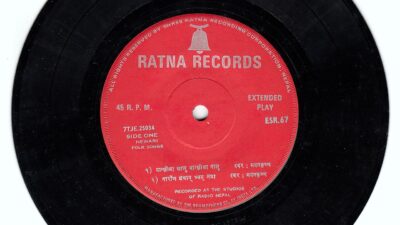
गीत विंग · गीत-पट्टिका · Song Plate
जाओ जी काहे आए बलम (भैरवी ठुमरी)
Jao Ji Kahe Aye Balam (Bhairavi Thumri)
देर रात क्यों आए बलम? जाओ जी — नायिका की नकली डाँट में सब कुछ छुपा है सिवाय उदासीनता के।
भावमीठा-कड़वा · चुलबुला · रोमांटिक
भाषाbraj
श्रेय
The Creditsबोल · The Lyrics
पूरे बोल · Full Lyrics
सुनो ना मोरी बात मैं काहे मिलूँ
Suno na mori baat main kahe milun
सूत्र-वाक्य · The Hook
सूत्र-वाक्य
देर रात क्यों आए बलम? जाओ जी — नायिका की नकली डाँट में सब कुछ छुपा है सिवाय उदासीनता के।
In EnglishWhy have you come so late at night, beloved? Go away — the nayika's mock-scolding hides everything but indifference.
पट्टिका-लेख
The Monographपरिचय Overview
नकली-अस्वीकृति का ठुमरी पाठ बनारस परंपरा में सबसे प्रिय में से एक है: नायिका अपने देर से आए प्रेमी को डाँटती है, उसे जाने को कहती है — जबकि उसकी आवाज़, उसके अलंकरण, उसका हर विराम विश्वासघात करता है कि वह वास्तव में ठीक इसके विपरीत चाहती है। लगभग 1942 की सिद्धेश्वरी देवी की इस भैरवी ठुमरी का प्रदर्शन जो-नहीं-कहा-जा-रहा उसकी कला का मास्टरक्लास है: गाए गए शब्द बर्खास्तगी व्यक्त करते हैं, लेकिन स्वर-विकल्प — 'जाओ' पर अतिरिक्त लंबा ठहराव, 'बलम' पर ऊर्ध्वगामी झुकाव — विपरीत कहते हैं।
अंग्रेज़ी में पढ़ें · Read in English
The thumri text of mock-rejection is one of the most beloved in the Banaras tradition: the nayika scolds her beloved for coming late, telling him to go away — while her voice, her ornaments, her every pause betray that she is longing for exactly the opposite. Siddheshwari Devi's performance of this Bhairavi thumri from around 1942 is a masterclass in the art of what-is-not-said: the sung words express dismissal, but the melodic choices — the extra-long hold on 'jao', the upward inflection on 'balam' — say the opposite.
संगीत The Music
भैरवी की उतरती गुणवत्ता इस ठुमरी में अनिच्छा की आवाज़ बन जाती है: हर गिरता वाक्यांश उसे रुकने के आग्रह की इच्छा को अभिनीत करता है, यहाँ तक कि पाठ उसे जाने को कहता है। प्रमुख अक्षरों पर सिद्धेश्वरी देवी के गमक (कंपन) का उपयोग एक आवाज़ का भाव देता है जो अपने से लड़ रही है।
अंग्रेज़ी में पढ़ें · Read in English
Bhairavi's descending quality becomes in this thumri the sound of reluctance: every falling phrase enacts the impulse to ask him to stay even as the text asks him to go. Siddheshwari Devi's use of gamak (oscillation) on key syllables gives the impression of a voice fighting itself.
काव्य The Poetry
ठुमरी में नकली-अस्वीकृति का पाठ बनारस की भक्ति-कविता की सबसे समृद्ध धाराओं में से एक है। 'जाओ जी' (जाओ, कृपया जाओ) नायिका का बर्खास्तगी का आदेश है — लेकिन ठुमरी परंपरा में उसकी प्रस्तुति का हर तत्त्व विश्वासघात करता है कि वह विपरीत चाहती है। 'काहे आए बलम देर रात को' (क्यों आए, प्रिय, इतनी देर रात को) एक शिकायत है जिसके लिए प्रिय की उपस्थिति ज़रूरी है ताकि उसे कहा जा सके: वह उसके आने पर डाँट रही है, जिसका मतलब है कि वह आ गया है। 'बलम' (प्रिय) शब्द ब्रज भाषा गीत में एक पूरा भावनात्मक इतिहास रखता है: यह आत्मीय, थोड़ा छेड़ने वाला, वह शब्द है जो ऐसे प्रेमियों के बीच प्रयुक्त होता है जो एक-दूसरे को इतना जानते हैं कि डाँट सकें। यह ठुमरी-सौंदर्यशास्त्र में विपरीत-बोल के रूप में जाना जाने वाला साहित्यिक रूप है — सुर और पाठ विपरीत दिशाओं में बोलते हैं, और उनके बीच की खाई में रस रहता है। सिद्धेश्वरी देवी का प्रदर्शन इस खाई को महसूस कराता है: जितना अधिक वे किसी अक्षर को धारण करती हैं, उतना ही स्पष्ट होता है कि शब्द जो कहते हैं वह उनका अभिप्राय नहीं है।
अंग्रेज़ी में पढ़ें · Read in English
The thumri text of mock-rejection is one of the richest strands in Banaras devotional poetry. The phrase 'Jao ji' (go, please go) is the nayika's command of dismissal — yet in the thumri tradition, every element of her delivery betrays that she wants the opposite. 'Kahe aaye balam der raat ko' (why did you come, beloved, so late at night) is a complaint that requires the beloved's presence in order to be voiced: she is scolding him for arriving, which means he has arrived. The word 'balam' (beloved) carries an entire emotional history in Braj Bhasha lyric: it is intimate, slightly teasing, the term used between lovers who know each other well enough to scold. This is the literary form known in thumri aesthetics as vipareet-bol — the melody and the text speak in opposite directions, and the gap between them is where the rasa (emotional essence) lives. Siddheshwari Devi's performance makes the gap palpable: the longer she holds a syllable, the more obvious that she does not mean what the words say.
कहानी The Story
सिद्धेश्वरी देवी (8 अगस्त 1908 – 18 मार्च 1977) बनारस घराने की ठुमरी की सबसे प्रमुख हस्तियों में से एक थीं। उन्होंने कई गुरुओं से प्रशिक्षण प्राप्त किया, बनारस के बड़े रामदास जी को अपना मुख्य गुरु मानते हुए, और देवास के रजब अली ख़ाँ और लाहौर के इनायत ख़ाँ से भी शिक्षा ली। इस भैरवी ठुमरी की HMV रिकॉर्डिंग लगभग 1942 की है — उनके सबसे उत्पादक मध्य-कैरियर काल के भीतर, जब उनकी आवाज़ पूरी तरह परिपक्व हो गई थी और उनकी व्याख्यात्मक बुद्धिमत्ता अपने तीखेपन पर थी। वे जिस ठुमरी परंपरा का प्रतिनिधित्व करती थीं, वह बनारस की महफ़िल (सलोन) संस्कृति में जड़ें रखती थी, जहाँ तवायफ़ (वेश्या-कलाकार) संगीतकारों ने असाधारण परिष्कार की एक कला-विधा विकसित की थी: अपनी विस्तृत बोल-बनाव (वाक्यांश-विस्तार) और परतदार भावनात्मक विडंबनाओं के साथ धीमी-लय की ठुमरी। यह रिकॉर्डिंग एक विशिष्ट भैरवी परिवेश में उन गुणों को पकड़ती है, जहाँ राग का उतरता स्वभाव स्वाभाविक रूप से अनिच्छा और इनकार की नीचे-खींचती वाग्मिता को समायोजित करता है।
अंग्रेज़ी में पढ़ें · Read in English
Siddheshwari Devi (8 August 1908 – 18 March 1977) was one of the preeminent figures of the Banaras gharana of thumri. She trained under multiple masters, counting Bade Ramdas of Banaras as her primary guru, and also received instruction from Rajab Ali Khan of Dewas and Inayat Khan of Lahore. The HMV recording of this Bhairavi thumri dates from approximately 1942 — within her most productive mid-career period, when her voice was fully formed and her interpretive intelligence at its sharpest. The thumri tradition she represented was rooted in the mehfil (salon) culture of Banaras, where tawaif (courtesan-artist) musicians developed an art form of extraordinary sophistication: the slow-tempo thumri with its extended bol-banav (phrase-elaboration) and layered emotional ironies. This recording captures those qualities in a specific Bhairavi setting, where the raag's descending character naturally accommodates the downward-pulling rhetoric of reluctance and refusal.
विरासत The Legacy
इस रिकॉर्डिंग को बनारस ठुमरी के कई अध्ययनों में विपरीत-बोल (विपरीत-अर्थ) तकनीक के एक अनुकरणीय उदाहरण के रूप में उद्धृत किया जाता है — जहाँ पाठ का अर्थ और स्वर-अर्थ विरोधाभास पैदा करने के लिए अलग होते हैं। सिद्धेश्वरी देवी का उपचार निश्चित व्याख्या माना जाता है।
अंग्रेज़ी में पढ़ें · Read in English
This recording is cited in several studies of the Banaras thumri as an exemplary instance of the vipareet-bol (contrary-meaning) technique — where textual meaning and melodic meaning diverge to create irony. Siddheshwari Devi's treatment is considered the definitive exposition.
वर्गीकरण
ClassificationGenre
अन्य विवरण
More Details- https://en.wikipedia.org/wiki/Siddheshwari_Devi
- https://www.parrikar.org/vpl/catalogue/hindustani/siddeshwari-devi/
- https://feminisminindia.com/2024/01/12/siddheshwari-devi-the-queen-of-thumri-from-benaras-indianwomeninhistory/
References
रोचक तथ्य
Margin Notesसिद्धेश्वरी देवी ने अपने प्रमुख गुरु के रूप में बनारस के बड़े रामदास से प्रशिक्षण लिया, और देवास के रजब अली ख़ान तथा लाहौर के इनायत ख़ान से भी शिक्षा प्राप्त की।
अंग्रेज़ी में पढ़ें · Read in English
Siddheshwari Devi trained under Bade Ramdas of Banaras as her primary guru, and also received instruction from Rajab Ali Khan of Dewas and Inayat Khan of Lahore.
ठुमरी की आरंभिक पंक्ति — 'जाओ जी काहे आए बालम देर रात को' — को बनारस ठुमरी सौंदर्यशास्त्र में एक 'विपरीत-बोल' रचना के रूप में वर्गीकृत किया जाता है, जिसमें शाब्दिक अर्थ और स्वरगत-अभिव्यंजक अर्थ अलग-अलग दिशाओं में जाकर नाटकीय विडंबना उत्पन्न करते हैं।
अंग्रेज़ी में पढ़ें · Read in English
The thumri's opening text — 'Jao ji kahe aaye balam der raat ko' — is classified in Banaras thumri aesthetics as a vipareet-bol (contrary-meaning) composition, in which the verbal meaning and the melodic-expressive meaning diverge to produce dramatic irony.
सिद्धेश्वरी देवी 1930 के दशक से एक रिकॉर्डिंग कलाकार के रूप में सक्रिय थीं; उनकी एचएमवी 78 आरपीएम रिकॉर्डिंग विद्युत-रिकॉर्डिंग युग में बनारस घराने की ठुमरी शैली के प्रमुख दस्तावेज़ों में से हैं।
अंग्रेज़ी में पढ़ें · Read in English
Siddheshwari Devi was active as a recording artist from the 1930s; her HMV 78 RPM recordings are among the primary documentation of the Banaras gharana thumri style in the electric-recording era.
उन्हें 1968 में भारत सरकार द्वारा पद्म भूषण से सम्मानित किया गया, वे अपनी पीढ़ी की उन गिने-चुने तवायफ़-परंपरा की कलाकारों में से थीं जिन्हें अपने जीवनकाल में आधिकारिक राजकीय सम्मान मिला।
अंग्रेज़ी में पढ़ें · Read in English
She was awarded the Padma Bhushan by the Government of India in 1968, one of the few tawayif-tradition artists of her generation to receive official state recognition in her lifetime.
नमूना-पट्टी
The Specimen Table| शीर्षक | जाओ जी काहे आए बलम (भैरवी ठुमरी) · Jao Ji Kahe Aye Balam (Bhairavi Thumri) |
|---|---|
| वर्ष · युग | 1942 |
| गायक | Siddheshwari Devi |
| गीतकार | पारंपरिक (बनारस ठुमरी भंडार) |
| भाषा | braj |
| भाव | मीठा-कड़वा · चुलबुला · रोमांटिक |
| लोकप्रियता | Popular |
| बोल-स्थिति | सार्वजनिक |
जुड़े हुए पन्ने
Connected Plates · The Graph Made Visibleअटलस में कोई पन्ना अकेला नहीं — इस गीत से जुड़े गीत, कलाकार, फ़िल्म, राग-ताल-विधा, सब यहाँ से खुलते हैं।
मिलते-जुलते गीत · Related Songs
साझा कीजिए · Share this Plate