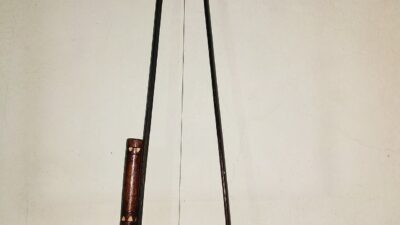
शास्त्र विंग · वाद्य-पट्टिका · Instrument Plate
गोपीचंद
Gopichand
भटकते साधुओं का साथी — कृष्ण भक्ति की एकल पुकार · Companion of wandering ascetics — the solitary call of Krishna devotion
अन्य नामएकतारा · यक्तारी · खमक · गोपी-यंत्र
एक पंक्तिगोपीचंद एक एकल-तारयुक्त बाँस का वाद्य यंत्र है जिसमें एक लौकी-अनुरणक जुड़ा होता है — बाँस को दबाकर या छोड़कर सुर बदला जाता है, और यह भटकते भक्त संतों, बाउलों, और साधुओं का परम साथी रहा है।
परिचय
Overviewगोपीचंद एक ऐसा वाद्य यंत्र है जिसे देखकर लगता है कि यह किसी बच्चे का खिलौना है — लेकिन इसकी ध्वनि में सदियों का आध्यात्मिक ज्ञान समाया है। दो बाँस की पट्टियाँ, एक लौकी, और एक तार — बस इतनी सरल सामग्री से बना यह यंत्र भारतीय संत-परंपरा की उस भावना को व्यक्त करता है जो कहती है: 'सबसे सरल में सबसे गहरा ज्ञान है।' इस यंत्र का नाम राजा गोपीचंद से आया है — वह राजा जिन्होंने अपना राज-पाट छोड़कर भटकते साधु बनना स्वीकार किया। जब गोपीचंद बजाया जाता है, उसकी आवाज़ में वही भटकन है, वही त्याग है, वही खोज है। एक सुर से दूसरे सुर की ओर जाती उसकी ध्वनि जैसे आत्मा ईश्वर की ओर बढ़ रही हो। गोपीचंद की भौतिक संरचना में एक गहरा दर्शन है। जब आप पट्टियों को दबाते हैं — तार ढीला पड़ता है, सुर नीचे जाता है — जैसे अहंकार का पतन। जब छोड़ते हैं — तार तनता है, सुर ऊँचा जाता है — जैसे आत्मा का उत्थान। यह संगीत-यंत्र एक ही समय में भौतिक विज्ञान का अद्भुत उदाहरण और आध्यात्मिक रूपक है। आज जब दुनिया शोर में डूबी है, गोपीचंद की शांत, भटकती आवाज़ एक विरोध है — एक याद दिलाना कि संगीत का सार जटिलता में नहीं, सादगी में है। एक तार, दो बाँस, और असीमित संभावनाएँ।
अंग्रेज़ी में पढ़ें · Read in English
Gopichand is an instrument that looks like a child's toy — but in its sound lies centuries of spiritual knowledge. Two bamboo strips, a gourd, and a single string — made from such simple materials, this instrument expresses the spirit of India's saint tradition that says: 'In the simplest lies the deepest knowledge.'
The instrument's name comes from King Gopichand — the king who abandoned his kingdom to become a wandering ascetic. When Gopichand is played, its voice contains that same wandering, that same renunciation, that same seeking. Its sound moving from one note to another is like the soul moving toward God.
Gopichand's physical structure contains deep philosophy. When you press the strips — the string slackens, pitch drops — like the fall of ego. When released — the string tightens, pitch rises — like the soul's elevation. This musical instrument is simultaneously a wonderful example of physics and a spiritual metaphor.
Today, when the world is drowned in noise, Gopichand's quiet, wandering voice is a protest — a reminder that music's essence lies not in complexity but in simplicity. One string, two bamboos, and infinite possibilities.
काव्य-पंक्ति · The Verse
काव्य-पंक्ति
गोपीचंद की एक तान में सारी दुनिया की तलाश है, जो भटक-भटक के खोजे, वो मिले अपने पास है।
— संत परंपरा से In one note of Gopichand lies the search of the entire world, Whoever wanders seeking, finds it within themselves.
वर्गीकरण
ClassificationNatya Shastra
तत वाद्य — तार-युक्त वाद्य, बाँस-शरीर सहित
Tata Vadya — Stringed instrument with bamboo body
नाट्यशास्त्र के अनुसार गोपीचंद 'तत' श्रेणी का वाद्य यंत्र है जहाँ ध्वनि एकल तार के कंपन से उत्पन्न होती है। यह भक्ति परंपरा का एक विशेष वाद्य है जो शास्त्रीय वर्गीकरण से परे है।
According to Natya Shastra, Gopichand belongs to the 'Tata' category where sound is produced by single string vibration. It is a special instrument of devotional tradition that transcends classical classification.
Western
Chordophone
Plucked / Plucked-bent string instrument
पश्चिमी वर्गीकरण में गोपीचंद एक 'बेंट-स्ट्रिंग' कॉर्डोफोन है — जिसमें शरीर को मोड़कर सुर बदला जाता है। यह विशेषता इसे विश्व के अनूठे वाद्यों में रखती है।
In Western classification, Gopichand is a 'bent-string' chordophone — where the body is bent to change pitch. This feature places it among the world's unique instruments.
Hornbostel Sachs
312.12
Composite chordophone — spike lute with variable-length body altering pitch
सिनेमा में
In Cinemaगोपीचंद भारतीय सिनेमा में मुख्यतः एक सांस्कृतिक प्रतीक के रूप में दिखता है। जब भी किसी फिल्म में भटकते साधु, कृष्ण-भक्त, या बाउल परंपरा को दिखाना होता है, गोपीचंद की झलक मिलती है। बांग्ला सिनेमा में बाउल-थीम की फिल्मों में गोपीचंद का विशेष स्थान है। हिंदी फिल्मों में जब भी 'भगवान की खोज में निकले साधु' का दृश्य आता है, पृष्ठभूमि में गोपीचंद की लहरदार आवाज़ सुनाई देती है। यह यंत्र त्याग, भटकन, और आत्म-खोज का सिनेमाई प्रतीक बन गया है।
अंग्रेज़ी में पढ़ें · Read in English
Gopichand mainly appears as a cultural symbol in Indian cinema. Whenever a film needs to show wandering sadhus, Krishna devotees, or Baul tradition, Gopichand makes an appearance. It has a special place in Baul-theme films in Bengali cinema. In Hindi films, whenever a scene shows a 'sadhu seeking God', Gopichand's undulating sound appears in the background. This instrument has become a cinematic symbol of renunciation, wandering, and self-discovery.
वर्तमान स्थिति
Modern Statusविवरण
गोपीचंद आज एक संकटपूर्ण स्थिति में है। भटकते साधुओं और बाउलों की परंपरा के कमज़ोर होने के साथ, गोपीचंद के वादकों की संख्या घट रही है। शहरी जीवन में इस यंत्र के लिए कोई स्थान नहीं है। हालाँकि, विश्व संगीत के मंच पर इसकी अनूठी ग्लिसांडो-आवाज़ ने कुछ प्रायोगिक संगीतकारों को आकर्षित किया है। पार्वती बाउल जैसी कलाकार अंतरराष्ट्रीय स्तर पर गोपीचंद को प्रस्तुत कर रही हैं।
अंग्रेज़ी में पढ़ें · Read in English
Gopichand today faces an endangered situation. As traditions of wandering sadhus and Bauls weaken, the number of Gopichand players is declining. Urban life has no place for this instrument. However, its unique glissando sound has attracted some experimental musicians on the world music stage. Artists like Parvati Baul are presenting Gopichand internationally.
Estimated Players
500-2,000 active players
Revival Efforts
अंतरराष्ट्रीय विश्व संगीत महोत्सवों में गोपीचंद को स्थान मिल रहा है। कुछ YouTube चैनलों ने इसकी शिक्षा भी शुरू की है।
अंग्रेज़ी में पढ़ें · Read in English
Gopichand is getting space in international world music festivals. Some YouTube channels have also started teaching it.
बनावट
Physicalविवरण
गोपीचंद की बनावट अत्यंत अनूठी और विलक्षण है। इसमें दो पतली बाँस की पट्टियाँ होती हैं जो ऊपर की तरफ मुड़कर एक हैंडल बनाती हैं। इन दोनों पट्टियों के नीचे एक छोटी लौकी (gourd) जुड़ी होती है जो अनुरणन कक्ष का काम करती है। दोनों पट्टियों के ऊपरी सिरों पर एक एकल तार बँधा होता है। यह तार लौकी के शीर्ष से नीचे जाता है और लौकी के नीचे एक लकड़ी या बाँस की छड़ी पर टिका होता है। जब वादक दोनों पट्टियों को अंदर की तरफ दबाता है, बाँस मुड़ता है, तार ढीला पड़ता है, और सुर नीचे जाता है। जब छोड़ता है, तार तन जाता है और सुर ऊपर जाता है। यह एक अद्भुत भौतिक नियम है जो गोपीचंद को एक अनूठा ग्लिसांडो-वाद्य बनाता है। यंत्र की कुल लंबाई लगभग ४०-५५ सेंटीमीटर होती है।
अंग्रेज़ी में पढ़ें · Read in English
Gopichand's construction is extremely unique and distinctive. It consists of two thin bamboo strips that curve upward to form a handle. Below these strips, a small gourd is attached serving as the resonating chamber. A single string is tied to the upper ends of both strips. This string runs down to the top of the gourd and rests on a wooden or bamboo bridge below. When the player presses both strips inward, the bamboo bends, the string slackens, and the pitch drops. When released, the string tightens and pitch rises. This is a remarkable physical principle that makes Gopichand a unique glissando instrument. Total instrument length is approximately 40-55 cm.
Dimensions
40-55 cm
10-15 cm
200-400 grams
Strings Or Keys
गोपीचंद में केवल एक तार होता है। इसी एकल तार की कसाव को बाँस की पट्टियों को दबाकर/छोड़कर नियंत्रित किया जाता है जिससे सुर बदलते हैं।
Gopichand has only one string. The tension of this single string is controlled by pressing/releasing bamboo strips, changing the pitch.
1 (एकल)
Metal wire, silk, or gut
Tuning
परिवर्तनशील — दबाव से नियंत्रित, कोई निश्चित ट्यूनिंग नहीं
Variable — pressure-controlled, no fixed tuning
Variable (typically starts around Ma or Pa)
1.5-2 octaves (by varying pressure)
Construction
दो पतली बाँस की पट्टियाँ जो यंत्र का मुख्य ढाँचा बनाती हैं। इन्हें दबाकर सुर बदला जाता है — यह गोपीचंद का अद्वितीय तंत्र है।
Two thin bamboo strips forming the main frame of the instrument. Pressing them changes pitch — this is Gopichand's unique mechanism.
दोनों पट्टियों के नीचे जुड़ी सूखी लौकी। यह ध्वनि को प्रवर्धित करती है और यंत्र को उसकी विशेष आवाज़ देती है।
Dried gourd attached below both strips. It amplifies sound and gives the instrument its special voice.
एकल धातु या रेशम का तार जो दोनों पट्टियों के सिरों को जोड़ता है। बाँस के दबाव से इसकी कसाव बदलती है।
Single metal or silk string connecting the ends of both strips. Its tension changes with bamboo pressure.
लौकी पर लगी छोटी घोड़ी जो तार को ऊपर उठाती है और कंपन को लौकी में प्रसारित करती है।
Small bridge on the gourd that elevates the string and transmits vibration to the gourd.
साधुओं और बाउलों के गोपीचंद पर अक्सर रंगीन धागे, मालाएँ, और सजावट होती है जो उनकी भक्ति-परंपरा को दर्शाती है।
Gopichands of sadhus and Bauls are often decorated with colored threads, beads, and ornaments reflecting their devotional tradition.
ध्वनि-चरित्र
SoundTonal Character
गोपीचंद की ध्वनि एक सतत, अनवरत ग्लिसांडो है — कोई एक सुर नहीं, बल्कि सुरों के बीच की यात्रा। इसकी आवाज़ में एक रोना-हँसना जैसा भाव है — जैसे आत्मा अपनी खोज में भटक रही हो। लौकी का अनुरणन इसे एक मधुर गुंजन देता है। यंत्र की ध्वनि में एक विचित्र लहरदार गुण है जो मंत्र-मुग्ध कर देता है। यह आवाज़ एकांत, भक्ति, और आत्म-खोज की प्रतीक है।
अंग्रेज़ी में पढ़ें · Read in English
Gopichand's sound is a continuous, unbroken glissando — not one fixed note, but a journey between notes. Its voice has a quality of crying-laughing — as if the soul is wandering in its search. The gourd's resonance gives it a melodious hum. The instrument's sound has a strange undulating quality that is mesmerizing. This voice symbolizes solitude, devotion, and self-discovery.
Timbre
लहरदार, ग्लिसांडो-प्रधान, आध्यात्मिक गूँज
अंग्रेज़ी में पढ़ें · Read in English
Undulating, glissando-dominant, spiritual resonance
Dynamic Range
कम से मध्यम — ध्यान और भक्ति संगीत के लिए उपयुक्त
अंग्रेज़ी में पढ़ें · Read in English
Low to medium — suited for meditation and devotional music
Comparison
तार पर आँसू — ऐसी आवाज़ जो सुर और सुर के बीच की दूरी को महसूस कराए
अंग्रेज़ी में पढ़ें · Read in English
Tears on a string — a sound that makes you feel the distance between notes
वादन-तकनीक
Playing Techniqueविवरण
गोपीचंद बजाने की विधि अत्यंत अनूठी है — इसमें सुर बदलने के लिए उंगलियों की जगह हाथ की पूरी मुट्ठी काम करती है। वादक दोनों बाँस की पट्टियों को अपनी हथेली से पकड़ता है। तार को प्लक करके बजाते समय, हाथ की मुट्ठी को धीरे-धीरे दबाया और खोला जाता है। जब मुट्ठी बंद होती है (पट्टियाँ एक-दूसरे की तरफ) — तार ढीला → सुर नीचा। जब मुट्ठी खुलती है → तार तना → सुर ऊँचा। इस प्रकार वादक बिना किसी फ्रेट या उंगली-स्थिति के पूरा एक-डेढ़ ऑक्टेव नियंत्रित कर सकता है। यह तकनीक एक सतत ग्लिसांडो उत्पन्न करती है जो इस यंत्र की विशेषता है। बाउल और संत अक्सर नृत्य करते हुए गोपीचंद बजाते हैं।
अंग्रेज़ी में पढ़ें · Read in English
Playing Gopichand is extremely unique — instead of fingers, the entire fist works to change pitch. The player holds both bamboo strips with their palm. While plucking the string to play, the fist is slowly squeezed and released. When fist closes (strips toward each other) — string slackens → pitch drops. When fist opens → string tightens → pitch rises. Thus the player can control a full one to one-and-a-half octave without any frets or finger positions. This technique produces a continuous glissando that is the instrument's trademark. Bauls and saints often play Gopichand while dancing.
Posture
खड़े होकर या चलते हुए — एक हाथ में गोपीचंद, दूसरे से दबाते/छोड़ते हुए
अंग्रेज़ी में पढ़ें · Read in English
Standing or walking — Gopichand in one hand, squeezing/releasing with the other
Techniques
बाँस को धीरे-धीरे दबाना और छोड़ना जिससे एक सतत सुर-प्रवाह उत्पन्न होता है — गोपीचंद की मूल पहचान।
Slowly pressing and releasing bamboo to produce continuous note flow — Gopichand's fundamental identity.
तार को प्लक करते हुए एक साथ दबाव बदलना — इससे एक जटिल, लहरदार ध्वनि उत्पन्न होती है।
Changing pressure simultaneously while plucking the string — produces complex, undulating sound.
तेज़ी से दबाव बदलकर एक tremolo-जैसा प्रभाव उत्पन्न करना। यह उन्नत वादकों की पहचान है।
Rapidly changing pressure to produce a tremolo-like effect. Marks advanced players.
बाउल और कीर्तन में गोपीचंद को नृत्य करते हुए बजाना — शरीर और संगीत की एकता।
Playing Gopichand while dancing in Baul and kirtan — unity of body and music.
ताल के अनुसार नियमित दबाव-परिवर्तन करके एक लयबद्ध संगीत उत्पन्न करना।
Creating rhythmic music through regular pressure changes according to tala.
निर्माण-प्रक्रिया
Making Processविवरण
गोपीचंद का निर्माण सरल किंतु कुशल है। पहले दो समान लंबाई और मोटाई की बाँस की पट्टियाँ चुनी जाती हैं। इन्हें गर्म करके थोड़ा मोड़ा जाता है ताकि ये आमने-सामने झुकी रहें। दोनों पट्टियों के नीचे एक उचित आकार की सूखी लौकी जोड़ी जाती है — इसे मज़बूती से बाँधा जाता है। तार को पट्टियों के ऊपरी सिरों पर और लौकी के ब्रिज पर लगाया जाता है। तार की कसाव इस प्रकार रखी जाती है कि दबाव देने पर वह ढीली हो और छोड़ने पर तन जाए। अंत में यंत्र को सजाया जाता है। पूरी प्रक्रिया में एक सप्ताह लगता है।
अंग्रेज़ी में पढ़ें · Read in English
Gopichand making is simple but skillful. First, two bamboo strips of equal length and thickness are selected. They are heated and slightly bent so they face each other. A dried gourd of appropriate size is attached below both strips — firmly bound. The string is attached to the upper ends of the strips and the gourd's bridge. String tension is set so it slackens when pressed and tightens when released. Finally the instrument is decorated. The entire process takes about one week.
Materials
मुख्य ढाँचा — लचीला और टिकाऊ बाँस।
Main frame — flexible and durable bamboo.
अनुरणन कक्ष — ध्वनि को प्रवर्धित करता है।
Resonating chamber — amplifies sound.
एकल तार — यंत्र की मुख्य ध्वनि उत्पन्न करता है।
Single string — produces the instrument's main sound.
रंगीन धागे, मालाएँ, फूल — भक्ति-प्रतीक।
Colored threads, beads, flowers — devotional symbols.
Artisan Centers
वृंदावन में भक्त गोपीचंद का निर्माण स्वयं करते हैं या स्थानीय कारीगरों से लेते हैं।
In Vrindavan, devotees make Gopichand themselves or get them from local artisans.
बाउल परंपरा के केंद्रों में गोपीचंद बनाने की परंपरा।
Tradition of making Gopichand in centers of Baul tradition.
Time To Craft
1 week
Price Range
₹200-2,000
संगीत-समूह में भूमिका
Role In EnsemblePrimary Role
एकल भक्ति गायन में मुख्य संगत और ताल-वाद्य
अंग्रेज़ी में पढ़ें · Read in English
Primary accompaniment and rhythm instrument in solo devotional singing
Solo Capability
गोपीचंद पूर्णतः एकल वाद्य यंत्र है — संत इसे अकेले बजाकर घंटों भजन गाते हैं।
अंग्रेज़ी में पढ़ें · Read in English
Gopichand is a completely solo instrument — saints sing bhajans for hours playing it alone.
Accompaniment For
साधुओं और संतों के भजन गायन में गोपीचंद एकमात्र संगत होती है।
Gopichand is the sole accompaniment in saints' bhajan singing.
वैष्णव कीर्तन में गोपीचंद एक विशेष आध्यात्मिक उपस्थिति देती है।
Gopichand gives a special spiritual presence in Vaishnava kirtan.
बाउल संत गोपीचंद को दोतारे के साथ या अकेले बजाते हैं।
Baul saints play Gopichand with Dotara or alone.
लोक संगीत में
In Folk Musicगोपीचंद भारतीय भक्ति परंपरा का एक अभिन्न अंग है। कबीर, मीरा, सूरदास जैसे संत-कवियों की परंपरा में भटकते साधुओं ने सदियों से गोपीचंद के साथ अपने भजन गाए हैं। राजस्थान के 'जोगी' और 'भोपा' समुदाय गोपीचंद के साथ लोक महाकाव्य गाते हैं। उत्तर प्रदेश और बिहार के ग्रामीण क्षेत्रों में भिखारी ठाकुर जैसे परंपराओं में गोपीचंद एक आम वाद्य था। बाउल परंपरा में गोपीचंद दोतारे का एक पूरक है — जब दोतारा मेलोडी बजाता है, गोपीचंद एक सतत आध्यात्मिक पृष्ठभूमि बनाती है।
अंग्रेज़ी में पढ़ें · Read in English
Gopichand is an integral part of India's devotional tradition. In the tradition of saint-poets like Kabir, Meera, Surdas — wandering ascetics have sung bhajans with Gopichand for centuries. The 'Jogi' and 'Bhopa' communities of Rajasthan sing folk epics with Gopichand. In rural UP and Bihar, Gopichand was a common instrument in traditions like Bhikhari Thakur's. In Baul tradition, Gopichand complements Dotara — when Dotara plays melody, Gopichand creates a continuous spiritual background.
क्षेत्रीय रूप
Regional Variantsबंगाल में 'खमक' — एक छोटा, डिब्बे-जैसे शरीर वाला संस्करण जो ताल-वाद्य की तरह भी काम करता है।
In Bengal, 'Khamak' — a smaller, box-body version that also functions as a percussion instrument.
वृंदावन क्षेत्र में 'गोपी-यंत्र' — कृष्ण भक्ति से जुड़ा नाम और थोड़ी भिन्न बनावट।
In Vrindavan area, 'Gopi-yantra' — name connected to Krishna devotion with slightly different construction.
राजस्थान में 'यक्तारी' — भटकते जोगियों का संस्करण, अक्सर मिट्टी के बर्तन को अनुरणक के रूप में प्रयोग करता है।
In Rajasthan, 'Yaktari' — wandering Jogis' version, often using a clay pot as resonator.
प्रसिद्ध वादक
Famous Playersमहाकवि-संत कबीर ने भटकते साधुओं के गोपीचंद वादन को अपनी रचनाओं में जगह दी। उनके दोहों में एकतारे/गोपीचंद वाले साधु की छवि आती है। यह यंत्र उनके 'निराकार ईश्वर की खोज' के दर्शन का प्रतीक था।
The great saint-poet Kabir included the image of wandering sadhus playing Gopichand in his compositions. His couplets invoke the image of a sadhu with ektara/gopichand. This instrument symbolized his philosophy of 'seeking the formless God'.
बाउल सम्राट लालन फकीर की परंपरा में गोपीचंद एक महत्वपूर्ण यंत्र था। उनके शिष्यों ने इसे दोतारे के साथ बजाकर लालनगीत गाए।
In Baul Emperor Lalon Fakir's tradition, Gopichand was an important instrument. His disciples sang Lalongeeti playing it alongside Dotara.
सितार वादक मनिलाल नाग ने गोपीचंद की आवाज़ को शास्त्रीय संगीत की प्रयोगात्मक धारा में शामिल किया और इसकी अनूठी ग्लिसांडो-क्षमता को उजागर किया।
Sitar player Manilal Nag incorporated Gopichand's sound into experimental classical music streams, highlighting its unique glissando capability.
समकालीन बाउल कलाकार पार्वती बाउल दोतारे और गोपीचंद दोनों के साथ प्रदर्शन करती हैं। उन्होंने अंतरराष्ट्रीय मंच पर बाउल परंपरा और गोपीचंद को लोकप्रिय बनाया है।
Contemporary Baul artist Parvati Baul performs with both Dotara and Gopichand. She has popularized Baul tradition and Gopichand on the international stage.
बिहार के प्रसिद्ध लोक संगीतकार जिन्होंने गोपीचंद को भोजपुरी और मैथिली लोक संगीत में जीवित रखा।
Famous folk musician of Bihar who kept Gopichand alive in Bhojpuri and Maithili folk music.
राग-उपयुक्तता
Raag Suitabilityभैरवी की विदाई और करुणा भावना गोपीचंद की लहरदार आवाज़ के साथ एक अद्भुत संयोजन बनाती है।
Bhairavi's farewell and compassion feeling creates a wonderful combination with Gopichand's undulating sound.
पहाड़ी राग की सरल, खुली संरचना गोपीचंद की ग्लिसांडो प्रकृति के लिए आदर्श है।
Pahadi raag's simple, open structure is ideal for Gopichand's glissando nature.
काफी का लोक और भक्ति मिश्रण गोपीचंद की परंपरा के साथ स्वाभाविक रूप से मेल खाता है।
Kafi's folk and devotional blend naturally matches with Gopichand's tradition.
यमन कल्याण की शांत और आध्यात्मिक प्रकृति गोपीचंद की ध्यान-शैली के अनुकूल है।
Yaman Kalyan's calm and spiritual nature is suited to Gopichand's meditative style.
घराना-संबंध
Gharana Connectionsगोपीचंद का मुख्य सांस्कृतिक आधार वैष्णव भक्ति आंदोलन है।
Gopichand's main cultural foundation is the Vaishnava Bhakti movement.
सीखने का मार्ग
Learning Pathविवरण
गोपीचंद सीखना तकनीकी दृष्टि से सरल लेकिन आत्मिक दृष्टि से गहरा है। पहले हफ्ते में यंत्र की बनावट और तार की बुनियादी ट्यूनिंग समझी जाती है। दूसरे हफ्ते से बाँस दबाकर सुर बदलने का अभ्यास शुरू होता है। पहले महीने के अंत तक एक सतत ग्लिसांडो बनाया जा सकता है। तीसरे महीने तक सरल भजन बजाए जा सकते हैं। यंत्र को सही अर्थों में सीखने के लिए भक्ति परंपरा का ज्ञान और अभ्यास भी आवश्यक है — क्योंकि गोपीचंद केवल तकनीक नहीं, एक भाव है।
अंग्रेज़ी में पढ़ें · Read in English
Learning Gopichand is technically simple but spiritually deep. The first week involves understanding the instrument's construction and basic string tuning. From the second week, practice begins in changing pitch by pressing bamboo. By end of first month, a continuous glissando can be produced. By third month, simple bhajans can be played. To truly learn the instrument, knowledge and practice of devotional tradition are also necessary — because Gopichand is not just technique, it is a feeling.
Beginner Steps
पहला सप्ताह — बाँस पट्टियों को पकड़ना और तार को महसूस करना।
Week one — holding bamboo strips and feeling the string.
दूसरे और तीसरे सप्ताह — बाँस दबाकर सुर बदलने का अभ्यास।
Weeks two and three — practice of changing pitch by pressing bamboo.
पहले महीने के अंत तक — एक सुरीली, अनवरत सुर-धारा बनाना।
By end of first month — creating a melodious, continuous note flow.
तीसरे महीने से — 'हरे राम', 'जय कृष्ण' जैसे सरल भजन बजाना।
From third month — playing simple bhajans like 'Hare Ram', 'Jai Krishna'.
सामान्य अवधि
3-6 months for basic proficiency; spiritual mastery is a lifelong journey
संस्थान
भक्त साधुओं से गोपीचंद सीखने का पारंपरिक तरीका।
Traditional way of learning Gopichand from devotee sadhus.
बाउल गुरुओं से गोपीचंद और बाउल संगीत सीखना।
Learning Gopichand and Baul music from Baul gurus.
सांस्कृतिक महत्व
Cultural Significanceगोपीचंद का सांस्कृतिक महत्व भारत की भक्ति परंपरा के मूल में है। यह यंत्र उस परंपरा का प्रतीक है जो कहती है कि ईश्वर की खोज के लिए न तो महँगे वाद्य चाहिए, न जटिल तकनीक — केवल एक खुला दिल और एक तार। कबीर, नानक, मीरा — इन महासंतों की परंपरा में गोपीचंद जैसे सरल यंत्रों का प्रयोग एक गहरे दर्शन का प्रतिबिंब है। गोपीचंद उस भारतीय सांस्कृतिक मूल्य का प्रतीक है जो सादगी में सौंदर्य देखता है।
अंग्रेज़ी में पढ़ें · Read in English
Gopichand's cultural significance lies at the core of India's devotional tradition. This instrument symbolizes the tradition that says neither expensive instruments nor complex techniques are needed to seek God — only an open heart and one string. The use of simple instruments like Gopichand in the tradition of great saints like Kabir, Nanak, Meera reflects a deep philosophy. Gopichand symbolizes that Indian cultural value which sees beauty in simplicity.
सुनने का मार्गदर्शन
The Listening Guideगोपीचंद सुनते समय, आँखें बंद करें और उसकी लहरदार ध्वनि को महसूस करें। यह ध्वनि आपको कहीं ले जाती है — किसी गाँव की गली में, किसी नदी के किनारे, किसी साधु के साथ जंगल में। इसकी ग्लिसांडो आवाज़ में एक सवाल छिपा है — 'मैं कौन हूँ?' गोपीचंद की रिकॉर्डिंग के लिए पार्वती बाउल के प्रदर्शन खोजें जहाँ वे गोपीचंद और दोतारे दोनों के साथ गाती हैं।
अंग्रेज़ी में पढ़ें · Read in English
When listening to Gopichand, close your eyes and feel its undulating sound. This sound takes you somewhere — down a village lane, along a riverbank, into the forest with a sadhu. In its glissando sound hides a question — 'Who am I?' For Gopichand recordings, search for Parvati Baul's performances where she sings with both Gopichand and Dotara.
श्रवण-कक्ष · The Listening Room
देखें-सुनें
पार्वती बाउल — गोपीचंद के साथ बाउल गायन · पार्वती बाउल · 7:00
गोपीचंद — परिचय और वादन तकनीक · लोक संगीत शिक्षक · 5:00
परिचय
Identity- Year Of Origin
- 1200
वर्गीकरण
Classification- Code
- 312.12
- Description
- Composite chordophone — spike lute with variable-length body altering pitch
- Category
- तत वाद्य — तार-युक्त वाद्य, बाँस-शरीर सहित
- Category En
- Tata Vadya — Stringed instrument with bamboo body
- Description
- नाट्यशास्त्र के अनुसार गोपीचंद 'तत' श्रेणी का वाद्य यंत्र है जहाँ ध्वनि एकल तार के कंपन से उत्पन्न होती है। यह भक्ति परंपरा का एक विशेष वाद्य है जो शास्त्रीय वर्गीकरण से परे है।
- Description En
- According to Natya Shastra, Gopichand belongs to the 'Tata' category where sound is produced by single string vibration. It is a special instrument of devotional tradition that transcends classical classification.
Hornbostel Sachs
Natya Shastra
अन्य विवरण
More Details- बाँस पट्टियाँ — चिमटे जैसा ढाँचा — दो पतली बाँस की पट्टियाँ जो यंत्र का मुख्य ढाँचा बनाती हैं। इन्हें दबाकर सुर बदला जाता है — यह गोपीचंद का अद्वितीय तंत्र है। · Bamboo Strips — Tong-like Frame
- लौकी — अनुरणन कक्ष — दोनों पट्टियों के नीचे जुड़ी सूखी लौकी। यह ध्वनि को प्रवर्धित करती है और यंत्र को उसकी विशेष आवाज़ देती है। · Gourd — Resonating Chamber
- एकल तार — एकल धातु या रेशम का तार जो दोनों पट्टियों के सिरों को जोड़ता है। बाँस के दबाव से इसकी कसाव बदलती है। · Single String
- घोड़ी — ब्रिज — लौकी पर लगी छोटी घोड़ी जो तार को ऊपर उठाती है और कंपन को लौकी में प्रसारित करती है। · Ghodi — Bridge
- माला या सजावट — साधुओं और बाउलों के गोपीचंद पर अक्सर रंगीन धागे, मालाएँ, और सजावट होती है जो उनकी भक्ति-परंपरा को दर्शाती है। · Decoration and Beads
- System
- परिवर्तनशील — दबाव से नियंत्रित, कोई निश्चित ट्यूनिंग नहीं
- System En
- Variable — pressure-controlled, no fixed tuning
- Standard Tuning
- Variable (typically starts around Ma or Pa)
- Range
- 1.5-2 octaves (by varying pressure)
- Timbre
- लहरदार, ग्लिसांडो-प्रधान, आध्यात्मिक गूँज
Construction
Tuning
रोचक तथ्य
Margin Notesगोपीचंद का नाम एक ऐतिहासिक राजा से आया है — राजा गोपीचंद, जो गोरखनाथ के शिष्य बने और अपना राज-सिंहासन छोड़कर साधु बन गए। इस कहानी को 'गोपीचंद भरथरी' के नाम से कहा जाता है।
Gopichand's name comes from a historical king — King Gopichand, who became a disciple of Gorakshanath and abandoned his throne to become an ascetic. This story is told as 'Gopichand Bharthari'.
गोपीचंद विश्व के उन दुर्लभ वाद्य यंत्रों में से है जिसमें सुर बदलने के लिए तार की लंबाई नहीं, बल्कि उसकी कसाव (tension) बदली जाती है। यह एक अनूठा ध्वनि-सिद्धांत है।
Gopichand is among the rare instruments in the world where pitch is changed not by altering string length, but by changing its tension. This is a unique acoustic principle.
गोपीचंद और तंबूरे (जैज़ बेस) में एक भौतिक समानता है — दोनों में एक तार की कसाव बदलकर सुर नियंत्रित होता है। यह 'तनाव-आधारित' सुर-नियंत्रण (pitch bending) पश्चिमी इलेक्ट्रिक गिटार में भी 'वाह-वाह पेडल' से प्राप्त किया जाता है।
Gopichand and the jug bass share a physical similarity — both control pitch by changing string tension. This 'tension-based' pitch bending is also achieved in Western electric guitar using a 'wah-wah pedal'.
भारत के कई राज्यों में 'गोपीचंद' की लोक-कथा नाट्य परंपरा है — जहाँ गाँव के लोग राजा गोपीचंद की कहानी अभिनय करते हैं और यंत्र गोपीचंद उस अभिनय का संगीत-साथी होता है।
Many Indian states have a folk-theater tradition of the 'Gopichand' story — where village people act out King Gopichand's story and the Gopichand instrument provides musical accompaniment to that performance.
गोपीचंद की ध्वनि को वैज्ञानिक रूप से 'ग्लिसांडो कॉर्डोफोन' कहा जाता है — यानी एक ऐसा तार-वाद्य जो सुर और सुर के बीच की जगह को ध्वनि देता है। यह भारतीय संगीत की 'श्रुति' अवधारणा (microtone) का यंत्र-स्तर पर एक अभिव्यक्ति है।
Gopichand's sound is scientifically called a 'glissando chordophone' — meaning a stringed instrument that gives sound to the space between notes. This is an expression at the instrument level of Indian music's 'shruti' concept (microtone).
क्या आप जानते हैं?
Did You Knowगोपीचंद बनाने के लिए केवल तीन सामग्री चाहिए — बाँस, लौकी, और तार। इसकी कीमत ₹२०० से ₹२,००० के बीच होती है — यह दुनिया के सबसे सस्ते संगीत वाद्य यंत्रों में से एक है।
Only three materials are needed to make Gopichand — bamboo, gourd, and string. Its price ranges from ₹200 to ₹2,000 — it is among the world's most affordable musical instruments.
पार्वती बाउल ने गोपीचंद को लेकर विश्व के ५०+ देशों में प्रदर्शन किया है और इसे अंतरराष्ट्रीय स्तर पर भारतीय लोक संगीत का प्रतीक बनाया है।
Parvati Baul has performed with Gopichand in 50+ countries worldwide and has made it a symbol of Indian folk music internationally.
गोपीचंद और पश्चिमी 'बेंड-बार गिटार' (steel guitar) में एक गहरी समानता है — दोनों तार की कसाव बदलकर एक सुरीला ग्लिसांडो बनाते हैं। लेकिन गोपीचंद सदियों पुरानी परंपरा से आता है।
Gopichand shares a deep similarity with the Western 'bend-bar guitar' (steel guitar) — both create melodious glissando by changing string tension. But Gopichand comes from a centuries-old tradition.
सूक्तियाँ
Words of the Masters“एक तार में भगवान मिले, तो क्या करूँ जटिल राग? गोपीचंद की एक आवाज़ में सारी साधना समाई।”
— — संत-परंपरा, उत्तर भारत“If God can be found in one string, why need complex ragas? All spiritual practice is contained in one sound of Gopichand.”
“गोपीचंद बजाना एक ध्यान है। जब बाँस दबाते हो, सुर नीचे जाता है — जैसे विनम्रता। जब छोड़ते हो, सुर उठता है — जैसे ईश्वर की कृपा।”
— — पार्वती बाउल“Playing Gopichand is meditation. When you press the bamboo, pitch drops — like humility. When you release, pitch rises — like God's grace.”
“दुनिया के सारे साज़ मिलकर भी वो नहीं कह पाते जो एक गोपीचंद अकेले कह देता है।”
— — बाउल परंपरा का कहन“All the instruments of the world together cannot say what a single Gopichand says alone.”
सवाल-जवाब
Questions & Answersगोपीचंद क्या है और इसका नाम कहाँ से आया?
गोपीचंद एक एकल-तारयुक्त बाँस का वाद्य यंत्र है जिसमें एक लौकी अनुरणक के रूप में जुड़ी होती है। इसका नाम राजा गोपीचंद से आया है जो गोरखनाथ के शिष्य बने और अपना राज्य छोड़कर साधु बन गए। यह यंत्र भारत की भक्ति परंपरा का एक महत्वपूर्ण हिस्सा है और सदियों से भटकते संतों, बाउलों, और साधुओं का साथी रहा है।
गोपीचंद में सुर कैसे बदले जाते हैं?
गोपीचंद में सुर बदलने का तरीका अनूठा है। इसमें दो बाँस की पट्टियाँ होती हैं जिन्हें दबाने पर तार ढीला पड़ता है और सुर नीचे जाता है। जब पट्टियाँ छोड़ी जाती हैं, तार तनता है और सुर ऊँचा जाता है। इस प्रकार बाँस के दबाव को बदलकर वादक पूरा एक-डेढ़ ऑक्टेव नियंत्रित कर सकता है — बिना किसी फ्रेट या उंगली-स्थिति के।
गोपीचंद और एकतारे में क्या अंतर है?
गोपीचंद और एकतारे दोनों एकल-तार वाद्य हैं लेकिन उनमें महत्वपूर्ण अंतर है। एकतारा में एक सख्त डंडी होती है और सुर बदलने के लिए डंडी पर उंगली दबाई जाती है। गोपीचंद में दो लचीली बाँस पट्टियाँ होती हैं जिन्हें दबाकर/छोड़कर सुर बदला जाता है। गोपीचंद एक निरंतर ग्लिसांडो (सुर-प्रवाह) देता है जबकि एकतारे से अलग-अलग सुर बजाए जाते हैं।
इतिहास
The Historyउत्पत्ति — भक्ति आंदोलन — १२वीं-१४वीं शताब्दी Origin
गोपीचंद की उत्पत्ति का निश्चित इतिहास नहीं मिलता क्योंकि यह एक लोक वाद्य यंत्र है जो कागजों पर नहीं बल्कि परंपरा में जीता है। माना जाता है कि यह यंत्र भक्ति आंदोलन के काल में उन भटकते संतों ने विकसित किया जिन्हें एक ऐसे सरल, हल्के, और लंबे सफर में ले जाने योग्य वाद्य की ज़रूरत थी। राजा गोपीचंद की कहानी — जो गोरखनाथ के शिष्य बने — इस यंत्र को नाम और एक प्रतीकात्मक अर्थ देती है। कुछ विद्वान मानते हैं कि इसका उद्भव वेदों की 'वाणी' परंपरा से हुआ।
अंग्रेज़ी में पढ़ें · Read in English
A definitive history of Gopichand's origin is not found because it is a folk instrument that lives in tradition, not in documents. It is believed that wandering saints of the Bhakti Movement era developed this instrument — needing a simple, light, travel-suitable instrument. The story of King Gopichand — who became a disciple of Gorakshanath — gives this instrument its name and symbolic meaning. Some scholars believe its origins lie in the 'Vani' tradition of the Vedas.
विकास-यात्रा · Evolution
- भक्ति आंदोलन — १२वीं-१७वीं शताब्दी भटकते संतों ने गोपीचंद को विकसित किया। कबीर, रैदास, और अन्य संत-कवियों की परंपरा में यह यंत्र एक आवश्यक साथी बन गया।
- बाउल समावेश — १८वीं-१९वीं शताब्दी बंगाल के बाउल संतों ने गोपीचंद को अपनी परंपरा में शामिल किया। यह दोतारे का पूरक बन गया।
- आधुनिक पुनर्जन्म — २०वीं-२१वीं शताब्दी पार्वती बाउल और अन्य कलाकारों ने गोपीचंद को वैश्विक मंच पर लाया। विश्व संगीत में इसकी अनूठी ध्वनि की खोज हुई।
प्रमुख पड़ाव · Key Milestones
- 1200 भक्ति आंदोलन में भटकते संतों द्वारा गोपीचंद का विकास
- 1450 कबीर और अन्य संत-कवियों की परंपरा में गोपीचंद की केंद्रीय भूमिका
- 1800 बंगाल के बाउल परंपरा में गोपीचंद का समावेश
- 1900 भारत के विभिन्न राज्यों में गोपीचंद भरथरी नाट्य परंपरा का विकास
- 1970 पश्चिमी नृवंशसंगीतशास्त्रियों (ethnomusicologists) द्वारा गोपीचंद की खोज और दस्तावेज़ीकरण
- 2000 पार्वती बाउल द्वारा गोपीचंद का अंतरराष्ट्रीय मंच पर प्रस्तुतीकरण
नमूना-पट्टी
The Specimen Table| नाम | गोपीचंद · Gopichand |
|---|---|
| अन्य नाम | एकतारा · यक्तारी · खमक · गोपी-यंत्र · Ektara (alternate) · Khamak |
| उद्गम | 1200 |
| काल | भक्ति आंदोलन — १२वीं-१४वीं शताब्दी |
| प्रकार | वाद्य · Instruments |
साझा कीजिए · Share this Plate