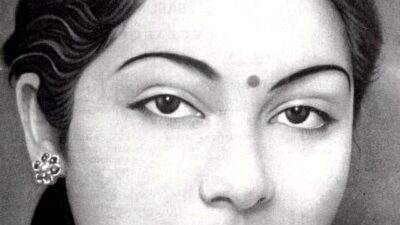
गीत विंग · गीत-पट्टिका · Song Plate
मेरे दिल की दुनिया से जाओ तो जानूँ
Mere Dil Ki Duniya Se Jao To Janoon
'चम्पा' का वही इकलौता गीत जिसे लोग आज भी उतारते और दोबारा चढ़ाते हैं — एक ग़ज़ल, जिसमें ज़ीनत बेगम जाते हुए प्रियतम को चुनौती देती हैं कि जाना सच है तो साबित करके दिखाओ।
भावमीठा-कड़वा · उदास
भाषाhindi गतिधीमी स्वरूपएकल महिला
श्रेय
The Creditsसूत्र-वाक्य · The Hook
सूत्र-वाक्य
'चम्पा' का वही इकलौता गीत जिसे लोग आज भी उतारते और दोबारा चढ़ाते हैं — एक ग़ज़ल, जिसमें ज़ीनत बेगम जाते हुए प्रियतम को चुनौती देती हैं कि जाना सच है तो साबित करके दिखाओ।
In EnglishThe one song from Champa that people still transfer and re-upload — a ghazal in which Zeenat Begum dares a departing lover to prove the departure is real.
पट्टिका-लेख
The Monographपरिचय Overview
'चम्पा' के संगीत का सबसे दूर तक पहुँचा हुआ गीत और सबसे अधिक बार डिजिटल किया गया: यह सरेगामा के अपने एलबम-संस्करण पर मिलता है, दो स्वतंत्र 78-आरपीएम संग्राहक-प्रतिलिपियों में, और बोलों सहित हिंदीगीतमाला पर। इसे ज़ीनत बेगम अकेले गाती हैं। इसकी ज़बान एलबम के गाँव वाले गीतों की लोक-हिंदी नहीं, उर्दू है, और रूप सीधी फ़िल्मी ग़ज़ल का — वही ढाँचा जिसे लाहौर के स्टूडियो तब उठाते थे जब दृश्य को रंग नहीं, गरिमा चाहिए होती थी।
अंग्रेज़ी में पढ़ें · Read in English
The best-travelled song of the Champa soundtrack and the one most often digitised: it appears on Saregama's own release of the album, on two independent 78-rpm collectors' transfers, and with lyrics on HindiGeetMala. Zeenat Begum sings it alone. The diction is Urdu rather than the folk Hindi of the album's village numbers, and the form is a straight film ghazal — the shape Lahore studios reached for whenever a scene needed dignity rather than colour.
संगीत The Music
रिकॉर्डिंग दस-इंच के 78-आरपीएम रिकॉर्ड की तीन-मिनट की सीमा के लगभग बराबर चलती है, जो संगीतकारों को वाद्य-ढाँचा किफ़ायती रखने पर मजबूर करती है: एक छोटा आलाप-नुमा प्रवेश, शेरों के बीच आवाज़ का उत्तर देती एक खिंची हुई गज़-वादित पंक्ति, और ताल इतनी हल्की कि शब्द सुनाई देते रहें। ज़ीनत बेगम प्रशिक्षित शास्त्रीय गायिका थीं, जिन्हें 1930 के दशक के अंत में पंडित अमरनाथ ने खोजा था, और यह संयोजन उन्हें पंक्तियों के अंत के लंबे स्वरों को गढ़ने की छूट देता है — 1940 के दशक के लाहौरी संगीत में ग़ज़ल का यही मानक बरताव था, जहाँ धुन का संयम स्वयं ही मंतव्य था।
अंग्रेज़ी में पढ़ें · Read in English
The recording runs close to the three-minute limit a ten-inch 78 allowed, which forces the composers to keep the instrumental frame spare: a short introduction, a sustained bowed line answering the voice between couplets, and percussion held light so the words carry. Zeenat Begum was a trained classical singer, discovered by Pandit Amar Nath in the late 1930s, and the setting leaves her free to shape the long vowels at the ends of lines rather than hurrying her through them — the standard treatment of a ghazal in a 1940s Lahore score, where melodic restraint was itself the point.
काव्य The Poetry
यह नज़्म विलाप पर नहीं, चुनौती पर टिकी है, और हर शेर के अंत में वही चुनौती दोहराती है: जाना है तो जाओ, पर जाना तभी माना जाएगा जब ख़यालों से भी चले जाओ। फिर वक्ता वह स्वीकार कर लेता है जो प्रिय निश्चित ही करेगा — भूल जाना — और उसकी जगह कठिनतर चीज़ माँगता है: याद उधर से भी मिट जाए। आगे का शेर उलाहने को भीतर की ओर मोड़ता है, पूरे लगाव को जवानी की ग़लती कहकर यह माँगता है कि सामने वाला कम-से-कम उस ग़लती को निभा तो दे। आख़िरी शेर बाहर मुड़ता है — उन लोगों की ओर, जिन्हें टूटे दिल की ख़बर सुनकर हँसी आती है। तीनों चालें मिलकर एक छोटी-सी दलील बनाती हैं: यहाँ नुक़सान का मातम कम, इम्तिहान ज़्यादा है — और हर इम्तिहान ऐसा है जिसमें प्रिय पास नहीं हो सकता।
अंग्रेज़ी में पढ़ें · Read in English
The poem is built on a challenge rather than a lament, and it repeats that challenge at the end of every couplet: go if you are going, but only leaving my thoughts as well will count as leaving. The speaker then concedes what the beloved will certainly do — forget — and asks for the harder thing instead, that the memory be erased from the other side too. A later couplet turns the reproach inward, calling the whole attachment a mistake of youth and demanding that the other person at least see the mistake through. The last couplet turns outward, to the people who hear about a broken heart and find it funny. Read together the three moves are a small argument: the loss is not being mourned so much as being tested, and each test is one the beloved cannot pass.
कहानी The Story
'चम्पा' लाहौर की शोरे पिक्चर्स में निर्माता रूप के. शोरे के लिए बनी और इसका निर्देशन बरकत राम मेहरा ने किया; यह अक्टूबर 1945 में लाहौर के क्राउन सिनेमा में लगी, जिसमें मनोरमा, आशा पोसले, हरि शिवदासानी, मजनू, सलमा और ज़हूर शाह थे। फ़िल्म की कथा का कोई विवरण नहीं बचा और न कोई प्रिंट प्रचलन में है — कोलंबिया पर जारी और आज सरेगामा के कैटलॉग में मौजूद ये रिकॉर्ड ही व्यावहारिक रूप से उसका सारा बचा हुआ अवशेष हैं। उस संगीत में यही वह गीत है जिसे अभिलेख ने सँभाला: 78-आरपीएम संग्रह के एक चैनल ने इसे 'चम्पा' के अपने चार रिकॉर्डों में पहला बताकर रखा है, और एक दूसरे उपयोक्ता ने भी इसे चढ़ाया है। नौ में से दो स्वतंत्र प्रतिलिपियों ने वही एक शीर्षक चुना — यह अपने आप में इस बात का मोटा पैमाना है कि रिकॉर्ड किस गीत के लिए ख़रीदे जाते थे।
अंग्रेज़ी में पढ़ें · Read in English
Champa was made at Shorey Pictures in Lahore for the producer Roop K. Shorey and directed by Barkat Ram Mehra; it opened at the Crown cinema in Lahore in October 1945 with Manorama, Asha Posley, Hari Shivdasani, Majnu, Salma and Zahoor Shah in the cast. No plot summary of the film survives, and no print is known to circulate — the discs, issued on Columbia and now in the Saregama catalogue, are effectively the whole of what is left of it. Within that soundtrack this is the number the archive kept: a vintage-78 collectors' channel carries it as the first of its four Champa sides, and a second uploader carries it again. That two independent uploads chose the same title out of nine is itself a rough measure of which song the discs were bought for.
विरासत The Legacy
जब ज़ीनत बेगम ने यह रिकॉर्ड किया, वे अपने सबसे व्यस्त रिकॉर्डिंग-वर्षों के बीच थीं: 1944 में वे लाहौर से बंबई आ चुकी थीं, और 1944 से 1947 के बीच के रिकॉर्ड ही विभाजन-पूर्व उनके काम का बड़ा हिस्सा हैं — यद्यपि उसका कोई प्रामाणिक कुल आँकड़ा नहीं मिला। 'चम्पा' के दो साल बाद वे पाकिस्तान चली गईं और शेष कार्यजीवन रेडियो पाकिस्तान, लाहौर में बिताया — फ़िल्मी गीत नहीं, ग़ज़लें और नज़्में गाते हुए। इसीलिए इस जैसी एक फ़िल्मी ग़ज़ल वह बिंदु है जहाँ उनके कामकाजी जीवन के दोनों हिस्से क्षण भर को छू जाते हैं।
अंग्रेज़ी में पढ़ें · Read in English
Zeenat Begum was in the middle of her heaviest recording years when she cut this: she had moved from Lahore to Bombay in 1944, and the discs from 1944 to 1947 are the bulk of her pre-Partition output, though no reliable total for it has been traced. Two years after Champa she crossed to Pakistan and spent the rest of her career at Radio Pakistan's Lahore station, singing ghazals and nazms rather than film songs — which makes a film ghazal like this one a point where the two halves of her working life briefly touch.
वर्गीकरण
Classification- Tempo
- Slow
Genre
अन्य विवरण
More Details- https://www.hindigeetmala.net/movie/champa.htm
- https://myswar.co/album/champa-1945
- https://en.wikipedia.org/wiki/List_of_Hindi_films_of_1945
- https://pakmag.net/film/predetails.php?pid=2618
- https://indiancine.ma/EDN
- https://www.hindigeetmala.net/song/mere_dil_ki_duniyaa_se.htm
- https://www.youtube.com/watch?v=t9oBvF6iFS8
References
रोचक तथ्य
Margin Notes'चम्पा' एलबम के डिजिटल पुनःप्रकाशन में इस गीत का कलाकार-खाना किसी नाम के बजाय एक स्थानापन्न शब्द रखता है, जबकि समूह-गीत 'डोरिये की ओढ़नी में' वहाँ 'कोरस' के नाम दर्ज है। दोनों ही असली श्रेय नहीं हैं; 78-आरपीएम प्रतिलिपि और माईस्वर, दोनों इसे ज़ीनत बेगम का एकल बताते हैं।
अंग्रेज़ी में पढ़ें · Read in English
The digital reissue of the Champa album files this track under an auto-generated placeholder artist rather than a name, and files the ensemble number 'Doriye Ki Odhni Men' under 'Chorus'. Neither is a real credit; the 78-rpm transfer and MySwar both name Zeenat Begum singing this one alone.
माईस्वर इस गीत को 'फ़िल्मी' और 'ग़ज़ल' में रखती है — 'चम्पा' एलबम का यही इकलौता गीत है जिसे वहाँ कोई शैली दी गई है; शेष आठ 'अज्ञात' दर्ज हैं।
अंग्रेज़ी में पढ़ें · Read in English
MySwar classifies the song as Filmi and Ghazal — the only track on the Champa album it assigns a genre to at all; the other eight are listed as 'Unknown'.
नमूना-पट्टी
The Specimen Table| शीर्षक | मेरे दिल की दुनिया से जाओ तो जानूँ · Mere Dil Ki Duniya Se Jao To Janoon |
|---|---|
| फ़िल्म | चम्पा · 1945 |
| वर्ष · युग | 1945 |
| गायक | Zeenat Begum |
| गीतकार | Aziz Kashmiri |
| संगीतकार | लछ्छीराम तमर, Anupam Ghatak |
| स्वरूप | एकल महिला |
| गति | धीमी |
| भाषा | hindi |
| भाव | मीठा-कड़वा · उदास |
| लोकप्रियता | Known |
| बोल-स्थिति | केवल झलक |
जुड़े हुए पन्ने
Connected Plates · The Graph Made Visibleअटलस में कोई पन्ना अकेला नहीं — इस गीत से जुड़े गीत, कलाकार, फ़िल्म, राग-ताल-विधा, सब यहाँ से खुलते हैं।
मिलते-जुलते गीत · Related Songs
कलाकार · The Artists
फ़िल्म · The Film
साझा कीजिए · Share this Plate