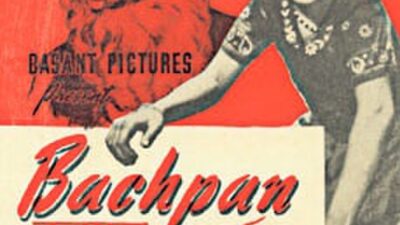
गीत विंग · गीत-पट्टिका · Song Plate
गोकुल की एक नार छबीली
Gokul Ki Ek Naar Chhabili
'बचपन' का इकलौता गीत जिसका गायक कहीं दर्ज हुआ — और वह नाम है मुकेश, ठीक उसी साल जब वे गुमनामी से बाहर निकले।
भावचुलबुला · रोमांटिक
भाषाhindi स्वरूपएकल पुरुष
श्रेय
The Creditsसूत्र-वाक्य · The Hook
सूत्र-वाक्य
'बचपन' का इकलौता गीत जिसका गायक कहीं दर्ज हुआ — और वह नाम है मुकेश, ठीक उसी साल जब वे गुमनामी से बाहर निकले।
In EnglishThe only song in Bachpan whose singer was ever written down — and the name on it is Mukesh, in the year he stopped being an unknown.
पट्टिका-लेख
The Monographपरिचय Overview
'गोकुल की एक नार छबीली' 'बचपन' (1945) का वह इकलौता गीत है जिसके साथ सूचियों में गायक का नाम दर्ज है: मुकेश। शीर्षक गीत को ब्रज की धरती पर रखता है — गोकुल की एक 'छबीली नार', यानी कृष्ण के बचपन के ग्वाल-गाँव की एक अनोखी छटा वाली स्त्री। संगीत एस. एन. त्रिपाठी का, बोल आई. सी. कपूर के; और बचे हुए शेलैक रिकॉर्ड से किया गया दो मिनट सत्तावन सेकंड का ट्रांसफ़र इस पूरे संगीत के उन दो टुकड़ों में से एक है जो आज भी सुने जा सकते हैं।
अंग्रेज़ी में पढ़ें · Read in English
'Gokul Ki Ek Naar Chhabili' is the one song from Basant Pictures' Bachpan (1945) that carries a singer credit in the catalogues: Mukesh. The title puts the song in Braj country — a chhabili naar, a woman of striking charm, from Gokul, the cowherd village of Krishna's boyhood. S. N. Tripathi composed it to I. C. Kapoor's words, and a transfer from the surviving shellac disc, running two minutes and fifty-seven seconds, is one of only two pieces of this soundtrack that can still be heard at all.
संगीत The Music
एस. एन. त्रिपाठी इस संगीत में हिंदुस्तानी शास्त्रीय प्रशिक्षण लेकर आए थे — लखनऊ का भातखंडे मॉरिस कॉलेज ऑफ़ म्यूज़िक — और साथ में एक काम करते ऑर्केस्ट्रा-वादक का व्यावहारिक कान भी; वे 1935 में बंबई आए थे, बॉम्बे टॉकीज़ में सरस्वती देवी के सहायक वायलिन-वादक के रूप में, और 1945 तक तीन साल से स्वतंत्र संगीतकार थे। शीर्षक का ब्रज-परिवेश उसी लोक-भक्ति रंग की ओर इशारा करता है जो आगे चलकर पौराणिक फ़िल्मों में उनकी पहचान बना। रचना जैसी भी रही हो, उसे शेलैक 78 के एक पहलू में समाना था: बचा हुआ ट्रांसफ़र 2 मिनट 57 सेकंड चलता है, और पूरा गीत इतना ही है।
अंग्रेज़ी में पढ़ें · Read in English
S. N. Tripathi brought a Hindustani classical training to this score — Bhatkhande's Morris College of Music in Lucknow — along with the practical ear of a working orchestra musician; he had arrived in Bombay in 1935 as a violinist assisting Saraswati Devi at Bombay Talkies, and by 1945 had been an independent composer for three years. The Braj setting of the title points toward the folk-devotional register that would later become his signature in mythological films. Whatever the arrangement, it had to fit one side of a shellac 78: the surviving transfer runs 2 minutes 57 seconds, and that is the whole song.
काव्य The Poetry
शीर्षक का यह पद कृष्ण-काव्य की ब्रज-शब्दावली से आता है, जहाँ गोकुल किसी स्थान से अधिक एक भाव है — कृष्ण के बचपन का ग्वाल-गाँव, उसकी गोपियाँ, उसका छेड़-छाड़ भरा हास, उसकी नदी। किसी स्त्री को 'छबीली' कहना एक ख़ास तारीफ़ है, जो सादे सौंदर्य से अधिक 'चमक' और 'तेवर' की ओर झुकती है, और 1940 के दशक के हिंदी गीतकार इस शब्द तक तब पहुँचते थे जब उन्हें ऐसी पंक्ति चाहिए होती जो देहाती और चतुर — दोनों लगे। आई. सी. कपूर, जिन्होंने फ़िल्म की कहानी और संवाद भी लिखे, यहाँ उसी ब्रज-रंग में लिख रहे हैं जिसे गाँव में बसी एक बाल-कथा स्वाभाविक रूप से माँगती है। कथा में यह गीत कहाँ आता है, यह दर्ज नहीं है।
अंग्रेज़ी में पढ़ें · Read in English
The phrase in the title belongs to the Braj vocabulary of Krishna poetry, where Gokul is less a place than a mood — the cowherd settlement of Krishna's boyhood, its gopis, its teasing, its river. Calling a woman chhabili is a particular compliment, nearer to 'striking' or 'full of spark' than to plain beauty, and Hindi lyricists of the 1940s reached for it when they wanted a line that sounded rustic and knowing at the same time. I. C. Kapoor, who wrote the film's story and dialogue as well as its songs, is working here in the Braj-flavoured register that a village-set film about childhood invites. Where the number sits in the narrative is not documented.
कहानी The Story
'बचपन' होमी वाडिया की बसंत पिक्चर्स की फ़िल्म थी — वही स्टूडियो जो तब फ़ियरलेस नाडिया की स्टंट फ़िल्मों के लिए जाना जाता था — पर यह एक सामाजिक पारिवारिक नाटक है: भैरव (मज़हर ख़ान), जो बेटे के अंतर्जातीय विवाह के बाद कड़वे होकर पहाड़ पर अकेले रहते हैं, अपनी छोटी भांजी मधु (बेबी माधुरी) के सान्निध्य से धीरे-धीरे पिघलते हैं। मधु का दो बार अपहरण होता है — एक बार मौसी द्वारा, जो उसे धनी विकलांग कमला (बेबी शकुंतला) की सहेली बनाकर बेच देती है, और एक बार कमला की ईर्ष्यालु गवर्नेस द्वारा — और फ़िल्म का अंत गाँव के अध्यापक रमेश (बी. नांदरेकर) तथा उनकी प्रेमिका (चंद्रप्रभा) द्वारा थाने में भैरव को निर्दोष सिद्ध करने पर होता है। कहानी, संवाद और दसों गीत आई. सी. कपूर ने लिखे; संगीत एस. एन. त्रिपाठी का था। यहाँ एकाकी भैरव का किरदार निभाने वाले मज़हर ख़ान उसी साल अपने बैनर एशियाटिक पिक्चर्स के लिए 'पहली नज़र' (1945) निर्देशित कर रहे थे — वही फ़िल्म जिसमें मुकेश ने 'दिल जलता है तो जलने दे' गाया और रातोंरात पार्श्वगायक बन गए।
अंग्रेज़ी में पढ़ें · Read in English
Bachpan was made by Homi Wadia's Basant Pictures, a studio then known for Fearless Nadia stunt pictures, and it is a social family drama instead: Bhairav (Mazhar Khan), embittered and living alone on a mountainside after his son married outside their caste, is slowly softened by Madhu (Baby Madhuri), the young niece a relative sends to live with him. Madhu is twice abducted — once by the aunt, who sells her as a companion to the wealthy invalid Kamla (Baby Shakuntala), and once by Kamla's jealous governess — and the film ends with the village schoolteacher Ramesh (B. Nandrekar) and his beloved (Chandraprabha) clearing Bhairav's name at the police station. I. C. Kapoor wrote the story, the dialogue and all ten song lyrics; S. N. Tripathi composed the score. Mazhar Khan, who plays the recluse Bhairav here, was in the same year directing Pehli Nazar (1945) under his own Asiatic Pictures banner — the film in which Mukesh sang 'Dil Jalta Hai To Jalne De' and became a playback singer overnight.
विरासत The Legacy
मुकेश का 1945 एक ही गीत के लिए याद किया जाता है — 'पहली नज़र' का 'दिल जलता है तो जलने दे', जिसे सुनकर के. एल. सैगल ने कथित रूप से उसे अपनी ही आवाज़ समझ लिया था। 'गोकुल की एक नार छबीली' उस कथा से पूरी तरह बाहर है। उनके आरंभिक करियर के किसी मानक विवरण में यह नहीं मिलता, इसका कभी पुनःप्रकाशन नहीं हुआ, और यह इसलिए बचा क्योंकि किसी निजी संग्राहक ने रिकॉर्ड का ट्रांसफ़र ऑनलाइन डाल दिया। आज इसका मूल्य संगीत से अधिक दस्तावेज़ी है: यह बताता है कि जिस साल उनका नाम मायने रखने लगा, उसी साल वे और क्या काम कर रहे थे।
अंग्रेज़ी में पढ़ें · Read in English
Mukesh's 1945 is remembered for a single song — 'Dil Jalta Hai To Jalne De' from Pehli Nazar, which K. L. Saigal is said to have mistaken for his own voice. 'Gokul Ki Ek Naar Chhabili' sits entirely outside that story. It appears in no standard account of his early career, it was never reissued, and it survives because a private collector put a disc transfer online. Its value now is documentary rather than musical: it records what work a young singer was still taking on in the year his name began to matter.
वर्गीकरण
ClassificationGenre
अन्य विवरण
More Details- https://en.wikipedia.org/wiki/Bachpan_(1945_film)
- https://www.hindigeetmala.net/movie/bachpan_1945.htm
- https://myswar.co/album/bachpan-1945
- https://atulsongaday.me/2019/05/28/bole-re-panchhi-bole/
- https://en.wikipedia.org/wiki/S._N._Tripathi
- https://en.wikipedia.org/wiki/Homi_Wadia
- https://en.wikipedia.org/wiki/Mukesh_(singer)
- https://en.wikipedia.org/wiki/Mazhar_Khan_(actor,_born_1905)
References
रोचक तथ्य
Margin Notes'बचपन' के दस में से नौ गीतों के गायकों के नाम कहीं दर्ज नहीं हुए। हिंदी फ़िल्म गीत कोश से निकली सूचियों में पूरे संगीत के लिए ठीक एक नाम मिलता है — 'गोकुल की एक नार छबीली' पर मुकेश।
अंग्रेज़ी में पढ़ें · Read in English
No singer credits were recorded for nine of Bachpan's ten songs. Catalogues derived from the Hindi Film Geet Kosh carry exactly one name for the whole soundtrack — Mukesh, on 'Gokul Ki Ek Naar Chhabili'.
'बचपन' में भैरव का किरदार निभाने वाले मज़हर ख़ान निर्देशक और निर्माता भी थे: उन्होंने 1942 में एशियाटिक पिक्चर्स की स्थापना की और 'पहली नज़र' (1945) निर्देशित की — वही फ़िल्म जिसने मुकेश को पार्श्वगायक बनाया, यानी अभिनेता और गायक दोनों 1945 में एक-दूसरे की श्रेय-सूची में उलटी दिशाओं से आते हैं।
अंग्रेज़ी में पढ़ें · Read in English
Mazhar Khan, who plays Bhairav in Bachpan, was also a director and producer: he founded Asiatic Pictures in 1942 and directed Pehli Nazar (1945), the film that made Mukesh a playback singer — putting actor and singer in each other's 1945 credits from opposite directions.
एस. एन. त्रिपाठी ने लखनऊ के भातखंडे मॉरिस कॉलेज ऑफ़ म्यूज़िक में प्रशिक्षण लिया और 1935 में बंबई आकर बॉम्बे टॉकीज़ में सरस्वती देवी के सहायक वायलिन-वादक बने; 'बचपन' उनका आरंभिक काम है, 'चंदन' (1942) के पहले स्वतंत्र संगीत के तीन साल बाद।
अंग्रेज़ी में पढ़ें · Read in English
S. N. Tripathi trained at Bhatkhande's Morris College of Music in Lucknow and came to Bombay in 1935 as a violinist assisting Saraswati Devi at Bombay Talkies; Bachpan is early work, three years after his first independent score for Chandan (1942).
नमूना-पट्टी
The Specimen Table| शीर्षक | गोकुल की एक नार छबीली · Gokul Ki Ek Naar Chhabili |
|---|---|
| फ़िल्म | बचपन · 1945 |
| वर्ष · युग | 1945 |
| गायक | Mukesh |
| गीतकार | I. C. Kapoor |
| संगीतकार | S. N. Tripathi |
| स्वरूप | एकल पुरुष |
| भाषा | hindi |
| भाव | चुलबुला · रोमांटिक |
| लोकप्रियता | Obscure |
| बोल-स्थिति | केवल झलक |
जुड़े हुए पन्ने
Connected Plates · The Graph Made Visibleअटलस में कोई पन्ना अकेला नहीं — इस गीत से जुड़े गीत, कलाकार, फ़िल्म, राग-ताल-विधा, सब यहाँ से खुलते हैं।
मिलते-जुलते गीत · Related Songs
कलाकार · The Artists
फ़िल्म · The Film
साझा कीजिए · Share this Plate