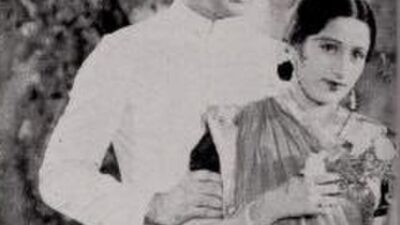
गीत विंग · गीत-पट्टिका · Song Plate
दुनिया दोरंगी है
Duniya Dorangi Hai
'दुनिया दोरंगी है' — 'आरती' (1945) का मोहभंग का गीत, और फ़िल्म के सुधारवादी तेवर का सबसे साफ़ बचा हुआ संकेत।
भावतीव्र · उदास · दार्शनिक
भाषाhindi
श्रेय
The Creditsसूत्र-वाक्य · The Hook
सूत्र-वाक्य
'दुनिया दोरंगी है' — 'आरती' (1945) का मोहभंग का गीत, और फ़िल्म के सुधारवादी तेवर का सबसे साफ़ बचा हुआ संकेत।
In English'The world is two-coloured' — the disenchantment song of Aarti (1945), and the clearest surviving sign of the film's reformist streak.
पट्टिका-लेख
The Monographपरिचय Overview
'दुनिया दोरंगी है' हिंदीगीतमाला और माईस्वर दोनों में 'आरती' (1945) के दस गीतों में सूचीबद्ध है, संगीत अशोक घोष और अली बख़्श का, और कोई गायक-श्रेय नहीं। फ़िल्म का कोई गीतकार दर्ज नहीं है। शीर्षक 'दुनिया-गीत' की श्रेणी का है — हिंदी फ़िल्म संगीत की वह बँधी हुई श्रेणी जिसमें गायक किसी व्यक्ति पर नहीं, स्वयं दुनिया पर अभियोग लगाता है। 'दोरंगी', शब्दशः 'दो रंगों वाली', उर्दू-हिंदी में दोहरेपन का शब्द है: वह दुनिया जो एक चेहरा दिखाती है और दूसरा छिपाए रखती है। 'नंगे बदन वस्त्र बिन फिरते' के साथ मिलकर यह सबसे मज़बूत पाठ्य प्रमाण है कि 'आरती' में वह सुधारवादी आवेश था जिसका संकेत उसकी 'सोशल' श्रेणी देती है।
अंग्रेज़ी में पढ़ें · Read in English
'Duniya Dorangi Hai' is listed in both HindiGeetMala and MySwar among the ten songs of Aarti (1945), with music by Ashok Ghosh and Ali Baksh and no singer credit. No lyricist is recorded for the film. The title belongs to the duniya song — the fixed Hindi film category in which the singer indicts the world itself rather than any individual. Dorangi, literally 'of two colours', is the Urdu-Hindi word for duplicity: a world that shows one face and holds another. Together with 'Nange Badan Vastra Bin Phirate', it is the strongest textual evidence that Aarti carried the reformist charge implied by its 'Social' classification.
संगीत The Music
रिकॉर्डिंग सार्वजनिक प्रचलन में नहीं है और संगीत की कोई समीक्षा नहीं मिली, इसलिए धुन, लय, राग और वादन-सज्जा यहाँ पुनर्निर्मित करने के बजाय अदर्ज छोड़ी गई हैं। श्रेय संयुक्त है — अशोक घोष के साथ अली बख़्श, दसों गीतों की तरह — और अभिलेख उनके योगदान अलग करने का कोई रास्ता नहीं देता। घोष का उस दौर का बाक़ी काम — 'निर्दोष' (1941), 'शराफ़त' (1943), 'मिस देवी' (1944), 'गुंजन' (1948) — केवल शीर्षकों की सूची के रूप में दर्ज है; उसमें से भी लगभग कुछ भी आज सुनाई नहीं देता, इसलिए उनकी शैली का तुलनात्मक पाठ भी बंद है।
अंग्रेज़ी में पढ़ें · Read in English
The recording is not in public circulation and no review of the score has been traced, so the melody, tempo, raag and orchestration are left unrecorded here rather than reconstructed. The credit is joint, Ashok Ghosh with Ali Baksh, as on all ten songs, and the archive gives no way to separate their contributions. Ghosh's other work of the period — Nirdosh (1941), Sharafat (1943), Miss Devi (1944), Gunjan (1948) — is documented only as a list of titles; almost none of it is audible today either, so even a comparative reading of his style is closed off.
काव्य The Poetry
'दुनिया-गीत' हिंदी फ़िल्मी गीत के टिकाऊ रूपों में से एक है, और उसकी बयानी चाल विस्थापन की है: 'दुनिया' पर अभियोग लगाकर गायक किसी विशेष अन्याय के बारे में वे बातें कह सकता है जो किसी नामित व्यक्ति या वर्ग पर लक्षित होने पर कही ही नहीं जा सकतीं। 'दोरंगी' इसे और तेज़ कर देता है — आरोप यह नहीं कि दुनिया निर्दय है, बल्कि यह कि वह दोमुँही है, जिससे विषय दुर्भाग्य नहीं, पाखंड बन जाता है। 'सोशल' श्रेणी में दर्ज फ़िल्म में यही वह अभियोग है जिसके लिए यह विधा बनी थी। रचना ने आगे किसका नाम लिया, यह प्राप्य नहीं: किसी उपलब्ध स्रोत में 'आरती' का गीतकार दर्ज नहीं है और गीत की कोई रिकॉर्डिंग प्रचलन में नहीं बची।
अंग्रेज़ी में पढ़ें · Read in English
The duniya song is one of the durable forms of Hindi film lyric, and its rhetorical trick is displacement: by arraigning 'the world' the singer can say things about a specific injustice that would be unsayable if aimed at a named person or class. 'Dorangi' sharpens that further — the charge is not that the world is cruel but that it is two-faced, which makes hypocrisy rather than misfortune the subject. In a film catalogued as a social, that is precisely the accusation the genre existed to make. What the verse went on to name cannot be recovered: no lyricist is recorded for Aarti in any accessible source and no recording of the song survives in circulation.
कहानी The Story
विकिपीडिया की 1945 की हिंदी फ़िल्मों की सूची 'आरती' को 'सोशल' श्रेणी देती है — सुधार-तर्क वाली समकालीन फ़िल्मों की व्यापारिक श्रेणी — और बची हुई सामग्री में यह शीर्षक उस लेबल की सबसे सीधी पुष्टि है। फ़िल्म का निर्माण स्क्रीन अट्रैक्शंस कॉर्पोरेशन ने किया और निर्देशन रामचंद्र ठाकुर ने, जिसमें सुरेंद्र और वनमाला मुख्य भूमिका में थे और हंसा वाडकर, शेख़ मुख़्तार, कन्हैयालाल, अंसारी तथा हरीश सहायक भूमिकाओं में। इनमें से किसने यह गीत गाया या यह किस पर फ़िल्माया गया, दर्ज नहीं है; कोश इस गीत को संगीतकार का श्रेय देते हैं और उसके अलावा कुछ नहीं।
अंग्रेज़ी में पढ़ें · Read in English
Wikipedia's list of Hindi films of 1945 assigns Aarti the genre 'Social', the trade category for contemporary films with a reform argument, and this title is the plainest confirmation of that label in the surviving material. The film was produced by Screen Attractions Corporation and directed by Ramchandra Thakur, with Surendra and Vanmala leading and Hansa Wadkar, Sheikh Mukhtar, Kanhaiyalal, Ansari and Harish in support. Which of them sang or was pictured in this number is not recorded; the catalogues give the song a composer credit and nothing else.
विरासत The Legacy
यह गीत हर स्ट्रीमिंग कोश और यूट्यूब दोनों से अनुपस्थित है, और 1945 के फ़िल्म-संगीत के किसी प्रकाशित इतिहास में नहीं आता। यह केवल हिंदी फ़िल्म गीत कोश से निकली गीत-सूचियों की एक पंक्ति के रूप में बचा है। इसे छोड़ने के बजाय दर्ज करना सार्थक है: 1940 के दशक की छोटी 'सोशल' फ़िल्मों के सुधार-गीत उस दौर के उत्पादन का वह हिस्सा हैं जो सबसे पूरी तरह लुप्त हुआ, और जो कोश केवल बचे हुए हिट गिनाता है वह इस बात की झूठी तस्वीर बनाता है कि वह दशक असल में कैसा सुनाई देता था।
अंग्रेज़ी में पढ़ें · Read in English
The song is absent from every streaming catalogue and from YouTube, and it appears in no published history of 1945 film music. It is preserved only as a line in the song indexes derived from the Hindi Film Geet Kosh. That is worth recording rather than skipping: the reform songs of minor 1940s socials are the part of the period's output that vanished most completely, and a database that lists only the surviving hits reproduces a false picture of what the decade actually sounded like.
वर्गीकरण
ClassificationGenre
अन्य विवरण
More Details- https://www.hindigeetmala.net/movie/aarti_1945.htm
- https://myswar.co/album/aarti-1945
- https://en.wikipedia.org/wiki/List_of_Hindi_films_of_1945
- https://en.wikipedia.org/wiki/Surendra_(actor)
References
रोचक तथ्य
Margin Notes'दोरंगी' शब्द उर्दू और हिंदी दोनों के प्रयोग में दोहरेपन का अर्थ रखता है, और 'दुनिया दोमुँही है' की शिकायत 1930 से 1970 के दशक तक हिंदी फ़िल्मी गीत में सीधी चलती है — 'आरती' का यह संस्करण उन आरंभिक दर्ज उदाहरणों में है जिनसे अब कोई रिकॉर्डिंग जुड़ी नहीं है।
अंग्रेज़ी में पढ़ें · Read in English
The word dorangi ('two-coloured') carries the sense of duplicity in both Urdu and Hindi usage, and the duniya-is-two-faced complaint runs straight through Hindi film song from the 1930s to the 1970s — Aarti's version is one of the earliest catalogued instances that no longer has a recording attached.
नमूना-पट्टी
The Specimen Table| शीर्षक | दुनिया दोरंगी है · Duniya Dorangi Hai |
|---|---|
| फ़िल्म | आरती · 1945 |
| वर्ष · युग | 1945 |
| संगीतकार | Ashok Ghosh, अली बख़्श |
| भाषा | hindi |
| भाव | तीव्र · उदास · दार्शनिक |
| लोकप्रियता | Obscure |
| बोल-स्थिति | केवल झलक |
जुड़े हुए पन्ने
Connected Plates · The Graph Made Visibleअटलस में कोई पन्ना अकेला नहीं — इस गीत से जुड़े गीत, कलाकार, फ़िल्म, राग-ताल-विधा, सब यहाँ से खुलते हैं।
कलाकार · The Artists
फ़िल्म · The Film
साझा कीजिए · Share this Plate