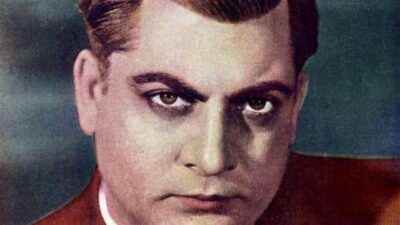
सिनेमा विंग · फ़िल्म-पट्टिका · Film Plate
औरंगज़ेब
Aurangzeb
शैलीHistorical · Action
भाषाhindi प्रकारकथा-चित्र (फ़ीचर)
कथा-सार
Synopsis'औरंगज़ेब' की कथा का कोई विवरण किसी उपलब्ध स्रोत में सुरक्षित नहीं है, और हिंदीगीत उसे गढ़ेगा नहीं। जो प्रमाणित है वह निर्माण का ढाँचा है: 1945 की एक हिंदुस्तानी फ़ीचर फ़िल्म, निर्देशक आस्पी ईरानी, निर्माता ड्यूब इंडस्ट्रीज़, दूसरी निर्माण-संस्था के रूप में द बॉम्बे टॉकीज़ स्टूडियोज़, और मुख्य भूमिकाओं में चंद्रमोहन, सविता देवी तथा जयंत। शीर्षक मुग़ल दरबार के विषय की ओर संकेत करता है, और 1945 बंबई के ऐतिहासिक फ़िल्म-चक्र के ठीक बीच में पड़ता है — 'पुकार' (1939), 'हुमायूँ' (1945), 'शाहजहाँ' (1946) — जिसमें मुग़ल सदी उद्योग की सबसे प्रिय पोशाक थी। चंद्रमोहन सोहराब मोदी की 'पुकार' में जहाँगीर का किरदार निभा चुके थे और चालीस के दशक तक शाही रौब और शाही वैभव — दोनों के लिए उद्योग की पहली पसंद थे; इसलिए उनकी उपस्थिति ही इस फ़िल्म के मिज़ाज का सबसे बड़ा संकेत है। इसके आगे रिकॉर्ड ख़ामोश है, और यह प्रविष्टि वही दर्ज करती है जो प्रमाणित है।
अंग्रेज़ी में पढ़ें · Read in English
No plot summary of Aurangzeb survives in any accessible record, and HindiGeet will not reconstruct one. What the documentation does establish is the shape of the production: a Hindustani feature of 1945, directed by Aspi Irani, produced by Dube Industries with The Bombay Talkies Studios credited as the second production company, and led by Chandra Mohan, Savita Devi and Jayant. The title points to a Mughal court subject, and 1945 sat in the middle of Bombay's historical-film cycle — Pukar (1939), Humayun (1945), Shahjehan (1946) — in which the Mughal century was the industry's favourite costume. Chandra Mohan had already played Emperor Jehangir in Sohrab Modi's Pukar and was by the mid-1940s the industry's default casting for imperial menace and imperial grandeur alike, so his presence here is the single strongest clue to the film's register. Beyond that clue the record stops, and this entry records what is documented rather than what would be easy to invent.
संगीत-सूची
The Soundtrack'औरंगज़ेब' का एक भी गीत प्रमाणित नहीं है — न कोई शीर्षक, न कोई गायक, न कोई 78-आरपीएम तवा — इसलिए यह प्रविष्टि अनुमान पर आधारित गीत-सूची के बजाय ख़ाली गीत-सूची रखती है। द बॉम्बे टॉकीज़ स्टूडियोज़ की अपनी अभिलेखीय फ़िल्म-सूची संगीत का श्रेय ख़ुर्शीद अनवर को और गीतों का श्रेय नरेंद्र शर्मा को देती है, और 1945 के लिए दोनों नाम संभव हैं: ख़ुर्शीद अनवर उस वर्ष बंबई में सक्रिय थे ('यतीम', जिसमें उनका संगीत-श्रेय के. दत्त के साथ साझा था, 1 जून 1945 को रिलीज़ हुई), और नरेंद्र शर्मा उस दशक में बॉम्बे टॉकीज़ से सबसे अधिक जुड़े गीतकार थे। लेकिन यह श्रेय एक ही आधुनिक स्रोत पर टिका है। ख़ुर्शीद अनवर की प्रचलित फ़िल्म-सूची — 'कुड़माई' (1941), 'इशारा' (1943), 'परख' (1944), 'यतीम' (1945), 'परवाना' (1947) — में 'औरंगज़ेब' नहीं है, हिंदी फ़िल्म गीत कोश पर आधारित गीत-डेटाबेस इस फ़िल्म को दर्ज ही नहीं करते, और 1945-46 के किसी एचएमवी विज्ञापन में इसका नाम नहीं मिलता। जब तक कोई गीत-पुस्तिका, रिकॉर्ड-लेबल या सेंसर-सूची सामने न आए, सही कथन यही है कि इस फ़िल्म का संगीत अप्राप्य है।
अंग्रेज़ी में पढ़ें · Read in English
Not one song from Aurangzeb is documented — no title, no singer, no 78-rpm disc — and this entry therefore carries an empty soundtrack rather than a speculative one. The Bombay Talkies Studios' own archival film list credits the score to Khurshid Anwar and the lyrics to Narendra Sharma, and both names are plausible for 1945: Khurshid Anwar was working in Bombay that year (Yateem, on which he shared music credit with K. Dutt, was released on 1 June 1945), and Narendra Sharma was the lyricist most closely associated with Bombay Talkies through the decade. But that attribution rests on a single modern source. Khurshid Anwar's standard filmography — Kurmai (1941), Ishara (1943), Parakh (1944), Yateem (1945), Parwana (1947) — does not include Aurangzeb, the Hindi Film Geet Kosh-derived song databases do not list the film at all, and no HMV record advertisement of 1945 or 1946 names it. Until a song booklet, a record label or a censor list surfaces, the correct statement is simply that the music of Aurangzeb is unrecovered.
पट्टिका-लेख
The Monographपर्दे के पीछे Behind the Scenes
सबसे बोलता हुआ विवरण निर्माता का नाम है। ड्यूब इंडस्ट्रीज़ कोई स्थायी फ़िल्म कंपनी नहीं, बल्कि पूँजी लगाने वाली इकाई थी; और दूसरा निर्माण-श्रेय — द बॉम्बे टॉकीज़ स्टूडियोज़ — उसी स्टूडियो का है जिसके फ़्लोर पर यह फ़िल्म बनी। 1945 के लिए यह बिलकुल सामान्य ढाँचा था: युद्धकालीन मुनाफ़े ने फ़िल्म में बाहरी पैसा लगाने वालों की एक लहर पैदा कर दी थी, जो स्थापित स्टूडियो से फ़्लोर, उपकरण और तकनीशियन किराए पर लेते थे। लेकिन ड्यूब इंडस्ट्रीज़ एक-फ़िल्म का उपक्रम नहीं थी: अकेले 1945 में उसने कम से कम तीन फ़िल्मों — 'औरंगज़ेब', 'बुलंदी' और 'सिपाही' — में पैसा लगाया, और तीनों में द बॉम्बे टॉकीज़ स्टूडियोज़ के साथ वही जोड़ी दर्ज है। आस्पी ईरानी ठीक उसी तरह के पेशेवर निर्देशक थे जिन्हें ऐसे निर्माता काम पर रखते थे। उस दौर के एक 'फ़िल्मइंडिया' स्टूडियो-वृत्तांत में लिखा है कि उन्होंने रणजीत में 'कारवाँ' पूरी कर ली है और अब 'एक नई फ़िल्म में व्यस्त हैं जिसका नामकरण अभी नहीं हुआ' — वह बेनाम फ़िल्म 'औरंगज़ेब' बनी या नहीं, यह प्रमाणित नहीं है और इसे यहाँ सूत्र के रूप में रखा गया है, तथ्य के रूप में नहीं। ईरानी ने आगे तीस साल लंबा करियर बनाया — 'सिपहिया' (1949), 'शीरीं फ़रहाद' (1956), 'निशान' (1965), 'गरम मसाला' (1972); जबकि चंद्रमोहन अपने करियर के अंतिम दौर में थे, जिसे उनकी जुए और शराब की लत ने 1949 तक ख़त्म कर दिया।
अंग्रेज़ी में पढ़ें · Read in English
The producer's name is the most telling detail. Dube Industries was a financier rather than a standing film company, and the second production credit, The Bombay Talkies Studios, is the studio whose floors the picture used — the ordinary shape for 1945, when wartime profits pushed a wave of outside money into film production and backers rented floors, equipment and technicians from established studios. Dube Industries was not, however, a one-picture venture: it financed at least three features released in 1945 alone — Aurangzeb, Bulandi and Sipahi — all three carrying the same pairing with The Bombay Talkies Studios. Aspi Irani was exactly the kind of working professional such producers hired. A FilmIndia studio round-up of the period notes that he had 'completed Caravan' at Ranjit and was 'busy with a new one which has not yet been christened' — whether that unnamed picture became Aurangzeb is not established, and is offered here as a thread rather than a fact. Irani went on to a thirty-year career, directing Sipahiya (1949), Shirin Farhad (1956), Nishan (1965) and Garam Masala (1972); Chandra Mohan, by contrast, was in the last phase of his, and his gambling and drinking had ended it by 1949.
महत्व Significance
'औरंगज़ेब' का महत्त्व हिंदी फ़िल्म-संगीत के विश्वकोश के लिए इस बात में नहीं कि उसमें क्या था, बल्कि इस बात में है कि उसकी लगभग पूर्ण अनुपस्थिति क्या सिद्ध करती है। यह 1945 की उन कई दर्जन फ़िल्मों में से एक है जो केवल एक जनगणना-पंक्ति के रूप में बची हैं — एक शीर्षक, एक वर्ष, एक निर्देशक, दो निर्माण-संस्थाएँ — न कोई समीक्षा, न कोई विज्ञापन, न कोई ग्रामोफ़ोन रिकॉर्ड। 'फ़िल्मइंडिया', वह व्यापारिक मासिक जो उस वर्ष की लगभग हर बंबइया रिलीज़ की समीक्षा करता था और हर महीने स्टूडियो-वृत्तांत छापता था, अपने 1944, 1945, 1946 और 1947 के अंकों में एक बार भी यह शीर्षक नहीं छापता — जबकि उन्हीं महीनों में उसी स्टूडियो से जुड़ी अन्य फ़िल्मों, जैसे 'प्रतिमा' और 'आम्रपाली', की चर्चा वह करता है। 1945 में जो फ़िल्में सिनेमाघरों तक पहुँचीं उन्होंने निशान छोड़े — समीक्षा, सेंसर-सूचना, एचएमवी रिकॉर्ड का विज्ञापन; इस फ़िल्म ने कोई निशान नहीं छोड़ा। ईमानदार निष्कर्ष यही है कि 'औरंगज़ेब' या तो व्यावसायिक रिलीज़ तक पहुँची ही नहीं, या इतनी चुपचाप निकली कि व्यापार-पत्रिका ने उसे दर्ज नहीं किया।
अंग्रेज़ी में पढ़ें · Read in English
Aurangzeb matters to an encyclopedia of Hindi film music less for what it contained than for what its near-total absence proves. It is one of several dozen 1945 productions that survive only as a census line — a title, a year, a director, two production companies — with no review, no advertisement and no gramophone record attached to it. FilmIndia, the trade monthly that reviewed almost every Bombay release of the year and printed monthly studio round-ups, never once carried the title across its 1944, 1945, 1946 and 1947 issues, although it covered the other pictures associated with the same studio in the same months, including Pratima and Amrapali. Films that reached theatres in 1945 left tracks — a review, a censor note, an HMV record advertisement; this one left none. The honest reading is that Aurangzeb either never reached a commercial release or went out so quietly that the trade press did not register it, and that reading is worth more to a reference work than a manufactured plot would be.
विरासत Legacy
'औरंगज़ेब' की विरासत संगीत की नहीं, दस्तावेज़ की है। यह फ़िल्म indiancine.ma की भारतीय सिनेमा जनगणना में, आईएमडीबी की एक सूखी प्रविष्टि में, और द बॉम्बे टॉकीज़ स्टूडियोज़ की अपनी फ़िल्म-सूची में मौजूद है — और खोज में इसके अलावा कहीं नहीं। हिंदी फ़िल्म-संगीत का पूरा नक़्शा बनाने की कोशिश करने वाली परियोजना के लिए ऐसी प्रविष्टियाँ नक़्शे का किनारा हैं: वह बिंदु जहाँ अभिलेख समाप्त हो जाता है और ईमानदार सूचीकरण का अर्थ होता है ठीक-ठीक यह लिख देना कि क्या ग़ायब है, न कि उस ख़ाली जगह को संभावित कल्पना से भर देना। चालीस के दशक में प्रमाणित हुई लगभग एक-चौथाई हिंदी फ़िल्में इसी हाल में हैं — उनके गीत, यदि बचे हैं, तो केवल निजी संग्रहों के शेलैक तवों पर। यदि इस फ़िल्म का कोई प्रिंट, सेंसर प्रमाणपत्र, गीत-पुस्तिका या एक भी 78-आरपीएम लेबल कभी सामने आया, तो वह 1945 के रिकॉर्ड की एक असली रिक्तता भरेगा — और यह पृष्ठ इसी तरह लिखा गया है कि उस दिन इसे सुधारा जा सके।
अंग्रेज़ी में पढ़ें · Read in English
The legacy of Aurangzeb is documentary rather than musical. It exists in the indiancine.ma census of Indian cinema, in a bare IMDb record, and in the Bombay Talkies Studios' own list of films associated with its floors — and nowhere else that can be found. For a project attempting a complete map of Hindi film music, entries like this one mark the edge of the map: the point at which the archive runs out and honest cataloguing means writing down precisely what is missing instead of filling the gap with plausible invention. Roughly a quarter of the Hindi films certified in the 1940s are in a comparable state, their songs surviving, if at all, only on shellac in private collections. If a print, a censor certificate, a song booklet or a single 78-rpm label from this film ever surfaces, it will close one of the genuine blanks in the 1945 record — and this page is written so that it can be corrected the day that happens.
नमूना-पट्टी
The Specimen Table| शीर्षक | औरंगज़ेब · Aurangzeb |
|---|---|
| वर्ष · युग | 1945 — Pre Independence |
| निर्देशक | आस्पी ईरानी · Aspi Irani |
| संगीत-निर्देशक | ख़ुर्शीद अनवर · Khurshid Anwar |
| गीतकार | नरेंद्र शर्मा · Narendra Sharma |
| कलाकार-मंडली | चंद्रमोहन · Chandra Mohan · सविता देवी · Savita Devi · जयंत · Jayant |
| निर्माण-गृह | Dube Industries; The Bombay Talkies Studios |
| शैली | Historical · Action |
| भाषा | hindi |
| प्रकार | कथा-चित्र (फ़ीचर) |
जुड़े हुए पन्ने
Connected Plates · The Graph Made Visibleअटलस में कोई पन्ना अकेला नहीं — 'औरंगज़ेब' से उसके गीत, कलाकार, राग और युग, सब जुड़े हैं।
कलाकार · Cast & Crew
युग · The Era
साझा कीजिए · Share this Plate