शास्त्र विंग · वाद्य-पट्टिका · Instrument Plate
सेमक्कलम्
Semakkalam
अन्य नामசேமக்கலம் (Tamil) · सोमंगलम् / Somangalam · सोमन कलम् / Soman Kalam · Semakalam (variant spelling)
परिचय
Overviewसेमक्कलम् तमिलनाडु का काँसे (वेंकलम्) से ढला एक गोलाकार आघात-घंटा है, जिसे किनारे की डोरी से बाएँ हाथ में लटकाकर एरुक्कु-लकड़ी के डंडे से बजाया जाता है। यह केरल के चेंगिला का तमिल समकक्ष है, शिव एवं चंद्रमा (सोमन) से जुड़ा 'घन' वाद्य, जो मंदिरों में हर प्रहर की घोषणा, देव-जुलूसों और मार्गळि मास के पासुरम्-गायन में बजता है।
अंग्रेज़ी में पढ़ें · Read in English
The semakkalam is a circular struck-gong of Tamil Nadu cast from bronze (venkalam), hung from a rim cord in the left hand and struck with an erukku-wood stick. The Tamil counterpart of Kerala's chengila, it is a 'Ghana' idiophone linked to Shiva and the moon (soman), sounding in temples to announce each watch of the day, in deity processions, and in the Margazhi-month Pasuram singing.
वर्गीकरण
ClassificationNatya Shastra Category
घन (Ghana - solid/struck idiophones)
नाट्यशास्त्र के घन वर्ग में सेमक्कलम् एक ठोस धातु का आघात वाद्य (इडियोफ़ोन) है, जिसमें ध्वनि किसी तनी हुई तंत्री या झिल्ली से नहीं, बल्कि स्वयं धातु-पिंड के कंपन से उत्पन्न होती है। यह काँसे (वेंकलम्) की एक गोलाकार थाली है जिसे डंडे से बजाया जाता है।
In the Ghana (solid/struck idiophone) category of the Natya Shastra, the semakkalam is a solid metal percussion instrument in which sound is produced not by a stretched string or membrane but by the vibration of the metal body itself. It is a circular disc of bronze (venkalam) struck with a stick.
Western Category
Struck idiophone (hand-held flat gong / metal disc)
Western Family
Gong family (a flat, non-bossed suspended gong, related to hand percussion plaques)
Sub Classification
बनावट
PhysicalDescription Hindi
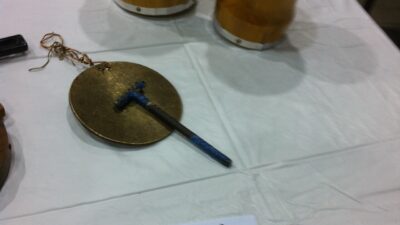
सेमक्कलम् काँसे (वेंकलम्) से ढली एक गोलाकार चपटी थाली/घंटा है, जिसके किनारे पर एक छेद करके डोरी बाँधी जाती है। वादक इस डोरी को बाएँ हाथ में पकड़कर थाली को हवा में लटकाए रखता है और दाएँ हाथ में पकड़े डंडे से उसे आघात करता है। इसकी सतह अक्सर रंगी हुई होती है। बजने पर पूरा धातु-पिंड कंपित होकर एक लंबी, गूँजती हुई धात्विक ध्वनि छोड़ता है।
Description English
The semakkalam is a circular, flat plate/gong cast from bronze (venkalam), with a hole pierced near the rim through which a cord is tied. The player holds this cord in the left hand so the disc hangs freely, and strikes it with a stick held in the right hand. Its surface is often painted. When struck, the entire metal body vibrates to give a long, resonant metallic tone.
Body
Circular flat disc (non-bossed gong)
गोलाकार चपटी थाली (बिना उभार वाला घंटा)
Venkalam — bell-metal / bronze (copper-tin alloy)
वेंकलम् — काँसा / घंटा-धातु (ताँबा-टिन मिश्र धातु)
approx. 15-25 (hand-sized, varies by maker) — exact dimensions vary
None — the flat solid bronze disc is itself the resonating body; suspension by cord lets it vibrate freely
Suspension
डोरी / कयिऱु
Cord (kayiru)
किनारे के छेद से बँधी डोरी, जिसे बाएँ हाथ में पकड़कर थाली को स्वतंत्र रूप से लटकाया जाता है ताकि वह पूरी तरह गूँज सके।
A cord tied through a hole at the rim; held in the left hand so the disc hangs freely and can resonate fully.
Beater
डंडा / कोल्
Striking stick (kol)
Wooden stick — traditionally cut from the calotropis (erukku / आक-मदार) plant
लकड़ी का डंडा — परंपरागत रूप से एरुक्कु (आक/मदार, calotropis) की लकड़ी से बनाया जाता है
Held in the right hand and used to strike the face of the suspended disc
Surface Finish
रंगाई / सजावट
Painted finish
थाली की सतह प्रायः रंगी हुई या सजाई हुई होती है; कई अनुष्ठान-प्रतियों पर धार्मिक चिह्न बने होते हैं।
The face of the disc is often painted or decorated; many ritual examples bear religious markings.
Frets
सेमक्कलम् एक अस्वरात्मक (एकल-स्वर) आघात वाद्य है — इसमें फ्रेट, तार या स्वर-छिद्र नहीं होते। यह किसी राग की धुन नहीं बजाता, बल्कि एक निश्चित गूँजती ध्वनि और लय उत्पन्न करता है।
The semakkalam is a non-melodic single-pitched percussion instrument — it has no frets, strings, or finger holes. It does not play a raga melody but produces a fixed, resonant tone and rhythm.
ध्वनि-चरित्र
SoundTonal Character Hindi
सेमक्कलम् की ध्वनि गहरी, धात्विक और लंबे समय तक गूँजने वाली होती है — एक स्पष्ट 'टण्ण्ण...' जो मंदिर के गर्भगृह और परिक्रमा-पथ में दूर तक फैलती है। इसका स्वर गंभीर, पवित्र और सूचनात्मक (announcing) होता है।
Tonal Character English
The semakkalam's sound is deep, metallic, and long-sustaining — a clear ringing 'taNNN…' that carries far through a temple's sanctum and circumambulatory path. Its tone is grave, sacred, and announcing in character.
Timbre
Bright yet dark bronze ring with a long, shimmering decay; strongly overtone-rich
Range
Essentially a single fundamental pitch with rich overtones (not chromatically variable)
Dynamic Range
From a soft ritual tap marking time to a loud, carrying stroke for processions and signalling
Techniques
सुनने का मार्गदर्शन
The Listening Guideसेमक्कलम् को सुनना हो तो किसी तमिल मंदिर-अनुष्ठान या पंचवाद्यम् प्रदर्शन में उस स्पष्ट, लंबी गूँजती काँसे की 'टण्ण्' को पहचानिए जो शंख और ढोलों के बीच से उभरती है। आघातों को गिनिए — गिनती और विराम ही प्रहर या ताल का संकेत है। यह वाद्य धुन नहीं, पवित्र समय बजाता है।
अंग्रेज़ी में पढ़ें · Read in English
To hear the semakkalam, in any Tamil temple-ritual or panchavadyam video focus on that clear, long-ringing metallic 'taNN' that rises through the layers of conch and mridangam-type drums. Count — how many strokes, then a pause; that count is the signal of a watch or a rhythmic cycle. Its beauty is not in melody but in that sacred regularity.
अन्य विवरण
More DetailsTimbre
Bright yet dark bronze ring with a long, shimmering decay; strongly overtone-rich
रोचक तथ्य
Margin Notesशिव और चंद्रमा का घंटा — सेमक्कलम् को 'सोमंगलम्'/'सोमन कलम्' भी कहते हैं क्योंकि 'सोमन' चंद्रमा का नाम है, और शिव के मस्तक पर चंद्रमा विराजता है। इसी कारण यह वाद्य शिव-प्रतीक माना जाता है, यद्यपि यह अधिकतर वैष्णव मंदिरों में भी बजता है।
The semakkalam is also called 'somangalam'/'soman kalam' because 'soman' is a name for the moon, and the moon rests on Shiva's head. For this reason the instrument is regarded as an emblem of Shiva, even though it is also played largely in Vaishnavite temples.
समय बताने वाला वाद्य — मंदिरों में सेमक्कलम् एक ध्वनि-घड़ी की तरह काम करता है। प्रत्येक याम (प्रहर) पर इसे निर्धारित संख्या में बजाया जाता है — आघातों की गिनती और उसके बाद का विराम भक्तों को बताता है कि दिन-रात का कौन-सा प्रहर चल रहा है।
In temples the semakkalam works like a sonic clock. It is struck a set number of times at each yaamam (watch) — the count of strokes and the following pause tell devotees which watch of the day or night it is.
आंडि और दासर — परंपरा के वाहक — शैव भिक्षुक-गायक (आंडि) बाएँ हाथ में सेमक्कलम् और दाएँ हाथ में डंडा लेकर अनुष्ठान करते हैं। मार्गळि मास में थूत्तियम्पट्टि नायकर (दासर) समुदाय घर-घर पासुरम् गाते हुए इसे शंख और थप्पट्टै के साथ बजाता है।
Saiva mendicant singers (Andis) perform ritual with the semakkalam in the left hand and a stick in the right. In the Margazhi month the Thoothiyampatti Naicker (Dasar) community goes house to house singing Pasurams, playing it with the conch and the thappattai.
केरल का जुड़वाँ — चेंगिला — सेमक्कलम् केरल के 'चेंगिला' का तमिल भाई है। दोनों काँसे के गोलाकार आघात-घंटे हैं और मंदिर-अनुष्ठान में समान भूमिका निभाते हैं — दक्षिण भारत की साझा घन-वाद्य परंपरा का प्रमाण।
The semakkalam is the Tamil sibling of Kerala's 'chengila'. Both are circular bronze struck-gongs and play a similar role in temple ritual — evidence of a shared South Indian idiophone tradition.
सवाल-जवाब
Questions & Answersसेमक्कलम् क्या है?
सेमक्कलम् तमिलनाडु का काँसे (वेंकलम्) से बना एक गोलाकार आघात-घंटा (घन वाद्य/इडियोफ़ोन) है। इसे किनारे की डोरी से बाएँ हाथ में लटकाकर दाएँ हाथ के डंडे से बजाया जाता है, और यह मंदिर-अनुष्ठान में समय-घोषणा तथा जुलूसों के लिए प्रयोग होता है।
सेमक्कलम् कैसे बजाया जाता है?
वादक थाली से बँधी डोरी को बाएँ हाथ में पकड़कर उसे स्वतंत्र रूप से लटकाता है और दाएँ हाथ के डंडे से उसकी सतह पर आघात करता है। डंडा परंपरागत रूप से एरुक्कु (आक/मदार) की लकड़ी का होता है।
सेमक्कलम् और केरल के चेंगिला में क्या संबंध है?
सेमक्कलम् केरल के चेंगिला (चेन्निला) का तमिल समकक्ष है। दोनों ही काँसे के गोलाकार आघात-घंटे हैं और मंदिर-अनुष्ठान में लगभग समान भूमिका निभाते हैं।
सेमक्कलम् का धार्मिक महत्व क्या है?
इसे 'सोमंगलम्'/'सोमन कलम्' भी कहते हैं ('सोमन' अर्थात् चंद्रमा) और यह भगवान शिव से जोड़ा जाता है, क्योंकि शिव के मस्तक पर चंद्रमा विराजता है। यह अधिकतर वैष्णव मंदिरों में बजता है पर शिव-मंदिरों की शोभायात्राओं में भी सुना जाता है।
क्या सेमक्कलम् हिंदी फ़िल्म-संगीत में प्रयोग होता है?
नहीं — सेमक्कलम् एक क्षेत्रीय तमिल मंदिर-अनुष्ठान वाद्य है और इसका बॉलीवुड या हिंदुस्तानी शास्त्रीय संगीत में कोई स्थापित प्रयोग प्रलेखित नहीं है। इसका जीवन मुख्यतः मंदिर, मठ और भक्ति-लोक परंपरा में है।
नमूना-पट्टी
The Specimen Table| नाम | सेमक्कलम् · Semakkalam |
|---|---|
| अन्य नाम | சேமக்கலம் (Tamil) · सोमंगलम् / Somangalam · सोमन कलम् / Soman Kalam · Semakalam (variant spelling) |
| प्रकार | वाद्य · Instruments |
साझा कीजिए · Share this Plate