शास्त्र विंग · वाद्य-पट्टिका · Instrument Plate
साज़-ए-कश्मीर
Saz-e-Kashmir
अन्य नामसाज़-ए-कश्मीर · साज़-इ-कश्मीर · कश्मीरी साज़ · Saaz-e-Kashmir
परिचय
Overviewसाज़-ए-कश्मीर घाटी की सूफ़ियाना मौसीक़ी का इकलौता धनुष-वाद्य है — अख़रोट की लकड़ी से तराशा, हाथी-दाँत से जड़ा, चमड़े से मढ़े गोल पेट वाला एक कमानचे-रूपी साज़, जिसे ज़मीन पर टिकाकर गज़ से बजाया जाता है। इसकी करुण, गायी हुई सी आवाज़ फ़ारस से आई और कश्मीर की आत्मा में घुल गई; यही एकमात्र वाद्य है जो मक़ामों की सूक्ष्म श्रुतियाँ छू सकता है, और आज यही विलुप्ति के कगार पर खड़ा अपनी परंपरा को बचाने की गुहार लगाता है।
अंग्रेज़ी में पढ़ें · Read in English
The Saz-e-Kashmir is the sole bowed instrument of the valley's Sufiana Mausiqi — a kamancheh-like saz carved from walnut, inlaid with ivory, its round belly covered in skin, played with a bow while rested on the ground. Its plaintive, sung-like voice came from Persia and dissolved into the soul of Kashmir; it is the one instrument able to touch the fine microtones of the maqams, and it now stands on the brink of extinction, pleading for its tradition to be saved.
वर्गीकरण
ClassificationNatya Shastra Category
तत (Tata - stringed instruments)
तत (तार) वर्ग में साज़-ए-कश्मीर एक धनुष-आधारित वाद्य यंत्र है जो घोड़े के बालों के गज़ (धनुष) के तारों पर घर्षण से ध्वनि उत्पन्न करता है। यह सूफ़ियाना मौसीक़ी का एकमात्र धनुष-वाद्य है।
In the Tata (stringed) category of Natya Shastra, the Saz-e-Kashmir is a bow-based instrument that produces sound through the friction of a horsehair bow (gaz) against its strings. It is the only bowed instrument in Kashmiri Sufiana Mausiqi.
Western Category
Bowed string instrument (spike fiddle)
Western Family
Kamancheh family — the Kashmiri rendition of the Iranian/Central Asian kamancheh (kemenche), a spiked, round-bodied bowed lute
Sub Classification
बनावट
PhysicalDescription Hindi
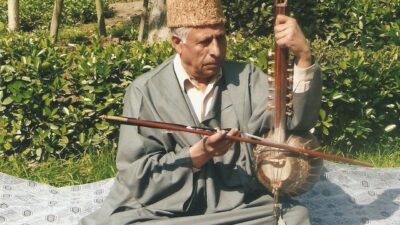
साज़-ए-कश्मीर एक लंबी गर्दन वाला धनुष-वाद्य है जिसका पेट (शरीर) गोल, कटोरे जैसा होता है और उस पर चमड़े/झिल्ली का आवरण चढ़ा रहता है — यही इसे 'पेट-वाली सारंगी/वायलिन' का रूप देता है। इसकी लकड़ी अक्सर अख़रोट की होती है और गर्दन तथा शरीर पर हाथी-दाँत (आइवरी) की नक़्क़ाशी व जड़ाई की जाती है। इसे धनुष (गज़) से बजाया जाता है, जिसे ज़मीन पर टिकाकर, सेलो की तरह सीधा पकड़कर बजाया जाता है, यद्यपि यह वायलिन जितना ही लंबा होता है।
Description English
The Saz-e-Kashmir is a long-necked bowed instrument whose belly (body) is a round, bowl-shaped resonator covered with a skin/parchment membrane — giving it the look of a 'pot-belly fiddle'. It is typically carved from walnut wood, with the neck and body ornamented with ivory carving and inlay. It is played with a bow (gaz) while rested on the ground and held upright like a cello, though it is only about the length of a violin.
Body
Rounded, pot-belly bowl resonator (spike-fiddle form)
गोल, कटोरेनुमा पेट (स्पाइक-फ़िडल आकृति)
Walnut wood (traditional Kashmiri choice), with a skin/parchment soundboard over the bowl; iron/metal fittings; ivory inlay decoration
अख़रोट की लकड़ी (कश्मीर की पारंपरिक पसंद), कटोरे पर चमड़े/झिल्ली का ध्वनि-पटल, धातु की फ़िटिंग और हाथी-दाँत की जड़ाई
60-75
Round wooden bowl with a stretched skin membrane top that projects the bowed tone (like a spike fiddle / kamancheh)
Strings
Primary bowed melody strings
Fine resonating sympathetic strings (tarab) running beneath the main strings that vibrate in sympathy and give the saz its shimmering halo
Some builds add low resonating strings; the saz relies chiefly on its sympathetic tarab set rather than a fixed drone
Bow
गज़
Gaz
Wooden stick strung with horse-tail hair
55-70
Drawn across the strings while the instrument stands upright; the left hand stops the strings on the fretless neck for meend and microtones
Tuning Pegs
खूँटी
Khunti
Large wooden pegs at the head tune the main strings; a row of smaller side pegs tunes the many sympathetic (tarab) strings
Bridge
घुड़च / पुल
Ghurach / Bridge
A bridge seated on the skin membrane transmits string vibration into the bowl resonator
Wood, resting on the stretched skin soundboard
Frets
साज़-ए-कश्मीर में फ्रेट नहीं होते — कलाकार उँगलियों से सीधे तारों को दबाता है, जिससे मक़ाम की सूक्ष्म श्रुतियाँ (माइक्रोटोन) और मींड संभव होती हैं। यही कारण है कि इसे सूफ़ियाना मौसीक़ी का एकमात्र माइक्रोटोन-सक्षम वाद्य माना जाता है।
The Saz-e-Kashmir has no frets — the player presses the strings directly with the fingers, enabling the fine microtones (shrutis) of the maqams and smooth meend. This is precisely why it is regarded as the only microtone-capable instrument in Sufiana Mausiqi.
ध्वनि-चरित्र
SoundTonal Character Hindi
साज़-ए-कश्मीर की आवाज़ नरम, मख़मली और गहराई से करुण होती है — कहा जाता है कि यह मानवीय कंठ के सबसे निकट है और सूफ़ी कलाम की तड़प को सीधे स्वर देती है। तरब तारों की गूँज इसकी ध्वनि पर एक झिलमिलाता प्रभामंडल छोड़ती है।
Tonal Character English
The Saz-e-Kashmir's tone is soft, velvety and deeply plaintive — often said to be the closest to the human voice, giving direct utterance to the yearning of Sufi kalam. The resonance of its tarab strings leaves a shimmering halo over its sound.
Timbre
Warm, nasal-reedy resonance with a shimmering sympathetic-string overtone
Range
Roughly two to three octaves within the maqam framework of Sufiana Mausiqi
Dynamic Range
Intimate and gentle — built for the acoustic mehfil rather than for loud projection
Techniques
सुनने का मार्गदर्शन
The Listening Guideसाज़-ए-कश्मीर का रस लेना हो तो किसी शांत क्षण में सूफ़ियाना मौसीक़ी की एक मक़ाम-प्रस्तुति चुनिए। पकड़िए कि कैसे गज़ की रेखा गायक की आवाज़ के पीछे मींड में फिसलती है और तरब तारों की झिलमिलाहट हर स्वर पर आभा छोड़ती है। संतूर की टंकार और तबले की थाप के बीच साज़ की रोती-गाती लय को पहचानिए — यही इसकी आत्मा है।
अंग्रेज़ी में पढ़ें · Read in English
To hear the Saz-e-Kashmir, choose a quiet moment and a 'maqam' presentation of Sufiana Mausiqi. Notice how the saz's bowed line slides in meend behind the singer's voice, and how the shimmer of its tarab strings leaves a halo over each note. Between the struck santoor and the tabla's pulse, find the saz's plaintive, sung-like line — that is its soul.
परिचय
Identity- Year Of Origin
- 1400
अन्य विवरण
More DetailsTimbre
Warm, nasal-reedy resonance with a shimmering sympathetic-string overtone
रोचक तथ्य
Margin Notesफ़ारसी कमानचे का कश्मीरी अवतार — साज़-ए-कश्मीर मूलतः फ़ारसी कमानचे (kamancheh) का ही रूप है, जो 14वीं-15वीं शताब्दी में सूफ़ी संतों के साथ कश्मीर पहुँचा। कश्मीरी कारीगरों ने इसे अख़रोट की लकड़ी और हाथी-दाँत की जड़ाई से इतना संवार दिया कि यह अपने फ़ारसी मूल से अलग एक स्वतंत्र पहचान बन गया।
The Saz-e-Kashmir is essentially a form of the Persian kamancheh that arrived in Kashmir with Sufi saints in the 14th-15th centuries. Kashmiri craftsmen refined it with walnut wood and ivory inlay so thoroughly that it became a distinct identity apart from its Persian origin.
माइक्रोटोन का एकमात्र वाहक — सूफ़ियाना मौसीक़ी के मक़ामों में कुछ ऐसी सूक्ष्म श्रुतियाँ हैं जिन्हें केवल फ्रेटलेस, धनुष-चालित साज़-ए-कश्मीर ही निकाल सकता है। जैसे-जैसे इसके वादक घटे, कई मक़ामों की ये माइक्रोटोन-श्रुतियाँ व्यवहार से लुप्त होती गईं।
The maqams of Sufiana Mausiqi contain certain fine microtones that only the fretless, bowed Saz-e-Kashmir can produce. As its players have dwindled, these microtonal shades of several maqams have fallen out of practice.
पद्मश्री उस्ताद और सज़नवाज़ घराना — सज़नवाज़ घराना साज़-ए-कश्मीर और सूफ़ियाना मौसीक़ी की जीवंत परंपरा को थामे कुछ घरानों में से एक है। इसके वरिष्ठ उस्ताद ग़ुलाम मोहम्मद सज़नवाज़ को 2013 में पद्मश्री मिला; परिवार की अगली पीढ़ियाँ — मुश्ताक़ अहमद व शबीर अहमद सज़नवाज़ — आज भी यह कला बजा रही हैं।
The Saznawaz Gharana is among the few families still holding the living tradition of the Saz-e-Kashmir and Sufiana Mausiqi. Its senior master Ghulam Mohammad Saznawaz received the Padma Shri in 2013; the family's next generations — Mushtaq Ahmad and Shabir Ahmad Saznawaz — still play the art today.
विलुप्ति के कगार पर एक धरोहर — शोध बताते हैं कि आज सूफ़ियाना मौसीक़ी के केवल गिने-चुने घराने और मुट्ठी भर उस्ताद बचे हैं; कई मक़ाम और ताल पूरी तरह भुला दिए गए हैं। राज-आश्रय के लोप और आर्थिक असुरक्षा ने इस पेशे को टिकाऊ नहीं रहने दिया, जिससे साज़-ए-कश्मीर आज भारत के सबसे संकटग्रस्त वाद्यों में गिना जाता है।
Studies report that only a few gharanas and a handful of masters of Sufiana Mausiqi remain today, and several maqams and taals have been entirely forgotten. The loss of patronage and economic insecurity made the profession unsustainable, leaving the Saz-e-Kashmir among India's most critically endangered instruments.
सवाल-जवाब
Questions & Answersसाज़-ए-कश्मीर क्या है?
साज़-ए-कश्मीर एक लंबी गर्दन वाला धनुष-वाद्य है, जो फ़ारसी कमानचे का कश्मीरी रूप है। गोल, चमड़े से मढ़े पेट और हाथी-दाँत की जड़ाई वाला यह वाद्य कश्मीर की सूफ़ियाना मौसीक़ी (शास्त्रीय संगीत) का एकमात्र धनुष-वाद्य है।
साज़-ए-कश्मीर कैसे बजाया जाता है?
इसे ज़मीन पर टिकाकर, सेलो की तरह सीधा पकड़कर, घोड़े के बालों वाले गज़ (धनुष) से बजाया जाता है। इसमें फ्रेट नहीं होते, इसलिए कलाकार उँगलियों से सीधे तार दबाकर मींड और सूक्ष्म श्रुतियाँ निकालता है।
साज़-ए-कश्मीर सूफ़ियाना मौसीक़ी में इतना महत्वपूर्ण क्यों है?
यह सूफ़ियाना मौसीक़ी का एकमात्र ऐसा वाद्य है जो मक़ामों की सूक्ष्म माइक्रोटोन-श्रुतियाँ निकाल सकता है। इसकी करुण, गायी हुई सी आवाज़ को मानवीय कंठ के सबसे निकट माना जाता है, इसलिए यह सूफ़ी कलाम की संगत का हृदय है।
क्या साज़-ए-कश्मीर आज भी बजाया जाता है?
यह एक अत्यंत लुप्तप्राय वाद्य है। शोध के अनुसार सूफ़ियाना मौसीक़ी के केवल गिने-चुने घराने और मुट्ठी भर उस्ताद बचे हैं। सज़नवाज़ घराना, जिसके उस्ताद ग़ुलाम मोहम्मद सज़नवाज़ को 2013 में पद्मश्री मिला, इसे जीवित रखने वालों में प्रमुख है।
साज़-ए-कश्मीर और फ़ारसी कमानचे में क्या संबंध है?
साज़-ए-कश्मीर मूलतः फ़ारसी कमानचे का ही रूप है, जो 14वीं-15वीं शताब्दी में सूफ़ी इस्लाम के साथ कश्मीर पहुँचा। कश्मीरी कारीगरों ने इसे अख़रोट की लकड़ी और हाथी-दाँत से इतना परिष्कृत बनाया कि इसे 'साज़-ए-कश्मीर' — कश्मीर का साज़ — कहा गया।
नमूना-पट्टी
The Specimen Table| नाम | साज़-ए-कश्मीर · Saz-e-Kashmir |
|---|---|
| अन्य नाम | साज़-ए-कश्मीर · साज़-इ-कश्मीर · कश्मीरी साज़ · Saaz-e-Kashmir · Saz-i-Kashmir · Sāz-i-Kashmir |
| उद्गम | 1400 |
| प्रकार | वाद्य · Instruments |
साझा कीजिए · Share this Plate