शास्त्र विंग · वाद्य-पट्टिका · Instrument Plate
सप्प
Sapp
अन्य नामसप्प / सप · चिक्का / छिक्का (Chhikka / Chikka) · कैंची / खैंचियाँ (Kainchi / Khenchiyan — 'scissors') · साप / सांप (Saap / Saanp — folk 'snake' name)
परिचय
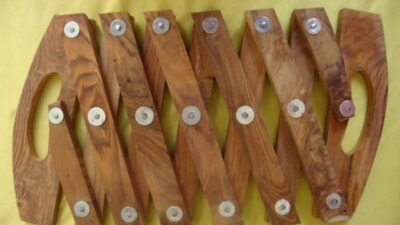
Overviewसप्प पंजाब का वह लोक-वाद्य है जो लकड़ी की X-आकार जाली (कैंची/लेज़ी-टॉन्ग) से बना है; इसे दोनों हाथों से खोलकर झटके से बंद करने पर दर्जनों पट्टियाँ एक साथ टकराकर एक बड़ी, सामूहिक ताली रचती हैं। तार-रहित, झिल्ली-रहित और स्वर-रहित यह घन-वाद्य भांगड़ा और मालवई गिद्धा की धड़कन है, जहाँ नर्तक स्वयं इसे बजाकर संगीत और नृत्य को एक कर देता है।
अंग्रेज़ी में पढ़ें · Read in English
The sapp is that Punjabi folk instrument built from a wooden X-shaped lattice (a scissor / lazy-tongs frame); opened in both hands and snapped shut, its dozens of slats strike together into one big communal clap. Stringless, skinless and pitchless, this idiophone is the pulse of Bhangra and Malwai Giddha, where the dancer plays it himself and so fuses music with movement.
वर्गीकरण
ClassificationNatya Shastra Category
घन (Ghana — solid / self-sounding idiophone instruments)
प्राचीन भारतीय वाद्य-वर्गीकरण (तत, सुषिर, अवनद्ध, घन) में सप्प 'घन वाद्य' है — अर्थात् वह स्वयंवादी यंत्र जो अपने ही ठोस काष्ठ-शरीर के आपस में टकराने से ध्वनि उत्पन्न करता है। इसमें न कोई तार होता है, न कोई ताल-मढ़ी झिल्ली; ध्वनि केवल लकड़ी के लकड़ी से टकराने से जन्म लेती है।
In the ancient Indian four-fold classification (Tata / Sushira / Avanaddha / Ghana), the sapp belongs to the 'Ghana' (solid, self-sounding) category — an idiophone whose sound arises from its own rigid wooden body striking against itself. It has no strings and no stretched membrane; the tone is born purely of wood clapping against wood.
Western Category
Idiophone — concussion clapper (folding lattice clapper)
Western Family
Concussion-idiophone / clapper family (Hornbostel–Sachs 111.1). Mechanically a 'lazy-tongs' (pantograph) lattice of pivoted wooden slats that expands and collapses like a pair of scissors.
Sub Classification
बनावट
PhysicalDescription Hindi
सप्प X-आकार में जुड़ी लकड़ी की चपटी पट्टियों की एक जालीदार 'कैंची' (लेज़ी-टॉन्ग) रचना है। अनेक पट्टियाँ अपने काटने-बिंदुओं पर कीलों/धुरियों से जुड़ी होती हैं, जिससे पूरा ढाँचा अकॉर्डियन की तरह फैलता और सिकुड़ता है। दोनों सिरों पर पकड़ने के लिए दस्ते होते हैं; जब वादक दोनों हाथ पास लाकर ढाँचे को झटके से बंद करता है, तो सारी पट्टियाँ एक साथ टकराकर एक तीखी, सामूहिक 'ताली' जैसी आवाज़ पैदा करती हैं।
Description English
The sapp is a lattice of flat wooden slats joined in a series of X-shapes — a 'lazy-tongs' (pantograph) mechanism. The many slats are pinned at their crossing points, so the whole frame expands and collapses like an accordion or a giant pair of scissors. Handles at each end let the player grip it; when the two hands are brought together and the frame is snapped shut, all the slats strike at once, producing a sharp, collective clap.
Body
Expanding–collapsing X-lattice (scissor / lazy-tongs frame)
फैलने-सिकुड़ने वाला X-जालीदार ढाँचा (कैंची / लेज़ी-टॉन्ग)
Seasoned hardwood — commonly sheesham (Indian rosewood) or similar close-grained wood; usually polished or varnished, sometimes painted in bright folk colours
पक्की, सूखी दृढ़ लकड़ी — प्रायः शीशम या समान घने-रेशे वाली लकड़ी; सामान्यतः पॉलिश या रोगन की हुई, कभी-कभी चटक लोक-रंगों में रँगी हुई
30–45
90–120 (when fully extended)
No enclosed resonating chamber — the sound is a direct percussive report of many hardwood slats clapping simultaneously
Lattice
जाली / पट्टियाँ
Slat lattice
एक-दूसरे को X में काटती अनेक चपटी लकड़ी की पट्टियाँ (प्रायः लगभग एक दर्जन या अधिक क्रॉस)। अंतिम पट्टियाँ ही आपस में टकराकर 'क्लैप' उत्पन्न करती हैं।
Many flat wooden slats crossing one another in X-shapes (commonly a dozen or more crossings). It is the outermost slats that strike together to produce the clap.
Wooden slats riveted / pinned (metal rivets or wooden pegs) at each crossing so the lattice articulates freely
Handles
दस्ते / मुठिये
Grip blocks
Solid end-blocks or bars at both ends of the lattice, held one in each hand; pushing the hands together closes the frame and snaps the clappers shut, pulling them apart re-opens it
Ornamentation
प्रदर्शन-सप्प प्रायः चमकीले रंगों, नक़्क़ाशी, धातु-जड़ाई या छोटे घुँघरू/छल्लों से सजाए जाते हैं, ताकि मंच पर दृश्य-प्रभाव और भी बढ़े।
Performance sapps are often decorated with bright paint, carving, metal inlay, or small jingles/rings, heightening the visual spectacle on stage.
Playing Position
वादक सप्प को दोनों हाथों में पकड़कर प्रायः सिर के ऊपर, छाती के सामने या बग़ल में लहराते हुए ढोल की थाप पर खोलता-बंद करता है — यही भांगड़ा के सबसे आकर्षक दृश्यों में से एक है।
The player holds the sapp in both hands and opens/snaps it in time with the dhol — overhead, in front of the chest, or swept to the side — one of the most eye-catching visuals in Bhangra.
ध्वनि-चरित्र
SoundTonal Character Hindi
सप्प की ध्वनि तीखी, सूखी और लकड़ीली 'खट्ट' जैसी है — अनेक पट्टियों के एक साथ टकराने से एक बड़ी, दूर तक जाने वाली सामूहिक ताली बनती है। यह उत्सव, ऊर्जा और सामूहिक हर्ष की ध्वनि है; इसमें कोई निश्चित स्वर (पिच) नहीं होता, केवल आघात-लय होती है।
Tonal Character English
The sapp's tone is sharp, dry and woody — a big 'clack' in which many slats striking together read as one large, far-carrying communal clap. It is the sound of festivity, energy and collective joy; it has no fixed pitch, only percussive rhythm.
Timbre
Dry, bright, woody knock — a single hardwood clack multiplied and thickened by the whole lattice snapping at once
Range
Unpitched. A single percussive report; expressive range lies in dynamics (soft taps → full-frame snaps) and speed (single accents → rapid rolls)
Dynamic Range
Wide — from a light tick to a cutting crack that projects over dhol and crowd without amplification
Techniques
सुनने का मार्गदर्शन
The Listening Guideसप्प को समझना हो तो किसी बढ़िया भांगड़े को केवल सुनिए मत, देखिए भी। पहले ढोल की मुख्य थाप पकड़िए, फिर देखिए कि सप्प उसी थाप पर तीखी ताली मारता है और बीच की खाली मात्राओं को तड़तड़ाते रोल से भर देता है। ग़ौर कीजिए कि वादक स्वयं नाच रहा है — यही सप्प की आत्मा है: एक ही देह में लय और नृत्य।
अंग्रेज़ी में पढ़ें · Read in English
To understand the sapp, watch a good Bhangra performance rather than only listening. Catch the main dhol beat, then see how the sapp lands its sharp clap on that beat and fills the gaps with rolls. Notice that the player is himself dancing — that is the sapp's soul: rhythm and dance together in a single body.
श्रवण-कक्ष · The Listening Room
देखें-सुनें
Bhangra Empire - Sapp Workshop - Snake by Deep Jandu · 6:33
Young boys performing Bhangra using Sapp · 1:36
Sapp Segment on Bhangra Boliyan || Royal Punjab Group || Dcrust · 1:01
अन्य विवरण
More DetailsTimbre
Dry, bright, woody knock — a single hardwood clack multiplied and thickened by the whole lattice snapping at once
रोचक तथ्य
Margin Notesएक वाद्य, अनेक नाम — सप्प को अलग-अलग क्षेत्रों में सप, साप, साँप, चिक्का/छिक्का, कैंची और खैंचियाँ कहा जाता है। हर नाम या तो इसके साँप-जैसे लपकने से, या कैंची-जैसे X-आकार से जुड़ा है।
The sapp is called, across regions, sapp, saap, saanp, chhikka/chikka, kainchi and khenchiyan. Each name derives either from its snake-like lunge or its scissor-like X-shape.
नर्तक ही वादक — अधिकांश वाद्यों में संगीतकार अलग होता है और नर्तक अलग। सप्प इस विभाजन को तोड़ देता है — भांगड़े में एक ही व्यक्ति नाचते हुए सप्प बजाता है, जिससे लय और गति एक हो जाती हैं।
In most music the instrumentalist and the dancer are separate people. The sapp breaks that divide — in Bhangra one person both dances and plays, fusing rhythm and movement into one.
मालवई गिद्धा की धड़कन — सप्प केवल भांगड़े का नहीं, पंजाब के मालवा क्षेत्र के पुरुष-नृत्य 'मालवई गिद्धा' का भी हस्ताक्षर-वाद्य है, जहाँ इसकी तीखी ताली बोलियों की लय को थामती है।
The sapp is signature not only to Bhangra but also to 'Malwai Giddha', the men's dance of Punjab's Malwa region, where its sharp clap holds the rhythm of the boliyan.
प्रवासी मंचों तक की यात्रा — यू.के., कनाडा और अमेरिका की प्रतियोगी भांगड़ा-संस्कृति ने सप्प को वैश्विक बना दिया; अब विदेशी विश्वविद्यालयों की टीमें तक सप्प-कार्यशालाएँ आयोजित करती हैं।
Competitive Bhangra culture in the UK, Canada and USA carried the sapp global; overseas university teams now even hold sapp workshops.
सवाल-जवाब
Questions & Answersसप्प क्या है?
सप्प (चिक्का/कैंची) पंजाब का एक लकड़ी का लोक-वाद्य है, जो X-आकार में जुड़ी पट्टियों की कैंची-जैसी जाली से बना होता है। इसे दोनों हाथों से खोलकर झटके से बंद करने पर पट्टियाँ आपस में टकराकर एक तीखी, सामूहिक ताली जैसी आवाज़ करती हैं। यह भांगड़ा और मालवई गिद्धा का प्रमुख वाद्य है।
सप्प को कैसे बजाया जाता है?
वादक सप्प के दोनों सिरों के दस्तों को दोनों हाथों में पकड़ता है और ढोल की थाप पर ढाँचे को खोलता-बंद करता है। बंद करने पर तीखी ताली बनती है; तेज़ी से खोलने-बंद करने पर तड़तड़ाती तालियों का रोल बनता है। भांगड़े में नर्तक स्वयं इसे बजाता है।
सप्प को 'कैंची' या 'साँप' क्यों कहते हैं?
'कैंची / खैंचियाँ' नाम इसके X-आकार से आता है, जो कैंची जैसा दिखता है। 'साप/साँप' नाम इसलिए है क्योंकि खुलने पर इसकी जाली साँप की तरह आगे लपकती है — इसी से भांगड़े की प्रसिद्ध 'स्नेक' चाल भी जुड़ी है।
क्या सप्प शास्त्रीय संगीत में प्रयोग होता है?
नहीं। सप्प पूर्णतः लोक-वाद्य है और राग-आधारित हिंदुस्तानी या कर्नाटक शास्त्रीय संगीत का अंग नहीं है। इसका स्वर-रहित, आघात-प्रधान स्वभाव इसे सामूहिक लोक-नृत्य की लय के लिए उपयुक्त बनाता है, न कि राग-संगीत के लिए।
सप्प किन नृत्यों में बजाया जाता है?
सप्प मुख्यतः भांगड़ा (पंजाब का पुरुष फ़सल-नृत्य) और मालवई गिद्धा में बजाया जाता है। यह वैसाखी, विवाह, मेलों और किला रायपुर 'ग्रामीण ओलंपिक' जैसे आयोजनों में गूँजता है।
नमूना-पट्टी
The Specimen Table| नाम | सप्प · Sapp |
|---|---|
| अन्य नाम | सप्प / सप · चिक्का / छिक्का (Chhikka / Chikka) · कैंची / खैंचियाँ (Kainchi / Khenchiyan — 'scissors') · साप / सांप (Saap / Saanp — folk 'snake' name) · Sapp (also: Sap, Saap, Supp) |
| प्रकार | वाद्य · Instruments |
साझा कीजिए · Share this Plate