शास्त्र विंग · वाद्य-पट्टिका · Instrument Plate
फ्ल्यूगलहॉर्न
Flugelhorn
अन्य नामफ्ल्यूगलहॉर्न · फ्लूगेलहॉर्न · Flügelhorn (German spelling) · Flugel horn
परिचय
Overviewफ्ल्यूगलहॉर्न तुरही का शांत, स्वप्निल भाई है — वही अंगुलियाँ, वही स्वर, पर बिल्कुल अलग आत्मा। इसकी चौड़ी शंकु-नली और गहरा माउथपीस तीखी धार को गला देते हैं और पीछे छोड़ जाते हैं एक गर्म, गोल, मखमली आवाज़, जो जैज़ के बैलड और फ़िल्मी संगीत की कोमल मेलडी-पंक्तियों के लिए आदर्श है।
अंग्रेज़ी में पढ़ें · Read in English
The flugelhorn is the trumpet's quiet, dreamy brother — same fingers, same notes, but an entirely different soul. Its wide conical bore and deep mouthpiece melt away the sharp edge and leave behind a warm, round, velvet voice that is ideal for jazz ballads and the tender melodic lines of film music.
वर्गीकरण
ClassificationNatya Shastra Category
सुषिर (Sushira - wind instruments)
फ्ल्यूगलहॉर्न भारतीय वर्गीकरण की दृष्टि से 'सुषिर' (फूँक से बजने वाले) वाद्य वर्ग में आता है, क्योंकि इसमें वादक के होंठों के कंपन (होंठ-रीड) और नली में वायु-स्तंभ से ध्वनि उत्पन्न होती है। नाट्यशास्त्र का यह वर्ग शहनाई, बाँसुरी और तुरही जैसे वाद्यों को समेटता है, जिनसे फ्ल्यूगलहॉर्न स्वर-उत्पादन के सिद्धांत में मिलता-जुलता है।
By Indian classification, the flugelhorn falls in the 'Sushira' (blown/wind) category, since its sound arises from the vibration of the player's lips (a lip-reed) energising a column of air in the tubing. This Natya Shastra class covers instruments such as the shehnai, bansuri and turahi (natural trumpet), with which the flugelhorn shares its basic principle of tone production, though it is a Western valved brass import.
Western Category
Brass wind instrument (valved bugle / labrosone aerophone)
Western Family
Bugle / saxhorn family — a wide-conical-bore soprano brass, close cousin of the B-flat trumpet and cornet
Sub Classification
बनावट
PhysicalDescription Hindi
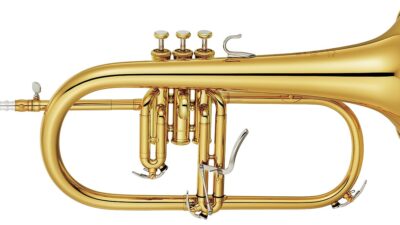
फ्ल्यूगलहॉर्न एक पीतल का फूँक-वाद्य है जो देखने में तुरही (ट्रम्पेट) जैसा लगता है, किंतु इसकी नली अधिक चौड़ी और शंकु-आकार (कोनिकल) होती है और घंटी (बेल) बड़ी होती है। यही चौड़ी शंकु-नली इसे तुरही की चमकीली, तीखी ध्वनि के बजाय एक कोमल, मखमली, गोल स्वर देती है। इसमें तीन पिस्टन वाल्व होते हैं (कभी-कभी चौथा), और वादक एक गहरे, कीप-आकार के माउथपीस में होंठों का कंपन देकर बजाता है।
Description English
The flugelhorn is a brass wind instrument that looks like a trumpet but has wider, more conical tubing and a larger bell. This broad conical bore is precisely what gives it a mellow, velvety, rounded tone in place of the trumpet's bright, piercing edge. It has three piston valves (occasionally a fourth) and is played by buzzing the lips into a deep, funnel-shaped mouthpiece.
Body
Compact wrapped brass tubing, like a stockier trumpet, ending in a wide flaring bell
तुरही जैसी परंतु अधिक गठीली, लिपटी हुई पीतल की नली, जो एक चौड़ी फैली घंटी में समाप्त होती है
Brass (yellow brass most common; rose/gold brass and silver-plated finishes also made)
पीतल (सामान्यतः पीली पीतल; गुलाबी/स्वर्ण पीतल और चाँदी-मुलम्मा वाले रूप भी बनते हैं)
Overall length of tubing roughly 130 (uncoiled); wrapped instrument about 30-35 cm long
The conical bore itself acts as the resonating body — its steadily widening cross-section shapes the dark, warm timbre
Bore And Bell
Predominantly conical (widening) bore — the defining feature that separates it from the trumpet's largely cylindrical bore
मुख्यतः शंकु-आकार (लगातार चौड़ी होती) नली — यही वह विशेषता है जो इसे तुरही की बेलनाकार नली से अलग करती है और मधुर स्वर देती है।
Valves
पिस्टन वाल्व
Piston valves
3 (some professional models add a 4th valve to improve low-register tuning)
तीन पिस्टन वाल्व वायु-नली की लंबाई बदलकर स्वर बदलते हैं। इनकी अंगुली-विन्यास (फिंगरिंग) बी-फ्लैट तुरही के समान होती है, इसलिए तुरही वादक सहजता से फ्ल्यूगलहॉर्न पर आ जाते हैं।
Three piston valves change pitch by rerouting the air through extra lengths of tubing. The fingering is identical to the B-flat trumpet, so trumpet players switch to flugelhorn with ease.
Mouthpiece
माउथपीस (मुखिका)
Mouthpiece
फ्ल्यूगलहॉर्न का माउथपीस तुरही की तुलना में गहरा और अधिक कीप-आकार (V-आकार) का होता है। यही गहराई कोमल, अँधेरी टिम्बर के लिए ज़िम्मेदार है।
The flugelhorn mouthpiece is deeper and more funnel-shaped (V-shaped cup) than a trumpet's; that depth is largely responsible for its darker, softer timbre.
Brass, usually silver- or gold-plated
Leadpipe And Slides
लीडपाइप एवं ट्यूनिंग स्लाइड
Leadpipe and tuning slides
मुख्य ट्यूनिंग स्लाइड से समग्र स्वर मिलाया जाता है और वाल्व-स्लाइडों से अलग-अलग स्वरों की सूक्ष्म शुद्धि की जाती है — जैसे तुरही में होती है।
A main tuning slide sets overall pitch and the valve slides fine-tune individual notes, exactly as on a trumpet.
Frets
फ्ल्यूगलहॉर्न पर फ्रेट नहीं होते; स्वरों के बीच का सूक्ष्म परिवर्तन (लिप-स्लर, पोर्टामेंटो) वादक होंठों के दबाव और वायु-नियंत्रण से करता है, जिससे भारतीय 'मींड' जैसी झलक भी संभव है।
The flugelhorn is naturally 'fretless' — smooth transitions between notes (lip slurs, portamento) are shaped by embouchure and air control, allowing even a hint of Indian-style meend on sustained melodic lines.
ध्वनि-चरित्र
SoundTonal Character Hindi
फ्ल्यूगलहॉर्न की आवाज़ गर्म, गोल, मखमली और अंतरंग होती है — मानो तुरही ने अपनी तीखी धार त्याग कर एक फुसफुसाती, स्वप्निल कोमलता ओढ़ ली हो। मध्य और निचले स्वरों में यह सबसे मधुर सुनाई देती है; इसीलिए इसे धीमी, भावुक धुनों और गीत की मुख्य पंक्ति (मेलडी) के लिए चुना जाता है।
Tonal Character English
The flugelhorn's voice is warm, round, velvety and intimate — as though a trumpet had shed its bright edge for a hushed, dreamy softness. It sings most beautifully in the middle and lower register, which is why it is chosen for slow, emotional melodies and lyrical lead lines.
Timbre
Dark, mellow, covered; less brilliant and more diffuse than the trumpet or cornet
Range
Practical range of roughly two-and-a-half octaves (about F-sharp below middle C up to high B-flat), similar to the B-flat trumpet but weaker and less secure in the extreme high register
Dynamic Range
Excels at soft to medium dynamics; prized for pianissimo lyricism rather than loud, cutting projection
Techniques
सुनने का मार्गदर्शन
The Listening Guideफ्ल्यूगलहॉर्न को पहचानना हो तो किसी धीमे जैज़-बैलड से शुरू कीजिए — इसकी गोल, मखमली आवाज़ तुरही की चमकीली धार से बिल्कुल अलग सुनाई देती है। फिर एक तुरही रिकॉर्डिंग से तुलना कीजिए; अंतर एक ही पल में स्पष्ट हो जाएगा। अंत में पुराने हिंदी फ़िल्मी ऑर्केस्ट्रा के कोमल ब्रास हिस्सों को ध्यान से सुनिए।
अंग्रेज़ी में पढ़ें · Read in English
To understand the flugelhorn, begin with a slow jazz ballad — a melody like 'Moon River' unlocks its velvet soul. Then compare it with a bright trumpet recording; the difference is immediate — the flugelhorn whispers where the trumpet calls. Finally, listen closely to the soft brass interludes of golden-age Hindi film music, where this round, gentle voice can sometimes be heard caressing the melody.
परिचय
Identity- Year Of Origin
- 1820
अन्य विवरण
More DetailsTimbre
Dark, mellow, covered; less brilliant and more diffuse than the trumpet or cornet
रोचक तथ्य
Margin Notesतुरही का 'नरम जुड़वाँ' — फ्ल्यूगलहॉर्न और तुरही की स्वर-श्रेणी एवं अंगुली-विन्यास समान होते हैं, किंतु अंतर केवल नली की बनावट का है — तुरही की नली मुख्यतः बेलनाकार होती है (चमकीला स्वर), जबकि फ्ल्यूगलहॉर्न की मुख्यतः शंकु-आकार (मधुर, गोल स्वर)।
The flugelhorn and trumpet share range and fingering; the difference is only in the bore — the trumpet's tubing is mostly cylindrical (bright tone), while the flugelhorn's is mostly conical (mellow, round tone).
शिकार से मंच तक — फ्ल्यूगलहॉर्न का पूर्वज एक बड़ा शिकार-बिगुल था। वाल्व जुड़ने से यह पूर्ण-स्वर वाद्य बना और ब्रास बैंड तथा बाद में जैज़ में पहुँचा — शिकार के संकेत से लेकर बैलड की फुसफुसाहट तक की यात्रा।
The flugelhorn's ancestor was a large hunting bugle. The addition of valves turned it into a fully melodic instrument that entered brass bands and later jazz — a journey from hunting signals to the whisper of a ballad.
फ़िल्मी ऑर्केस्ट्रा की गोवा-मंडली — हिंदी फ़िल्म-संगीत के स्वर्णकाल में मुंबई के ब्रास सेक्शन को मुख्यतः गोवा के पश्चिमी-प्रशिक्षित वादक भरते थे। इन्हीं की बहुमुखी दक्षता के कारण तुरही, कॉर्नेट एवं अवसरगत फ्ल्यूगलहॉर्न जैसे पश्चिमी ब्रास वाद्य भारतीय धुनों में सहज घुल-मिल गए।
In the golden age of Hindi film music, Bombay's brass section was staffed largely by Western-trained Goan musicians. Their versatility is why Western brass instruments — trumpet, cornet and the occasional flugelhorn — blended so naturally into Indian melodies.
चौथा वाल्व — निचले स्वरों की शुद्धि — कुछ पेशेवर फ्ल्यूगलहॉर्न में तीन के स्थान पर चार पिस्टन वाल्व होते हैं। चौथा वाल्व निचले स्वरों की सुरीलेपन (इंटोनेशन) को सुधारता है, जिससे वादक गहरे रजिस्टर में भी शुद्ध स्वर बजा सके।
Some professional flugelhorns have four piston valves instead of three. The fourth valve corrects the intonation of the lowest notes, letting the player stay in tune even in the deep register.
सवाल-जवाब
Questions & Answersफ्ल्यूगलहॉर्न क्या है?
फ्ल्यूगलहॉर्न एक पीतल का फूँक-वाद्य है जो तुरही जैसा दिखता है, किंतु इसकी चौड़ी शंकु-नली और गहरे माउथपीस के कारण इसकी आवाज़ अधिक कोमल, गोल और मखमली होती है। इसमें तीन (कभी-कभी चार) पिस्टन वाल्व होते हैं और यह सामान्यतः बी-फ्लैट में बजता है।
फ्ल्यूगलहॉर्न और तुरही में क्या अंतर है?
दोनों की स्वर-श्रेणी और अंगुली-विन्यास समान होते हैं, इसलिए तुरही वादक सहजता से फ्ल्यूगलहॉर्न बजा सकते हैं। अंतर नली की बनावट का है — तुरही की नली मुख्यतः बेलनाकार होती है (चमकीला, तीखा स्वर), जबकि फ्ल्यूगलहॉर्न की मुख्यतः शंकु-आकार होती है (कोमल, गोल, मधुर स्वर)।
क्या फ्ल्यूगलहॉर्न का हिंदी फ़िल्म-संगीत में प्रयोग हुआ है?
हाँ, किंतु विरल रूप से। स्वर्णकालीन हिंदी फ़िल्मी ऑर्केस्ट्रा के पश्चिमी ब्रास सेक्शन को मुख्यतः गोवा-मूल वादक भरते थे। ये कुशल वादक जब किसी धुन को अधिक कोमल, गोल रंग देना चाहते, तो तुरही के स्थान पर कभी-कभी फ्ल्यूगलहॉर्न बजाते। इसका प्रयोग अवसरगत एवं प्रायः अनाम रहा।
फ्ल्यूगलहॉर्न किस संगीत-शैली में सबसे प्रसिद्ध है?
जैज़ में, विशेषकर धीमे बैलड में। माइल्स डेविस ('स्केचेज़ ऑफ़ स्पेन'), आर्ट फ़ार्मर, क्लार्क टेरी और चक मांजियोने ('फ़ील्स सो गुड') जैसे कलाकारों ने फ्ल्यूगलहॉर्न को इसकी मखमली, गीतात्मक पहचान दी। यह ब्रिटिश-शैली ब्रास बैंड में भी एक स्थायी एकल-वाद्य है।
फ्ल्यूगलहॉर्न नाम का अर्थ क्या है?
यह नाम जर्मन शब्द 'फ्लूगेल' (पंख या पार्श्व) से आया है। मूल रूप से यह एक शिकार-बिगुल था जिससे शिकार-दल के पार्श्वों (फ्लूगेल) को संकेत दिया जाता था; 19वीं सदी में वाल्व जुड़ने के बाद यह पूर्ण-स्वर वाला संगीत वाद्य बन गया।
नमूना-पट्टी
The Specimen Table| नाम | फ्ल्यूगलहॉर्न · Flugelhorn |
|---|---|
| अन्य नाम | फ्ल्यूगलहॉर्न · फ्लूगेलहॉर्न · Flügelhorn (German spelling) · Flugel horn |
| उद्गम | 1820 |
| प्रकार | वाद्य · Instruments |
साझा कीजिए · Share this Plate