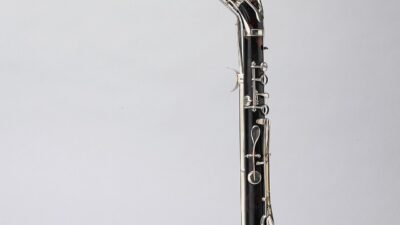
शास्त्र विंग · वाद्य-पट्टिका · Instrument Plate
इंग्लिश हॉर्न
Cor anglais (English Horn)
अन्य नामइंग्लिश हॉर्न · आल्टो ओबो (Alto Oboe) · Cor anglais (also: English Horn, Corno inglese)
परिचय
Overviewइंग्लिश हॉर्न (कोर आँग्ले) ओबो-परिवार का आल्टो काष्ठ-वाद्य है, जिसका नाशपाती-आकार का घंटा उसे ढकी, गोल, विषादमय आवाज़ देता है — मानवीय कंठ के सबसे निकट। पश्चिमी ऑर्केस्ट्रा में यह एकाकीपन और स्मृति का स्वर है; हिंदी फ़िल्म संगीत में इसका उपयोग सीमित पर प्रलेखित रहा — पश्चिमी-शैली बैकग्राउंड स्कोर में गर्म, शोकपूर्ण रंग भरने के लिए। दोहरी-पत्ती के नाते यह भारत की शहनाई और नादस्वरम का दूर का भाई है।
अंग्रेज़ी में पढ़ें · Read in English
The cor anglais (English horn) is the alto woodwind of the oboe family, whose pear-shaped bell gives it a covered, rounded, mournful voice — among the closest of instruments to the human voice. In the Western orchestra it is the sound of solitude and memory; in Hindi film music its use has been limited but documented, lending a warm, grieving colour to Western-style background scores. As a double-reed, it is a distant brother of India's shehnai and nadaswaram.
वर्गीकरण
ClassificationNatya Shastra Category
सुषिर (Sushira - wind instruments)
नाट्यशास्त्र की चार वाद्य-श्रेणियों में इंग्लिश हॉर्न 'सुषिर' (फूँक से बजने वाले, खोखले) वर्ग में आता है — जिसमें बाँसुरी, शहनाई और नादस्वरम जैसे वाद्य आते हैं। यह हवा को कंपित कर के ध्वनि उत्पन्न करता है, यहाँ दो पत्तियों (डबल रीड) के कंपन से।
Among the four Natya Shastra instrument categories, the cor anglais belongs to the 'Sushira' (hollow, breath-blown) class — the same family that in Indian terms holds the bansuri, shehnai, and nadaswaram. It sounds by setting a column of air in vibration, here through the buzzing of a double reed.
Western Category
Woodwind — double-reed aerophone
Western Family
Oboe family (the alto member, pitched in F, a perfect fifth below the oboe)
Sub Classification
बनावट
PhysicalDescription Hindi
इंग्लिश हॉर्न ओबो-परिवार का आल्टो सदस्य है — ओबो से लगभग डेढ़ गुना लंबा (करीब 90 सेमी) एक शंक्वाकार (कोनिकल) नली वाला काष्ठ-वाद्य, जिसके सिरे पर एक विशिष्ट नाशपाती के आकार का घंटा (बल्ब बेल) होता है। इसी बल्ब-बेल के कारण इसकी आवाज़ ढकी, गोल और उदास लगती है। दो-पत्ती वाली रीड सीधे नली में नहीं, बल्कि एक मुड़ी हुई धातु की नली (बोकल/क्रूक) पर लगती है।
Description English
The cor anglais is the alto of the oboe family — a conical-bore woodwind roughly one-and-a-half times the length of the oboe (about 90 cm), capped by a distinctive pear-shaped 'bulb' bell. It is this bulb bell that gives the instrument its covered, rounded, mournful voice. Its double reed is not fixed straight into the body but onto a curved metal tube called the bocal (or crook).
Body
Straight three-jointed tube (upper joint, lower joint, bulb bell) — historically also built curved or angled
सीधी, तीन जोड़ों वाली नली (ऊपरी जोड़, निचला जोड़, बल्ब बेल) — ऐतिहासिक रूप से मुड़े और कोणीय रूप भी बने
African blackwood (grenadilla) or cocobolo; keywork of silver-plated nickel-silver
अफ़्रीकी ब्लैकवुड (ग्रेनाडिला) या कोकोबोलो; चाबियाँ (कीज़) चाँदी-चढ़ी निकल-सिल्वर की
88-92
Conical internal bore ending in a bulbous 'Liebesfuß' (pear/love-foot) bell that filters overtones for a veiled tone
Bore
Conical (widening) bore
शंक्वाकार (धीरे-धीरे चौड़ी होती) नली
The gradually widening conical bore, wider than the oboe's, lowers the pitch by a fifth and warms the timbre
ओबो से चौड़ी, धीरे-धीरे फैलती शंक्वाकार नली स्वर को पाँचवें सुर नीचे लाती है और लय को गर्माहट देती है
Reed
दोहरी पत्ती (डबल रीड)
Double reed
Two bound blades of cane (Arundo donax)
ओबो की रीड से बड़ी और चौड़ी दोहरी बेंत-पत्ती, जिसे होंठों के बीच दबाकर फूँकने से दोनों पत्तियाँ आपस में कंपित होती हैं और ध्वनि बनती है — शहनाई की पत्ती-प्रणाली से मिलती-जुलती।
A double blade of cane, broader than the oboe's, held between the lips; blowing makes the two blades beat against each other to produce sound — conceptually akin to the reed of the Indian shehnai.
Bocal
बोकल / क्रूक
Bocal (crook)
Curved metal tube (usually brass or nickel-silver)
एक छोटी, मुड़ी हुई धातु की नली जो रीड को वाद्य के शरीर से जोड़ती है और वादक के होंठ तक पहुँचाती है — ओबो में यह सीधी होती है, इंग्लिश हॉर्न में मुड़ी।
A short curved metal tube that joins the reed to the body and brings it toward the player's lips — straight on the oboe, curved on the cor anglais.
Bell
बल्ब बेल (नाशपाती-घंटा / Liebesfuß)
Bulb bell (pear-shaped, Liebesfuß)
इसका सबसे पहचानने योग्य अंग — गोल, नाशपाती जैसा घंटा जो कुछ ऊँची तरंगों को दबाकर वाद्य को उसकी विशिष्ट ढकी, विषादमय आवाज़ देता है।
Its most recognisable feature — the rounded, pear-shaped bell that muffles certain high overtones, giving the instrument its signature veiled, plaintive voice.
Keywork
चाबी-प्रणाली (कीवर्क)
Keywork
ओबो जैसी ही जटिल चाबी-प्रणाली (मुख्यतः फ्रेंच/कंज़र्वेटॉयर प्रणाली) जो अनेक छिद्रों को उँगलियों की पहुँच में लाती है।
A complex system of keys (mostly the French/Conservatoire system, shared with the oboe) that brings many tone-holes within reach of the fingers.
Frets
काष्ठ-वाद्य होने के कारण इसमें फ्रेट या तार नहीं होते; सुर छिद्रों को खोलने-बंद करने, फूँक के दबाव और होंठों की पकड़ (एम्बशर) से बनते हैं — जिससे सूक्ष्म स्वर-लचक और मीड-सी झलक संभव होती है।
Being a woodwind, it has no frets or strings; pitch comes from opening and closing tone-holes, breath pressure, and lip control (embouchure) — allowing subtle bending of pitch and a hint of meend-like glide.
ध्वनि-चरित्र
SoundTonal Character Hindi
इंग्लिश हॉर्न की आवाज़ ओबो की तुलना में गहरी, गोल, ढकी और गहन विषाद से भरी होती है। यही कारण है कि संगीतकार इसे अकेलेपन, स्मृति, विरह और चरवाहे की दूर से आती धुन जैसे भावों के लिए चुनते हैं — मानो कोई मानवीय आवाज़ धीमे से सिसक रही हो।
Tonal Character English
Compared with the oboe, the cor anglais is darker, rounder, more veiled, and deeply melancholic. This is why composers reach for it to voice solitude, memory, longing, and the distant song of a shepherd — as though a human voice were quietly grieving.
Timbre
Warm, reedy, veiled and mournful; nasal edge softened by the pear-shaped bell
Range
Written: b (below middle C) to a''' in treble clef; sounding a perfect fifth lower, roughly E3 to D6
Dynamic Range
Expressive but gentler than the oboe — best in tender, sustained, cantabile lines; less brilliant at full fortissimo
Techniques
सुनने का मार्गदर्शन
The Listening Guideइंग्लिश हॉर्न का रस लेना हो तो पहले दिवोरझाक की 'न्यू वर्ल्ड' सिंफनी का 'लार्गो' सुनिए — वही घर की याद दिलाती अमर धुन इसी वाद्य की है। फिर ओबो और इंग्लिश हॉर्न को अगल-बगल सुनकर फ़र्क पहचानिए: इंग्लिश हॉर्न गहरा, गोल, अधिक उदास। और अंत में किसी पुरानी हिंदी फ़िल्म के विषादमय पृष्ठभूमि-संगीत में उस 'दूर से रोती-सी' आवाज़ को खोजिए।
अंग्रेज़ी में पढ़ें · Read in English
To understand the cor anglais, first hear the slow 'Largo' of Dvořák's 'New World' Symphony — that immortal, home-longing melody is this very instrument. Then listen to the oboe and cor anglais side by side: the cor anglais will sound darker, rounder, and sadder. Finally, in the melancholy background passage of an old Hindi film, try to catch that 'distant, weeping' voice — often it is this oboe-family colour.
परिचय
Identity- Year Of Origin
- 1720
अन्य विवरण
More DetailsTimbre
Warm, reedy, veiled and mournful; nasal edge softened by the pear-shaped bell
रोचक तथ्य
Margin Notesनाम का रहस्य — न अंग्रेज़ी, न हॉर्न — इंग्लिश हॉर्न का नाम संगीत के सबसे मज़ेदार भ्रमों में से एक है। यह इंग्लैंड में नहीं बना और न ही यह नरसिंहा (हॉर्न) है — यह ओबो-परिवार का काष्ठ-वाद्य है। सबसे मान्य व्याख्या यह है कि फ्रेंच 'कोर आँग्ले' (कोणीय हॉर्न, क्योंकि शुरुआती वाद्य कोण में मुड़ा होता था) को 'कोर आँग्ले' यानी 'अंग्रेज़ी हॉर्न' समझ लिया गया।
The instrument's name is one of music's most delightful confusions. It was not made in England, nor is it a horn — it is a woodwind of the oboe family. The most accepted explanation is that the French 'cor anglé' (angled horn, since early instruments were bent at an angle) was misread as 'cor anglais', i.e. 'English horn'.
बाख का 'ओबो दा कच्चा' पूर्वज — आधुनिक इंग्लिश हॉर्न का पूर्वज 'ओबो दा कच्चा' (शिकार-ओबो) था, जिसकी घुमावदार, चमड़े से मढ़ी नली को जोहान सेबास्तियन बाख ने अपने पवित्र संगीत (जैसे मैथ्यू पैशन) में प्रयोग किया। पेरिस में लगभग 1830 के दशक में ऑन्री ब्रॉ ने इसे सीधा, नाशपाती-घंटे वाला आधुनिक रूप दिया।
The ancestor of the modern cor anglais was the 'oboe da caccia' (hunting oboe), whose curved, leather-covered tube J. S. Bach used in his sacred music (such as the St. Matthew Passion). In Paris around the 1830s, Henri Brod gave it the straight, bulb-belled modern form.
बंबई स्टूडियो में पश्चिमी वादक — 1940-1970 के दशकों में हिंदी फ़िल्म-ऑर्केस्ट्रा में ओबो-परिवार के वाद्य प्रायः गोवा और एंग्लो-इंडियन वादकों द्वारा बजाए जाते थे, जो पश्चिमी संगीत-शिक्षा में पले थे। इसी परंपरा में इंग्लिश हॉर्न विषादमय बैकग्राउंड अंशों का एक विरल पर प्रलेखित रंग बना।
In the 1940s-1970s, oboe-family instruments in Hindi film orchestras were often played by Goan and Anglo-Indian musicians trained in the Western tradition. Within this lineage the cor anglais became a rare but documented colour for melancholy background passages.
शहनाई का पश्चिमी सगोत्र — इंग्लिश हॉर्न और भारत की शहनाई दोनों ही 'दोहरी पत्ती' वाले फूँक-वाद्य हैं। यद्यपि इनकी बनावट, स्वर-प्रणाली और परंपरा भिन्न हैं, दोनों की आवाज़ का मूल एक ही है — दो बेंत-पत्तियों का आपस में कंपन, जो मानवीय कंठ जैसी गायन-लय रचता है।
The cor anglais and India's shehnai are both 'double-reed' wind instruments. Though their construction, tuning systems, and traditions differ, the root of their sound is the same — two cane blades beating against each other to spin a vocal, singing line.
सवाल-जवाब
Questions & Answersइंग्लिश हॉर्न क्या है?
इंग्लिश हॉर्न ओबो-परिवार का आल्टो काष्ठ-वाद्य है — दोहरी पत्ती (डबल रीड) से बजने वाला, ओबो से बड़ा और पाँचवें सुर नीचे। इसके नाशपाती-आकार के घंटे के कारण इसकी आवाज़ ढकी, गोल और उदास होती है।
इंग्लिश हॉर्न का नाम 'अंग्रेज़ी' और 'हॉर्न' क्यों है जब यह न अंग्रेज़ी है न हॉर्न?
यह नाम एक भ्रामक अनुवाद है। सबसे मान्य व्याख्या यह है कि फ्रेंच 'कोर आँग्ले' (कोणीय हॉर्न, क्योंकि शुरुआती वाद्य मुड़े होते थे) को 'anglais' (अंग्रेज़ी) समझ लिया गया।
क्या इंग्लिश हॉर्न का उपयोग हिंदी फ़िल्म संगीत में हुआ है?
हाँ, पर सीमित रूप से। 1940-1970 के दशकों में पश्चिमी-शैली स्टूडियो-ऑर्केस्ट्रा में ओबो-परिवार के वाद्य विषादमय पृष्ठभूमि-संगीत और अंतराल में रंग भरते थे। ओबो अधिक आम रहा; इंग्लिश हॉर्न का प्रयोग विरल पर प्रलेखित रहा।
इंग्लिश हॉर्न और शहनाई में क्या संबंध है?
दोनों 'दोहरी पत्ती' वाले फूँक-वाद्य हैं — दो बेंत-पत्तियों के कंपन से गाने-सी आवाज़ बनाते हैं। बनावट और परंपरा अलग हैं, पर ध्वनि-सिद्धांत एक ही है। इंग्लिश हॉर्न को शहनाई-नादस्वरम का पश्चिमी सगोत्र कहा जा सकता है।
इंग्लिश हॉर्न का सबसे प्रसिद्ध एकल-अंश कौन सा है?
दिवोरझाक की 'न्यू वर्ल्ड' सिंफनी के धीमे 'लार्गो' का इंग्लिश हॉर्न एकल सबसे प्रसिद्ध है — घर की याद और लालसा की अमर धुन। सिबेलियस का 'स्वान ऑफ़ तुओनेला' और रॉसिनी का 'विलियम टेल' भी विख्यात हैं।
नमूना-पट्टी
The Specimen Table| नाम | इंग्लिश हॉर्न · Cor anglais (English Horn) |
|---|---|
| अन्य नाम | इंग्लिश हॉर्न · आल्टो ओबो (Alto Oboe) · Cor anglais (also: English Horn, Corno inglese) |
| उद्गम | 1720 |
| प्रकार | वाद्य · Instruments |
साझा कीजिए · Share this Plate