शास्त्र विंग · वाद्य-पट्टिका · Instrument Plate
चेंगिला
Chengila
अन्य नामचेन्नला · चेंगला · Cennala · Chengala
परिचय
Overviewचेंगिला केरल की मंदिर-वाद्य परंपरा की काँसे से ढली एक चपटी, गोल घंटी है — एक घन वाद्य जो सुर नहीं, ताल रचता है। एक हाथ की कलाई से डोरी में लटकी और दूसरे हाथ की छोटी छड़ी से आघातित, यह पंचवाद्यम्, कथकली, कृष्णनाट्टम और सोपान संगीत में समय का अटल आधार देती है। तमिल सेमक्कलम का यह केरलीय समकक्ष उत्सव-लय का मौन किंतु अपरिहार्य हृदय है।
अंग्रेज़ी में पढ़ें · Read in English
The chengila is a flat, circular bell-metal gong cast in Kerala's temple-instrument tradition — an idiophone that shapes rhythm rather than melody. Hung by a cord from one wrist and struck with a short stick in the other hand, it provides the unwavering foundation of time in Panchavadyam, Kathakali, Krishnanattam and Sopana Sangeetham. This Kerala equivalent of the Tamil semakkalam is the silent yet indispensable heart of festive rhythm.
वर्गीकरण
ClassificationNatya Shastra Category
घन (Ghana - solid/struck idiophones)
नाट्यशास्त्र के घन वर्ग में चेंगिला एक ठोस, स्वतः-अनुनादी वाद्य है जो अपने ही धातु-शरीर के कंपन से ध्वनि उत्पन्न करता है — इसमें न कोई तार होता है, न कोई खिंची हुई झिल्ली। इसे छड़ी से आघात कर बजाया जाता है और यह मुख्यतः ताल (लय) चिह्नित करने वाला वाद्य है।
In the Ghana (solid/idiophone) category of the Natya Shastra, the chengila is a self-resonating instrument that produces sound from the vibration of its own metal body — it has no strings and no stretched membrane. It is struck with a stick and functions primarily as a time-keeping (tala-marking) instrument.
Western Category
Idiophone (struck gong)
Western Family
Gong family (flat, bossless bell-metal disc gong — akin in role to the Tamil semakkalam)
Sub Classification
बनावट
PhysicalDescription Hindi
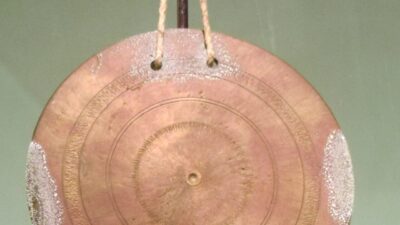
चेंगिला काँसे (घंटा-धातु — ताँबे और टिन की मिश्रधातु) से ढली एक मोटी, गोल, चपटी तश्तरीनुमा घंटी है। इसमें बीच में कोई उभार (boss) नहीं होता; इसके किनारे पर एक छेद होता है जिसमें डोरी पिरोकर इसे एक हाथ की कलाई से लटकाया जाता है, और दूसरे हाथ में पकड़ी छोटी, ठोस लकड़ी की छड़ी से इसे आघात किया जाता है।
Description English
The chengila is a thick, circular, flat disc-shaped gong cast from bell-metal (bronze — an alloy of copper and tin). It has no central boss; a hole near its rim carries a cord by which it is looped over the wrist of one hand, while a short, stout wooden stick held in the other hand strikes it.
Body
Circular flat disc (bossless gong)
गोल चपटी तश्तरी (बिना उभार वाला गोंग)
Bell-metal / bronze (copper-tin alloy)
घंटा-धातु / काँसा (ताँबा-टिन मिश्रधातु)
diameter approx 20-30 cm (varies by maker)
None — the solid metal disc is itself the resonating body; sound comes from the vibration of the bell-metal
Strings
Chengila has no strings — it is an idiophone, not a chordophone
Not applicable — no sympathetic strings on an idiophone
Not applicable
Bow
कोल् / छड़ी
Striking stick (kol)
Short, stout wooden wand
15-25 (approx, short hand-held wand)
Held in the free hand and used to strike the face of the suspended disc; not a bow — chengila is struck, not bowed
Tuning Pegs
लागू नहीं
None
The chengila has no tuning pegs; its single metallic pitch is fixed by the size, thickness and alloy of the cast disc
Bridge
लागू नहीं
None
No bridge — an idiophone transmits vibration directly through its own body
N/A
Frets
चेंगिला में फ्रेट, तार या सुर-स्थान नहीं होते। यह एक ही धात्विक ध्वनि उत्पन्न करता है; कलाकार आघात की तीव्रता और डिस्क को हाथ/बाँह से दबाकर (मफ़ल करके) खुली गूँज या दबी हुई सपाट ध्वनि के बीच अंतर करता है।
The chengila has no frets, strings, or pitch positions. It produces a single metallic tone; the player varies only the force of the stroke and whether the disc rings freely or is damped against the forearm to produce an open ring versus a flat, muted tone.
ध्वनि-चरित्र
SoundTonal Character Hindi
चेंगिला की ध्वनि तीखी, धात्विक और भेदक है — काँसे की एक स्पष्ट 'टन्न' जो ढोल-चेंडा और शंख की गड़गड़ाहट के बीच से भी साफ़ सुनाई देती है। जब डिस्क स्वतंत्र रूप से लटकी हो तो वह लंबी, गूँजती हुई झंकार देती है; जब उसे बाँह से छुआ/दबाया जाए तो सपाट, कटी हुई 'ठक' ध्वनि निकलती है।
Tonal Character English
The chengila's sound is bright, metallic and penetrating — a clear bronze 'ring' that cuts cleanly through the roar of chenda drums and conches. When the disc hangs free it gives a long, resonant chime; when it is touched or pressed against the forearm it yields a flat, clipped 'thock'.
Timbre
Clear, ringing bell-metal timbre with a single dominant pitch and long sustain when undamped
Range
Non-melodic — a single fixed metallic pitch (functions rhythmically, not tonally)
Dynamic Range
Moderate to loud — designed to project the beat over large temple ensembles and open-air processions
Techniques
सुनने का मार्गदर्शन
The Listening Guideचेंगिला को पहचानना हो तो किसी पंचवाद्यम् या कथकली प्रस्तुति में उसकी अटल, धात्विक 'टन्न' पर कान लगाइए — वह लय-रेखा जो तिमिला और चेंडा की बौछारों के नीचे बिना रुके चलती है। खुली गूँज 'सम' पर, और बीच की मात्राएँ दबी-कटी ध्वनि से। स्त्री-पात्र के पदम् में इसकी भूमिका सबसे साफ़ खुलती है।
अंग्रेज़ी में पढ़ें · Read in English
To pick out the chengila, listen in any Panchavadyam or Kathakali performance for its steady, metallic 'ring' — the rhythmic line that runs unbroken beneath the fast showers of thimila and chenda. Notice how the open, resonant stroke lands on the 'sam' while the in-between beats are filled by damped, clipped sounds. Listen especially in a Kathakali padam for a female character — with the chenda removed, the chengila's role becomes clearest.
अन्य विवरण
More DetailsTimbre
Clear, ringing bell-metal timbre with a single dominant pitch and long sustain when undamped
रोचक तथ्य
Margin Notesस्त्री-पात्र और चेंगिला — कथकली की वाद्य-योजना में एक सूक्ष्म नियम है: जब मंच पर स्त्री-पात्रों के लिए पदम् गाए जाते हैं, तब तीव्र, गरजती चेंडा हटा दी जाती है और लय का भार चेंगिला तथा इलत्तालम पर आ जाता है — ताकि भाव कोमल और संयमित बना रहे।
Kathakali's instrumentation carries a subtle rule: when padams are sung for female characters on stage, the loud, thundering chenda is withdrawn and the rhythm shifts to the chengila and ilathalam — so that the mood stays soft and restrained.
काँसे की एक ही आवाज़ — चेंगिला में सुर बदलने का कोई साधन नहीं — न तार, न फ्रेट, न छिद्र। कलाकार केवल दो चीज़ें बदलता है: आघात कितना ज़ोरदार हो, और डिस्क खुली गूँजे या बाँह से दबकर सपाट 'ठक' दे। इसी सादगी में इसकी ताल-शक्ति है।
The chengila has no means of changing pitch — no strings, frets or holes. The player varies only two things: how hard the stroke lands, and whether the disc rings open or is damped against the arm into a flat 'thock'. Its rhythmic power lies in exactly this simplicity.
तमिल सेमक्कलम से नाता — चेंगिला अकेली नहीं है — तमिलनाडु में इसी विचार का वाद्य 'सेमक्कलम' कहलाता है। घंटा-धातु की चपटी घंटी को ताल-वाहक बनाने की यह परंपरा दक्षिण भारत के प्रादेशिक संगीत-रूपों में साझा है।
The chengila is not alone — in Tamil Nadu the same idea is the 'semakkalam'. This tradition of turning a flat bell-metal disc into a timekeeper is shared across South India's regional musical forms.
सवाल-जवाब
Questions & Answersचेंगिला क्या है?
चेंगिला केरल का एक काँसा (घंटा-धातु) गोंग है — एक घन वाद्य जो छड़ी से आघात कर बजाया जाता है और मुख्यतः ताल (लय) चिह्नित करने का काम करता है। यह पंचवाद्यम्, कथकली, कृष्णनाट्टम और सोपान संगीत में प्रयुक्त होता है।
चेंगिला कैसे बजाई जाती है?
काँसे की गोल चपटी डिस्क को एक हाथ की कलाई से डोरी में लटकाया जाता है और दूसरे हाथ की छोटी छड़ी से आघातित किया जाता है। स्वतंत्र लटकी डिस्क खुली, गूँजती झंकार देती है; बाँह से दबाने पर सपाट, कटी ध्वनि निकलती है।
कथकली में चेंगिला की क्या भूमिका है?
कथकली में चेंगिला ताल-वाहक है, जिसे मुख्य गायक (पोन्नानि) इलत्तालम के साथ बजाता है। जब स्त्री-पात्रों के पदम् गाए जाते हैं तब गरजती चेंडा नहीं बजाई जाती — तब लय का भार चेंगिला और इलत्तालम पर आ जाता है।
चेंगिला और तमिल सेमक्कलम में क्या संबंध है?
चेंगिला को तमिलनाडु के 'सेमक्कलम' का केरलीय समकक्ष माना जाता है। दोनों घंटा-धातु के चपटे गोंग हैं जो ताल चिह्नित करते हैं — यह एक ही घन-वाद्य विचार के दो प्रादेशिक रूप हैं।
क्या चेंगिला से धुन बजाई जा सकती है?
नहीं। चेंगिला सुर-रहित है — इसमें तार, फ्रेट या छिद्र नहीं होते और यह एक ही धात्विक ध्वनि देती है। इसका काम राग नहीं, ताल रचना है, इसलिए यह हर राग की रचना के साथ चल सकती है।
नमूना-पट्टी
The Specimen Table| नाम | चेंगिला · Chengila |
|---|---|
| अन्य नाम | चेन्नला · चेंगला · Cennala · Chengala · सेमक्कलम / Semakkalam (तमिल समकक्ष) |
| प्रकार | वाद्य · Instruments |
साझा कीजिए · Share this Plate