शास्त्र विंग · वाद्य-पट्टिका · Instrument Plate
बास क्लैरिनेट
Bass Clarinet
अन्य नामबेस क्लैरनेट · Bass Clarinet (in B♭) · Clarinette basse (French) · Bassklarinette (German)
परिचय
Overviewबास क्लैरिनेट क्लैरिनेट परिवार का गंभीर, गहरा-स्वर सदस्य है — साधारण क्लैरिनेट से लगभग एक सप्तक नीचे। ऊपर मुड़ी धातु-गर्दन और नीचे उठी घंटी वाली यह लंबी नली अँधेरे, गहराई और नाटकीय गंभीरता का पर्याय है। एडॉल्फ़ सैक्स के 1838 के आधुनिक रूप से लेकर वाग्नर, स्त्राविंस्की और एरिक डॉल्फ़ी तक इसकी यात्रा गवाह है; हिंदी फ़िल्म-संगीत में इसका प्रयोग विरल एवं सहायक रहा।
अंग्रेज़ी में पढ़ें · Read in English
The bass clarinet is the grave, deep-voiced member of the clarinet family — roughly an octave below the ordinary clarinet. With its curved metal neck and upturned bell, this long tube is a byword for darkness, depth and dramatic solemnity. Its journey runs from Adolphe Sax's modern form of 1838 through Wagner, Stravinsky and Eric Dolphy; in Hindi film music its use was rare and supportive.
वर्गीकरण
ClassificationNatya Shastra Category
सुषिर (Sushira - wind/aerophone instruments)
बास क्लैरिनेट एक पाश्चात्य वाद्य है, किंतु नाट्यशास्त्र की चतुर्विध वाद्य-योजना में यह 'सुषिर' (फूँक से बजने वाले) वर्ग में आता है, क्योंकि इसकी ध्वनि नली में प्रवाहित वायु से उत्पन्न होती है — यहाँ एक ईख (रीड) को कँपाती हुई हवा से।
The bass clarinet is a Western instrument, yet within the Natya Shastra's fourfold vadya scheme it belongs to the 'Sushira' (blown/wind) class, since its sound arises from air flowing through a tube — here, air vibrating a single reed.
Western Category
Woodwind — single-reed aerophone
Western Family
Clarinet family (single-reed woodwinds); the bass member, pitched (in B♭) one octave below the standard soprano clarinet
Sub Classification
बनावट
PhysicalDescription Hindi
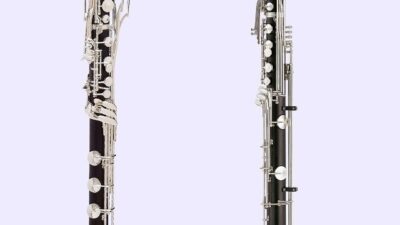
बास क्लैरिनेट एक लंबा, एकल-ईख वाला काष्ठ-वाद्य (वुडविंड) है जो साधारण क्लैरिनेट से लगभग एक सप्तक नीचे बजता है। इसकी बेलनाकार नली इतनी लंबी होती है कि उसे संभालने के लिए ऊपर एक मुड़ी हुई धातु की गर्दन (क्रुक) पर मुखनली लगती है और नीचे आगे-ऊपर की ओर मुड़ी हुई धातु की घंटी (बेल) होती है। वादक इसे फर्श पर टिके एक खूँटे (पेग) या गले की पट्टी से संभालता है।
Description English
The bass clarinet is a long single-reed woodwind that sounds roughly an octave below the ordinary clarinet. Its cylindrical tube is so long that the mouthpiece sits atop a curved metal neck (crook) at the top, while the bottom ends in an upward-and-forward-facing curved metal bell. The player supports it on a floor peg or a neck strap.
Body
Long straight cylindrical tube with an upturned metal bell and a curved metal neck at the top
लंबी सीधी बेलनाकार नली, नीचे ऊपर की ओर मुड़ी धातु-घंटी और ऊपर मुड़ी हुई धातु-गर्दन
African blackwood/grenadilla (professional), or hard rubber/ABS resin (student models); keywork of silver-plated nickel
अफ़्रीकी ब्लैकवुड/ग्रेनाडिला (पेशेवर), या कठोर रबड़/रेज़िन (अभ्यास-वाद्य); चाबियाँ सिल्वर-प्लेटेड निकल की
100-120 (folded tubing makes the playing length more compact)
Cylindrical bore that overblows at the twelfth, ending in a flared metal bell for low-register projection
Strings
Sound is produced by a single cane reed vibrating against the mouthpiece; there are no strings
Not applicable — the bass clarinet has no sympathetic strings
Not applicable — no drone strings on a woodwind
Bow
मुखनली और ईख
Mouthpiece and reed
Ebonite mouthpiece with a single cane reed held by a ligature; not bowed
N/A (blown, not bowed)
The player blows across the reed; there is no bow. Sound is shaped by breath, embouchure and tonguing
Tuning Pegs
स्वर-समायोजन
Barrel/neck and reed adjustment
Pitch is tuned by adjusting the reed, mouthpiece position on the neck, and by pulling the neck joint — not by pegs
Bridge
लागू नहीं
Not applicable
No bridge — a woodwind has none
N/A
Frets
फ्रेट के बजाय बास क्लैरिनेट में चाबियों (कीज़) और छिद्रों की एक जटिल प्रणाली (प्रायः बोहम प्रणाली) होती है, जो साधारण क्लैरिनेट जैसी ही है — इसीलिए क्लैरिनेट वादक इसे सहजता से बजा लेते हैं। रजिस्टर-की और अतिरिक्त निचली चाबियाँ स्वर-विस्तार देती हैं।
Instead of frets, the bass clarinet uses a complex system of keys and tone-holes (usually the Boehm system) identical in logic to the soprano clarinet — which is why clarinettists double on it easily. A register key and extra low keys extend the range.
ध्वनि-चरित्र
SoundTonal Character Hindi
बास क्लैरिनेट की ध्वनि गहरी, मखमली और गंभीर होती है — निचले स्वरों में यह घनी, अँधेरी और रहस्यमयी लगती है, जबकि ऊपरी स्वरों में गाती हुई, कोमल और भावुक। यही कारण है कि संगीतकार इसे उदासी, गंभीरता और नाटकीय अँधेरे के रंग के लिए चुनते हैं।
Tonal Character English
The bass clarinet's tone is deep, velvety and grave — dense, dark and mysterious in the low register, yet singing, mellow and tender in the upper range. This is exactly why composers reach for it to paint sorrow, solemnity and dramatic darkness.
Timbre
Warm and woody, hollow and reedy in the chalumeau (low) register, smoother and more vocal higher up
Range
Written low C (or low E♭ on shorter models) up into the altissimo; sounding an octave-plus-a-tone below written pitch, i.e. reaching down near the low B♭ of the cello/bassoon range
Dynamic Range
Wide — from an almost inaudible subtone whisper to a firm, dark fortissimo growl in the lowest notes
Techniques
सुनने का मार्गदर्शन
The Listening Guideबास क्लैरिनेट को समझना हो तो पहले इसके सबसे निचले स्वर सुनिए — घने, अँधेरे, लगभग गुर्राते हुए। फिर देखिए कैसे ऊपरी स्वरों में यह गाती हुई, मानवीय-सी हो जाती है। एरिक डॉल्फ़ी के जैज़-एकल से शुरुआत कीजिए, फिर किसी वाग्नर या स्त्राविंस्की के ऑर्केस्ट्रा अंश में इसे पूरे वाद्यवृंद के नीचे बहती गहरी छाया की तरह पहचानिए।
अंग्रेज़ी में पढ़ें · Read in English
To understand the bass clarinet, first listen to its low 'chalumeau' register — there it is dense, dark and almost growling. Then notice how, in the upper range, it turns singing and voice-like. Begin with an Eric Dolphy jazz solo, then hear a Wagner or Stravinsky orchestral passage where it flows like a deep shadow beneath the whole ensemble.
परिचय
Identity- Year Of Origin
- 1772
अन्य विवरण
More DetailsTimbre
Warm and woody, hollow and reedy in the chalumeau (low) register, smoother and more vocal higher up
रोचक तथ्य
Margin Notesएक ही आविष्कारक, दो प्रसिद्ध वाद्य — एडॉल्फ़ सैक्स ने पहले बास क्लैरिनेट का आधुनिक रूप (1838) और फिर सैक्सोफ़ोन (1846) बनाया — दोनों एकल-ईख वाले वाद्य, दोनों आज भी उन्हीं की संरचना पर चलते हैं।
Adolphe Sax first perfected the modern bass clarinet (1838) and then created the saxophone (1846) — both single-reed instruments, both still built on his designs today.
क्लैरिनेट वादक ही इसे बजाते हैं — क्योंकि बास क्लैरिनेट की फ़िंगरिंग सोप्रानो क्लैरिनेट जैसी ही है, अधिकांश ऑर्केस्ट्रा में एक ही वादक दोनों बजाता है ('डबलिंग') — यही बात इसे फ़िल्म-रिकॉर्डिंग सत्रों में सुविधाजनक बनाती थी।
Because the bass clarinet's fingering matches the soprano clarinet's, in most orchestras a single player covers both ('doubling') — which is exactly what made it convenient in film recording sessions.
अँधेरे का रंग — फ़िल्म-स्कोरिंग में सस्पेंस, भय और गहरी उदासी के क्षणों के लिए संगीतकार बार-बार बास क्लैरिनेट के निचले स्वर की ओर लौटते हैं — यह श्रोता को बिना शब्दों के 'कुछ अँधेरा' महसूस करा देता है।
For moments of suspense, dread and deep sorrow, film composers return again and again to the bass clarinet's low register — it makes the listener feel 'something dark' without a single word.
सवाल-जवाब
Questions & Answersबास क्लैरिनेट क्या है?
बास क्लैरिनेट क्लैरिनेट परिवार का एक एकल-ईख वाला काष्ठ-वाद्य है जो साधारण (सोप्रानो) क्लैरिनेट से लगभग एक सप्तक नीचे बजता है। इसकी लंबी बेलनाकार नली, ऊपर मुड़ी धातु-गर्दन और नीचे उठी हुई घंटी इसे पहचान देती है।
बास क्लैरिनेट का आधुनिक रूप किसने बनाया?
आरंभिक रूप 18वीं सदी में बने (सबसे पुराना ज्ञात 1772 में पेरिस के जिल लो का), किंतु 1838 में एडॉल्फ़ सैक्स ने सीधा शरीर, धातु-गर्दन और उठी घंटी वाला आधुनिक रूप गढ़ा जो आज भी मानक है।
क्या बास क्लैरिनेट हिंदी फ़िल्म-संगीत में इस्तेमाल हुआ है?
इसका उपयोग सीमित एवं सहायक रहा। स्वर्ण-युग के बड़े स्टूडियो-ऑर्केस्ट्रा के रीड-अनुभाग में इसे कभी-कभी गहरे, अँधेरे निचले पृष्ठ-रंग के लिए जोड़ा जाता था, पर साधारण क्लैरिनेट जैसी एकल प्रमुखता इसे कभी नहीं मिली।
बास क्लैरिनेट और साधारण क्लैरिनेट में क्या अंतर है?
बास क्लैरिनेट लगभग एक सप्तक नीचे बजता है, बहुत लंबा है, और इसमें ऊपर धातु-गर्दन तथा नीचे उठी हुई धातु-घंटी होती है। फ़िंगरिंग वही रहती है, इसलिए क्लैरिनेट वादक इसे सहजता से बजा लेते हैं।
नमूना-पट्टी
The Specimen Table| नाम | बास क्लैरिनेट · Bass Clarinet |
|---|---|
| अन्य नाम | बेस क्लैरनेट · Bass Clarinet (in B♭) · Clarinette basse (French) · Bassklarinette (German) |
| उद्गम | 1772 |
| प्रकार | वाद्य · Instruments |
साझा कीजिए · Share this Plate