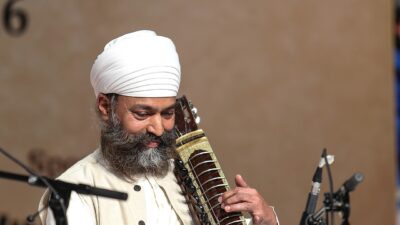
शास्त्र विंग · वाद्य-पट्टिका · Instrument Plate
तार शहनाई
Tar Shehnai
अन्य नामतार शहनाई · ताड़ शहनाई (उच्चारण भेद) · Taar Shehnai · Tar Shahnai
परिचय
Overviewतार शहनाई असल में एक इसराज है, जिसके साउंड-बोर्ड पर ग्रामोफोन का धातु भोंपू जड़ दिया गया — ताकि बिजली-रहित रिकॉर्डिंग के ज़माने में भी उसकी आवाज़ ऊँची और भेदती हो जाए। धनुष से बजने वाली इस 'तंतु शहनाई' की चीख़ती धुन शुरुआती हिंदी सिनेमा के इंटरल्यूड में बरसों गूँजी, और सत्यजित राय की 'पथेर पांचाली' में यह शोक की आवाज़ बन गई। आज गुरमत संगीत और नामधारी परंपरा के कलाकार इसे जीवित रखे हुए हैं।
अंग्रेज़ी में पढ़ें · Read in English
The tar shehnai is really an esraj with a gramophone metal horn fixed onto its sound board — so that, even in the age of electricity-free recording, its voice could be loud and cutting. The crying line of this bowed 'string shehnai' rang for years through the interludes of early Hindi cinema, and in Satyajit Ray's 'Pather Panchali' it became the very sound of grief. Today artists of the Gurmat Sangeet and Namdhari traditions keep it alive.
वर्गीकरण
ClassificationNatya Shastra Category
तत (Tata - stringed instruments)
नाट्यशास्त्र के 'तत' (तार वाले) वर्ग में तार शहनाई एक धनुष-आधारित वाद्य है — यह मूलतः इसराज है जिसकी ध्वनि तारों के घर्षण से उत्पन्न होती है, और फिर एक धातु के भोंपू (हॉर्न) द्वारा प्रवर्धित की जाती है।
In the Tata (stringed) category of the Natya Shastra, the tar shehnai is a bow-based instrument — essentially an esraj whose sound is produced by the friction of a bow on strings, and then amplified and projected through an attached metal horn.
Western Category
Bowed string instrument with mechanical (horn) amplification
Western Family
Fiddle / bowed-lute family (a resonator-bowed chordophone; conceptually related to the 'Japanese fiddle' and the dobro/resophonic idea of a mechanically amplified string instrument)
Sub Classification
बनावट
PhysicalDescription Hindi
तार शहनाई असल में एक इसराज है जिसकी ध्वनि-पट्टी (साउंड बोर्ड) पर एक धातु का भोंपू जोड़ दिया गया है। इसका शरीर, लंबी फ्रेट वाली गर्दन, चमड़े से मढ़ा गूँज-कक्ष और तरब के तार बिल्कुल इसराज जैसे होते हैं; अंतर केवल इतना है कि पुल (ब्रिज) की कंपन एक ग्रामोफोन-शैली की झिल्ली (डायाफ्राम) तक पहुँचती है और वहाँ से भोंपू के मुँह से बाहर फेंकी जाती है। यही भोंपू तार शहनाई को उसकी तीखी, दूर तक जाने वाली शहनाई जैसी आवाज़ देता है।
Description English
The tar shehnai is essentially an esraj with a metal horn fitted onto its sound board. Its body, long fretted neck, skin-covered resonator and sympathetic strings are exactly those of an esraj; the only difference is that the bridge's vibration is coupled to a gramophone-style diaphragm and thrown outward through the mouth of a horn. It is this horn that gives the tar shehnai its piercing, far-carrying, shehnai-like voice.
Body
Elongated, waisted esraj body with a skin-covered belly, plus a protruding metal horn near the bridge
लंबा, कमर-कटा इसराज-नुमा शरीर जिसका पेट चमड़े से मढ़ा होता है, और पुल के पास एक निकला हुआ धातु का भोंपू
Tun/teak or sheesham wood body, goat-skin/parchment belly, brass or nickel-plated metal horn (originally a gramophone soundbox horn)
तून/सागवान या शीशम की लकड़ी का शरीर, बकरी की खाल/चर्मपत्र से मढ़ा पेट, पीतल या निकल-चढ़ा धातु का भोंपू (मूल रूप से ग्रामोफोन साउंडबॉक्स का हॉर्न)
100-115 (esraj-length; horn adds projection, not height)
Skin-covered wooden resonator PLUS a gramophone-type soundbox: the bridge rests on a thin mica/metal diaphragm whose vibration is funnelled out through the horn
Horn
भोंपू / तूती
Horn (metal amplifier)
तार शहनाई की पहचान — एक धातु का भोंपू जो साउंडबॉक्स से जुड़ा होता है। यह अक्सर ग्रामोफोन के हॉर्न की तरह होता है और शहनाई की घंटी जैसा दिखता है। यह तारों की ध्वनि को दिशा देता है, प्रवर्धित करता है और उसमें एक नासिकीय, तीखी चमक भर देता है।
The defining feature — a metal horn coupled to the soundbox, often literally a gramophone horn, shaped like a shehnai's bell. It directs and amplifies the string tone and lends it a nasal, piercing brilliance.
Purely mechanical (acoustic) amplification and directional projection — no electronics; a legacy of the pre-microphone recording era
Strings
Primary bowed playing strings (as on the esraj)
Fine resonating strings (तरब / tarab) running under the frets that vibrate in sympathy with the bowed strings
Some esraj/tar shehnai builds add one or two drone/chikari strings; many do not
Bow
गज
Gaz
Wooden/bamboo stick strung with horsehair, rosined
55-70
Held in the right hand and drawn across the main strings while the left hand stops the strings against the frets; identical bowing to the esraj
Tuning Pegs
खूंटी
Khunti
Large wooden pegs at the head for the main strings; a row of small side pegs down the neck for the sympathetic (tarab) strings
Bridge
पुल / घोड़ी
Ghodi (bridge)
On a plain esraj the bridge sits on the skin; on the tar shehnai the primary bridge is coupled to the soundbox diaphragm so that vibration is transferred into the horn
Wood/bone bridge on a mica or thin-metal diaphragm
Frets
इसराज की तरह तार शहनाई में लगभग 18-20 धातु के परदे (फ्रेट) होते हैं जो गर्दन से बंधे रहते हैं और खिसकाए जा सकते हैं। कलाकार परदों पर तार दबाकर सुर लेता है, और परदों के बीच खींचकर मीड निकालता है — यही इसे सारंगी (जो फ्रेट-रहित है) से अलग करता है।
Like the esraj, the tar shehnai carries about 18-20 tied, movable metal frets (pardas) along the neck. The player stops the strings against the frets for pitch and pulls between them for meend — this fretted neck is what distinguishes it from the fretless sarangi.
ध्वनि-चरित्र
SoundTonal Character Hindi
तार शहनाई की आवाज़ तीखी, नासिकीय और दूर तक भेदने वाली है — शहनाई की चीख़ और वायलिन की गायकी का मेल। भोंपू के कारण इसमें एक धात्विक चमक और 'पंच' आ जाता है, जो इसे भीड़ या ऑर्केस्ट्रा में भी सुनाई देने लायक बनाता है। धीमे में यह करुण और रुदन-भरी लगती है, तेज़ में चंचल और उजली।
Tonal Character English
The tar shehnai's tone is piercing, nasal and far-cutting — a blend of the shehnai's cry and the violin's cantabile. The horn gives it a metallic brilliance and 'punch' that lets it be heard even in a crowd or an orchestra. Slow, it sounds plaintive and weeping; fast, it turns bright and playful.
Timbre
Reedy, nasal, metallic-bright with sympathetic-string shimmer
Range
Roughly two to three octaves (esraj range), centred in the vocal register
Dynamic Range
Naturally loud and projecting for a bowed string — the horn was designed precisely to boost volume before microphones existed
Techniques
सुनने का मार्गदर्शन
The Listening Guideतार शहनाई को पहचानना हो तो शहनाई-सी आवाज़ खोजिए जो 'साँस' न लेती हो — क्योंकि यह फूँक से नहीं, धनुष से बजती है, इसलिए इसका सुर बिना रुके, लगातार खिंचता है। धीमी धुन में इसकी करुणा और भोंपू की धात्विक चमक साथ-साथ सुनिए; तेज़ झाले में भोंपू से फूटती झनझनाहट पर ध्यान दीजिए।
अंग्रेज़ी में पढ़ें · Read in English
To recognise the tar shehnai, look for a shehnai-like voice that never 'breathes' — because it is bowed, not blown, its line pulls on unbroken. In a slow dhun, hear the pathos and the horn's metallic sheen together; in a fast jhala, listen for the jingling spray bursting out of the horn.
परिचय
Identity- Year Of Origin
- 1905
अन्य विवरण
More DetailsTimbre
Reedy, nasal, metallic-bright with sympathetic-string shimmer
रोचक तथ्य
Margin Notes‘डोब्रो’ का भारतीय चचेरा भाई — जैसे पश्चिम में साधारण गिटार में धातु की गूँज-थाली जोड़कर 'डोब्रो' (रेज़ोनेटर गिटार) बना, वैसे ही भारत में इसराज पर भोंपू जोड़कर तार शहनाई बनी। दोनों का मक़सद एक ही था — तंतु-वाद्य को ज़्यादा ज़ोरदार और भेदती आवाज़ देना।
Just as the West added a metal resonator plate to an ordinary guitar to make the 'dobro' (resonator guitar), India added a horn to the esraj to make the tar shehnai. Both aimed at the same thing — a louder, more cutting voice for a string instrument.
फ्रेट वाली इसराज बनाम फ्रेट-रहित सारंगी — तार शहनाई की गर्दन पर सारंगी के विपरीत परदे (फ्रेट) होते हैं। इसलिए इसकी बजाने की तकनीक सारंगी से आसान मानी जाती है — नौसिखिया के लिए सुर पकड़ना ज़्यादा सरल, क्योंकि परदे सुर की जगह बता देते हैं।
Unlike the sarangi, the tar shehnai's neck has frets. Its technique is therefore considered easier than the sarangi's — a beginner finds pitches more readily because the frets mark where each note sits.
शहनाई की जगह लेने वाला तार-वाद्य — जब किसी रिकॉर्डिंग या मंच पर शहनाई-वादक उपलब्ध न होते, तो तार शहनाई शहनाई की जगह बजा दी जाती थी, क्योंकि इसकी आवाज़ बहुत मिलती-जुलती थी। यही सुविधा शुरुआती फ़िल्म-संगीत में इसकी लोकप्रियता का एक बड़ा कारण बनी।
When no shehnai player was available for a recording or a stage, the tar shehnai was played in the shehnai's place, since its tone was so similar. This convenience was a major reason for its popularity in early film music.
सवाल-जवाब
Questions & Answersतार शहनाई क्या है?
तार शहनाई असल में एक इसराज है जिसके साउंड-बोर्ड पर एक धातु का भोंपू जोड़ दिया जाता है। यह धनुष (गज़) से बजने वाला तंतु-वाद्य है, पर इसका भोंपू इसे शहनाई जैसी तीखी, दूर तक जाने वाली आवाज़ देता है।
क्या तार शहनाई फूँक कर बजाई जाती है?
नहीं। नाम में 'शहनाई' होने के बावजूद यह फूँक वाद्य नहीं है — इसमें न रीड है, न नली। यह इसराज की तरह गज़ (धनुष) से बजती है; 'शहनाई' नाम केवल इसकी आवाज़ के कारण पड़ा।
तार शहनाई का भोंपू किसलिए है?
भोंपू एक यांत्रिक प्रवर्धक (एम्प्लिफायर) है। बिजली-रहित ग्रामोफोन युग में तंतु-वाद्य की आवाज़ रिकॉर्ड में दब जाती थी; भोंपू ने उसे इतना ऊँचा और दिशात्मक बना दिया कि वह रिकॉर्डिंग में और मंच पर साफ़ सुनाई दे।
तार शहनाई किस फ़िल्म में प्रसिद्ध रूप से सुनी गई?
सत्यजित राय की 'पथेर पांचाली' (1955) में, जहाँ दक्षिणामोहन ठाकुर की बजाई तार शहनाई दुर्गा की मृत्यु के शोक-दृश्य में सुनाई देती है। यह विश्व-सिनेमा में इस वाद्य का सबसे प्रसिद्ध उदाहरण है।
तार शहनाई और सारंगी में क्या फ़र्क है?
दोनों धनुष-वाद्य हैं, पर तार शहनाई (इसराज-आधारित) की गर्दन पर परदे (फ्रेट) होते हैं और उसमें भोंपू लगा होता है, जबकि सारंगी फ्रेट-रहित होती है और उसकी आवाज़ मानव-कंठ जैसी गहरी होती है। तार शहनाई की आवाज़ अधिक तीखी और धात्विक है।
नमूना-पट्टी
The Specimen Table| नाम | तार शहनाई · Tar Shehnai |
|---|---|
| अन्य नाम | तार शहनाई · ताड़ शहनाई (उच्चारण भेद) · Taar Shehnai · Tar Shahnai · Tar Sarangi (कभी-कभी भ्रमवश) |
| उद्गम | 1905 |
| प्रकार | वाद्य · Instruments |
साझा कीजिए · Share this Plate