शास्त्र विंग · वाद्य-पट्टिका · Instrument Plate
श्रुति उपांग
Sruti Upanga
अन्य नामश्रुति-उपांग · भजन-श्रुति (Bhazana-śruti) · मशक / मोशुक (Moshuq) · द्रुथि (Druthi)
परिचय
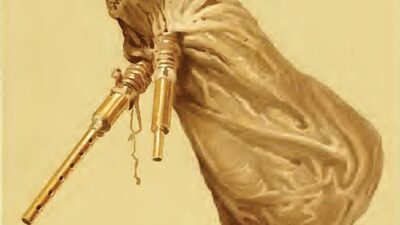
Overviewश्रुति उपांग दक्षिण भारत का एक दुर्लभ थैली-वाद्य (बैगपाइप) है, जो बकरी के बच्चे की खाल की धौंकनी से बजता है और नादस्वरम-मुखवीणा के नीचे एक अटल श्रुति (आधार-स्वर) थामे रखता है। यह मधुर एकल नहीं, आधार है — कार्य में 'ओट्टु' जैसा, पर रूप में बैगपाइप। चार्ल्स रसेल डे (1891) की प्लेट XVI इसका सबसे प्रामाणिक चित्र है; आज इसकी जगह सुरपेटी और श्रुति-बॉक्स ले चुके हैं।
अंग्रेज़ी में पढ़ें · Read in English
The sruti upanga is a rare South Indian bagpipe, sounded from a kid-skin bellows-bag, that holds a constant shruti (tonic drone) beneath the nadaswaram and mukha vina. It is not a melodic solo but a foundation — like the 'ottu' in function, but a bagpipe in form. Charles Russell Day's 1891 Plate XVI is its most authoritative depiction; today the surpeti and shruti box have taken its place.
वर्गीकरण
ClassificationNatya Shastra Category
सुषिर (Sushira - wind instruments)
श्रुति उपांग सुषिर (वायु-वाद्य) वर्ग में आता है। इसमें ध्वनि खाल की थैली में भरी हवा के दबाव से रीड (जिह्वा/नरकट) को कँपाकर उत्पन्न होती है — यह भारतीय वर्गीकरण में 'फूँक से बजने वाले' वाद्यों की श्रेणी है, यद्यपि यहाँ फूँक सीधे मुख से नहीं बल्कि थैली से निरन्तर आती है।
The sruti upanga belongs to the Sushira (wind/hollow) category. Sound is produced by air pressure stored in a skin bag driving a reed (tongue) — the Indian class of blown instruments — though here the air is supplied continuously from the bag rather than directly from the lips.
Western Category
Bagpipe (drone bagpipe) — reed aerophone
Western Family
Bagpipe family; a single-drone, chanter-less bag reedpipe (Hornbostel–Sachs 422 reed aerophone fed from a wind reservoir)
Sub Classification
बनावट
PhysicalDescription Hindi
श्रुति उपांग एक थैली-वाद्य (बैगपाइप) है जिसमें बकरी के बच्चे की खाल की एक वायु-थैली, दो नलियाँ और एक ड्रोन-नरकट होता है। छोटी नली से मुख द्वारा हवा भरकर थैली को फुलाया जाता है; बड़ी नली (बेंत की बनी) ड्रोन है जो लगातार एक ही आधार-स्वर बजाती रहती है। यह उत्तर भारत की मशक जैसी दिखती है परन्तु इसमें राग बजाने वाली 'चैंटर' नली नहीं होती — यह केवल श्रुति (आधार-स्वर) देती है।
Description English
The sruti upanga is a bagpipe consisting of a kid-skin (young goat) air bag, two pipes, and a drone reed-pipe. The smaller pipe is blown by mouth to inflate the bag; the larger cane pipe is the drone that sounds one continuous tonic. It resembles the North Indian mashak but, unlike many bagpipes, has no melody 'chanter' pipe — it produces only the shruti (fundamental drone).
Body
Inflatable bag with two protruding pipes
फुलाई जाने वाली थैली जिससे दो नलियाँ निकलती हैं
Kid (young goat) skin bag; cane pipes and stock; cane or marsh-reed tongue; sealed with black wax
बकरी के बच्चे की खाल की थैली; बेंत (कैन) की नलियाँ व स्टॉक; बेंत या नरकट की जिह्वा (रीड); काले मोम से सील
बैगपाइप — निश्चित लम्बाई नहीं; ड्रोन नली लगभग 30-45 सेमी (ऐतिहासिक नमूनों में परिवर्तनशील)
The kid-skin bag acts as a continuous air reservoir, keeping the reed sounding even between breaths
Strings
No strings — the sruti upanga is a wind/bag instrument, not a chordophone
None — resonance comes from the reed and the enclosed air column, not sympathetic strings
A single cane drone pipe holding one continuous tonic pitch — the entire purpose of the instrument
Bow
लागू नहीं
N/A
No bow — this is a wind instrument
N/A
Not applicable; the instrument is inflated and pressed, not bowed
Tuning Pegs
मोम-अवरोध
Wax stopping
Tuning is achieved not by pegs but by stopping the drone pipe's holes wholly or partially with wax to fix the desired pitch (per C. R. Day, 1891)
Bridge
स्टॉक (बेंत)
Stock (cane)
The drone reed is mounted in a cane stock of the same material as the pipe, which seats into the bag and houses the reed
Cane, sealed airtight with black wax
Frets
श्रुति उपांग में न फ्रेट होते हैं न स्वर-छिद्रों से राग बजता है — यह केवल एक अटल आधार-स्वर देता है। इसकी 'रीड' की जिह्वा पर एक छोटा तार या महीन डोरी लपेटकर कम्पन को नियन्त्रित किया जाता है, और पिच को मोम से सेट किया जाता है।
The sruti upanga has no frets and plays no melody — it sounds only a single fixed drone. The reed tongue is regulated by a little wire or fine twine tied round it, and the pitch is set with wax (as described by C. R. Day).
ध्वनि-चरित्र
SoundTonal Character Hindi
श्रुति उपांग की ध्वनि सतत, गहरी और थोड़ी 'भिनभिनाती' (नेज़ल) होती है — मानो एक अटूट गुनगुनाहट जो पूरे मंडप को भर देती है। यह मधुर एकल नहीं, अपितु आधार है: नादस्वरम या मुखवीणा की तीखी, ऊँची आवाज़ इसी की स्थिर श्रुति पर टिककर उभरती है।
Tonal Character English
The sruti upanga's sound is continuous, deep and slightly nasal — an unbroken hum that fills the temple courtyard. It is not a melodic solo but a foundation: the piercing high voice of the nadaswaram or mukha vina rises and rests upon its steady drone.
Timbre
Reedy, buzzing, sustained; a single unwavering tonic with the raw edge of a cane reed
Range
Single fixed pitch (the tonic/Sa of the ensemble); no melodic range
Dynamic Range
Narrow and steady by design — meant to be constant, unobtrusive underpinning rather than dynamic expression
Techniques
सुनने का मार्गदर्शन
The Listening Guideश्रुति उपांग को अकेले सुनने की रिकॉर्डिंग नहीं मिलती, इसलिए इसे 'भूमिका' से समझिए। किसी नादस्वरम-मंडली (periya melam) को सुनिए और नीचे बहते उस अटल आधार-स्वर पर कान टिकाइए, जिस पर पूरी धुन खड़ी है — यही श्रुति उपांग का काम था। फिर सुरपेटी या श्रुति-बॉक्स के ड्रोन को सुनिए; वही इसका जीवित रूप है।
अंग्रेज़ी में पढ़ें · Read in English
There is virtually no commercial recording of the sruti upanga on its own. The best way to experience it is to listen to a nadaswaram ensemble (periya melam) and attend to the continuous humming tonic under which the lead instrument sits — the very role the sruti upanga historically played. Also listen to the drone of a surpeti or shruti box, its living successor.
परिचय
Identity- Year Of Origin
- 1800
अन्य विवरण
More DetailsTimbre
Reedy, buzzing, sustained; a single unwavering tonic with the raw edge of a cane reed
रोचक तथ्य
Margin Notesनाम का अर्थ — 'श्रुति' अर्थात् आधार-स्वर और 'उपांग' अर्थात् सहायक अंग — नाम स्वयं वाद्य का पूरा उद्देश्य बता देता है: 'श्रुति (आधार-स्वर) देने वाला सहायक वाद्य'।
'Sruti' means the tonic/reference pitch and 'upanga' means an accessory limb — the name itself declares the instrument's whole purpose: 'the accessory that supplies the drone.'
मोशुक और मशक का रिश्ता — डे इसे 'मोशुक' (मशक) कहते हैं — वही शब्द जो उत्तर भारत की चमड़े की थैली-बैगपाइप के लिए है। यह भारत में बैगपाइप-परम्परा के फ़ारसी/मध्य-एशियाई संबंध की ओर इशारा करता है।
Day calls it the 'Moshuq' (mashak) — the same word used for the North Indian leather bagpipe. This points to the Persian/Central-Asian connection of the bagpipe tradition in India.
देवदासी मंडली का स्वर — तमिलनाडु में श्रुति उपांग उस वाद्य-मंडली का हिस्सा था जो देवदासी नृत्य की संगत करती थी; 20वीं सदी में देवदासी प्रथा के अन्त के साथ इसका सामाजिक आधार भी सिकुड़ गया।
In Tamil Nadu the sruti upanga was part of the ensemble that accompanied devadasi dance; as the devadasi system ended in the 20th century, the instrument's social base shrank with it.
संग्रहालय में सुरक्षित — एक 19वीं-शताब्दी का श्रुति उपांग नमूना न्यूयॉर्क के मेट्रोपॉलिटन म्यूज़ियम ऑफ़ आर्ट के संग्रह में सूचीबद्ध है — जो इस बात का प्रमाण है कि यह वाद्य अब मुख्यतः ऐतिहासिक/संग्रहालयी है।
A 19th-century sruti upanga specimen is catalogued in the collection of the Metropolitan Museum of Art, New York — evidence that the instrument is now largely a historical/museum object.
सवाल-जवाब
Questions & Answersश्रुति उपांग क्या है?
श्रुति उपांग दक्षिण भारत (तमिलनाडु) का एक ड्रोन बैगपाइप है। बकरी के बच्चे की खाल की थैली से हवा भरकर इसे बजाया जाता है और यह एक अटल आधार-स्वर (श्रुति) देता है, जिस पर नादस्वरम या मुखवीणा की धुन टिकती है।
श्रुति उपांग और ओट्टु में क्या सम्बन्ध है?
दोनों का काम एक ही है — नादस्वरम के नीचे अटल श्रुति देना। ओट्टु एक रीड-पाइप (नादस्वरम का द्रोण-रूप) है, जबकि श्रुति उपांग वही काम बैगपाइप के रूप में करता है, यानी हवा की थैली के साथ।
श्रुति उपांग को स्वर में कैसे मिलाया जाता है?
इसमें खूँटी या बटन नहीं होते। ड्रोन नली के छिद्रों को मोम से पूरी या आंशिक रूप से बन्द करके इच्छित पिच तय की जाती है, और रीड की जिह्वा पर तार/डोरी लपेटकर कम्पन नियन्त्रित किया जाता है (डे, 1891)।
क्या श्रुति उपांग आज भी बजाया जाता है?
यह लगभग लुप्त वाद्य है। देवदासी प्रथा के अन्त और सुरपेटी व इलेक्ट्रॉनिक श्रुति-बॉक्स के आगमन से इसका प्रचलन समाप्त हो गया। आज इसके नमूने मुख्यतः संग्रहालयों में और इसकी छवि डे की 1891 की प्लेट में सुरक्षित है।
नमूना-पट्टी
The Specimen Table| नाम | श्रुति उपांग · Sruti Upanga |
|---|---|
| अन्य नाम | श्रुति-उपांग · भजन-श्रुति (Bhazana-śruti) · मशक / मोशुक (Moshuq) · द्रुथि (Druthi) · नोसबग (Nosbug) · Sruti Upanga (also: Śruti-upāṅga) |
| उद्गम | 1800 |
| प्रकार | वाद्य · Instruments |
साझा कीजिए · Share this Plate