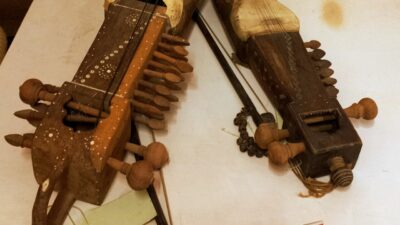
शास्त्र विंग · वाद्य-पट्टिका · Instrument Plate
सिंधी सारंगी
Sindhi Sarangi
अन्य नामसिंधी सारंगी · सारंगिया लंगा सारंगी · Sindhi Sarangi (also: Sindhī Sāraṅgī) · Langa Sarangi
परिचय
Overviewसिंधी सारंगी मरुभूमि की रोती-गाती आवाज़ है — शीशम के एक ही कुंदे से तराशी, चार बाज-तार और दो दर्जन तरब तारों वाली लोक सारंगी, जो सारंगिया लंगा समुदाय की पहचान है। वादक इसे बाएँ कंधे से टिकाकर, नाखूनों से तार दबाते और गज़ फेरते हुए मांड, पणिहारी और सूफ़ी कलाम की संगत करते हैं। लाखा खान जैसे उस्तादों ने इसे विश्व-मंच तक पहुँचाया।
अंग्रेज़ी में पढ़ें · Read in English
The Sindhi Sarangi is the weeping, singing voice of the desert — a folk sarangi carved from a single block of sheesham, with four bowed strings and two dozen sympathetic strings, and the identity instrument of the Sarangiya Langa community. Players rest it against the left shoulder, stop the strings with their nails and draw the bow to accompany maand, panihari and Sufi kalam. Masters such as Lakha Khan have carried it to the world stage.
वर्गीकरण
ClassificationNatya Shastra Category
तत (Tata - stringed instruments)
तत वर्ग में सिंधी सारंगी एक धनुष-आधारित लोक वाद्य है, जो गज़ (धनुष) की रगड़ से मुख्य तारों में कंपन उत्पन्न करता है; इसके अनेक तरब तार सहानुभूति में गूँजकर मरुभूमि जैसी झिलमिलाती ध्वनि रचते हैं।
Within the Tata (stringed) category of the Natya Shastra, the Sindhi Sarangi is a bow-driven folk instrument that sets its main strings vibrating through the friction of the bow, while its many sympathetic (tarab) strings resonate to create its shimmering, desert-hued sound.
Western Category
Bowed string instrument (short-necked folk fiddle)
Western Family
Fiddle family — a rustic, folk cousin of the classical sarangi, closer in social role to a village fiddle than a concert bass
Sub Classification
बनावट
PhysicalDescription Hindi
सिंधी सारंगी शीशम या ताली की एक ही लकड़ी के ठोस कुंदे से तराशी जाती है। इसका शरीर आयताकार पर हल्का कमरदार (waisted) होता है और शास्त्रीय सारंगी की तुलना में छोटा एवं हल्का है। चार मुख्य वादन-तार गज़ से बजते हैं और इनके नीचे-बग़ल में बाईस से छब्बीस तक तरब (सहानुभूति) तार लगे रहते हैं, जो हड्डी के गोल छोटे 'सुंदरी' पुलों से होकर गर्दन के पीछे बने खूँटी-बक्से तक जाते हैं।
Description English
The Sindhi Sarangi is carved from a single solid block of sheesham or tali wood. Its body is rectangular but gently waisted, and it is smaller and lighter than the classical sarangi. Four main playing strings are sounded by the bow, and beneath and beside them run some twenty-two to twenty-six sympathetic (tarab) strings, which pass through small circular bone bridges called 'sundari' to a peg-box behind the neck.
Body
Rectangular, gently waisted (slightly narrowed at the middle)
आयताकार, बीच से हल्का कमरदार
Solid wood carved from a single block (traditionally tali / sheesham — Indian rosewood)
एक ही कुंदे से तराशी ठोस लकड़ी (परंपरागत रूप से ताली / शीशम)
55-70
Single carved wooden chamber, traditionally covered with a stretched goatskin (parchment) belly over the lower body to project the bowed strings
Strings
Primary bowed playing strings, known as 'baj ke taar' (the sounding strings)
Metal sympathetic strings that resonate under the bow; in Langa terminology one set of about 8 is called 'jhara' and the remaining roughly 17 are called 'jheel'
The Sindhi Sarangi does not carry separate long drone strings like a tanpura; its sustained hum comes from the dense bank of sympathetic tarab strings
Bow
गज़
Gaj
Curved wooden or bamboo stick strung with horsehair
45-60
Held in an underhand grip in the right hand and drawn across the four main strings while the instrument stands vertically
Tuning Pegs
खूँटी
Khunti
Large wooden pegs for the main strings on the neck, plus many small pegs in the rear peg-box for the numerous sympathetic strings
Bridge
घोड़ी / सुंदरी
Ghodi / Sundari
A main wooden bridge carries the four bowed strings, while small circular bone 'sundari' bridges guide the sympathetic strings across the neck
Wood for the main bridge; bone for the small sundari bridges
Frets
सिंधी सारंगी फ्रेटलेस होती है — वादक बाएँ हाथ के नाखूनों के किनारे से तारों को दबाकर स्वर निकालता है, जिससे लोक-गायन जैसी फिसलती मींड और सूक्ष्म कण-स्वर संभव होते हैं।
The Sindhi Sarangi is fretless — the player stops the strings with the side of the left-hand fingernails (not the finger-pads), producing the sliding meend and fine microtonal inflections that mirror folk singing.
ध्वनि-चरित्र
SoundTonal Character Hindi
सिंधी सारंगी की आवाज़ खुरदरी, मिट्टी से जुड़ी और मरुभूमि की खुली हवा जैसी होती है — शास्त्रीय सारंगी की तुलना में कम मुलायम पर अधिक जंगली और भावभीनी। इसके तरब तारों की झनझनाहट गायक की पुकार के पीछे रेत के टीलों-सी लहराती है।
Tonal Character English
The Sindhi Sarangi's voice is earthy, grainy and open, like the wind over the desert — less polished than the classical sarangi but wilder and more plaintive. The jangle of its sympathetic strings ripples behind the singer's call like dunes shifting in the sand.
Timbre
Bright, ringing, slightly reedy folk resonance with a dense sympathetic-string shimmer
Range
Roughly two octaves, pitched to sit around and support the folk singer's vocal range
Dynamic Range
Wide for a folk instrument — from a soft accompanying murmur to a piercing, wailing lead in open-air performance
Techniques
सुनने का मार्गदर्शन
The Listening Guideसिंधी सारंगी को सुनना हो तो किसी लंगा या मांगणियार गायक के साथ इसकी संगत चुनिए। गौर कीजिए कि सारंगी गायक की हर टेर को कैसे दोहराती है और अंतरालों में तरब तारों की झनझनाहट कैसे खुली रेत-सी फैलती है। धीमे मांड या सूफ़ी कलाम से शुरुआत कीजिए — वहीं इसकी आत्मा सबसे साफ़ खुलती है।
अंग्रेज़ी में पढ़ें · Read in English
To appreciate the Sindhi Sarangi, choose a recording where it accompanies a Langa or Manganiyar singer. Notice how the sarangi echoes the same call behind each of the singer's lines, and how, in the pauses, the sympathetic strings ring out like open sand. Start with a slow maand or a Sufi kalam — that is where its soul is heard most clearly.
परिचय
Identity- Year Of Origin
- 1800
अन्य विवरण
More DetailsTimbre
Bright, ringing, slightly reedy folk resonance with a dense sympathetic-string shimmer
रोचक तथ्य
Margin Notesएक ही परिवार, दो दुनियाएँ — सिंधी सारंगी और शास्त्रीय सारंगी एक ही सारंगी-परिवार की शाखाएँ हैं, पर इनकी दुनिया अलग है — एक मरुभूमि के लंगा-मांगणियार गाँवों की, दूसरी उत्तर भारत के दरबारी-कोठे की खयाल-ठुमरी परंपरा की।
The Sindhi Sarangi and the classical sarangi are branches of the same sarangi family, but their worlds differ — one belongs to the Langa-Manganiyar villages of the desert, the other to the khayal-thumri tradition of North Indian courts and salons.
सिंध और राजस्थान का साझा तार — 'सिंधी' नाम इसके सिंध क्षेत्र से जुड़े मूल की ओर संकेत करता है। यह वाद्य उस सांस्कृतिक पट्टी का प्रतीक है जो आज की सरहद से पहले सिंध और मारवाड़ को एक संगीत-भाषा में बाँधती थी।
The name 'Sindhi' points to its roots in the Sindh region. The instrument is a symbol of the cultural belt that, before today's borders, bound Sindh and Marwar in a single language of music.
हड्डी के छोटे पुल — सुंदरी — सिंधी सारंगी के दर्जनों तरब तार गर्दन की सतह पर लगे हड्डी के गोल छोटे पुलों — 'सुंदरी' — से होकर गुज़रते हैं और गर्दन के पीछे बने खूँटी-बक्से तक जाते हैं। यही बारीक रचना इसकी झिलमिलाती अनुगूँज का रहस्य है।
The Sindhi Sarangi's dozens of sympathetic strings pass through small circular bone bridges — 'sundari' — on the face of the neck, running to a peg-box behind it. This delicate arrangement is the secret of its shimmering resonance.
सवाल-जवाब
Questions & Answersसिंधी सारंगी क्या है?
सिंधी सारंगी पश्चिमी राजस्थान और सिंध क्षेत्र की एक लोक गज़-सारंगी है, जो लंगा (सारंगिया लंगा) समुदाय की पहचान-वाद्य है। यह शीशम के एक ही कुंदे से तराशी जाती है और लोक व सूफ़ी गायकी की संगत करती है।
सिंधी सारंगी और शास्त्रीय सारंगी में क्या अंतर है?
सिंधी सारंगी छोटी, हल्की और लोक परंपरा की है, जिसे नाखूनों से बजाया जाता है; शास्त्रीय सारंगी बड़ी, गहरी और दरबारी खयाल-ठुमरी परंपरा की है। दोनों एक ही सारंगी-परिवार की शाखाएँ हैं पर उनकी दुनिया अलग है।
सिंधी सारंगी के कितने तार होते हैं?
इसमें चार मुख्य वादन-तार ('बाज के तार') होते हैं — दो स्टील और दो गट — और लगभग 22 से 26 धातु के तरब (सहानुभूति) तार, जिन्हें लंगा परंपरा में 'झरा' और 'झील' नाम से जाना जाता है।
सिंधी सारंगी कौन बजाता है?
इसे मुख्यतः जोधपुर और बाड़मेर के लंगा समुदाय के वंशानुगत संगीतकार बजाते हैं, और मांगणियार समुदाय भी। मांगणियार उस्ताद लाखा खान इसके सबसे प्रसिद्ध वादकों में से हैं, जिन्हें 2021 में पद्मश्री मिला।
सिंधी सारंगी को नाम 'सिंधी' क्यों कहा जाता है?
'सिंधी' नाम इसके सिंध क्षेत्र से जुड़े मूल और सिंधी-सूफ़ी गायन-परंपरा की ओर संकेत करता है। यह वाद्य सरहद से पहले सिंध और मारवाड़ को जोड़ने वाली साझा संगीत-पट्टी का प्रतीक है।
नमूना-पट्टी
The Specimen Table| नाम | सिंधी सारंगी · Sindhi Sarangi |
|---|---|
| अन्य नाम | सिंधी सारंगी · सारंगिया लंगा सारंगी · Sindhi Sarangi (also: Sindhī Sāraṅgī) · Langa Sarangi |
| उद्गम | 1800 |
| प्रकार | वाद्य · Instruments |
साझा कीजिए · Share this Plate