शास्त्र विंग · वाद्य-पट्टिका · Instrument Plate
संबळ
Sambal
अन्य नामसंबल · संभळ · सांबळ · Sambhal
परिचय
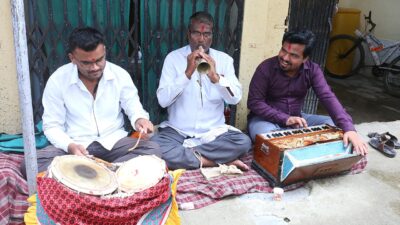
Overviewसंबळ महाराष्ट्र-गोवा की लोक-आत्मा का ढोल है — अगल-बगल जुड़े दो चर्म-मढ़े ढोल, एक गहरा बास और एक तीखा ट्रेबल, जिन्हें दो लकड़ी की डंडियों (एक का सिरा घुमावदार) से बजाया जाता है। यह गोंधळी समुदाय का पवित्र वाद्य है, देवी महालक्ष्मी और अंबा के आवाहन का स्वर, जो कमर से बँधकर गोंधळ की रात से लेकर गणपति विसर्जन के जुलूस तक भक्ति की सामूहिक धड़कन बनकर गूँजता है।
अंग्रेज़ी में पढ़ें · Read in English
The sambal is the drum of the Maharashtra-Goa folk soul — two side-by-side skin-covered drums, one a deep bass and one a sharp treble, struck with two wooden sticks (one with a curved tip). It is the sacred instrument of the Gondhali community, the voice invoking Goddess Mahalakshmi and Amba, sounding waist-slung as the collective heartbeat of devotion from the night of the gondhal to the Ganpati visarjan procession.
वर्गीकरण
ClassificationNatya Shastra Category
अवनद्ध (Avanaddha - membrane/percussion instruments)
अवनद्ध वर्ग में संबळ एक चर्म-मढ़ा ताल वाद्य है — दो जुड़े हुए लकड़ी के ढोलों पर खींची गई खाल से ध्वनि उत्पन्न होती है, जिसे लकड़ी की डंडियों से आघात कर बजाया जाता है।
In the Avanaddha (membrane-covered percussion) category of the Natya Shastra classification, the sambal is a struck drum — sound is produced from skin membranes stretched over two joined wooden drums, played by striking with wooden sticks.
Western Category
Membranophone (struck drum pair)
Western Family
Double drum / paired kettle-style folk drum (functionally comparable to nagara or a bongo-like paired drum, but uniquely tied to the Gondhali devotional tradition)
Sub Classification
बनावट
PhysicalDescription Hindi
संबळ दो जुड़े हुए लकड़ी के ढोलों का एक जोड़ा है, जिनके ऊपरी मुख पर चमड़े की खाल कसकर मढ़ी जाती है। दोनों ढोल आकार में भिन्न होते हैं — एक बड़ा जो गंभीर (बास) स्वर देता है और दूसरा छोटा जो ऊँचा (ट्रेबल) स्वर देता है। वाद्य ब्रास, लकड़ी, चमड़े (चर्म/पार्चमेंट), लोहे और सूती डोरी से बनता है। इसे कमर से बाँधकर या ज़मीन पर रखकर दो लकड़ी की डंडियों से बजाया जाता है — इनमें से एक डंडी का सिरा घुमावदार (मुड़ा हुआ) होता है।
Description English
The sambal is a pair of two joined wooden drums, over whose upper faces animal skin is stretched tight. The two drums differ in size — a larger one giving a deep (bass) tone and a smaller one giving a higher (treble) tone. The instrument is built from brass, wood, skin (parchment), iron and cotton cord. It is played either slung at the waist or rested on the ground, struck with two wooden sticks — one of which has a curved (bent) end.
Body
Two joined bowl/barrel-shaped drum shells set side by side
अगल-बगल जुड़े हुए दो कटोरे/पीपे के आकार के ढोल-कोश
Wood shells (some variants use metal/brass bowls), bound with iron rings and cotton cord
लकड़ी के कोश (कुछ रूपों में धातु/पीतल के कटोरे), लोहे के छल्लों और सूती डोरी से बँधे हुए
20-35 (each drum; a hand-held/waist-slung pair)
Two separate enclosed wooden chambers, each tuned to a different pitch so the pair produces a bass–treble contrast
Strings
None — the sambal is a percussion drum, not a stringed instrument. Pitch comes from the two skin heads, not strings.
Not applicable — no sympathetic strings on a membranophone.
Not applicable. In performance the sambal's drone is supplied externally by the tuntune (a plucked single-string drone) and the human voice.
Bow
टिपरी / काठी (डंडी)
Tipri / Kathi (wooden beater sticks)
Two wooden sticks — one straight, one with a curved (circular) tip
18-25
Not a bow — the two sticks strike the two heads; the curved-tipped stick works the bass head while the straight stick articulates crisp treble strokes
Tuning Pegs
कसाव डोरी / छल्ले
Lacing cord / rings
Pitch and tension are set not by pegs but by tightening the cotton/leather lacing and rings around each drum shell; applied tuning paste can weight the head
Bridge
लागू नहीं
N/A
No bridge — this is a struck membranophone, not a chordophone.
N/A
Frets
संबळ में फ्रेट नहीं होते (यह ताल वाद्य है)। स्वर और लय हाथ की डंडियों की चोट, चोट के स्थान (केंद्र बनाम किनारा) और दो मुखों के बास-ट्रेबल भेद से निर्धारित होते हैं।
The sambal has no frets (it is a percussion drum). Tone and rhythm come from the strike of the sticks, where the head is struck (centre vs rim), and the bass–treble contrast between the two heads.
ध्वनि-चरित्र
SoundTonal Character Hindi
संबळ की ध्वनि दो-रंगी है — एक ढोल की गहरी, गूँजती 'धुम' और दूसरे की तीखी, खनकती 'तिक'। साथ मिलकर यह एक भक्तिमय, आवेश भरी लय बुनते हैं जो गोंधळ की रात को देवी के आवाहन की तीव्रता से भर देती है।
Tonal Character English
The sambal's voice is two-toned — the deep, booming 'dhum' of one drum against the sharp, ringing 'tik' of the other. Together they weave a devotional, driving rhythm that fills the night of the gondhal with the urgency of invoking the Goddess.
Timbre
Resonant, earthy bass paired with a bright cutting treble crack; loud and carrying, built for open-air procession and ritual
Range
Two fixed pitch centres (low bass drum, high treble drum) rather than a melodic range
Dynamic Range
Wide and powerful — from a soft ritual undertone accompanying sung invocations to a thunderous processional roar during Ganpati visarjan
Techniques
सुनने का मार्गदर्शन
The Listening Guideसंबळ को समझना हो तो किसी गोंधळ या गणपति विसर्जन जुलूस की रिकॉर्डिंग से शुरुआत कीजिए। दो ढोलों के संवाद को पकड़िए — बड़े की गहरी 'धुम' और छोटे की तीखी 'तिक'। देखिए कैसे घुमावदार डंडी बास पर भारी पड़ती है और सीधी डंडी तेज़ नक्काशी बुनती है। तुणतुणे और झांज के साथ इसका मेल भक्ति की आवेशमयी लहर रच देता है।
अंग्रेज़ी में पढ़ें · Read in English
To appreciate the sambal, begin with a recording of a gondhal or a Ganpati visarjan procession. Listen to the dialogue between the two drums — the larger giving the deep foundation of 'dhum' and the smaller the sharp ornament of 'tik.' Hear how the curved stick lands heavy on the bass while the straight stick weaves the fast pattern. Its blend with the tuntune's twang and the zanja cymbals creates a surging wave of devotion.
अन्य विवरण
More DetailsTimbre
Resonant, earthy bass paired with a bright cutting treble crack; loud and carrying, built for open-air procession and ritual
रोचक तथ्य
Margin Notesअवनद्ध वाद्य वर्ग — भारतीय वाद्य-वर्गीकरण में संबळ 'अवनद्ध वाद्य' (चर्म-मढ़े ताल वाद्य) श्रेणी में आता है — वही वर्ग जिसमें तबला, मृदंगम, ढोल और नगाड़ा हैं। इसे भारत सरकार के सांस्कृतिक पोर्टल पर भी इसी वर्ग में सूचीबद्ध किया गया है।
In the Indian classification of instruments the sambal falls under 'Avanaddha Vadya' (skin-covered percussion) — the same category as tabla, mridangam, dhol and nagara. It is listed under this category on the Government of India's cultural portal.
कोकणा समुदाय का लोक ढोल — गोंधळी परंपरा के अलावा संबळ दादरा व नगर हवेली, महाराष्ट्र, गोवा और उत्तर कर्नाटक के कोकणा (आदिवासी) समुदाय में भी एक लोक-ढोल के रूप में बजाया जाता है, जिससे इसका भौगोलिक विस्तार पूरे पश्चिम भारत तक फैला है।
Beyond the Gondhali tradition, the sambal is also played as a folk drum among the Kokna (tribal) community of Dadra & Nagar Haveli, Maharashtra, Goa and North Karnataka, spreading its geographic reach across all of Western India.
पोवाडा में वीर-रस — महाराष्ट्र की वीर-गाथा 'पोवाडा' में संबळ, ढोल और तुणतुणे मिलकर लय में तीव्रता और वीरता भर देते हैं — यही आवेशमयी थाप शाहीर की गाथा को युद्ध-सा जोश देती है।
In Maharashtra's heroic ballad, the 'powada,' the sambal, dhol and tuntune together inject urgency and valour into the rhythm — this driving beat lends the shahir's ballad a battle-like fervour.
विज्ञान की नज़र में संबळ — संबळ इतना विशिष्ट वाद्य है कि इस पर अकादमिक ध्वनि-कंपन अध्ययन भी हुआ है (सुर्वे व सहयोगी, 2014), जिसमें इसके दो चर्म-मुखों की कंपन विशेषताओं का विश्लेषण किया गया — एक लोक वाद्य के लिए दुर्लभ वैज्ञानिक ध्यान।
The sambal is distinctive enough to have been the subject of an academic vibration study (Surve et al., 2014), analysing the vibrational characteristics of its two skin heads — rare scientific attention for a folk instrument.
सवाल-जवाब
Questions & Answersसंबळ क्या है?
संबळ दो जुड़े हुए लकड़ी के ढोलों का एक अवनद्ध (चर्म-मढ़ा) लोक ताल वाद्य है, जिसे दो लकड़ी की डंडियों (एक का सिरा घुमावदार) से बजाया जाता है। यह महाराष्ट्र, गोवा, उत्तर कर्नाटक और दादरा व नगर हवेली के गोंधळी समुदाय का पवित्र वाद्य है।
संबळ कैसे बजाया जाता है?
संबळ को दो लकड़ी की डंडियों से बजाया जाता है, जिनमें से एक का सिरा घुमावदार होता है। इसके दो ढोलों में एक गहरा (बास) और दूसरा ऊँचा (ट्रेबल) स्वर देता है। जुलूस में इसे प्रायः कमर से बाँधकर बजाया जाता है।
गोंधळ अनुष्ठान में संबळ का क्या महत्व है?
संबळ गोंधळ अनुष्ठान का केंद्रीय वाद्य है — देवी महालक्ष्मी/अंबा के आवाहन की रात्रि-पूजा। गोंधळी समुदाय, जो देवी के सेवक माने जाते हैं, विवाह व मंगल अवसरों के बाद इस अनुष्ठान में संबळ बजाते हैं। इसके बिना गोंधळ अधूरा माना जाता है।
संबळ किस क्षेत्र का वाद्य है?
संबळ पश्चिम भारत का वाद्य है — महाराष्ट्र, गोवा, उत्तर कर्नाटक और दादरा व नगर हवेली। यह गोंधळी परंपरा के साथ-साथ कोकणा आदिवासी समुदाय में भी लोक-ढोल के रूप में बजाया जाता है।
संबळ किस वाद्य-वर्ग में आता है?
संबळ 'अवनद्ध वाद्य' (चर्म-मढ़े ताल वाद्य) वर्ग में आता है — वही श्रेणी जिसमें तबला, ढोल, मृदंगम और नगाड़ा हैं। पश्चिमी वर्गीकरण में यह एक मेम्ब्रानोफ़ोन (चर्म वाद्य) है।
नमूना-पट्टी
The Specimen Table| नाम | संबळ · Sambal |
|---|---|
| अन्य नाम | संबल · संभळ · सांबळ · Sambhal · Sambal (also: Saṁbaḷ) |
| प्रकार | वाद्य · Instruments |
साझा कीजिए · Share this Plate